Is a Green-Cheeked Conure a Good Pet Bird? Pros and Cons
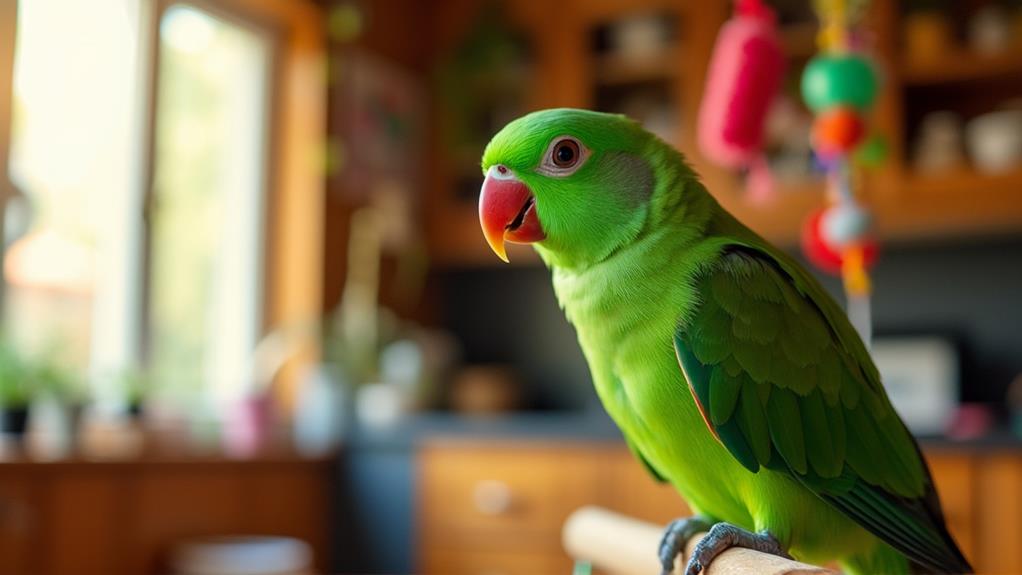
A Green-Cheeked Conure can make a great pet for those ready to commit to its social and playful nature. They form strong bonds with families and thrive with regular interaction. They're quieter than other conure species and display affectionate behavior, making them suitable for smaller homes. However, they can be messy eaters and might show bossy tendencies if not properly trained. Daily interaction is essential to prevent boredom. You'll need to manage their vocalizations and dietary requirements, along with regular vet check-ups. If you're inquisitive about having such a lively companion, investigate further to deepen your understanding.
Key Takeaways
- Green-Cheeked Conures are affectionate, fostering strong bonds with owners and are quieter than other conure species.
- They require daily interaction to prevent boredom and potential behavioral issues.
- Their diet consists mainly of high-quality pellets, fruits, and vegetables, avoiding harmful foods like chocolate and avocado.
- Green-Cheeked Conures are entertaining and trainable but can exhibit bossy behavior without consistent training.
- Owning one involves financial commitment, including initial setup costs and ongoing expenses for care and maintenance.
Species Overview
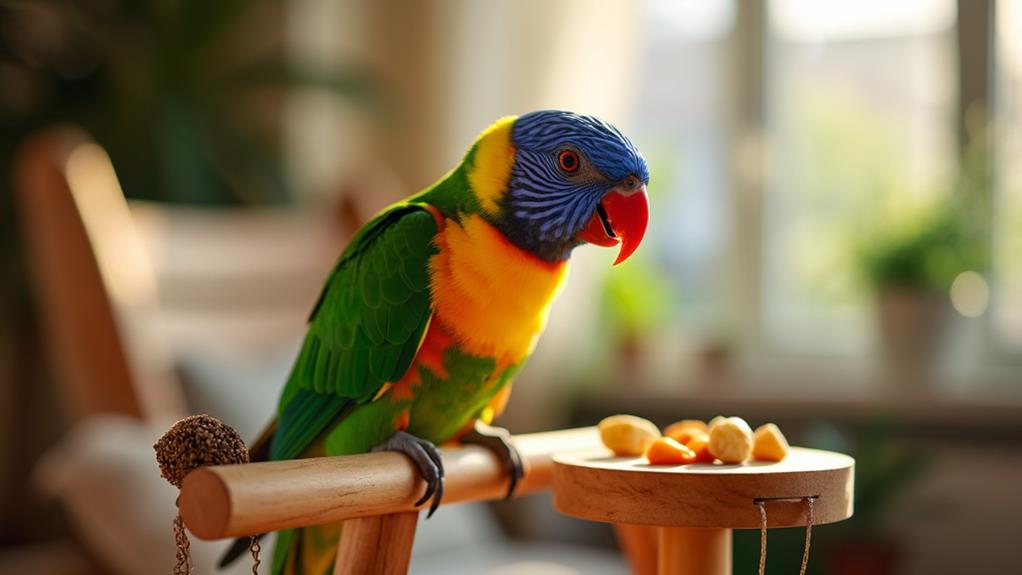
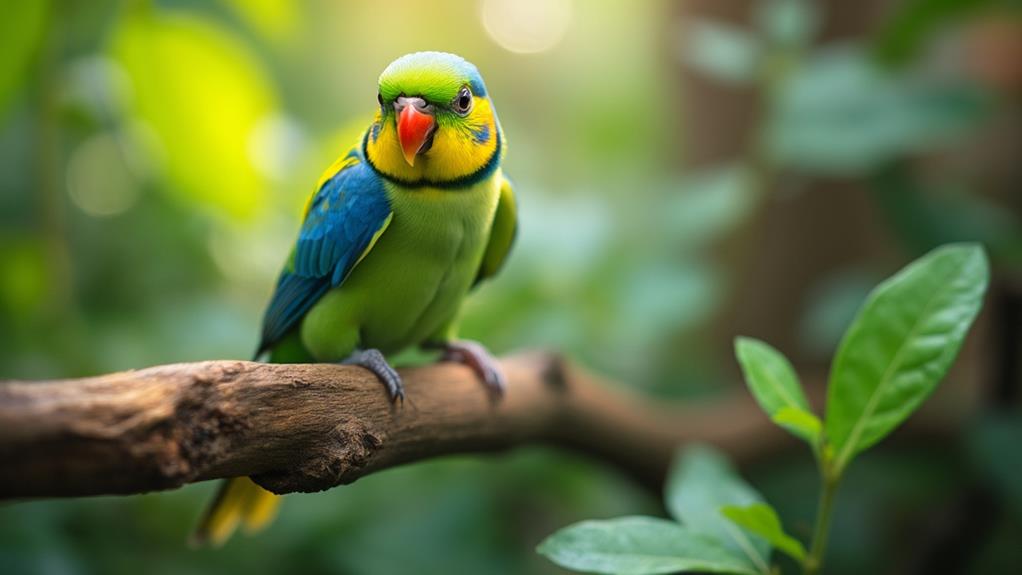
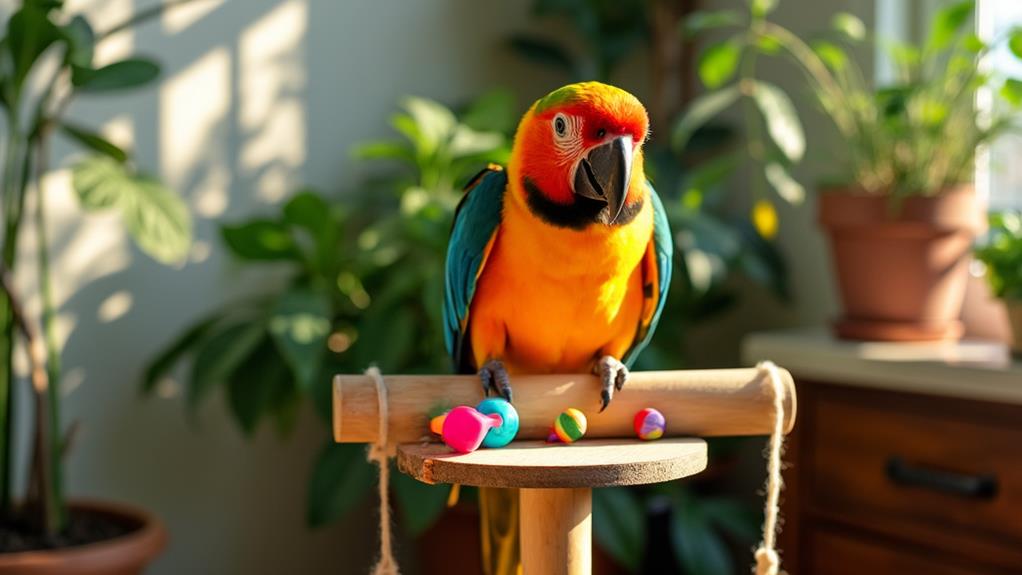
Green-cheeked conures, scientifically known as Pyrrhura molinae, are small yet lively parrots that captivate pet enthusiasts with their colorful plumage and engaging personalities. These pet birds typically measure around 10 inches and weigh between 2 to 3 ounces (60-80 grams), making them a manageable size for many bird lovers. Their striking plumage, mainly green adorned with accents of blue, yellow, and red, adds an aesthetic appeal that can't be overlooked.
As social birds, green-cheeked conures thrive in interactive environments. Their playful and affectionate nature makes them a joy to have around, but it's essential to understand that they require daily social interaction and mental stimulation. These birds aren't just pretty to look at; they need engagement to maintain their happiness and health.
With proper care, green-cheeked conures can live over 30 years, although their average lifespan is around 10 to 15 years. This longevity underscores the commitment required to keep them as pets. They're more than just decorative; they're companions that can brighten your life if you're ready to meet their needs. Consider their interactive nature and the effort needed to provide adequate mental stimulation before welcoming one into your home.
Native Habitat
Understanding where your green-cheeked conure comes from can improve your experience as a pet owner. These lively birds hail from the lush forests and woodlands of Brazil, Bolivia, Argentina, and Paraguay. Their native habitat is characterized by a rich diversity of food sources, like fruits and seeds, which are vital to their wild diet. As you care for your conure, recognizing these natural preferences can help you provide a more suitable environment and diet.
Green-cheeked conures exhibit a strong social nature, typically living in flocks of 10 to 20 birds. This flock structure offers them safety and constant interaction, fundamental aspects of their daily life. By acknowledging this, you can better appreciate their need for social engagement and companionship. In the wild, these birds spend much of their time at treetop levels, foraging for food and participating in social behaviors. Creating opportunities for similar activities at home can improve their well-being.
Unfortunately, their natural habitat faces threats from deforestation and habitat loss, leading to significant conservation concerns. Understanding these challenges underscores the importance of supporting conservation efforts to protect these magnificent birds and their native environments.
Temperament Traits
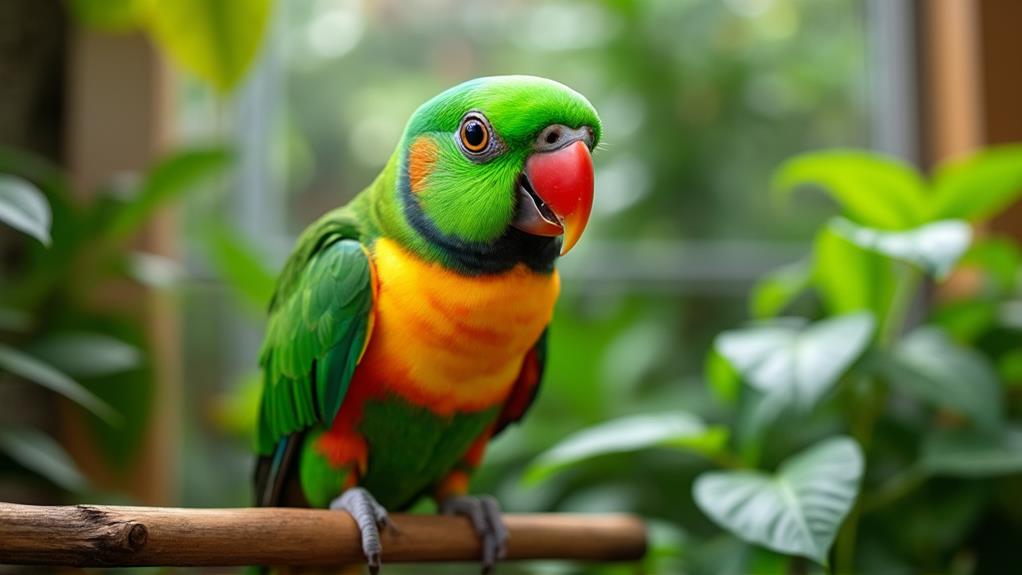
When you bring a green-cheeked conure into your home, you're welcoming a friendly companion known for its affectionate temperament. These birds are perfect for families and individuals who appreciate a pet that thrives on social interaction. Green-cheeked conures enjoy playful behavior, often engaging in activities that not only entertain but also strengthen the bond with their owners. They're generally quieter than other conure species, making them more suitable for apartment living, though they can still make loud vocalizations occasionally.
These conures are social creatures and can develop strong attachments to multiple people, provided they're well-socialized from an early stage. Their gentle nature makes them loving companions, but it's essential to keep in mind that they can exhibit bossy behavior if not properly trained. This might include potential biting, especially when they're excited or irritated. Consistent training and socialization are key to preventing such issues and ensuring your conure remains a delightful family member.
In essence, green-cheeked conures offer a blend of friendliness and affection, making them desirable pets. With the right training and social interaction, they become gentle, engaging companions that adapt well to different living situations, including apartments.
Care Needs
Caring for a green-cheeked conure involves meeting their specific needs to assure they thrive as a pet. Initially and foremost, green-cheeked conures require a spacious cage, at least 24x24x36 inches, providing ample room for climbing and playing. This setup helps prevent boredom and keeps them physically active. Furthermore, they need a balanced diet, primarily composed of 60-70% high-quality pellets, complemented by fresh fruits and vegetables. This guarantees they get all the nutrients they need while avoiding obesity.
Socialization is important for green-cheeked conures, so they need 2 to 4 hours of interaction outside the cage daily. This not only strengthens your bond but also prevents boredom-related behavioral issues. Bathing is another significant aspect of their care, as it should be done at least once a week to maintain healthy feathers and enhance their emotional well-being.
Regular veterinary check-ups with an avian veterinarian are fundamental for health monitoring. These visits help catch common issues like feather plucking and respiratory problems early, assuring your conure stays healthy. By addressing these care needs, you'll create a nurturing environment that supports your green-cheeked conure's well-being and happiness.
Dietary Requirements
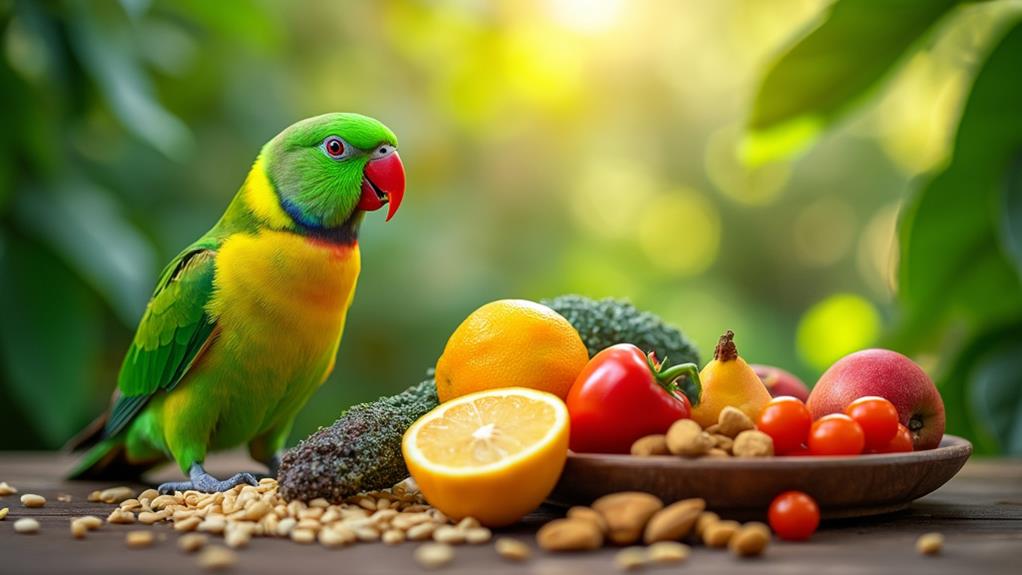
A green-cheeked conure's diet is vital to its health and happiness. Meeting their dietary requirements involves offering a balanced diet that consists of 60-70% high-quality pellets. These pellets are significant as they provide the foundation of their nutritional needs. However, to guarantee nutritional diversity, you should supplement their diet with fresh fruits and vegetables daily. Consider offering apples, bananas, and berries, along with carrots, spinach, and bell peppers. These fresh options provide important vitamins and minerals, contributing to your bird's general well-being.
Keep in mind that certain foods can be harmful to green-cheeked conures. Avoid avocado, chocolate, caffeine, and high-fat or high-sugar foods, as these can lead to serious health issues. By steering clear of these harmful foods, you can help prevent common problems like obesity, which is prevalent among conures. A varied and balanced diet not only aids in obesity prevention but also supports your bird's overall longevity and quality of life.
Don't forget about fresh water, which should always be available. Regularly clean food and water dishes to maintain hygiene and promote your conure's health. This attention to their dietary needs will help guarantee a happy, thriving pet.
Health Considerations
Understanding your green-cheeked conure's diet is just one aspect of guaranteeing their health and happiness. Proper care plays an important role in extending their lifespan, which can range from 10 to 30 years. Regular veterinary check-ups are necessary to catch potential health issues early, such as PDD (Proventricular Dilatation Disease), PBFD (Psittacine Beak and Feather Disease), and respiratory problems. These check-ups provide an opportunity to discuss any concerns you might have and confirm your conure remains in peak health.
A balanced diet is critical to prevent obesity and maintain general well-being. Aim for 60-70% high-quality pellets, supplemented with fresh fruits and vegetables. This not only supports their physical health but also contributes to their emotional well-being. Bathing your conure at least once a week helps maintain their feather condition, which is a significant part of their health.
Monitoring behaviors such as feather plucking can help you identify stressors or underlying health issues. Early detection and intervention can prevent these problems from escalating. Being attentive to their needs and providing a nurturing environment will keep your green-cheeked conure healthy and happy for many years.
Pros of Ownership
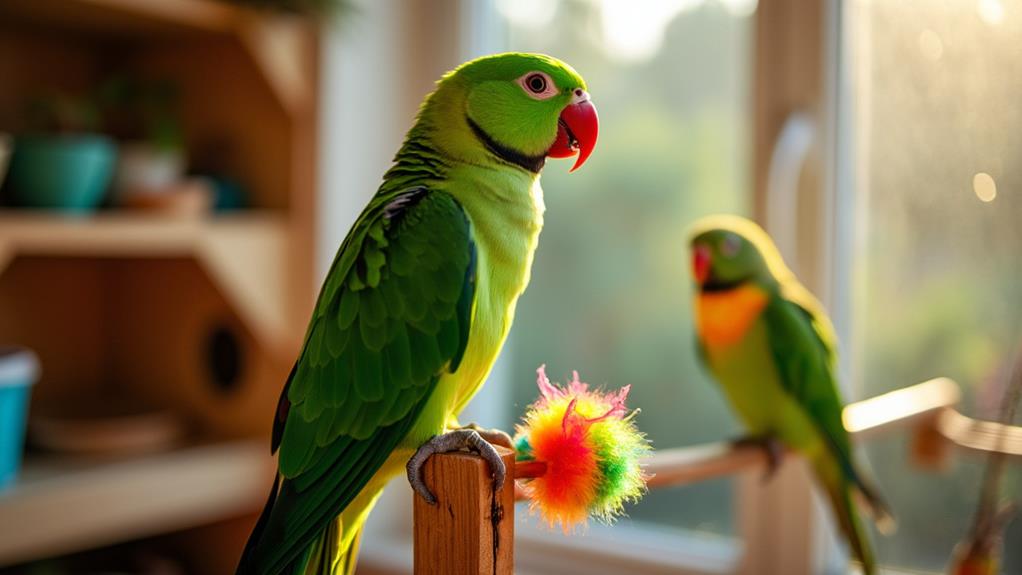
Frequently, green-cheeked conures are praised for their affectionate nature, forming strong bonds with their owners and making them ideal companions for families and individuals. Their friendly disposition guarantees you always have a feathered friend enthusiastic to interact and share affection. As excellent companions, these birds are known to be quieter than other conure species, making them suitable for apartment dwellers or those living in close quarters.
Their playful behavior is one of their standout characteristics. Green-cheeked conures often engage in clownish antics that are both entertaining and endearing. They love to play and investigate, keeping you amused and engaged with their antics. Their compact size, averaging about 10 inches, makes them perfect for smaller living spaces without losing any of the charm or personality larger birds offer.
Training your green-cheeked conure is relatively easy. These birds respond well to positive reinforcement techniques, making them accessible to novice bird owners. You'll find joy in teaching them new tricks and watching them learn.
Here are some pros of owning a green-cheeked conure:
- Affectionate nature
- Quieter than other conures
- Playful and entertaining
- Compact size
- Easy to train with positive reinforcement
Cons of Ownership
Owning a green-cheeked conure can come with its share of challenges. These birds are notorious for being messy eaters. You'll frequently find seeds and food debris scattered around their cage, requiring constant cleaning to maintain a tidy living space. Another potential issue is their bossy behavior. If not properly trained, they may become demanding or even clash with other pets and family members.
While green-cheeked conures are quieter than other conure species, they're not exactly silent. Their loud vocalizations can still disrupt a peaceful household, especially if you're not prepared for their occasional screeches. Furthermore, they require daily interaction and socialization to prevent boredom and behavioral issues. This need for attention translates into a significant time commitment, which might be challenging if you have a busy lifestyle.
In addition, green-cheeked conures have limited talking abilities and are not highly vocal compared to other birds. If you're hoping for a pet that engages in extensive speech, you might find this aspect disappointing. All in all, while they can be delightful companions, it's essential to take these cons into account to guarantee you're ready for the commitment involved in caring for a green-cheeked conure.
Training Tips
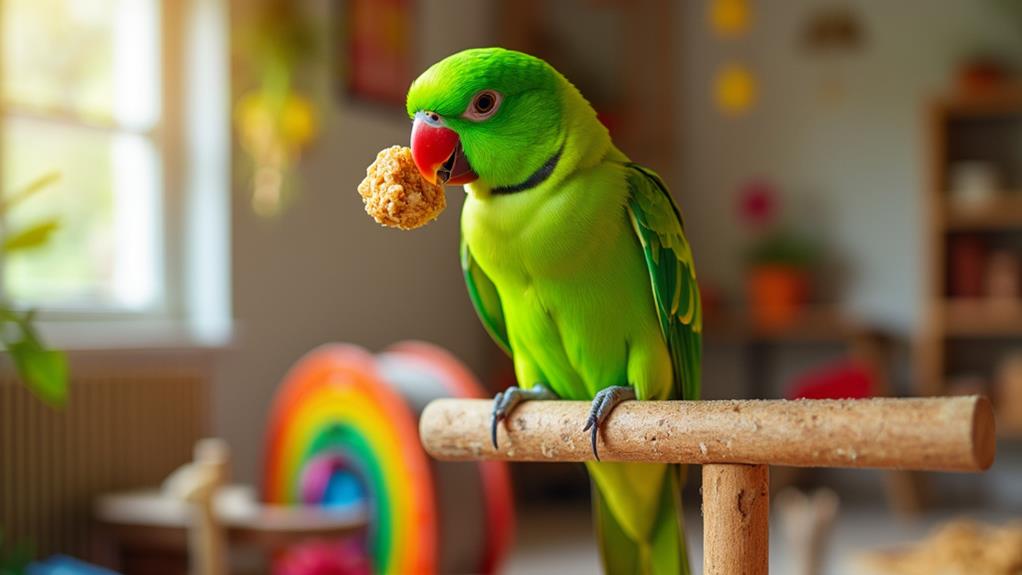
Training your green-cheeked conure effectively can lead to a rewarding relationship with your feathered friend. When you start at a young stage, you can establish positive behaviors and minimize issues like biting or aggression as they grow. By employing positive reinforcement, such as treats and praise, you encourage your conure to repeat desirable behaviors. Consistency is key to reinforcing what they learn.
Incorporating clicker training can make communication during sessions clearer, helping your conure link specific behaviors to rewards. Regular interaction and socialization with diverse people and environments are vital. This helps your conure adapt to new situations without fear or anxiety.
Remember, patience is fundamental. Training takes time, and regular practice will help your conure learn basic commands and tricks efficiently. Here are some tips to improve your training sessions:
- Start young: Establish good behaviors early.
- Use positive reinforcement: Treats and praise go a long way.
- Incorporate clicker training: Clear communication aids learning.
- Encourage socialization: Expose them to different people and settings.
- Be patient and consistent: Engagement over time leads to success.
With these tips, you'll cultivate a strong bond with your little companion.
Financial Commitment
When considering a green-cheeked conure as a pet, it's essential to evaluate the financial commitment involved. The initial cost of purchasing your conure can range from £100 to £500. This varies based on factors like age, coloration, and training. Choosing to buy from reputable breeders or trusted retailers can impact these costs but guarantees the bird's health and well-being.
Beyond the initial purchase, you'll need to budget for ongoing monthly expenses. These range from £50 to £100 and cover necessities like food, toys, and veterinary care. Regular vet visits are significant, and having pet insurance can help manage costs associated with unexpected health emergencies. Over time, these expenses add up, so it's wise to plan for long-term financial commitment.
You'll also need to invest in a proper cage setup and enrichment activities. A safe, stimulating environment is crucial for your conure's health and happiness. Consider costs for cage maintenance, perches, and interactive toys to keep your feathered friend engaged. By understanding and preparing for these financial commitments, you can guarantee a fulfilling and healthy life for your green-cheeked conure.