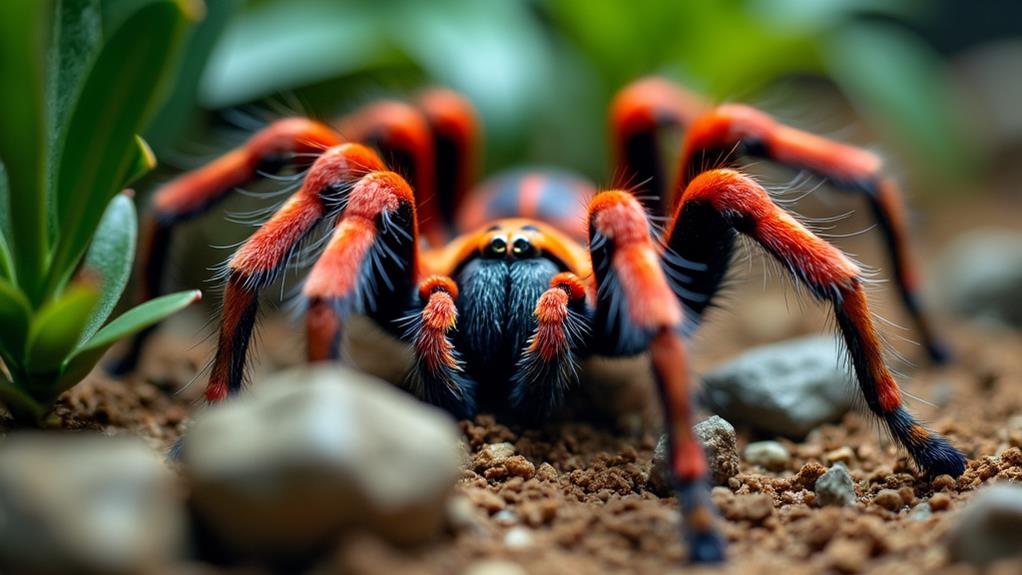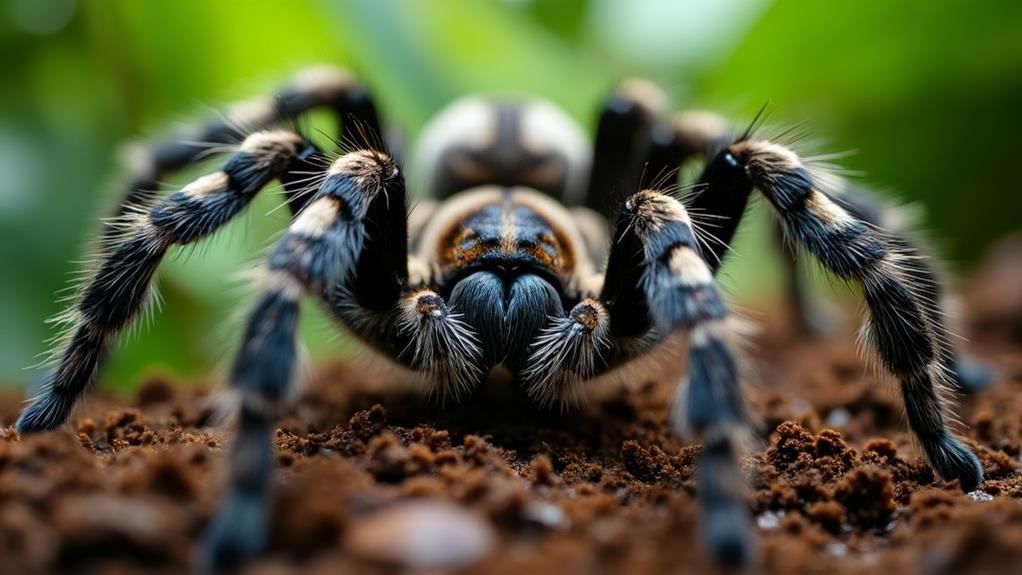
Is a Desert Blonde Tarantula a Good Pet? A Beginner’s Guide
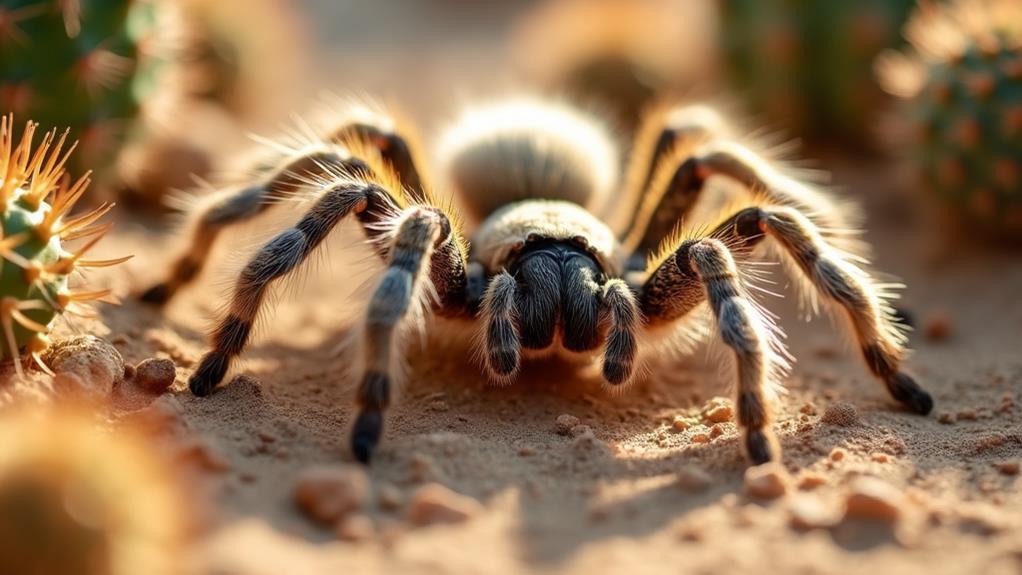
The Desert Blonde Tarantula is an excellent pet for beginners due to its docile nature and minimal maintenance needs. You'll appreciate its manageable care requirements, such as a secure 5 to 10-gallon enclosure and a diet of live insects like crickets and mealworms. These tarantulas are fascinating to watch and require stable temperatures and humidity levels, making them a unique pet with a bit of setup. While they aren't the cuddliest pets, they're suitable for gentle handling and offer a long-term companionship experience due to their 30-year lifespan potential. Ready to learn more about their care and setup?
Key Takeaways
- Desert Blonde Tarantulas are generally docile, making them suitable for novice pet owners.
- They require a secure, temperature-controlled enclosure with proper humidity levels.
- Their diet consists of live insects, needing careful management and gut-loading for nutrition.
- They have a long lifespan, with females living up to 30 years, requiring long-term commitment.
- Initial setup costs and species-specific knowledge are essential for successful pet ownership.
Understanding the Desert Blonde Tarantula
When you consider keeping a Desert Blonde Tarantula as a pet, it is vital to understand its basic characteristics and needs. Scientifically known as Aphonopelma chalcodes, this tarantula is a terrestrial burrowing species native to the deserts of the Southwestern U.S. and parts of Mexico. With a leg span reaching about 5 to 6 inches, this species is known for its generally docile temperament, making it a good beginner option for those new to pet tarantulas.
Caring for the Desert Blonde Tarantula involves understanding its specific care requirements. You'll need to maintain a habitat with a temperature range of 75 to 80 degrees Fahrenheit and a humidity level of 65 to 70 percent. Providing a secure enclosure with ample space for burrowing is fundamental, as these tarantulas naturally exhibit this behavior in their desert environments.
Feeding your tarantula consists of offering live prey such as crickets and roaches. Adults typically eat once or twice a week, while juveniles may need more frequent meals. By ensuring these conditions are met, you create a comfortable environment where your Desert Blonde Tarantula can thrive, making it an intriguing and manageable pet.
Assessing Pet Suitability
Having grasped the basic needs and characteristics of the Desert Blonde Tarantula, you might wonder if it's the right pet for you. This beginner species is known for its docile temperament, making it a suitable choice if you're new to tarantula care. However, owning one is a long-term commitment, especially since females can live for up to 30 years. If you're ready to dedicate time and effort to their care, this tarantula could be a rewarding companion.
You'll need to provide a secure enclosure, ideally between 5 to 10 gallons, ensuring it's temperature-controlled (75-80°F) and maintains proper humidity levels (65-70%). This environment is essential for your tarantula's health. Feeding them involves a steady supply of live insects like crickets and mealworms, so be prepared to manage this aspect of their diet regularly.
While the Desert Blonde Tarantula allows for gentle handling, remember they aren't cuddly pets. It's important to handle them carefully and sparingly, respecting their solitary nature. Before you commit, consider if you're comfortable with the responsibility involved, including understanding their specific needs and ensuring their wellbeing throughout their lifespan.
Behavior and Temperament
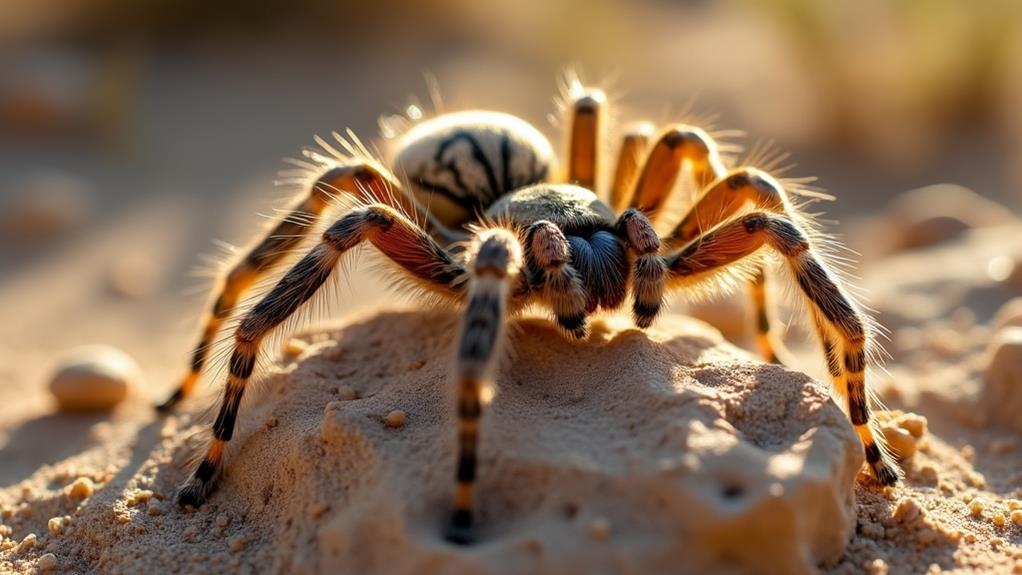
The Desert Blonde Tarantula, known for its docile nature, is a popular choice for those new to tarantula care. Its docile temperament makes it appealing to beginners who may be cautious about handling these intriguing pets. While they can be tolerant of gentle handling, it's vital to handle them carefully to avoid triggering their defensive instincts. If they feel threatened, they might react with a venomous bite or by flicking barbed hairs, which can irritate your skin.
These tarantulas are primarily nocturnal and naturally lead solitary lives. They often display territorial behavior, so it's best not to house multiple Desert Blonde Tarantulas together. This solitary nature, combined with their docile temperament, allows them to thrive as individual pets in the pet trade. However, keep in mind that individual temperament can vary. Some tarantulas may be more tolerant of handling than others, so observe their behavior closely to gauge their comfort level.
Understanding their behavior and respecting their space are essential to maintaining a healthy bond with your Desert Blonde Tarantula. By doing so, you'll guarantee that both you and your arachnid friend enjoy a safe and fulfilling companionship.
Housing and Environment Needs
To guarantee your Desert Blonde Tarantula feels secure and content, you'll need to create a habitat that mirrors its natural environment. Start by selecting a tank size of 5 to 10 gallons. Verify the tank is three times your tarantula's leg span in length, two to three times its width, and about one foot in height. This provides ample space for exploration and exercise while confirming safety.
Maintain the temperature between 75 and 80 degrees Fahrenheit. Your tarantula can tolerate some temperature fluctuations, but consistency is key for ideal pet care. Humidity should be kept at 65 to 70 percent to mimic its natural habitat. Using a hydrometer will help you monitor and maintain these levels accurately.
For the substrate, use three or more inches of peat moss, soil, or vermiculite. This not only supports their burrowing tendencies but also needs changing every four to six months to keep the environment clean. Adding shelter is vital; incorporate cork bark, hollow logs, or clay pots to provide hiding spots. These elements are necessary for their well-being, allowing your Desert Blonde Tarantula to exhibit natural behaviors and thrive in its new home.
Diet and Nutrition Basics
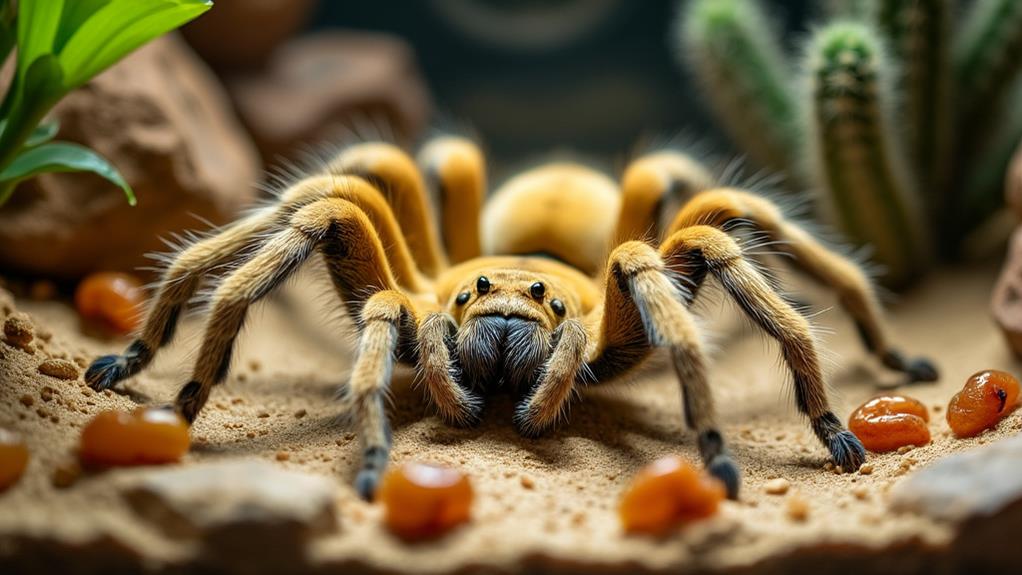
When caring for a Desert Blonde Tarantula, understanding its dietary needs is crucial for its health and well-being. These fascinating creatures thrive on a diet primarily consisting of live prey like crickets, mealworms, and roaches. Make certain the prey is smaller than your tarantula to guarantee safe and ideal feeding. For adults, feeding once or twice a week is sufficient, whereas juveniles require more frequent meals, about every day or two, to support their growth and nutrition needs.
Gut-loading crickets with nutritious foods before offering them to your tarantula is a great way to improve the nutritional value of their diet. This guarantees they get the vital nutrients they need for a healthy life. Moreover, always provide a shallow dish of fresh water in their habitat, renewing it daily to prevent any drowning hazards. It's a significant part of their care routine.
Don't forget to remove any uneaten food after 24 hours. This practice minimizes stress and helps maintain a clean habitat, ensuring your tarantula stays comfortable and stress-free. By meeting these dietary and nutritional needs, you'll help your Desert Blonde Tarantula thrive in its home environment.
Health Maintenance Tips
Caring for your Desert Blonde Tarantula involves several key health maintenance tips to guarantee it thrives. Initially, closely monitor the humidity levels, aiming for 65 to 70 percent. A hydrometer will help you achieve this balance, vital for preventing dehydration. Furthermore, make sure your tarantula's environment remains clean by changing the substrate every four to six months. Use materials like peat moss, soil, or vermiculite to provide ideal burrowing conditions and a clean environment.
Incorporate a shallow water dish in the enclosure, refilling it daily with fresh water. This practice helps prevent dehydration and reduces the risk of contamination. Keep in mind the molting process is a significant period for your tarantula. It may appear lethargic and should not be handled during this time to promote healthy growth.
Lastly, remove any uneaten prey within 24 hours. This step is fundamental for reducing stress and preventing bacterial build-up.
- Monitor humidity levels: Aim for 65-70% to avoid dehydration.
- Change substrate regularly: Every 4-6 months for a clean environment.
- Provide a fresh water dish: Refill daily and keep shallow.
- Observe molting process: Avoid handling during this time.
- Remove uneaten prey: Do so within 24 hours to prevent bacteria.
Pros and Cons of Ownership
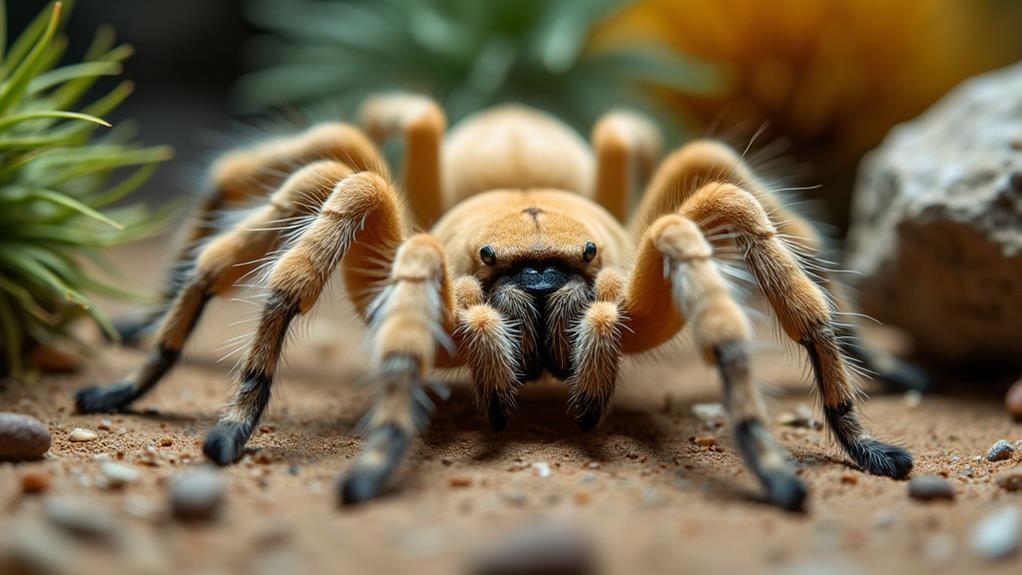
Owning a Desert Blonde Tarantula can be a rewarding experience, especially for those new to keeping arachnids. These tarantulas, known for their docile nature, are an excellent choice for novices. They require minimal maintenance, which makes them manageable for inexperienced owners. Their solitary nature means they thrive alone, eliminating the need for interaction with other pets, simplifying ownership.
One of the significant pros is their impressive lifespan; females can live up to 30 years, offering long-term companionship compared to many other pets. However, with this long lifespan comes the responsibility of meeting their specific habitat conditions. They require a temperature range of 75-80°F and humidity levels of 65-70%. For beginners, maintaining these conditions might necessitate supplementary equipment, which could be a con.
While they are generally gentle, Desert Blonde Tarantulas can bite if threatened. Although their venom is mild, it can still cause irritation, so handling them with care is essential. Weighing these pros and cons will help you decide if this fascinating arachnid fits your lifestyle, offering a unique and rewarding pet experience.
Related posts