Irish Wolfhound: the Giant Hunting Dog With a Gentle Heart
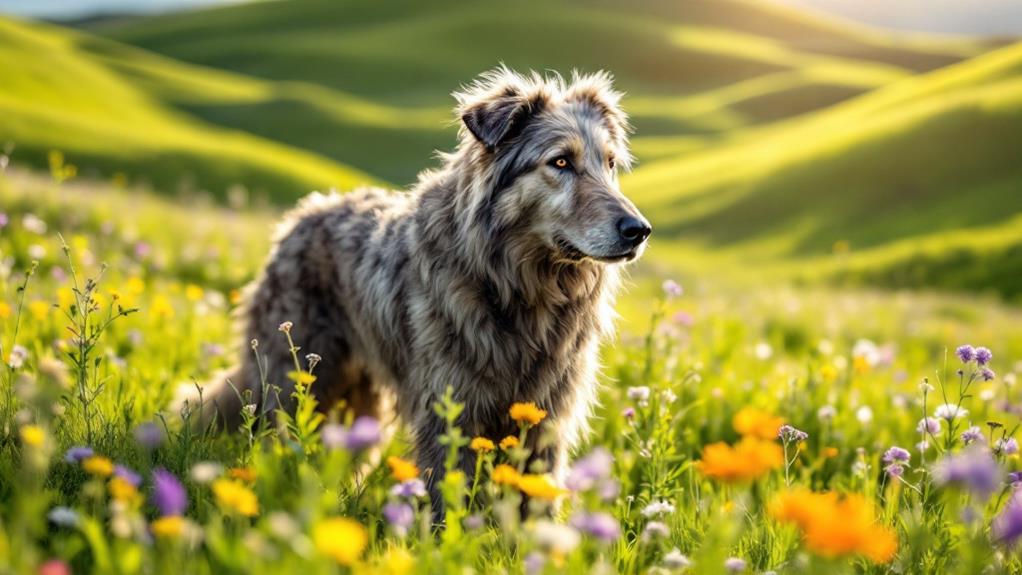
Imagine a dog that can reach up to 7 feet on its hind legs, yet still has a heart as gentle as any family pet. That's the Irish Wolfhound for you. Known as the tallest dog breed, these gentle giants were historically bred in Ireland to hunt wolves and deer. They have a gentle temperament and are especially patient with children. Despite their large size, they require moderate exercise and are prone to specific health issues like heart disease. Owning one demands understanding their care needs. There's much more to uncover about these remarkable dogs and their fascinating history.
Unmatched Size and Strength
When you initially encounter an Irish Wolfhound, you can't help but be awed by its immense size and strength. As the tallest dog breed, males often stand at least 32 inches tall, and when they rise on their hind legs, they can reach an impressive 7 feet. These gentle giants are not just about unmatched size; their powerful limbs and strong build make them effective hunters. Historically, they've been used to track and take down large game like wolves and deer, showcasing their prowess and agility despite their massive stature.
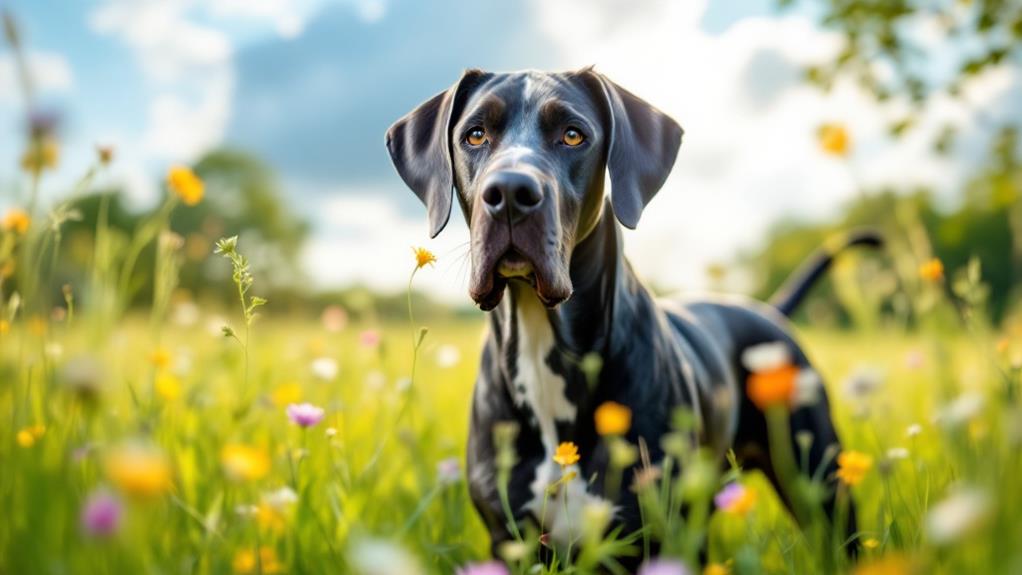
Yet, don't be fooled by their formidable appearance. Irish Wolfhounds are known for their gentle temperament and affectionate nature. They might be large dogs, but they are also tender companions. Their calm demeanor makes them more of a loving presence than an aggressive protector. Their double coat, featuring a soft undercoat and a wiry overcoat, provides ample protection against harsh weather, making them perfect outdoor working dogs. Regardless if they're serving as affectionate companions or showcasing their hunting skills, the Irish Wolfhound's combination of size, strength, and gentleness truly sets them apart as remarkable canines.
Ancient Origins and Legacy
Tracing back to the 6th century in Gaelic Ireland, the Irish Wolfhound has a storied history as a large, rough-coated greyhound known as the "cu." Known for their fierce hunting abilities, these dogs weren't just companions—they were vital to hunting wolves, wild boar, and deer, playing a significant role in ancient Irish culture. As a symbol of strength and loyalty, they were valued by noble families and even crossed borders as gifts to Roman dignitaries, showcasing their esteemed status.
However, with the extinction of wolves in Ireland by the 1700s, the need for these hunting dogs dwindled, leading to a sharp decline in their population. By the 1800s, the Irish Wolfhound teetered on the brink of extinction, their ancient origins nearly lost. Enter Capt. George Augustus Graham, whose dedication in the late 19th century sparked a revival. By crossbreeding with Scottish Deerhounds, he reestablished the breed, forming the Irish Wolfhound Club in 1885 to set breed standards.
Today, the Irish Wolfhound stands as a gentle giant, a reflection of its enduring legacy and the efforts to preserve its rich history in Gaelic Ireland.
Understanding Their Temperament
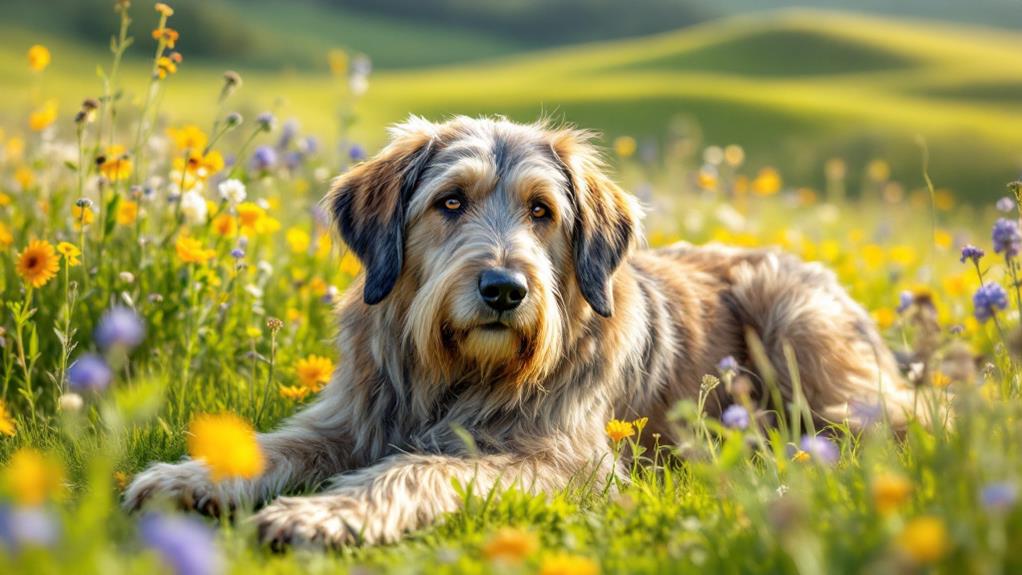
To truly appreciate the Irish Wolfhound, it's essential to understand their temperament, which is a fascinating blend of gentleness and loyalty. Known as gentle giants, these dogs are more than just their impressive size. They embody a loyal temperament that makes them affectionate companions, thriving on family interaction. They're not just good with families; they excel at it, showing remarkable patience with children. However, due to their large size, it's wise to supervise their playtime with little ones to guarantee safety for everyone involved.
Despite their calm nature, Irish Wolfhounds have a strong prey drive. This means you should be attentive when they're around small animals and maintain secure fencing when letting them off-leash. Their natural hunting instincts are strong, and awareness is key to preventing any mishaps.
While they enjoy lounging, these dogs aren't couch potatoes. They have moderate energy levels and need daily exercise to stay healthy and happy. A brisk walk or a romp in the yard can do wonders for their well-being. Remember, an exercised Wolfhound is a content one, emphasizing their role as loving, gentle giants in your home.
Common Health Challenges
Some health challenges are often associated with the majestic Irish Wolfhound. One of the most significant concerns is heart disease, particularly dilated cardiomyopathy. This condition can lead to congestive heart failure and arrhythmias, posing a serious risk to your dog's health. Alongside heart issues, skeletal problems are prevalent too. Young, rapidly growing Irish Wolfhounds may experience osteochondritis dissecans, which causes limping and pain, especially when touched.
As they mature, joint conditions become more common. Around 20% of Irish Wolfhounds over eight years old show rear-end weakness due to arthritis or other joint issues. Osteosarcoma, a type of bone cancer, is another severe concern for this breed. It often presents itself through limping or noticeable lumps on the limbs, and unfortunately, it's a leading cause of death.
Irish Wolfhounds also face the risk of bloat, or gastric dilatation-volvulus, a life-threatening condition that causes extreme stomach swelling. It requires immediate veterinary intervention to prevent severe complications or even death. Understanding these common health challenges helps you prepare and provide the best care for your gentle giant, ensuring they lead a healthy and fulfilling life.
Essential Care and Nutrition
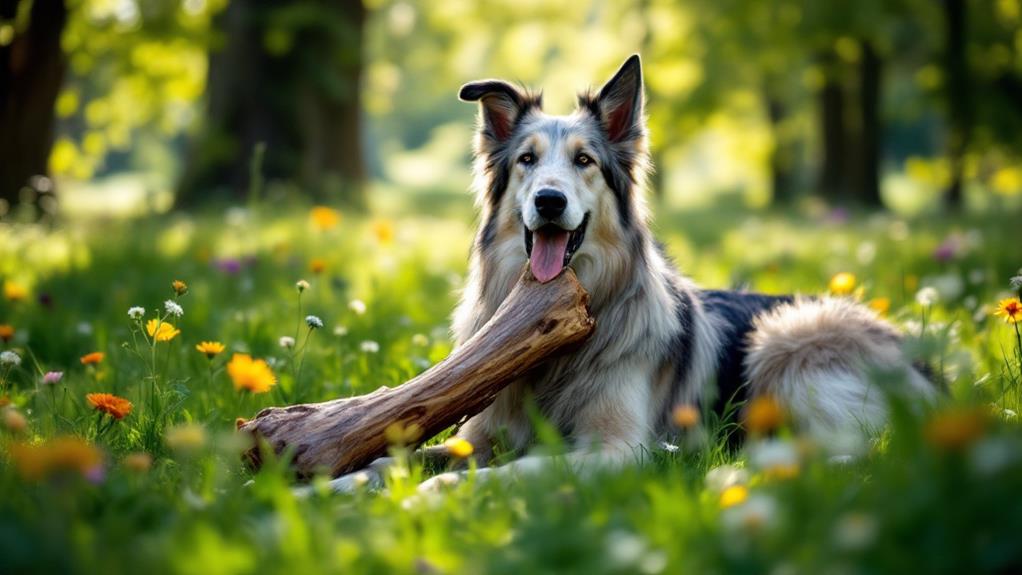
When it comes to caring for your Irish Wolfhound, a tailored approach to nutrition and grooming is fundamental. This gentle giant needs special large breed dog food, adjusted for each life stage, to support their growth and health. Regular grooming is necessary to maintain their double coat. Weekly brushing is important, as it helps manage their coat and keeps shedding minimal. Don't forget their nails — regular trimming guarantees their well-being.
Exercise is significant for your Irish Wolfhound. They thrive on daily moderate exercise like walks and outdoor play. However, avoid strenuous activities around mealtime to prevent bloat, a common issue in large breeds. Dental care should not be overlooked. Regular brushing, ideally daily or several times a week, helps combat gum disease, which is prevalent in dogs.
Annual veterinary checkups are essential, especially for monitoring heart health. Given their predisposition to heart problems, EKGs are recommended. Here's how you can visualize their care routine:
- Nutrition: Provide tailored large breed dog food.
- Grooming and Dental Care: Weekly brushing and regular dental hygiene.
- Exercise and Veterinary Care: Daily exercise and annual health checkups.
Notable Historical Mentions
The Irish Wolfhound's storied past dates back to 391 A.D., when it was initially mentioned in historical texts as a noble companion and hunting dog in ancient Rome. This giant breed was admired for its strength and gentle demeanor, making it a favorite among royalty and noble families. High King Cormac mac Airt's legendary army of 300 Irish Wolfhounds underscores their critical roles as guardians and warriors in Irish folklore.
Throughout history, Irish Wolfhounds were gifted to prominent figures, symbolizing their esteemed status in society. However, the breed's glory days faced a turning point when the last wolf in Ireland was killed in 1786. With their primary purpose gone, the Irish Wolfhound population plummeted, teetering on the brink of extinction by the 1800s.
Thankfully, the breed's revival owes much to Captain George Augustus Graham in the late 19th century. His dedication to restoring the Irish Wolfhound's original traits involved crossbreeding with other large dogs, ensuring these gentle giants regained their place in history. Today, they stand not only as majestic reminders of the past but as cherished companions with a legacy that spans centuries.