Important Safety Precautions to Take When Riding a Horse
When riding a horse, always wear proper gear like a safety-certified helmet and sturdy boots with a small heel. Check your saddle, bridle, and all equipment for wear or damage before mounting. Understanding horse behavior is crucial, so learn to read body language and establish a calm leadership role. Choose a horse suited to your experience level, and consider its temperament and size compatibility. Warm up both yourself and your horse with stretches and gentle exercises. Keep safe distances from other riders and choose trails wisely. Stay alert and prepare for emergencies. There's more to uncover for safe riding adventures.
Wear Proper Riding Gear
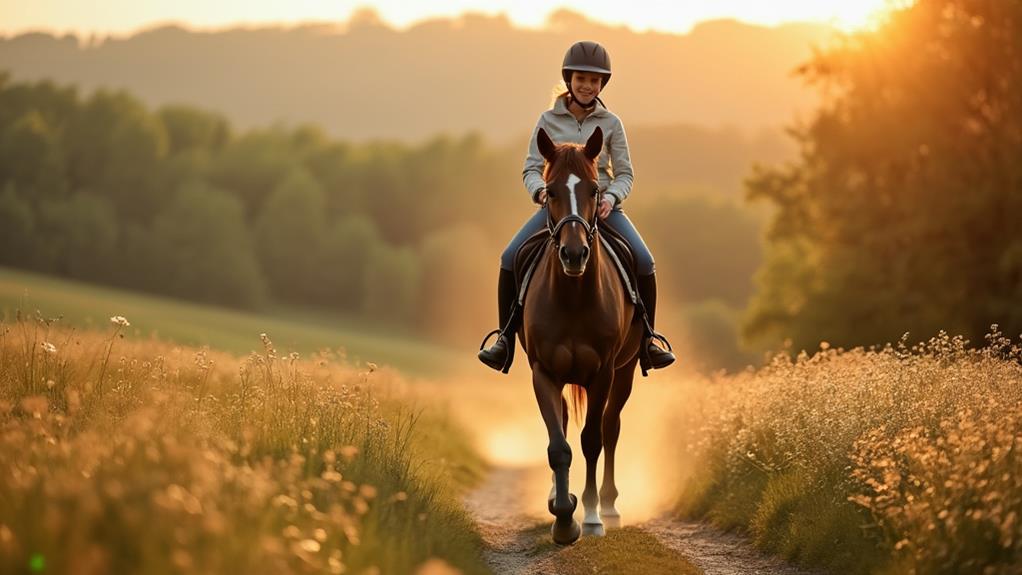
When you're preparing to ride a horse, wearing the right gear is crucial for your safety and comfort. Start with a helmet, which is non-negotiable for protecting your head from potential falls. There are different helmet types to take into account, such as velvet helmets for traditional events or sleek, ventilated models for everyday riding. Choose one that fits snugly and meets safety standards. Don't compromise on quality regarding head protection.
Next, focus on your feet. Riding boots aren't just about looking the part; they provide necessary grip and support. Opt for boots with a small heel to prevent your foot from slipping through the stirrup. Paddock boots are great for beginners and come with laces or zippers. Tall boots, like field or dress boots, offer more leg support and are often used in shows. Make sure your boots fit comfortably, allowing for easy ankle movement.
Equipping yourself with the right gear minimizes risks and improves your riding experience. By investing in proper helmet types and riding boots, you're prioritizing your safety while ensuring a more comfortable, controlled ride.
Check Your Equipment
After confirming you're wearing the proper riding gear, it's vital to check your equipment before hopping on the saddle. A thorough saddle inspection is fundamental to guarantee your ride is safe and comfortable. Start by examining the saddle for any signs of wear or damage. Look for frayed stitching or cracked leather, which could compromise your stability. Make certain the stirrups are secure and adjusted to your height, allowing for proper balance and control.
Next, focus on the bridle fitting. A well-fitted bridle guarantees effective communication with your horse. Check that the bit is comfortable and correctly positioned in the horse's mouth, and confirm that the straps aren't twisted or too tight. A bridle that's improperly fitted can cause discomfort and lead to unresponsive or erratic behavior from your horse.
To make certain everything is in place, always:
- Inspect the girth: Verify it's tight enough to keep the saddle from slipping but not so tight that it causes discomfort.
- Check the reins: Ensure they're not frayed and are the right length for your control.
- Examine the buckles: Confirm all buckles are fastened securely and functioning properly.
Taking these steps can prevent potential accidents and guarantee a safe ride.
Understand Horse Behavior
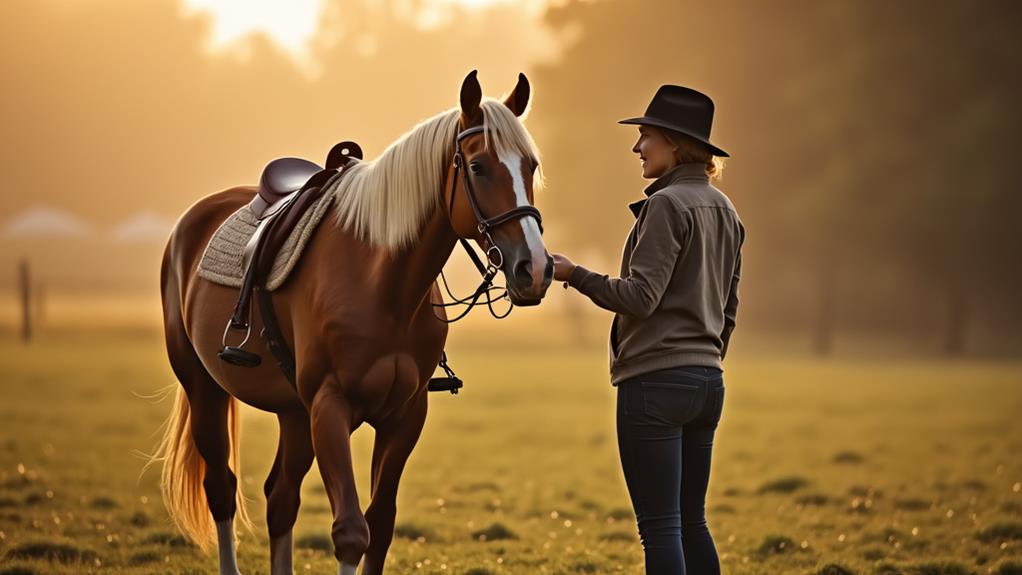
Understanding horse behavior is crucial for any rider aiming for a safe and enjoyable experience. Horses are prey animals with strong instincts, and recognizing their body language can help you anticipate their actions. Pay attention to their ears, eyes, and tail. Ears pinned back might indicate irritation or fear, while forward-facing ears usually show interest. A swishing tail could mean annoyance, whereas a relaxed tail often signifies calmness. Observing these signals allows you to respond appropriately, preventing potential accidents.
Horses naturally live in herds, and their behavior reflects these herd dynamics. They rely on social structures and tend to follow a leader. When riding, establish yourself as a confident and calm leader. Consistency in your actions and commands helps build trust, ensuring the horse feels secure in your presence. Be mindful of their need for companionship; sudden solitude might cause anxiety or stress.
Practice patience and empathy when interacting with horses. Approach them with steady movements and a soothing voice. Avoid sudden actions that could startle them. Understanding these behavioral cues and herd dynamics will empower you to create a positive riding experience, enhancing safety for both you and the horse.
Choose the Right Horse
Selecting the right horse is vital for a safe and enjoyable riding experience, especially for beginners. When considering horse selection criteria, focus on temperament, size, and training level. These factors can greatly impact your riding expedition. As a beginner, you'll want a horse that's calm and well-trained. A gentle disposition is fundamental, as it helps build your confidence and guarantees a smoother learning curve.
Consider the following beginner rider considerations when choosing a horse:
- Temperament: Opt for a horse known for being patient and easygoing. Avoid spirited or high-strung horses that might be challenging for inexperienced riders.
- Size: Verify the horse's size matches your height and weight. A horse that's too large can be intimidating, while one too small might not be comfortable or safe.
- Training Level: Look for a horse with a solid foundation in training. A well-trained horse can help guide you, making the learning process more enjoyable.
Warm Up Before Riding

Warming up before riding is crucial for both you and your horse. It guarantees you're both physically prepared, reducing the risk of injury and enhancing your performance. Start with stretching techniques to loosen up your muscles. Focus on key areas like your legs, arms, and back. Simple stretches, like leg swings and arm circles, can make a big difference. These will help you maintain balance and control while riding.
Your pre-ride routine should also include some dynamic movements to get your blood flowing. Consider adding light jogging or brisk walking to increase your heart rate and improve circulation. This helps prepare your body for the physical demands of riding.
Don't forget your horse in this routine. Begin with gentle walks, gradually increasing the pace to get their muscles warmed up. Incorporate some circles and figure-eights to verify your horse is flexible and responsive. This not only warms up their muscles but also helps establish a connection between you and your horse, setting the tone for a successful ride. Remember, a well-executed warm-up benefits both you and your horse, making your riding experience safer and more enjoyable.
Maintain a Safe Distance
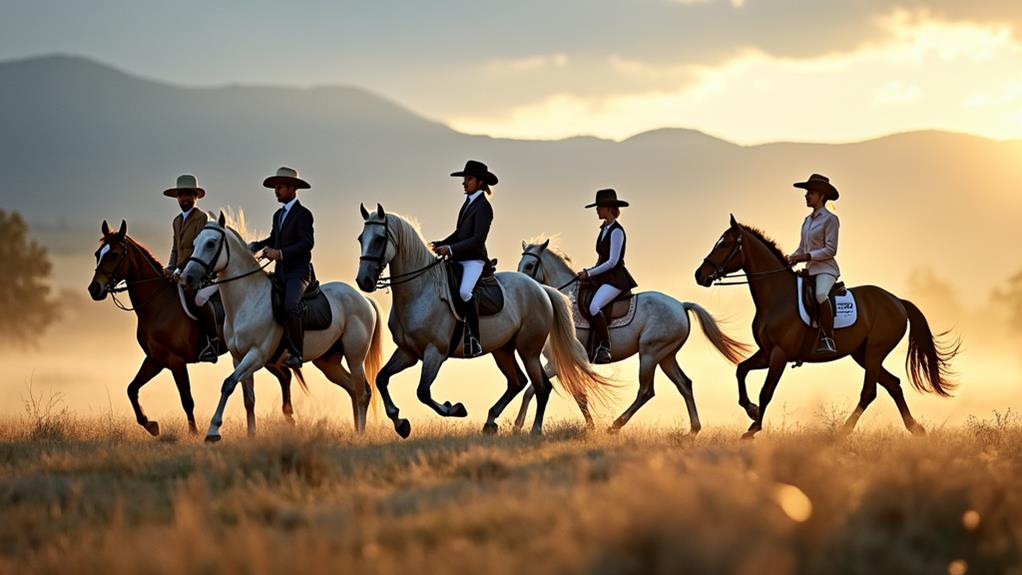
Frequently, maintaining a safe distance while riding not only protects you but also the horse. When you're riding in a group or near others, horse spacing is crucial. It prevents accidents and guarantees that each horse moves freely without feeling crowded. Distance awareness is key—knowing how much space to keep between you and other riders helps prevent unexpected kicks or collisions.
Here are some tips to help you maintain a safe distance:
- Observe the horse's body language: Pay attention to your horse's behavior. If it's showing signs of discomfort or stress, increase the gap between it and others.
- Practice consistent spacing: Maintain a consistent distance, usually about one horse length, between you and the horse ahead. This gives both you and your horse enough time to react to any sudden movements.
- Communicate with fellow riders: Let others know your intentions, especially when slowing down or changing direction. This communication helps everyone maintain the right horse spacing.
Ride in Safe Areas
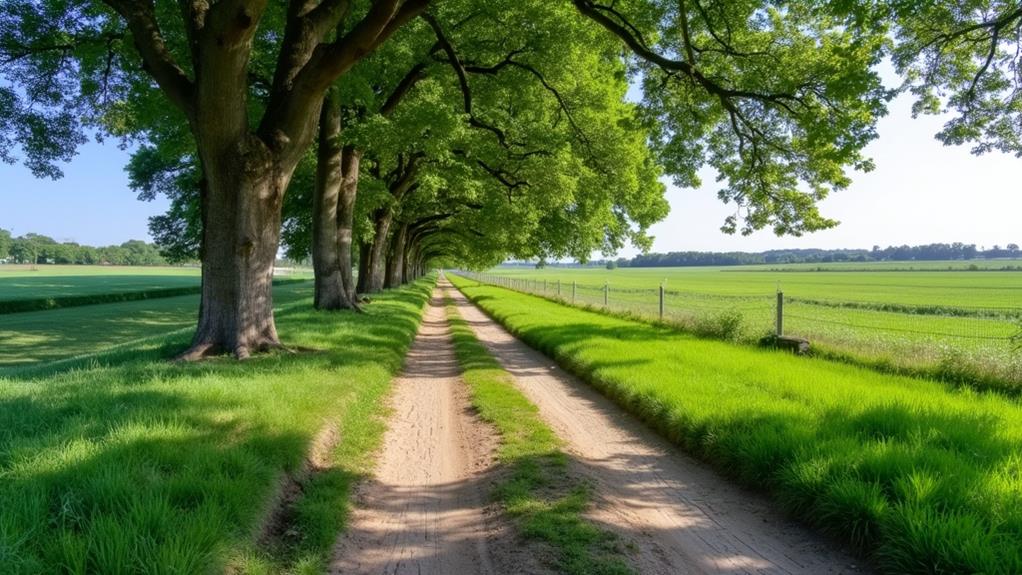
While maintaining safe distances is vital, choosing the right location to ride is just as important for guaranteeing your safety and your horse's well-being. Always select areas known for favorable trail conditions. Well-maintained trails reduce the risk of accidents caused by uneven or slippery surfaces. Before setting out, familiarize yourself with the terrain and any potential hazards, like steep inclines or water crossings, to verify they're manageable for both you and your horse.
Riding with companions adds an extra layer of safety and enjoyment. Experienced riding companions can offer guidance on which trails are best suited for your skill level and provide assistance if issues arise. They can also help assess trail conditions, pointing out any potential dangers you might miss. Plus, riding in a group can deter wildlife encounters and offer support if your horse becomes nervous or uncooperative.
Opt for designated equestrian trails or open spaces where horseback riding is permitted. Avoid crowded areas, such as public parks with heavy foot traffic, to prevent any unnecessary conflicts. By choosing safe areas for your rides, you'll protect both yourself and your horse, making your experiences enjoyable and secure.
Stay Alert and Focused
When riding a horse, staying alert and focused is vital for ensuring both your safety and your horse's. Horses are sensitive creatures and can pick up on your state of mind. Practicing mindfulness techniques helps maintain your focus. Keep your attention on the horse's movements and your surroundings to anticipate any sudden changes. Mindfulness can prevent accidents by allowing you to respond quickly to unexpected situations.
Managing distractions is just as significant. It's easy for your mind to wander, but try to keep it on the task at hand. This means putting away your phone and resisting the urge to daydream. Instead, concentrate on the rhythm of the ride and the communication between you and your horse.
Consider these tips to help stay focused:
- Mindful Breathing: Take deep breaths to calm your mind and improve your connection with the horse.
- Focused Listening: Pay attention to the sounds around you, such as your horse's hoofbeats, to stay present.
- Visual Scanning: Regularly check your environment for any potential hazards or changes.
Know Emergency Procedures
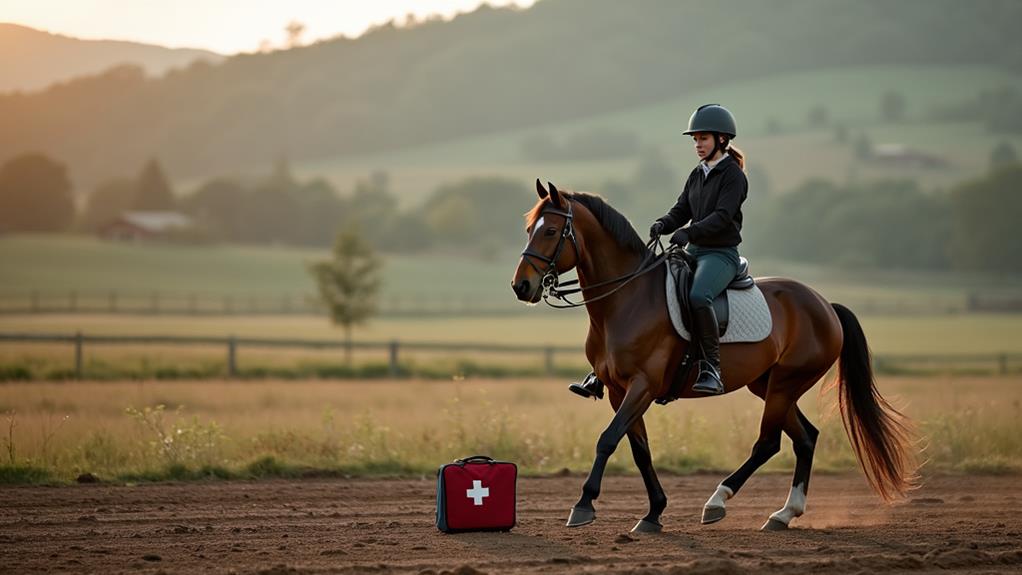
Emergencies on horseback, though rare, require quick thinking and a good grasp of fundamental procedures to assure safety. Knowing what to do in a crisis can make all the difference. Initially, confirm you have a list of emergency contacts handy. This list should include your trainer, a local veterinarian, and a nearby hospital or clinic familiar with equine injuries. Keep these numbers stored in your phone and a physical copy in your riding kit or saddlebag.
Next, familiarize yourself with basic first aid techniques for both you and your horse. You should know how to handle minor injuries, such as cuts or bruises, and have a first aid kit readily available. Kits should include bandages, antiseptic wipes, and anything else your trainer recommends for equine care.
Practice staying calm; panicking can escalate the situation. If you find yourself in an emergency, take a deep breath and follow the steps you've learned. Attend a first aid course tailored to horse riders to enhance your confidence. By preparing in advance and knowing these emergency procedures, you'll protect both yourself and your horse from potential harm.
Related posts