Hyacinth Macaw: What to Consider Before Getting This Majestic Pet Bird
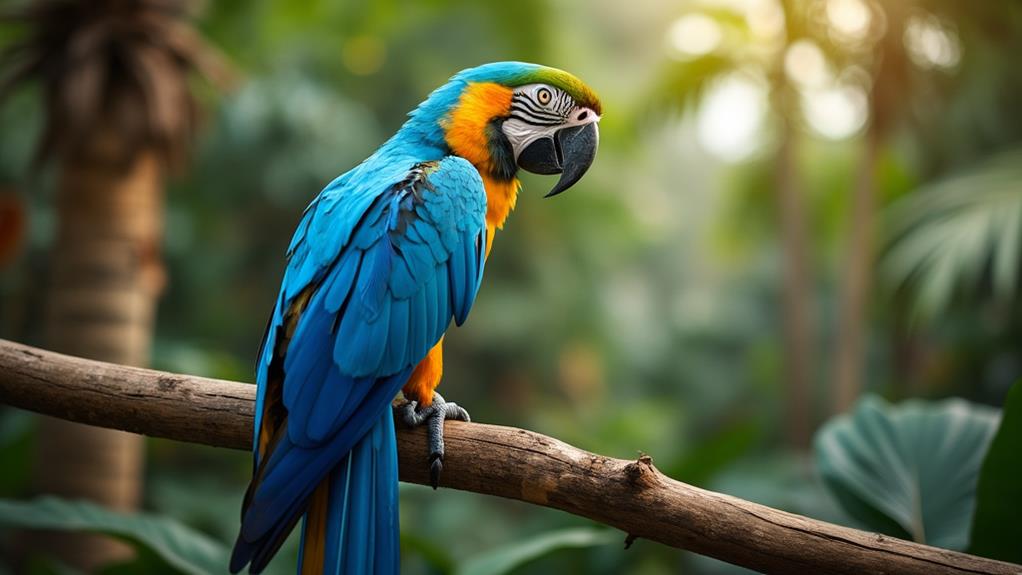
Considering a Hyacinth Macaw as a pet requires careful thought. Be ready for a long-term commitment, as they can live over 60 years. Confirm you have space for a large cage and maintain ideal temperatures and humidity levels. You'll need to provide a balanced diet consisting of high-quality pellets, fruits, vegetables, nuts, and seeds. Regular socialization and mental stimulation are vital to prevent destructive behaviors. Be aware of their legal status and the ethical responsibilities involved. Investing time for veterinary care and training is fundamental. There's more to understand about this stunning bird that will deepen your appreciation.
Key Takeaways
- Hyacinth Macaws require a lifelong commitment, with a potential lifespan of over 60 years needing long-term care planning.
- Adequate space and environmental enrichment are essential, with minimum cage dimensions and specific temperature and humidity requirements.
- A balanced diet of high-quality pellets, fruits, and vegetables is crucial, while avoiding processed foods.
- Daily socialization and mental stimulation are necessary to prevent boredom and destructive behaviors.
- Ownership requires understanding legal responsibilities, including permits and ethical breeding, supporting conservation efforts for this threatened species.
Understanding Hyacinth Macaw Lifespan
When considering a Hyacinth Macaw as a pet, it's vital to understand their impressive lifespan, which can extend over 60 years with proper care. This fact alone makes owning a Hyacinth Macaw a significant long-term commitment. You need to be prepared for the lifestyle changes that come with ensuring a stable environment throughout their life stages. Their lifespan can vary from 30 to 80 years, so adopting one should be viewed as a permanent decision, not a temporary arrangement.
To support their health and enhance their longevity, you'll need to prioritize regular veterinary check-ups. These visits help detect any potential health issues early, ensuring they receive the best care throughout their lives. A balanced diet is significant as well, as it directly impacts their health and general well-being. Make sure to provide a diet rich in nutrients and variety to keep your macaw healthy and thriving.
Space and Housing Needs
In conjunction with understanding their lifespan, providing adequate space and housing for a Hyacinth Macaw is vital to their well-being. Hyacinth Macaws are large, intelligent birds that require a spacious cage measuring at least 5 feet long, 3 feet wide, and 6 feet high. This space allows them to move freely and spread their wings. Their playful nature means they need mental stimulation, so include strong perches and toys to keep them engaged.
A secure environment is important because these birds can easily open doors and locks if not properly secured. You'll want to make sure their living space maintains a temperature range of 70°F to 85°F (21°C to 29°C) and humidity levels between 50% to 60%. These conditions are vital for their health and comfort.
Hyacinth Macaws thrive with regular interaction and socialization opportunities. They enjoy engaging with humans or other birds, which helps prevent boredom and promotes their well-being. Prioritize a habitat that supports their need for companionship and mental enrichment. By meeting these space and housing needs, you'll provide a safe and fulfilling environment for your Hyacinth Macaw, guaranteeing they lead a happy, healthy life.
Essential Diet and Nutrition
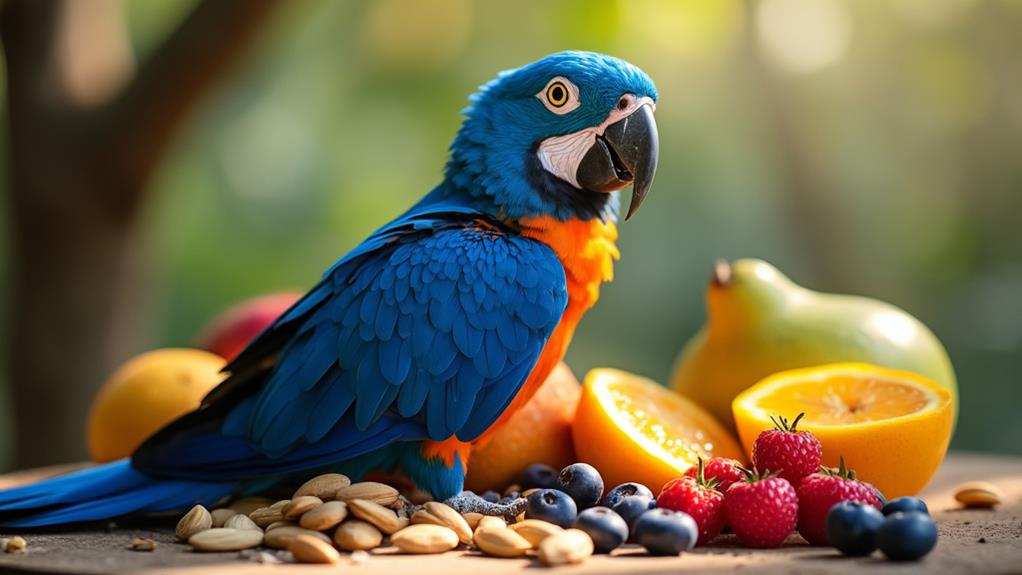
Although Hyacinth Macaws are enchanting with their lively plumage and playful demeanor, their dietary needs are also significant and require careful attention. Guaranteeing a balanced diet is essential for their health. Start with high-quality pellets specifically formulated for large parrots. These should form the foundation of their nutrition, providing important vitamins and minerals. Complement these pellets with a variety of fresh fruits and vegetables, contributing to a well-rounded diet and keeping mealtime interesting.
Hyacinth Macaws have a natural preference for fatty palm nuts, so include nuts and seeds in moderation to meet their dietary fat requirements. However, be cautious not to overdo it, as excessive fat can lead to obesity and other health issues. Always have fresh water available to maintain proper hydration, changing it daily to confirm cleanliness.
Consulting a veterinarian regularly is critical to tailor your bird's diet to its specific needs. They can help you guarantee your macaw gets adequate calcium and other necessary nutrients. Steer clear of processed foods and high-sugar items, which can lead to poor nutrition and common ailments. With the right diet, your Hyacinth Macaw will thrive in your care.
Behavioral Traits and Socialization
Hyacinth Macaws, with their lively personalities, are social butterflies that thrive on human interaction and form strong bonds with their owners. These intelligent birds require daily socialization to prevent loneliness and boredom, as they're highly dependent on mental stimulation. Without it, they might develop destructive behavioral traits. Your experience with birds will greatly aid in managing their playful and curious nature.
Interaction is key with Hyacinth Macaws. They love vocalizations, expressing themselves through a mix of growls, squawks, and even mimicry. These sounds not only showcase their intelligence but also their need for engagement. To manage their sometimes nippy and loud behaviors, it's vital to use positive reinforcement. Consistency in training sessions will help teach them commands and tricks, strengthening your bonds and maintaining a harmonious relationship.
Being prepared for their unique social needs is significant. Hyacinth Macaws aren't just pets; they're companions that demand your time and attention. Their need for constant engagement means they're best suited for owners who can dedicate ample time to interact and provide mental challenges. With proper socialization and care, you'll share a rewarding experience with these majestic birds.
Health Care and Training
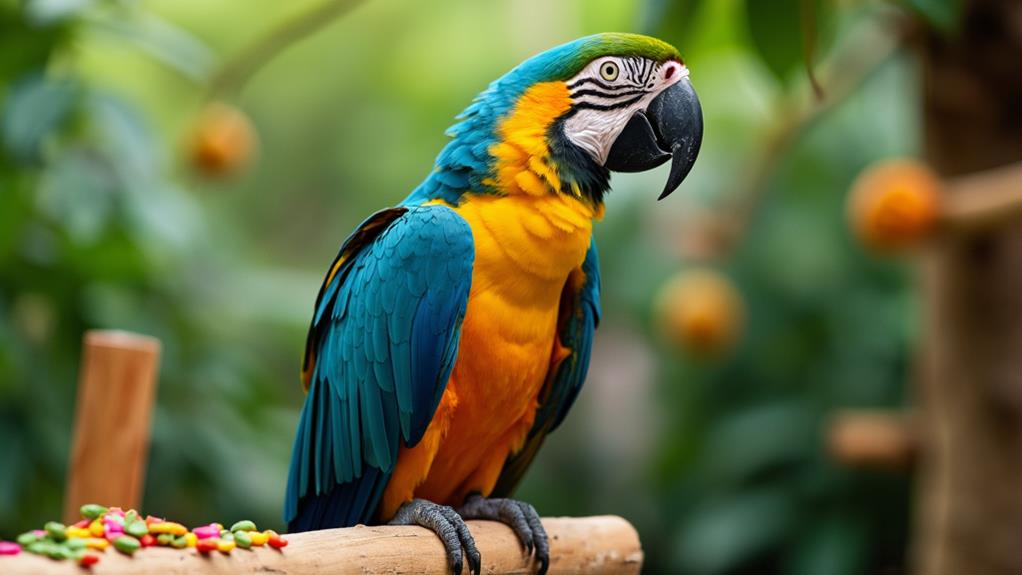
Taking care of a Hyacinth Macaw goes beyond social interaction; it also involves a commitment to their health and training. Regular visits to an avian veterinarian are fundamental to monitor your macaw's health and catch any early signs of problems like obesity and feather plucking. Be vigilant for indicators of illness, such as lethargy, changes in appetite, or abnormal droppings. Observing these signs early can prevent more severe health issues.
Training your Hyacinth Macaw using positive reinforcement not only teaches them basic commands and tricks but also strengthens your bond. Consistency is key in addressing potential behavioral issues like screaming and aggression, which can arise from neglect or stress. Regular interaction and engagement are indispensable, as these majestic birds are highly intelligent and require mental stimulation to prevent destructive behaviors.
Incorporate a variety of toys and activities into their daily routine to keep them entertained and mentally stimulated. Without proper engagement, they may resort to undesirable behaviors out of boredom. Remember, a well-trained and healthy Hyacinth Macaw will be a happier and more harmonious companion, making your commitment to their health care and training genuinely rewarding.
Environmental Requirements
When setting up the perfect environment for your Hyacinth Macaw, guarantee you provide a spacious and secure cage that allows them plenty of room to move around. Ideally, the cage should measure at least 4 feet wide, 6 feet high, and 3 feet deep, accommodating their impressive size. This spacious cage is fundamental for their physical and mental well-being.
Maintaining the correct temperature range is critical, keeping it between 70°F to 85°F (21°C to 29°C). This guarantees the macaw's comfort and health. Furthermore, humidity levels should be kept around 50% to 60%, as these levels are essential for their respiratory health and general well-being.
Creating an enriched environment is key to preventing destructive behaviors. You'll need to provide a variety of toys, perches, and opportunities for social interaction. These elements keep them engaged and mentally stimulated. Remember, Hyacinth Macaws have a curious nature, so making sure their surroundings are safe and free from hazards is fundamental. Their inquisitive tendencies can lead them into dangerous situations if not properly monitored.
Pros and Cons of Ownership
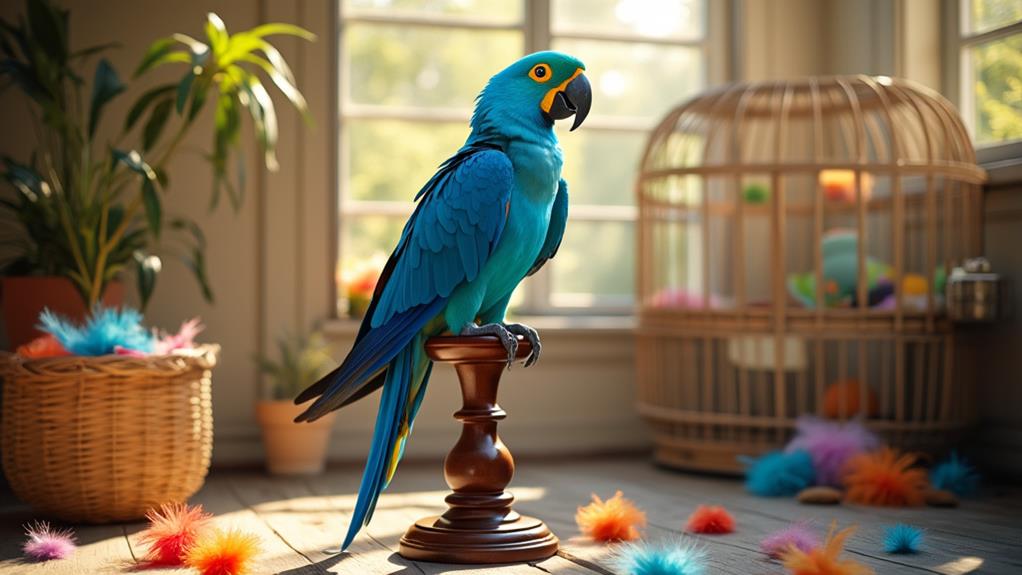
Owning a Hyacinth Macaw is a rewarding but challenging endeavor. These affectionate and intelligent birds can form deep bonds with you, offering companionship like no other pet. Their playful nature and ability to learn make them fascinating creatures to have around. However, this relationship requires a long-term commitment, as they can live over 60 years. You must be ready to adapt your lifestyle over the decades to accommodate their needs.
The Hyacinth Macaw's large size and strong beak mean you'll need to invest in a spacious cage. This isn't just about comfort—it's about safety and ensuring they have room to move around. Their diet is another essential factor. They need a balanced diet high in carbohydrates and fats, which means regularly providing nuts, fruits, and vegetables. This dietary requirement can be both time-consuming and costly.
On the downside, without sufficient social interaction and mental stimulation, these birds can exhibit destructive behavior. They need plenty of engaging toys and activities to channel their energy positively. If you're unable to provide regular attention, their well-being might suffer, making you reconsider if a Hyacinth Macaw is right for you.
Legal and Ethical Considerations
Before you decide to bring a Hyacinth Macaw into your home, it is crucial to understand the legal and ethical responsibilities involved. These majestic birds are a threatened species, so you'll need to check local laws and regulations. Some areas may require permits or have restrictions on Hyacinth Macaw ownership due to their conservation status. Ensuring compliance with these laws is a vital step in supporting their survival.
Ethical considerations are similarly significant. Choose reputable breeders or rescue organizations that adhere to ethical breeding practices and prioritize the welfare of the birds. The capture and trade of wild Hyacinth Macaws have considerably impacted their population, so your decision to support responsible sources contributes to conservation efforts.
Owning a Hyacinth Macaw is a lifelong commitment, as these birds can live over 60 years in captivity. You must consider future housing and care arrangements, ensuring a proper environment, diet, and socialization for your macaw. This commitment reflects your dedication to the welfare of the species, providing them with a healthy, fulfilling life. By embracing these legal and ethical considerations, you're not just gaining a pet but becoming a steward of conservation and welfare.
Educational Resources and Literature
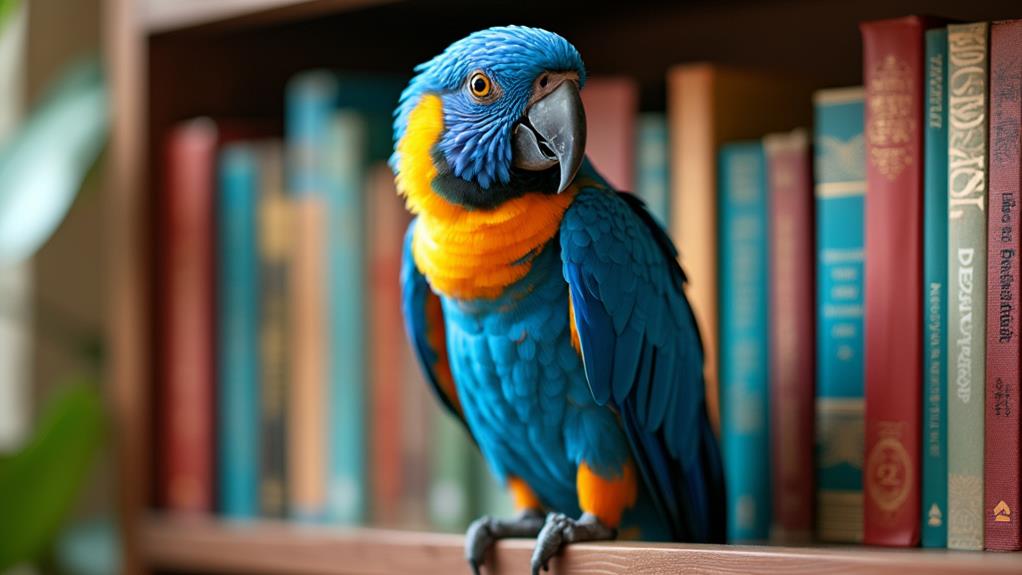
Understanding your legal and ethical duties is just the beginning of your expedition into Hyacinth Macaw ownership. To fully prepare, engage yourself in educational resources and literature focusing on their care, behavior, and specific needs. Numerous informative books offer detailed guidance on diet, housing requirements, and health management. These resources not only help prevent common health issues but also highlight the significance of the long-term commitment involved, as Hyacinth Macaws can live over 60 years in captivity.
Online forums and communities are invaluable, providing insights and shared experiences from current owners. Engaging with these platforms can assist you in making informed decisions, offering real-world perspectives on the joys and challenges of Hyacinth Macaw ownership. Consulting with avian veterinarians and experienced bird owners is also essential. They can provide tailored advice that addresses specific needs and training techniques, guaranteeing that your approach to care is as effective as possible.
Incorporating this wealth of knowledge into your preparation process will not only improve your understanding but also guarantee that your majestic pet thrives. Remember, being informed is key to fostering a healthy, happy life for your Hyacinth Macaw.