Human Foods That Are Dangerous for Cats: What to Avoid
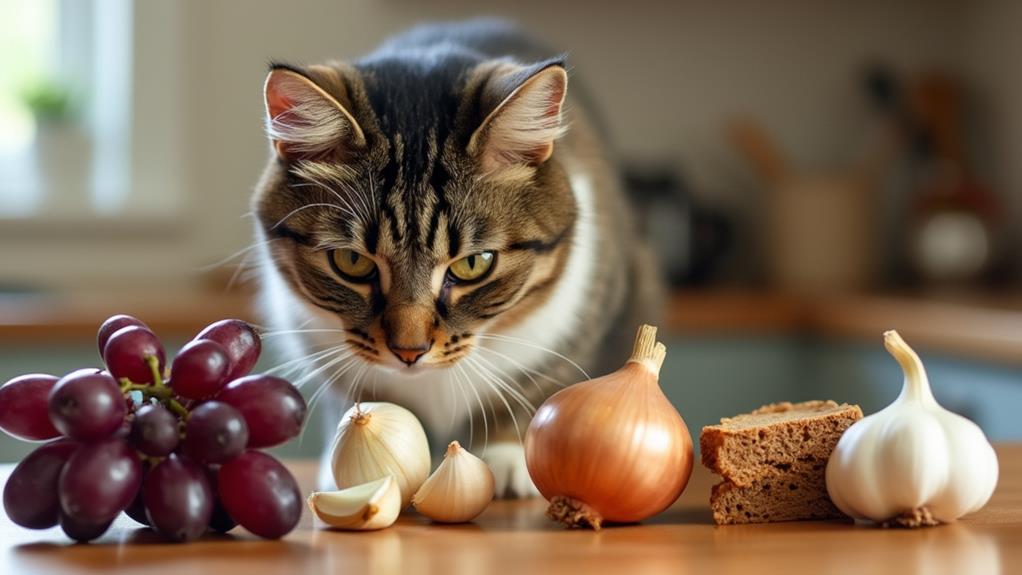
You must protect your feline friend by avoiding certain human foods that are dangerous for cats. Onions and garlic can damage their red blood cells, causing anemia, while chocolate can lead to vomiting and seizures due to its theobromine and caffeine content. Grapes and raisins pose a risk of acute kidney failure, and even small amounts of alcohol can be life-threatening. Most cats can't digest dairy well either, leading to stomach issues. If your cat ingests any toxic food, contact a vet immediately. Keep learning to stay informed about creating a safe environment for your furry companion.
Key Takeaways
- Onions and garlic can damage red blood cells in cats, causing anemia.
- Chocolate's theobromine and caffeine can lead to vomiting and seizures in cats.
- Grapes and raisins may cause acute kidney failure, requiring urgent veterinary attention.
- Even small amounts of alcohol can cause serious health issues like respiratory distress in cats.
- Many cats are lactose intolerant, resulting in digestive upset from consuming dairy products.
Common Toxic Foods
In relation to your cat's health, knowing which human foods are toxic is crucial. Onions and garlic are particularly harmful to cats. They contain thiosulfate, which damages red blood cells, leading to anemia. Even small amounts can be toxic, so avoid letting your feline friend near these kitchen staples.
Chocolate is another dangerous treat for cats, especially dark and unsweetened varieties. It contains theobromine and caffeine, which can cause severe symptoms like vomiting, seizures, and even death. So, keep those chocolate bars well out of reach.
Grapes and raisins might seem harmless, but they can induce acute kidney failure in cats. Watch out for symptoms like vomiting and lethargy, which can occur even after ingesting small quantities. Likewise, alcohol is extremely toxic to cats. Just a tablespoon can lead to severe health issues, including respiratory distress and coma.
Lastly, many cats are lactose intolerant, making dairy products such as milk and cheese harmful. These can lead to digestive upset and discomfort, so it's best to avoid offering your cat dairy altogether. Being informed and cautious can help protect your cat from these common toxic foods.
Health Risks of Ingestion
A myriad of health risks lurk when cats ingest certain human foods. If your cat has eaten chocolate and unsweetened baking chocolate, watch out for severe symptoms like seizures and heart arrhythmias. The theobromine in chocolate is highly toxic to cats, and even small amounts can be perilous. Likewise, grapes and raisins are foods that are poisonous, leading to acute kidney failure. Symptoms such as vomiting and lethargy can manifest quickly, demanding immediate attention.
The onion family can cause oxidative damage to your cat's red blood cells, resulting in anemia and digestive issues. This danger extends to garlic in some sauce, regardless of being raw, cooked, or powdered. Alcohol consumption, even just a tablespoon, is another risk; it can depress the central nervous system severely, leading to coma or death. No safe amount exists for cats.
Caffeine is just as hazardous, found in coffee, tea, and other products. It can result in restlessness, rapid breathing, and muscle tremors. Raw fish also poses risks, potentially leading to thiamine deficiency, which affects neurological health. Understanding these health risks of ingestion can help protect your feline friend from harm.
Steps After Consumption
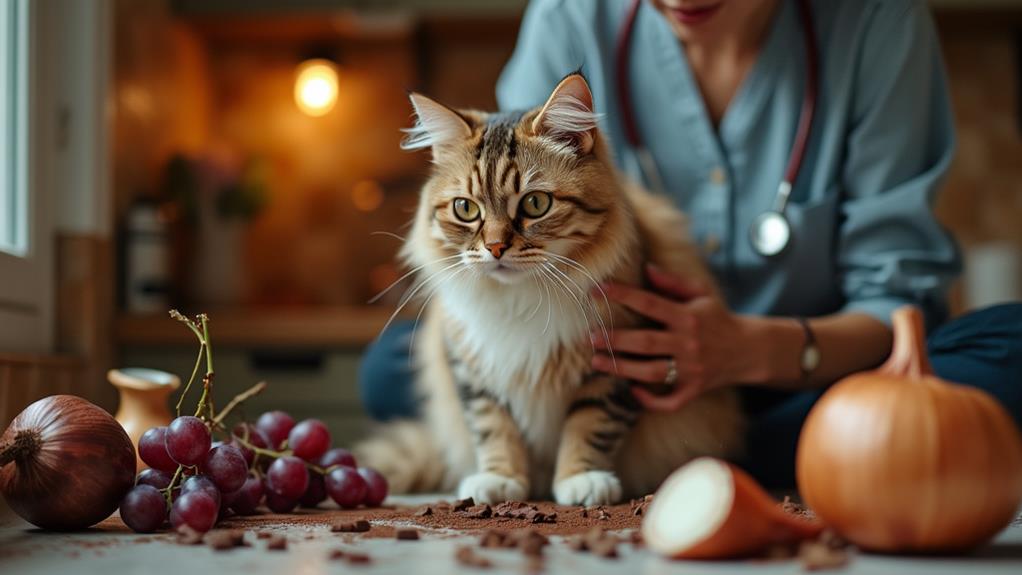
Once you find out your cat has consumed a harmful food, quick action becomes vital. Start by evaluating the quantity and type of food ingested. Knowing which foods are toxic to cats helps determine the potential risks and severity of the situation. Some foods to avoid feeding include chocolate, grapes, and onions, as they can lead to serious health issues like liver failure and digestive problems.
- Contact a Veterinarian: Reach out immediately for tailored advice. A professional can guide you on the necessary steps, especially if the food is known for causing severe reactions.
- Monitor Your Cat: Keep a close eye on your pet for any symptoms of toxicity such as vomiting, diarrhea, lethargy, or muscle tremors. These symptoms can indicate the need for veterinary intervention.
- Call the Pet Poison Helpline: If a veterinarian isn't available, call the Pet Poison Helpline at 1-855-213-6680 for expert guidance.
- Act Quickly: Early intervention can greatly improve the chances of a positive outcome. Prompt action can prevent complications like liver failure and serious digestive issues.
Veterinary Treatment Options
After recognizing the signs of toxicity in your cat, the next significant step involves exploring veterinary treatment options. When your cat consumes toxic foods, prompt veterinary treatment is critical to safeguard their health. Veterinarians typically provide supportive care, such as administering IV fluids to keep your cat hydrated. This important step helps monitor organ function and prevent further complications from arising.
Blood tests play an important role in evaluating your cat's health. These tests can reveal the extent of organ damage caused by the toxic foods, allowing for targeted treatment strategies. In cases of severe poisoning, your vet might recommend hospitalization. Hospitalization guarantees close monitoring and provides an opportunity to deliver specific treatments designed for the type of toxin ingested.
The treatment protocol will depend on the particular food consumed and the severity of your cat's symptoms. Immediate action is essential, as some situations might require specific antidotes or therapies tailored to the poison. By acting swiftly and consulting a veterinarian, you're taking the necessary steps to protect your cat's health. Remember, timely intervention can make all the difference in your cat's recovery from consuming harmful foods.
Preventive Measures
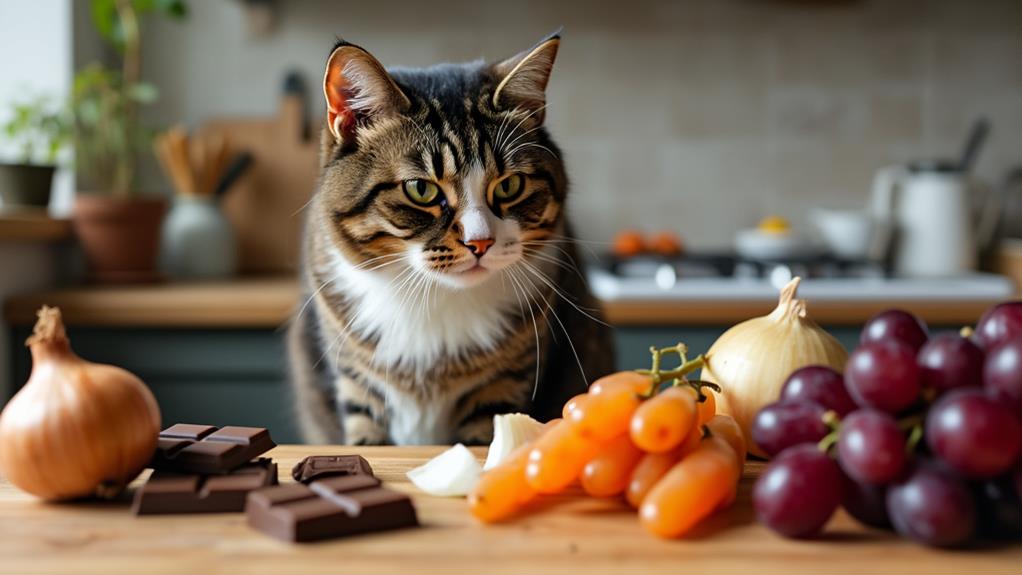
Preventing your cat from consuming dangerous human foods starts with vigilance at home. Many human foods can cause harm to cats, so it's essential to implement preventive measures effectively. Start by keeping toxic items like chocolate, onions, and alcohol securely stored out of reach to avoid accidental ingestion. Educate your family members and guests about the harmful effects of certain foods on cats to prevent them from sharing unsafe snacks or meals.
Here are some preventive steps to take into account:
- Secure Storage: Keep human foods and toxic items in cabinets or containers that your cat can't access. Regularly check for harmful items like grapes, raisins, and products with xylitol.
- Education: Make sure everyone in your household understands which foods are dangerous for cats. This reduces the risk of accidental feeding.
- Cat-Specific Treats: Stick to cat food and treats designed for feline consumption. This helps avoid health issues that human foods might cause.
- Veterinary Consultation: Consult with a veterinarian to develop a safe and balanced diet for your cat. Introduce new foods gradually and monitor for any adverse reactions.