How to Wash Your Dog Outside Using a Garden Hose: Safe and Effective Tips
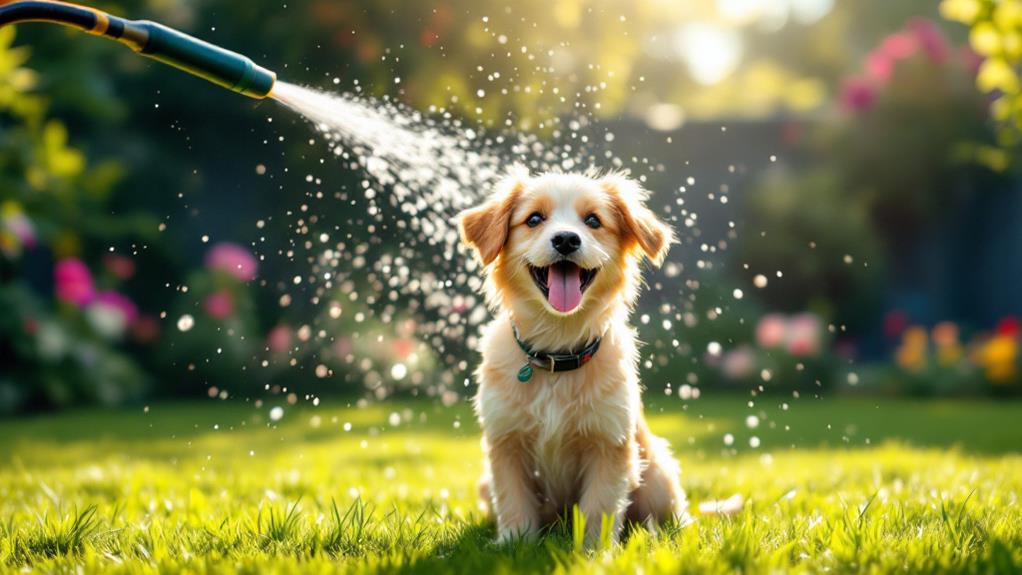
When washing your dog outside with a garden hose, choose a sunny day with temperatures above 70°F and no wind or rain in the forecast. Gather dog-safe shampoo, towels, and a non-slip mat. Brush your dog initially, then use lukewarm water, starting from the neck, avoiding the ears and eyes. Apply pet-specific shampoo, massaging for at least five minutes, and rinse thoroughly. After washing, towel dry promptly and give your pup a treat for behaving well. Maintain a safe environment, always use positive reinforcement, and observe your dog's comfort to make bath time enjoyable. Uncover more ways to improve this routine.
Choosing the Right Day
When planning to wash your dog outside, it's essential to choose the right day to assure a comfortable experience for your furry friend. Opt for a warm, dry day with outdoor temperatures above 70°F. This guarantees your dog stays comfortable and doesn't catch a chill during bathing. Avoid windy conditions, as strong gusts can make your pet feel colder once wet and increase the risk of them catching a chill. A calm day with stable weather is ideal for outdoor bathing.
Keep an eye on the weather forecast and select a day with clear skies and no rain in sight. This helps prevent any interruptions and assures your dog won't get dirty soon after the bath. Furthermore, pick a time in the early morning or late afternoon when temperatures are moderate. This minimizes the risk of overheating, providing a comfortable experience for both you and your dog. By monitoring the weather and planning ahead, you create a pleasant, stress-free environment for bathing. Remember, a warm, dry day free of wind and rain not only makes the process smoother but keeps your dog happy and healthy.
Essential Bathing Supplies
To guarantee a smooth and pleasant dog-washing experience, gather all your vital bathing supplies beforehand. Start with a dog-safe shampoo, necessary for protecting your dog's skin and coat. You'll also need absorbent towels to dry off your pup post-bath. A handheld sprayer or a hose with adjustable settings is ideal for controlling water flow, ensuring a thorough rinse without overwhelming your dog.
Prepare a non-slip surface or mat in the bathing area. This precaution prevents slipping, keeping your dog safe and comfortable during the wash. Having a large bucket or container of warm water on hand is advantageous, offering a gentle alternative to the sometimes shocking cold of a direct hose spray.
Keep a brush nearby to tackle tangles and mats before getting your dog wet. Brushing your dog beforehand can make the washing process smoother and more effective, ensuring the shampoo reaches every part of their coat.
Don't forget the treats! Rewarding your dog for good behavior during the bath can create a positive association with the experience, making future baths less stressful for both of you. With these vital bathing supplies, you're set for a successful outdoor dog bath.
Pre-Bath Preparation
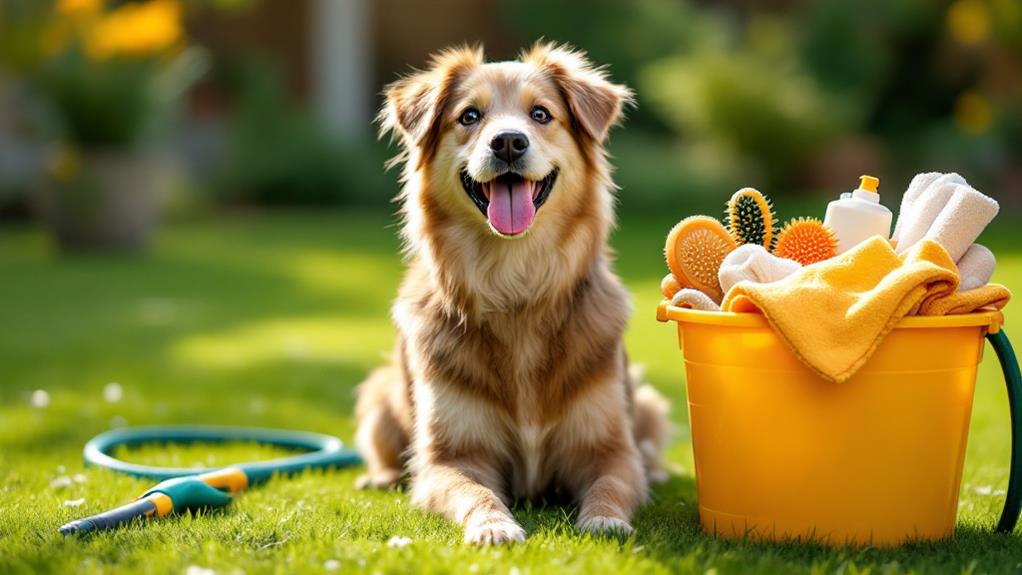
Before diving into the washing process, set the stage for a successful dog bath by focusing on pre-bath preparation. Start by gathering all necessary bathing supplies. Make certain you have dog-safe shampoo, absorbent towels, a brush, and a reliable water device, like a garden hose, ready. This guarantees a smooth and efficient bathing experience without needing to pause and search for items.
Next, choose an appropriate bathing location. Look for a spot with good drainage and minimal distractions, such as a grassy area or a pet pool. This creates a comfortable environment for your dog and helps you manage the water flow better. To secure your dog, use a leash or harness to prevent any unexpected escapes during the bath, assuring safety for both of you.
Before getting your dog wet, brush your dog's coat thoroughly to remove any tangles and mats. This makes the washing process more effective and enjoyable for them. Then, prepare the bathing area by laying down towels around the space. This helps catch excess water, prevents slips, and makes cleanup easier afterward. With these steps, you're well-prepared to give your dog a revitalizing outdoor bath.
Proper Wetting Techniques
With your pre-bath preparations complete, it's time to focus on the proper technique for wetting your dog. Start by using lukewarm water from the garden hose. This temperature is essential for your dog's comfort and helps open pores for better shampoo absorption. Make certain the water is gentle on their skin by using a spray nozzle with adjustable settings to maintain low water pressure. A strong stream might startle your furry friend, so keep it soft and calm.
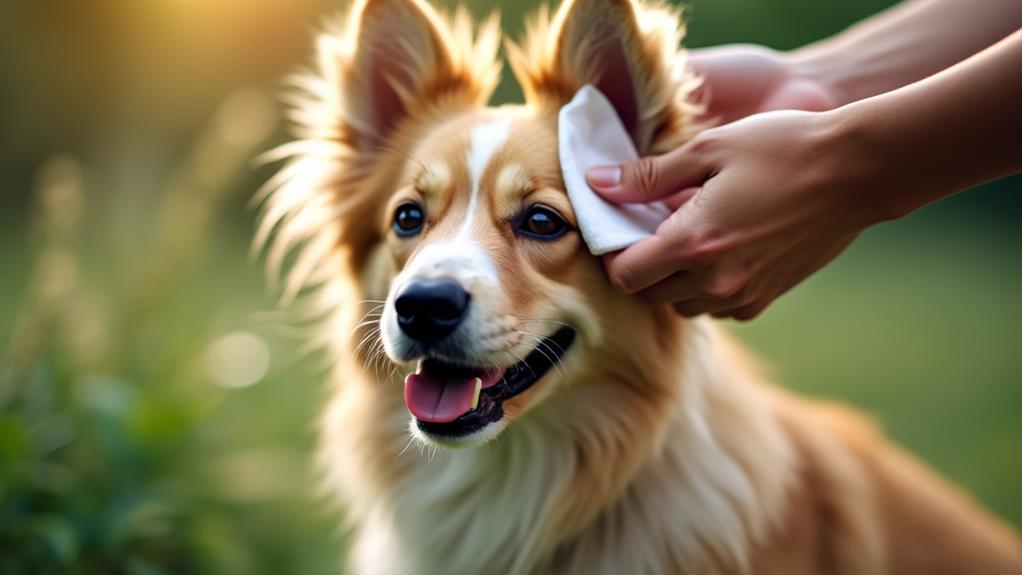
Begin the wetting process from the neck down, carefully avoiding the ears and eyes. This method not only prevents discomfort but also reduces the risk of ear infections. As you thoroughly wet your dog's coat, verify every part is saturated for effective cleaning. Pay attention to their body language, adjusting your techniques to maintain their comfort levels throughout the bath.
To avoid chilling your dog, especially in cooler weather, frequently check the water temperature. Cold hose water can cause shivering and discomfort, which isn't ideal. By following these wetting techniques, you'll guarantee a pleasant bathing experience for both you and your beloved pet, setting the stage for a safe and clean wash.
Safe Shampoo Application
Applying shampoo to your dog is a vital step in their bathing routine, and using pet-specific shampoos is key. Human shampoos can disrupt your dog's skin pH balance, leading to irritation or allergic reactions. To guarantee a safe shampoo application, start by wetting your dog's coat thoroughly with lukewarm water. This step is significant because it opens up the pores, allowing the shampoo to penetrate the fur more effectively.
Once the coat is wet, apply the shampoo starting from the neck and work your way down to the tail. Be careful to avoid sensitive areas like the eyes, ears, and mouth to prevent any discomfort or injury. As you wash your dog, massage the shampoo into their coat for at least five minutes. This not only guarantees a thorough cleaning but also provides an opportunity for bonding with your pet.
Thorough Rinsing Tips
After lathering your dog's coat with shampoo, it's vital to rinse thoroughly to confirm all product residue is removed. When bathing your dog outside with a garden hose, make certain to use lukewarm water. Cold water can cause your dog to shiver and feel stressed, so lukewarm offers a comfortable experience. Direct the spray nozzle away from your dog's face and ears to prevent discomfort and guarantee a more relaxed rinsing.
To rinse thoroughly, use low water pressure. High pressure can overwhelm your dog and make the process uncomfortable. A gentle spray allows you to clean the coat effectively without causing stress. It's necessary to remove all shampoo and conditioner residue because leftover products can irritate your dog's skin and coat.
Consider implementing a two-bucket method for a more controlled rinsing process. Use one bucket for rinsing and another for sudsing. This approach helps manage water usage and confirms you're not reapplying any shampoo residue while rinsing.
Effective Drying Methods
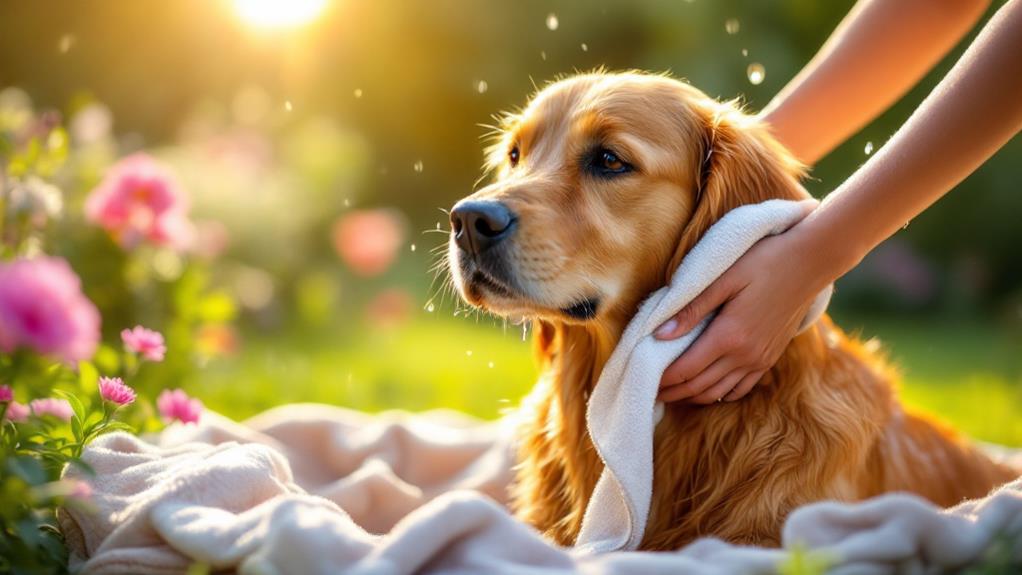
Getting your dog dry after a bath is vital to keep them comfortable and their fur in good condition. After you bathe your dog using cold water and a garden hose, start by towel drying them immediately. This step is fundamental to absorb excess moisture and prevent your furry friend from rolling in the grass, which can lead to dirt and debris getting caught in their coat. If it's hot outside, your dog might air dry faster, but towel drying is still significant, especially for heavy-coated breeds, to avoid hot spots from trapped moisture.
For more effective drying methods, consider using a high-velocity dryer similar to those used by professional groomers. These dryers can help speed up the process and guarantee your dog is thoroughly dry. However, if you don't have access to one, a good towel dry combined with a brisk walk can help dry your dog and prevent them from rolling around on the ground. Regular bathing is great for maintaining your dog's hygiene, but make certain poor weather doesn't interfere with the drying process. If it's cold or rainy, crating your dog can keep them warm and clean until they're completely dry.
Post-Bath Reward Strategies
Treats and toys can transform bath time into a positive experience for your dog. By using effective post-bath reward strategies, you can reinforce trust and create a positive association with baths. Start by offering a small treat or their favorite toy right after the bath. This simple gesture can make your dog more willing to participate in future baths. Praise and petting during and after baths can also alleviate any stress, making your dog feel secure and loved.
Consider these strategies to improve your dog's post-bath experience:
- Small Treat: Give a tiny snack immediately after the bath to reward good behavior.
- Praise and Petting: Shower your dog with affection to reassure them and reinforce trust.
- Play Session: Engage in a short, fun activity to help them shake off water and enjoy the moment.
- Cozy Warm Spot: Provide a comfortable area for them to relax, ensuring they feel safe and secure.
- Gentle Brushing: Spend time brushing their coat, which can be soothing and maintain their coat's health.