How to Train Your Cat to Only Eat From Its Food Bowl: Simple Tips
To train your cat to eat only from its food bowl, start by establishing a consistent feeding routine. Serve meals at the same time and in the same place daily. Use a specific sound or word to signal mealtime. Gradually shift from free-feeding to scheduled meals, rewarding your cat with treats for eating from its bowl. Recognize your cat's territorial nature by providing a clean, separate bowl. Monitor eating habits and adjust as needed, possibly using clicker training for reinforcement. Set up designated feeding spaces to reduce competition. These strategies create structure and reinforce positive eating habits, leading to a happy cat.
Establish a Feeding Routine
Creating a feeding routine for your cat is essential for fostering a sense of security and predictability. To establish this routine, start by serving meals at the same times each day. Consistency helps your cat feel more at ease and reduces anxiety surrounding feeding times. Designate a specific area for feeding to further reinforce the connection between location and mealtime, helping your cat anticipate when it's time to eat.
Introduce a signal, like a specific word or sound, to indicate when it's mealtime. This cue helps your cat recognize that it's time to head to its bowl. Gradually shift from free-feeding by reducing the availability of food throughout the day and instead offering several small, scheduled meals. This change not only supports a structured routine but also encourages your cat to eat from its bowl during designated times.
Monitor your cat's eating habits closely. Adjust the feeding frequency as needed to accommodate hunger cues, ensuring the routine remains flexible while maintaining structure. By doing so, you cater to your cat's individual needs and create a balanced approach to feeding that aligns with its natural rhythms and preferences.
Utilize Positive Reinforcement
Positive reinforcement's role in training your cat to eat from its food bowl can't be overstated. It's a powerful training technique that involves rewarding your cat with treats or praise whenever it eats from its designated bowl. This not only reinforces the desired behavior but also creates a positive association with the food bowl. Consistency is key; each time your cat uses its bowl, reward it immediately. This clear and consistent connection between the action and the positive outcome helps your cat understand what behavior is being rewarded.
Consider using clicker training to improve this technique. The distinct sound of a clicker marks the exact moment your cat engages with the bowl, followed by a reward. This precision helps in clearly communicating the desired behavior. Gradually increase the value of the rewards—perhaps by offering a favorite treat—immediately after using the bowl, which strengthens the positive experience.
Don't forget to monitor and adjust your reinforcement strategy based on your cat's response. This guarantees that the rewards remain motivating and relevant, making the training more effective. By doing so, you'll encourage your cat to consistently eat from its food bowl.
Understand Cat Behavior
Understanding your cat's behavior can improve the effectiveness of training sessions. Cats are territorial animals, meaning they prefer their own designated feeding areas. This natural tendency can be utilized when feeding your cat to reinforce the idea that their bowl is their own space. At meal times, ensuring each cat has its own distinct, clean bowl reduces conflicts stemming from resource guarding behavior. Cats are not fond of sharing, so observing and monitoring their feeding dynamics helps you identify any issues like competition or bowl sharing.
If you have multiple cats, it's essential to watch for signs of resource guarding behavior. This can manifest as aggression or anxiety around meal times. By establishing a routine, you help your cat understand when and where they're supposed to eat, minimizing the temptation to wander over to another cat's bowl out of curiosity or hunger.
Monitoring feeding dynamics allows you to adjust your approach if you notice any tension. Over time, a consistent routine reassures your cat that their food is secure, reducing stress and encouraging them to eat exclusively from their designated feeding area.
Designate Feeding Areas
To effectively manage mealtime for your feline friends, it is crucial to, initially, designate separate feeding areas. By doing this, you can reduce competition and territorial disputes over food bowls, creating a more harmonious dining experience for your cats. Each cat should have its own distinct bowl, which promotes a sense of ownership and encourages them to eat from their designated bowl. This simple step can greatly diminish any anxiety related to shared feeding spaces.
Raising food bowls is another effective strategy. By placing the bowls on elevated surfaces, you prevent access by other pets, discouraging inappropriate eating behavior. Visual barriers, such as partitions, can also be useful in reducing anxiety and competition. When cats can't see each other's bowls, they're less likely to feel the urge to compete, leading to a more peaceful mealtime.
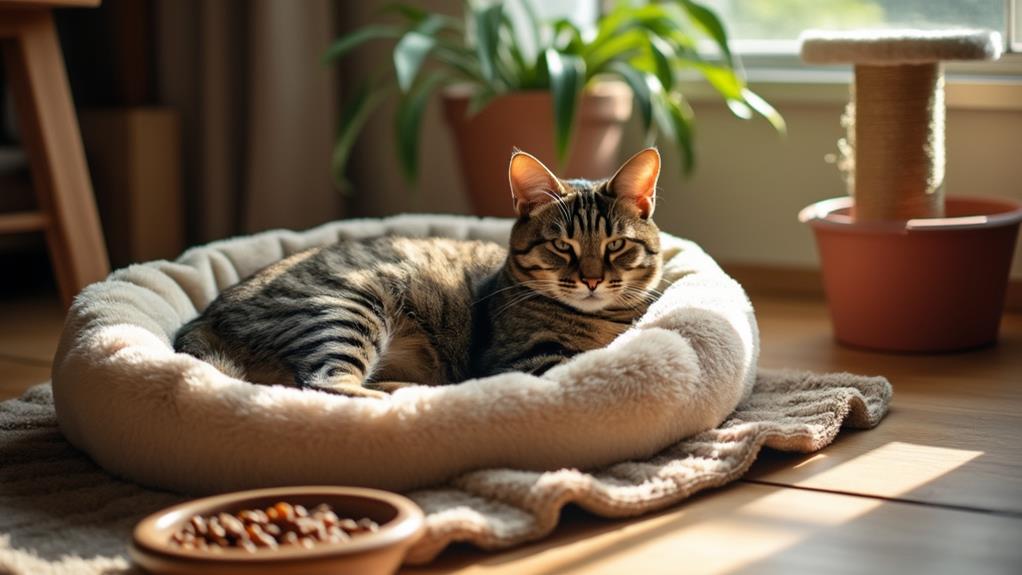
Maintaining a consistent feeding schedule in these designated areas reinforces a familiar routine, which helps cultivate positive eating habits. Your cats will begin to associate their specific area with mealtime, further reducing stress and confusion. By establishing these designated feeding zones, you're setting your cats up for a healthier, more positive eating experience.
Manage Feeding Interactions
When managing feeding interactions among your cats, physical barriers and separate feeding areas are essential to minimizing competition and resource guarding. By setting up distinct spaces, you guarantee that each cat can focus on its own food bowl without interference. This setup is particularly useful if one of your cats has a medical issue requiring special dry food.
To optimize feeding times, consider these steps:
- Monitor closely: Keep an eye on your cats during feeding times. This helps you intervene if a cat strays or exhibits aggressive behavior. Confirming each cat eats from its designated bowl is vital for reducing tension.
- Use timed feeders: Implement timed feeders that automatically close when a cat wanders away. This encourages them to eat from their bowls before the food is no longer accessible.
- Observe eating order: Allow dominant cats to finish eating before less assertive ones. This creates a calmer feeding environment and minimizes stress.
Consistency is vital. Gradually train your cats to associate specific locations with feeding by consistently placing their bowls in the same spot. With patience and these strategies, feeding times can become harmonious, guaranteeing each cat enjoys its meal without stress.
Monitor and Adjust Training
After setting up your feeding environment, it's essential to keep an eye on your cats' behaviors to verify the new system is working. Regularly observe their eating habits and interactions during mealtime. This helps you identify patterns, preferences, and any signs of stress or discomfort that might require adjustments in your training techniques. Track how much food each cat consumes and note any straying behaviors. This data helps you gauge the effectiveness of your training methods and decide if modifications are needed.
Adjust the timing and frequency of feeding sessions based on your cat's responses. Make sure that the food offered is consistent to reinforce positive behavior towards using their designated bowl. If one cat consistently eats from another's bowl, introduce separate feeding areas or barriers. Monitor interactions and gradually reintroduce shared spaces to minimize competition and maintain harmony.
Incorporate clicker training and rewards to reinforce positive behaviors. Consistently evaluate which techniques work best for your specific cat's learning style and eating habits. By staying attentive and flexible, you'll create a harmonious feeding routine that encourages your cat to eat exclusively from its own bowl.