How to Tell If Your Horse Trusts and Likes You: Key Signs to Look For
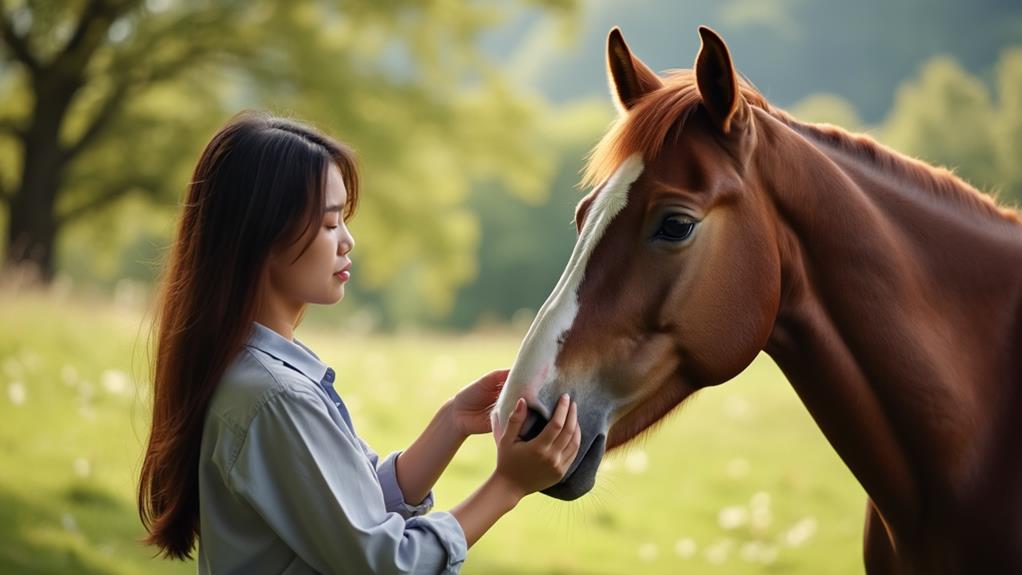
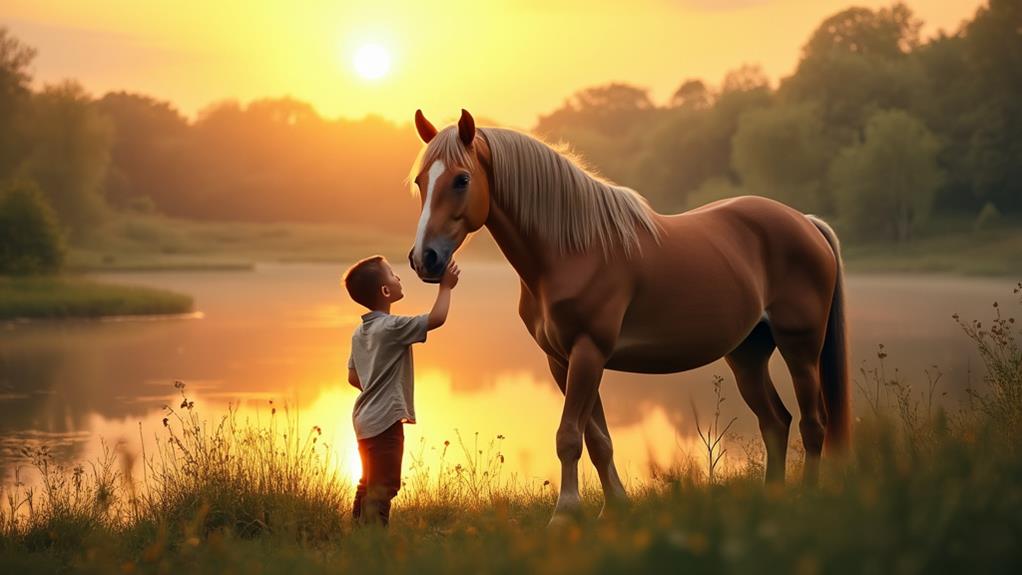
To know if your horse trusts and likes you, observe its body language and behaviors. A relaxed stance, soft eyes, and a lowered head are signs of comfort. Listen for soft nickers and notice if your horse willingly follows you, as these indicate affection and trust. Pay attention to ear position; ears gently forward suggest calmness. During grooming, if your horse leans into touch, it shows they feel safe. Licking and chewing after interactions indicate processing and relaxation. Playful nudges and participation in games reflect a strong bond. Investigate deeper attributes and improve your connection through these observations.
Understanding Body Language
Understanding your horse's body language is key to knowing if it trusts you. Horses communicate through subtle movements and gestures, so paying attention to these can reveal a lot about your relationship. One way to improve this bond is through bonding activities like grooming. When you brush your horse, notice if it stands relaxed, with a soft eye and a lowered head. This indicates comfort and trust.
Engaging in trust exercises is another effective way to read your horse's body language. Activities like leading your horse through obstacles or working on ground exercises can show how much it relies on you. If your horse follows your lead calmly and willingly, it's a good sign of trust. Look for signs like a relaxed tail, steady breathing, and ears that are forward or softly turned towards you, indicating attentiveness and comfort.
When you're spending time with your horse, be aware of how it reacts to your presence. A trusting horse will often approach you, seeking interaction. By consistently incorporating bonding activities and trust exercises, you'll strengthen your connection and better understand your horse's body language.
Observing Facial Expressions
When you're trying to determine if your horse trusts you, closely observe its facial expressions. Horses communicate a lot through facial cues, which can reveal their feelings and level of trust. By understanding these cues, you can strengthen your emotional connection with your horse. Here are some key facial expressions to look for:
- Soft Eyes: If your horse's eyes appear soft and relaxed, it's a strong indicator of trust. Hard, wide eyes can mean the opposite, signaling fear or anxiety.
- Ear Position: Ears that are gently forward or slightly to the side suggest a calm and trusting demeanor. Constantly swiveling or pinned-back ears might indicate discomfort or distrust.
- Muzzle Tension: A relaxed muzzle, with loose lips and a slightly drooping lower lip, shows your horse is comfortable around you. Tightly closed lips or a tense muzzle could mean it's on edge.
- Nostrils: Watch for nostrils that are relaxed and gently flaring. This shows your horse is at ease. Flared nostrils paired with tense facial muscles may indicate stress or heightened alertness.
Recognizing Relaxed Posture
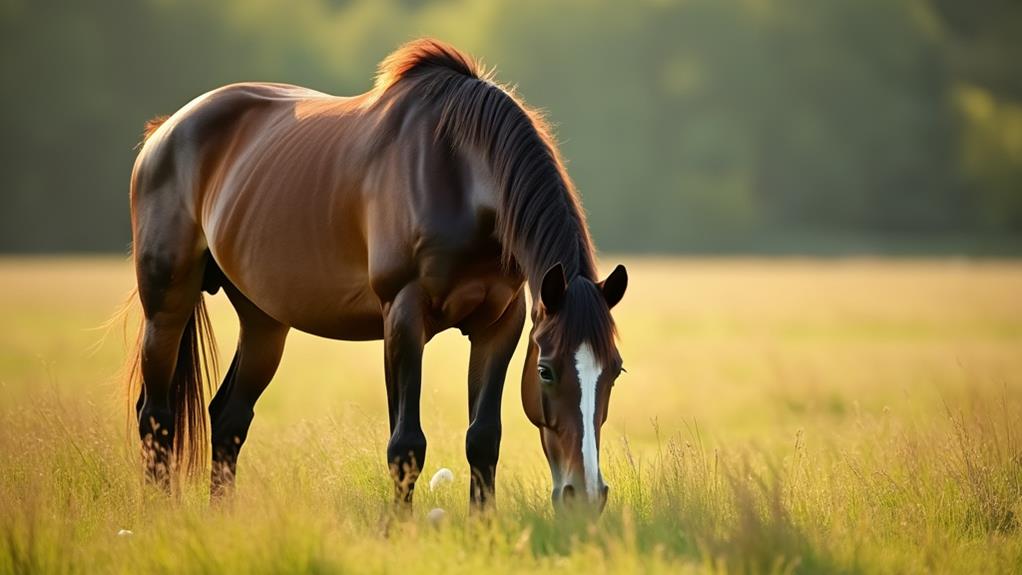
In conjunction with facial expressions, your horse's body language provides valuable insights into its level of trust. A relaxed posture is a significant indicator that your horse feels comfortable and secure around you. Start by observing their tail movements. A horse that trusts you will have a softly swaying tail, rather than one that's held rigid or tucked. This gentle movement signals contentment and ease, showing that your presence doesn't cause them stress.
Next, consider their head position. A trusting horse often carries its head slightly lowered, which indicates relaxation. If your horse frequently lowers its head in your company, it's a positive sign that they feel safe. Conversely, a horse that holds its head high or constantly scans the environment might be feeling anxious or vigilant.
Also, notice how your horse stands when you're nearby. Are their muscles loose, or do they appear tense and ready to bolt? Relaxed muscles and a soft stance suggest that your horse feels at ease. By paying close attention to these non-verbal cues, you can better understand your horse's comfort level and build a stronger bond based on trust.
Noticing Soft Eyes
While observing your horse's eyes, you'll find that soft eyes are a telltale sign of trust. Soft eyes typically appear relaxed, with the eyelids slightly droopy, indicating your horse feels safe and comfortable in your presence. To foster this trust, engage in bonding activities that promote relaxation and security. Recognizing and understanding these signs can strengthen your connection.
Here are some ways to identify soft eyes and encourage them:
- Gentle Eye Contact: Maintain a soft gaze when interacting with your horse. Avoid staring intensely, as this can be perceived as a threat.
- Trust Exercises: Incorporate activities like grooming, leading, and groundwork. These exercises help your horse associate your presence with positive experiences, encouraging relaxation and trust.
- Consistent Routine: Horses thrive on routine. A consistent schedule helps them predict what's coming next, reducing anxiety and promoting soft eyes.
- Observe Blink Rate: A slow, steady blink rate can indicate a relaxed and trusting state. If your horse blinks slowly while interacting with you, it's a good sign they feel at ease.
Listening to Vocalizations
Understanding your horse's vocalizations is another key to gauging trust and comfort. Horses use a range of vocal cues to communicate their feelings and needs. Pay close attention to these sounds, as they're crucial parts of horse communication. For example, a soft nicker often indicates affection or a friendly greeting. If your horse nickers when you approach, it's a positive sign that they trust and like you.
On the other hand, a high-pitched squeal might suggest discomfort or irritation. Recognizing these negative vocal cues can help you address any issues your horse might be experiencing. When you understand what each sound means, you can better respond to your horse's needs, reinforcing the bond between you.
Another vocalization to note is the whinny or neigh, which can signal anticipation or a call for attention. If your horse whinnies when they see you, it often means they're happy and enthusiastic for your company. This indicates a sense of security and trust. By actively listening to your horse's vocalizations, you develop a deeper understanding of their emotional state, allowing for more effective and empathetic communication with them.
Checking for Ears Forward
One clear indicator of your horse's trust is the position of their ears. When your horse's ears are forward, it often means they're relaxed and attentive, showing they trust you and are interested in their environment. Understanding ear position and ear movement helps you gauge your horse's mood and level of comfort. Here are some signs to watch for:
- Ears Forward and Relaxed: If your horse's ears are forward and slightly relaxed, they're likely comfortable and curious about their surroundings, indicating trust in you.
- Ears Perked Up: When their ears are forward but more alert, they're paying attention to you or something nearby. This shows they're engaged and interested, which is a positive sign.
- Consistent Ear Movement: If their ears are constantly moving back and forth but frequently return to a forward position, it means they're processing their environment while still focusing on you.
- Ears Forward During Grooming: While grooming or interacting, forward ears suggest your horse enjoys the interaction and feels secure.
Watching for Follow Behavior
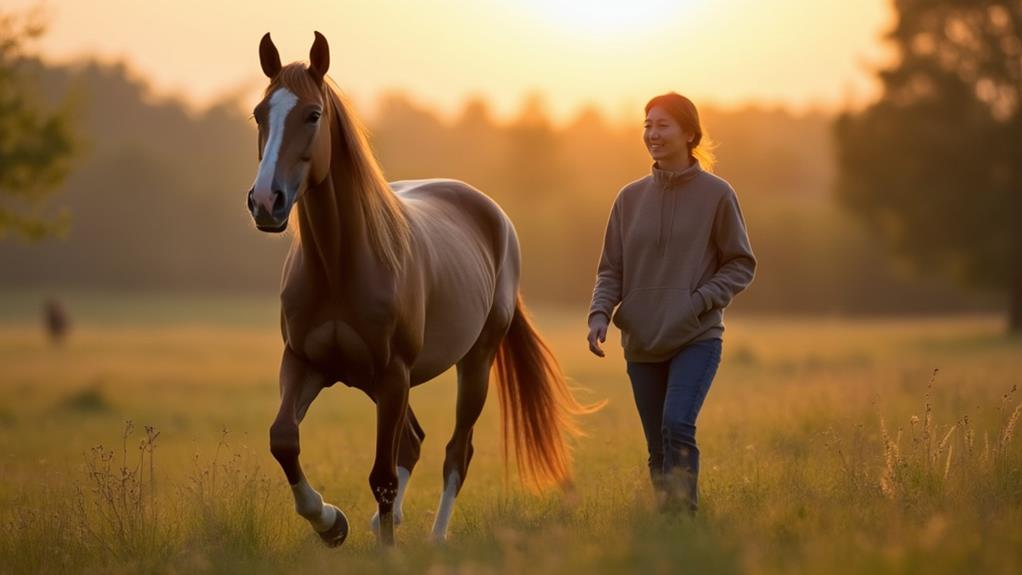
A clear sign of trust between you and your horse is when they choose to follow you willingly. This behavior indicates a strong bond and a level of comfort that can't be forced. When your horse follows you without hesitation, it shows that they see you as a leader and feel secure in your presence. This is often the result of consistent bonding activities and trust exercises that you've engaged in together.
To encourage follow behavior, start with simple exercises like leading your horse without a halter. Move around the paddock or arena, and see if they naturally fall into step with you. If they do, it means you've built a solid foundation of trust. Incorporate activities like walking over different surfaces or through obstacles to deepen this connection. Use positive reinforcement, such as treats or gentle pats, to reward them for staying close.
Evaluating Grooming Acceptance
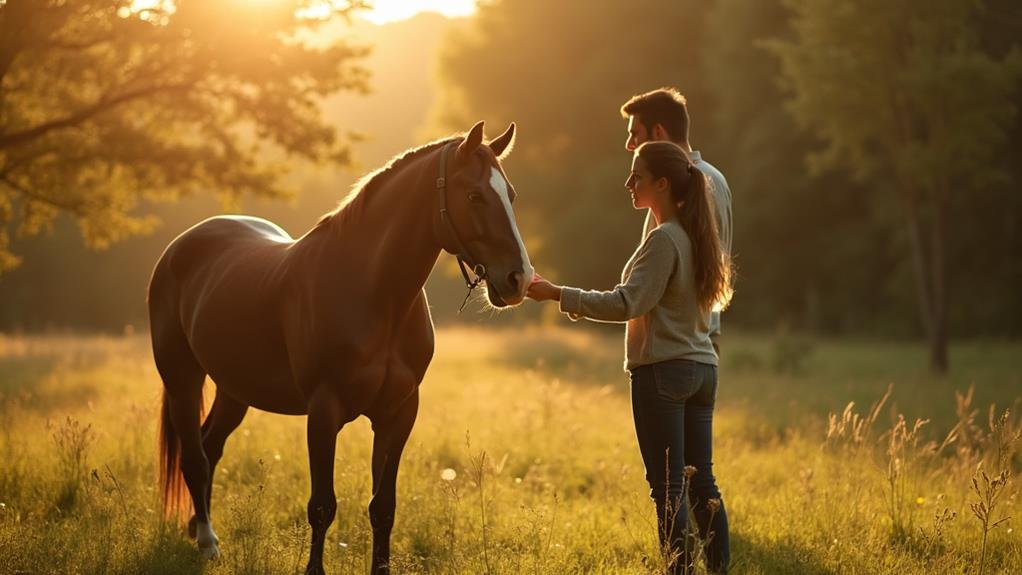
When your horse enjoys being groomed by you, it's a positive indicator of their trust. Grooming is not just about maintaining your horse's appearance; it's also about bonding. You'll want to observe how your horse reacts to different grooming techniques. Here's how you can evaluate their acceptance:
- Relaxed Behavior: If your horse stands quietly and doesn't fidget during grooming, it shows comfort and trust. They should appear calm, with relaxed ears and soft eyes.
- Lean In: Notice if your horse leans into your touch, especially when you hit that "sweet spot." This indicates they enjoy the sensation and feel safe enough to engage with you.
- Positive Reinforcement: Use treats or gentle words as positive reinforcement when your horse cooperates during grooming sessions. This strengthens the bond and encourages them to associate grooming with pleasant experiences.
- Responsive to Grooming Tools: Pay attention to how your horse reacts to different brushes and tools. If they don't flinch or pull away, they're likely comfortable and trusting of your handling.
Recognizing these signs can help you build a stronger connection with your horse, making grooming a mutually enjoyable activity.
Interpreting Licking and Chewing
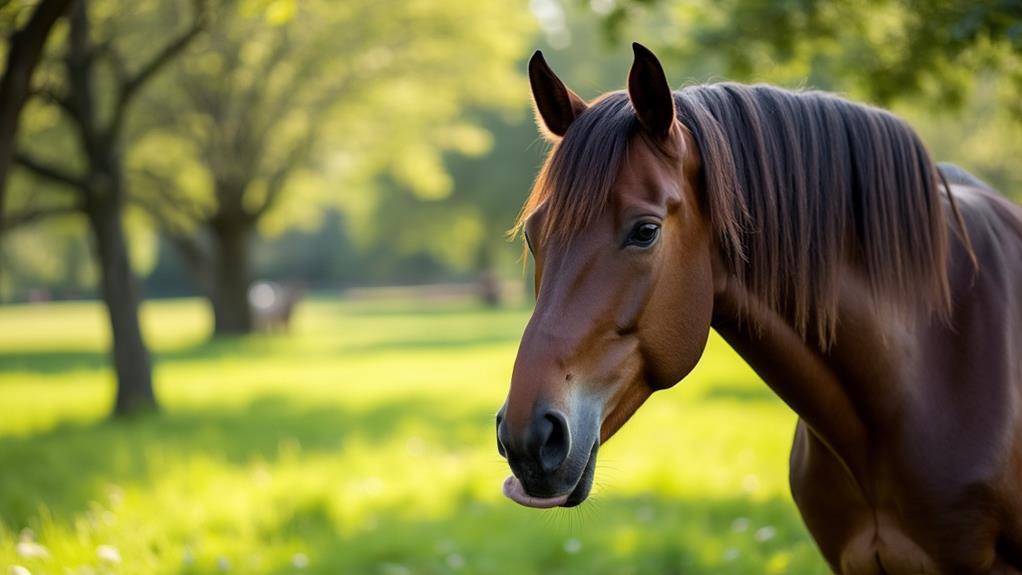
Many horse owners recognize licking and chewing as significant signals of trust and relaxation. When your horse starts licking and chewing after a training session or while you're spending quiet time together, it often means they're processing information and are at ease. Licking significance lies in the fact that it indicates your horse is comfortable with you, having released any tension from the interaction. This comfort level can be a strong indicator that your horse trusts you.
Chewing behavior, on the other hand, usually follows licking and provides further insight. When your horse chews without food present, it can mean they're acknowledging your leadership and feel safe. This behavior often happens when a horse is learning something new or after you've successfully communicated a message. It's their way of showing they've understood and accepted your guidance.
Pay attention to the context in which these behaviors occur. If your horse licks and chews during quiet moments or after a positive interaction, it's a good sign that your relationship is on the right track. By observing these behaviors, you can better understand your horse's emotional state and gauge their level of trust.
Assessing Playful Interactions
While licking and chewing provide insights into a horse's trust and relaxation, playful interactions offer another valuable perspective. Observing these moments can help you understand your horse's comfort level and affection towards you. Horses express their playful side in numerous ways, and recognizing these can strengthen your bond.
- Playful Nudges: Notice if your horse gently nudges you with its nose. This behavior can be a sign of affection and trust. It's their way of inviting you to engage or simply acknowledging your presence.
- Interactive Games: Engage in simple games like fetch or follow-the-leader. If your horse participates willingly, it's a good indicator they enjoy your company. These games help build mutual respect and understanding.
- Chasing and Running: If your horse playfully runs around you and invites you to join, it's a strong sign of trust. They're showing vulnerability by allowing you into their playful space.
- Mimicking Behavior: When your horse mirrors your actions, like tossing their head if you do, it shows they're paying attention and feel connected to you.
Pay attention to these playful interactions, and you'll gain a deeper insight into your horse's feelings and trust level.
Related posts