How to Teach Your Dog to Track by Scent: A Step-by-Step Guide
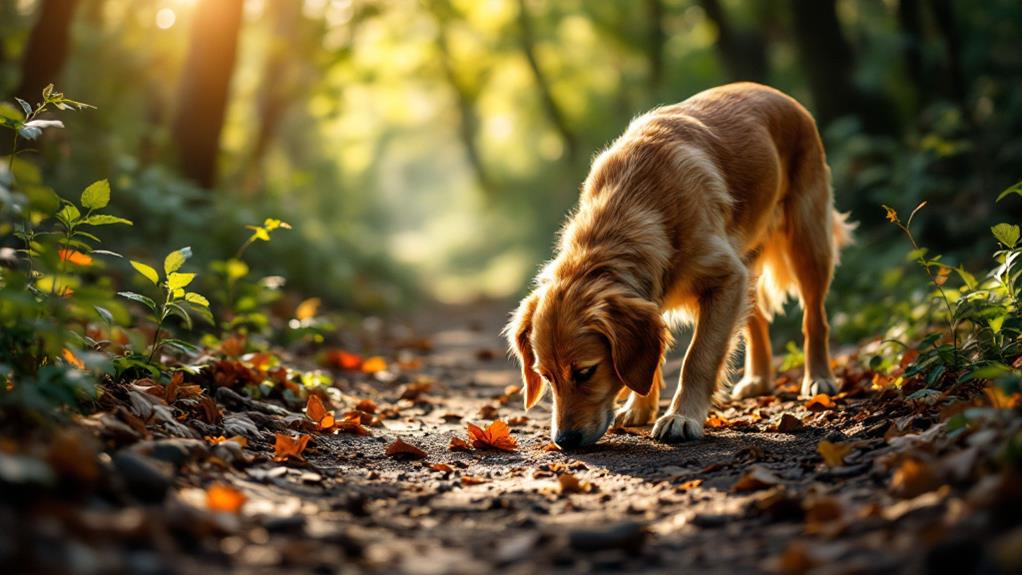
Start by ensuring your dog knows basic commands like "sit" and "stay." Gather supplies like cotton swabs soaked in birch vital oil, scent tins, and high-value treats. Lay out the scent trail in a controlled, distraction-free environment using clear patterns. Begin with simple trails and use positive reinforcement to reward successful scents. Keep training sessions around ten minutes to maintain focus, gradually increasing difficulty and complexity. Use fun games to keep your dog engaged. Overcome challenges by maintaining routine, using different scents, and providing plenty of praise. There's so much more you can investigate to master scent tracking.
Understanding Scent Training Basics
Scent training taps into your dog's incredible sense of smell, a natural ability that far surpasses human capabilities with over 220 million scent receptors. This type of training uses your dog's innate talent to track and identify specific odors, providing excellent mental stimulation and a chance to learn a new skill. Before diving into scent training, guarantee your dog has mastered basic commands like "come," "sit," and "stay." These commands create a solid foundation, making the training process smoother and more effective.
When introducing scent training, you'll notice your dog using diverse nose positions to track scents. Some dogs might keep their nose close to the ground, particularly in blood-tracking scenarios. It is vital to conduct scent training in a controlled environment. This reduces distractions, allowing your dog to focus solely on the scent task at hand. Positive reinforcement plays a significant role in your dog's success. Use treats and praise to encourage desired behaviors, keeping your dog engaged and motivated throughout the process.
Essential Supplies for Training
Before diving into scent training, you'll need to gather some vital supplies to guarantee a successful experience. These items will aid in teaching your dog to track scents effectively and make each training session productive. Here's what you'll need:
- Cotton Swabs and Birch Important Oil: Use cotton swabs as the medium for the scent. Dip them in birch important oil and store them in a small glass jar with a lid. This setup guarantees the scent remains potent and uncontaminated.
- Scent Tin or Container with Holes Drilled: Securely place the scented cotton swabs in a scent tin or box with ventilation holes. This allows your dog to detect the scent during the scent game while keeping the swabs safe.
- High-Value Treats: Reward your dog with high-value treats when they successfully identify and track the scent. This encourages positive behavior and reinforces learning.
- Plastic Sealable Bag: Use a plastic sealable bag to separate the scented supplies from other items to maintain cleanliness and prevent contamination.
Setting Up the Scent Trail
When setting up the scent trail, start by selecting a safe and distinctive scent source, like birch vital oil, to guarantee your dog has a clear and recognizable path to follow. You'll want to soak cotton swabs in the scent and strategically lay them at intervals along your desired tracking path. This method creates a consistent trail that serves as a guide for your dog, making the scent easy to follow.
To improve your dog's training, design the trail in an L-shaped or U-shaped pattern. These shapes provide clear navigation points and help your dog track the scent more accurately. Before your dog starts, set up your environment to be distraction-free. This focus allows your dog to hone in on the scent without any interruptions, ensuring they can concentrate on the task at hand.
Incorporate flags or markers to indicate the trail angles and the start point. These markers not only guide your dog but also help you monitor their progress during the exercise. By following these steps, you can create an effective and engaging training session that helps your dog develop their scent-tracking abilities.
Techniques for Effective Training
Mastery of scent tracking begins with a structured approach that prioritizes clarity and engagement. To teach your dog effectively, start in a distraction-free environment. Use a specific scent, like birch vital oil on a cotton swab, placed in a plastic container with holes. This setup focuses your dog's nose on a clear target and sets the stage for successful Scent Work.
Here's how to improve your training:
- Work in Controlled Settings: Initially, keep your dog in environments with minimal distractions. This helps them focus solely on the scent without external interruptions.
- Use Positive Reinforcement: Reward your dog with high-value treats immediately when they successfully identify the scent. This encourages them to associate the scent with positive outcomes and keeps them engaged.
- Gradually Increase Complexity: Allow your dog to watch as you hide the scent in new locations. Gradually make it more challenging by using different rooms or outdoor spaces.
- Incorporate Fun Games: Use scent trails or games like the Muffin Tin Game. These activities make learning enjoyable and help maintain your dog's interest.
Overcoming Common Challenges
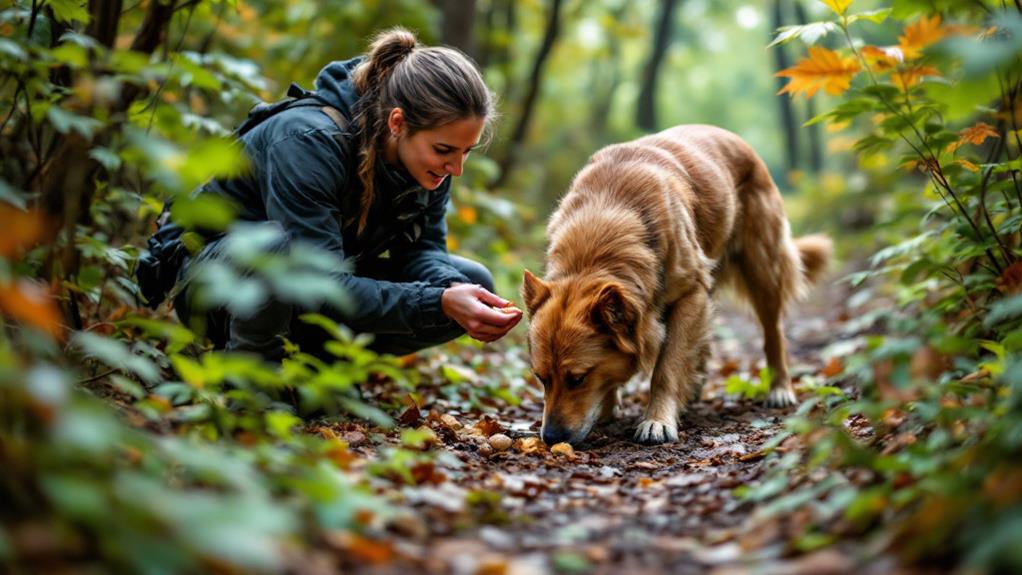
Even with effective techniques, scent training can present a variety of challenges. To maintain focus, keep sessions short, around 10 minutes, and take frequent breaks. Overexcitement can be a hurdle; calming techniques like controlled breathing help your dog regain focus. If your dog loses interest, experiment with different scents or high-value rewards to uncover what motivates them most.
Inconsistent performance might occur, but you can tackle this by establishing a routine and gradually increasing the difficulty of tasks. This builds confidence and reliability in your dog's nose work abilities. If fear or anxiety is an issue, slowly acclimate your dog to the environment. Make sure to create positive associations with rewards and praise for successful behaviors.
When practicing scent training, keep in mind the environment. Move to another room if distractions arise. Place the box containing the scent strategically, and hold the cotton with the scent firmly to prevent mixing odors. Watch as you hide the object, ensuring your dog sees the process, which can aid in understanding. These strategies will aid in overcoming common challenges, enhancing your dog's scent tracking abilities effectively.