How to Teach Your Dog to Track: A Step-by-Step Guide
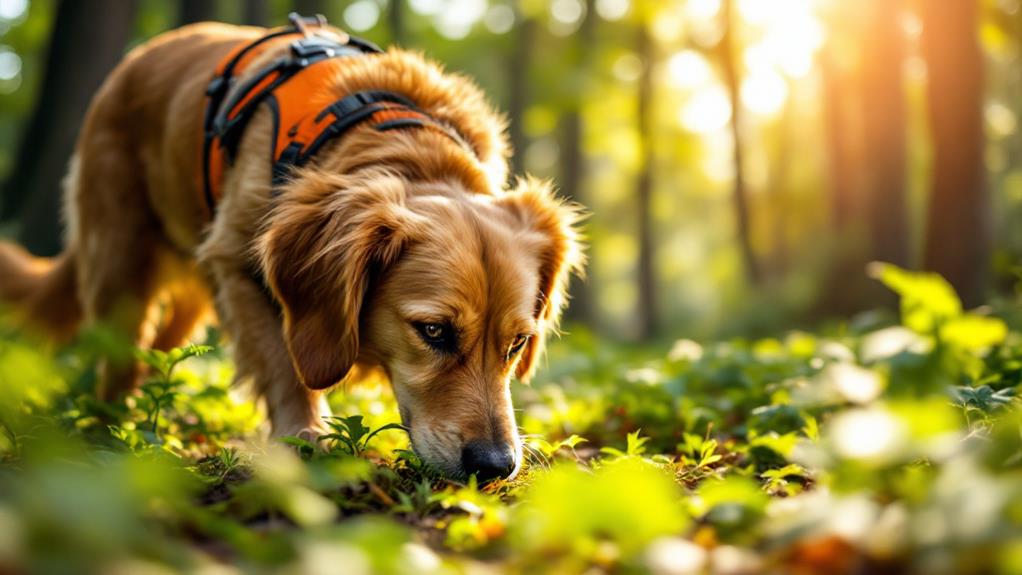
To teach your dog to track, start with the right gear: a harness, long-line leash, and high-value treats. Use a specific command, like "find it," and create a simple scent trail with treats spaced apart in a quiet area. Keep initial sessions distraction-free and gradually increase complexity. Reward their successes with praise and treats. Consistency and patience are key, in addition to managing your dog's energy levels with short warm-ups. As you progress, introduce distractions and scent puzzles to enhance their skills. There's much more to uncover in helping your dog become a skilled tracker.
Benefits of Tracking Training
Tracking training offers numerous benefits for both you and your dog. It improves your dog's cognitive abilities by stimulating their natural problem-solving skills, vital for breeds like Beagles and Bloodhounds. With approximately 300 million olfactory receptors, scent detection becomes a thrilling and natural exercise for your canine companion. This form of training not only taps into their innate abilities but also provides significant mental enrichment.
As you commence on this expedition, you'll notice a stronger bond forming between you and your dog. The interactive nature of tracking training fosters teamwork and communication, deepening the connection between handler and dog. Furthermore, regular tracking sessions encourage physical activity, helping manage your dog's energy levels while promoting general health and well-being.
Mastering tracking skills can open doors to exciting opportunities like search and rescue missions or participating in scent work competitions. These activities give your dog a sense of purpose and fulfillment, allowing them to thrive in environments that challenge their abilities. Ultimately, tracking training is a multifaceted approach that nurtures your dog's natural instincts while strengthening the bond you share, making it a rewarding experience for both of you.
Essential Training Gear
To fully adopt the benefits of tracking training with your dog, you'll need the right gear to guarantee a successful experience. Initially, let's talk about high-value treats. These are vital in motivating your dog to engage with the scent trail. Think of them as the ultimate reward for a job well done. Hot dogs or other savory snacks work excellently. Next, invest in a harness and a long-line leash, ideally 20 to 30 feet. This setup offers your dog the freedom to investigate while you maintain control.
Here's a quick list of necessary training gear:
- High-value treats: Use enticing snacks to motivate and reward your dog.
- Harness and long-line leash: Provides freedom and control during tracking practice.
- Scent samples and target item: Use toys or gloves to reinforce scent recognition.
- Quiet training environments: Choose grassy parks with minimal distractions.
Ensure you select training environments that are quiet and safe, free from distractions. This will help your dog focus better on tracking practice. Adequate preparation, with the right training gear and controlled settings, sets a solid foundation for your pup's tracking adventures.
Step-by-Step Tracking Process
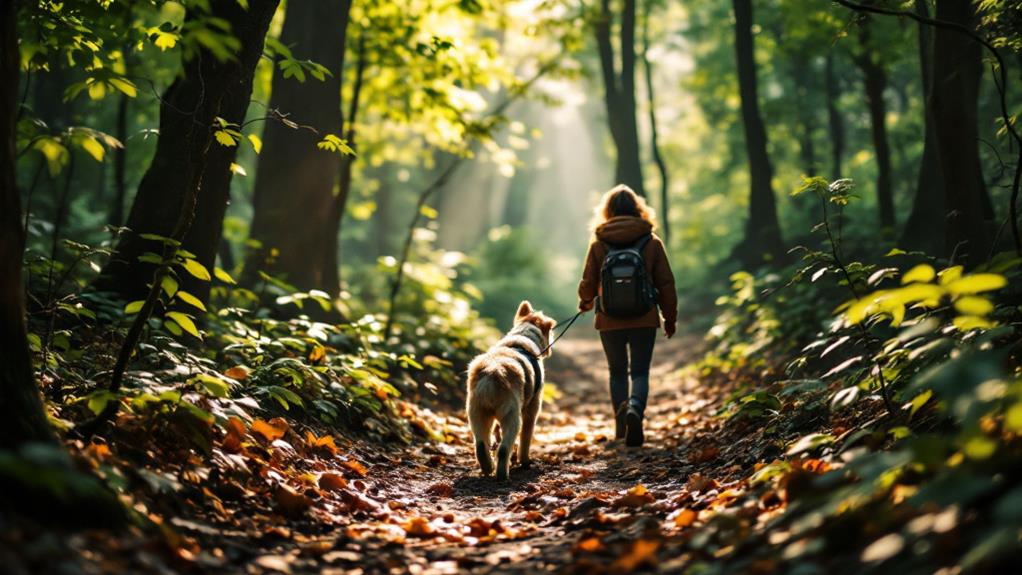
Starting your dog's tracking expedition requires a clear and consistent approach. Begin by introducing a specific command like "find it" to signal when it's time for your dog to start tracking. This command will be fundamental for your scent work, as it cues your dog to begin the search. Next, create a scent track by dropping high-value treats every 6-10 feet in a straight line. This track should end with a favorite toy or a special treat to motivate your dog to finish the search.
Conduct your training sessions in a quiet, distraction-free environment early in the day. This setting will help minimize disturbances, allowing your dog to focus better on the task at hand. As your dog's tracking skills improve, gradually increase the complexity of the track. Introduce curves and longer distances to challenge and boost their abilities.
Reinforce successful tracking efforts with plenty of praise and rewards. It's significant to monitor your dog's energy levels throughout the training process to guarantee they stay engaged and motivated. A well-paced and enjoyable training experience will encourage your dog to track with enthusiasm, ultimately making scent work a rewarding activity for both of you.
Teaching Commands Effectively
Now that you've laid the groundwork for your dog's tracking skills, it is crucial to focus on teaching commands effectively to improve their scent work. Establish a consistent tracking command, like "find it," to signal your dog to start tracking. Reinforce this command by using positive reinforcement. Reward your dog with high-value treats or toys each time they successfully follow the scent trail. Here's how to teach commands effectively:
- Introduce the Command Early: Start with a visible scent article. Gradually increase difficulty by hiding it in less obvious locations to build your dog's confidence.
- Use Positive Reinforcement: Immediately reward your tracking dogs with high-value treats or toys when they show desired behavior. This strengthens their understanding and motivation.
- Maintain Consistency: Use the same tracking command consistently. Repetition helps dogs learn, so be patient, as mastering this skill can take time.
- Incorporate Quiet Praise: Encourage your dog with subtle praise during tracking. This helps them stay focused without getting distracted by over-enthusiastic responses.
Managing Energy Levels
A significant aspect of successful tracking training is managing your dog's energy levels to improve focus and performance. Start by engaging your dog in short bursts of physical activity like a 10-15 minute walk or play session. This helps burn off excess energy, making your dog more attentive during tracking exercises. Monitoring energy levels closely allows you to tailor training sessions and guarantee your dog isn't over-exerted. Spacing sessions throughout the week helps maintain skill retention without overwhelming your dog.
Training sessions should be frequent enough to prevent skill degradation. Aim for multiple sessions each week to keep your dog mentally and physically engaged. Avoid long gaps between sessions, as this can lead to a loss of progress. During training, maintain your dog's motivation by celebrating small achievements. Reinforce these moments with praise and rewards, fostering a positive association with tracking activities.
High-value treats play a significant role in maintaining motivation. Ascertain your dog has an appetite by avoiding overfeeding before sessions. This way, treats remain enticing and effective for reinforcement. By managing energy levels and motivation, you'll improve your dog's tracking skills and general enjoyment of the training process.
Advanced Tracking Techniques
With your dog's energy levels and motivation well-managed, it's time to investigate advanced tracking techniques that build upon these foundations. Improving your dog's tracking abilities involves introducing new challenges and refining skills. Here's how you can take your tracking exercises to the next level:
- Introduce Distractions: Gradually add distractions during tracking sessions. This simulates real-world scenarios and teaches your dog to maintain focus, even when faced with interruptions. It's crucial for developing a disciplined search path.
- Scent Discrimination: Use multiple scent articles to help your dog differentiate between different smells. This exercise sharpens their scent discrimination skills and reinforces their ability to track specific targets.
- Scent Puzzles: Incorporate scent puzzles where your dog must solve problems to find hidden items. These puzzles engage their cognitive abilities and improve their general tracking proficiency.
- Communication Cues: Teach your dog a specific command or behavior to indicate when they've found the scent. This improves communication and guarantees effective collaboration during tracking tasks.
Regularly refresh scent samples to keep training engaging and prevent your dog from losing interest. These advanced techniques will boost your dog's tracking capabilities, making each session more productive and rewarding.