How to Teach Your Dog to Cross the Street Safely
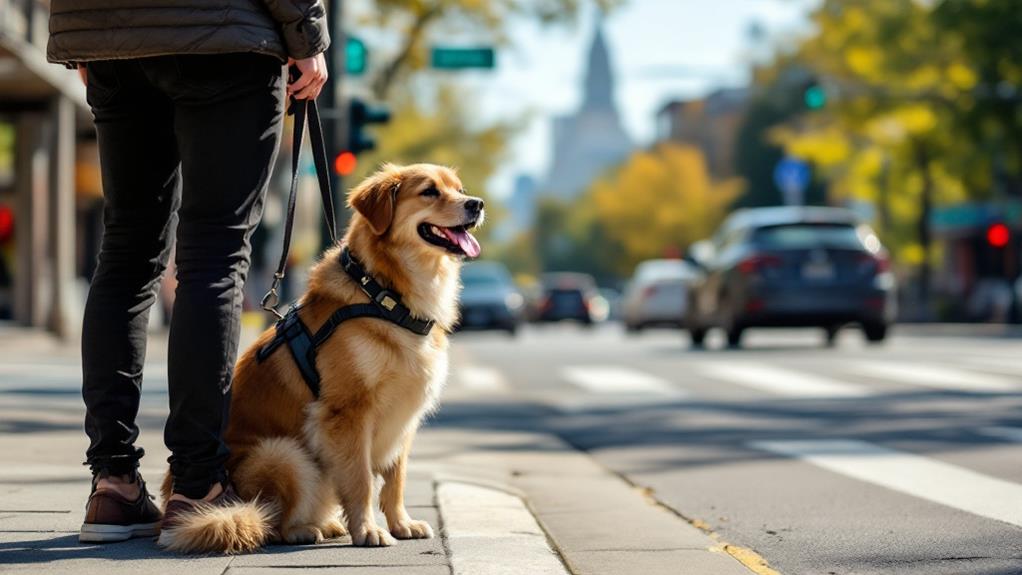
To teach your dog to cross the street safely, start by instilling basic commands like "sit," "stay," and "come" in a secure area. Use positive reinforcement to build their confidence and guarantee they recognize boundaries, viewing streets as unsafe zones. Gradually introduce them to traffic in controlled environments, and encourage calm behavior at curbs with rewards. Practice the essential skill of looking both ways before crossing. Always keep your dog on a leash and make certain they're visible with reflective gear. By building on these methods, you'll equip your dog with the skills for safe street navigation. Uncover more steps ahead.
Understanding Dog Safety Risks
Understanding the risks associated with dog safety is fundamental for every pet owner. With over 1,200,000 dogs dying annually from car accidents in the U.S., it's clear that effective safety training isn't just significant—it's imperative. Dogs don't instinctively fear vehicles or roads, so training them to stop and wait before they cross the road is essential. By addressing this aspect of dogs' behavior, you can greatly reduce the chances of tragic traffic incidents.
As a responsible dog owner, you must recognize that accidents don't just affect your pet. The emotional trauma of losing a pet can be overwhelming for families, and the financial burden of medical expenses from injuries can be substantial—often exceeding $250 each month. Consequently, proactive and consistent training is a cornerstone of responsible dog ownership.
To prevent accidents, start training your dog early, regardless of whether they're a puppy or an adult. This helps instill habits that guarantee their safety when exposed to streets and traffic. Remember, they can't comprehend the dangers of traffic without your guidance. By focusing on effective safety training, you'll not only safeguard your furry friend but also foster a safer environment for all.
Building a Strong Training Foundation
To always guarantee your dog is ready for safe street crossings, start by establishing a solid training foundation with basic commands like "sit," "stay," and "come" in secure environments such as sidewalks or yards. These commands are vital for developing a history of positive reinforcement, which encourages safe behavior. By consistently practicing these commands, you'll improve your dog's ability to respond to cues, ensuring they're ready to face the complexities of crossing the street.
Building a strong relationship with your dog through positive reinforcement, like treats and praise, is paramount. It creates a trusting environment where your dog feels motivated to obey commands and focus on your guidance. This relationship is significant when teaching your dog to look to you for directions, especially in traffic scenarios. Gradual exposure to such scenarios in controlled environments can help reinforce road safety without overwhelming your dog.
To cross the street safely, your dog must understand these commands and follow them reliably. With a solid training foundation, your dog will be better equipped to navigate street crossings safely, ensuring both their safety and your peace of mind.
Teaching Safe Zone Boundaries
How do you guarantee your dog knows where it's safe to roam? Establish clear safe zones, like your yard or driveway, where your dog can learn to stay and feel secure. Start your training sessions by using positive reinforcement techniques—treats and praise work wonders. When your dog remains within these designated areas, reward them to reinforce boundary recognition. This practice is essential for your dog's safety, allowing them to understand where it's safe to cross and where they should not venture.
As you train, consistency in training is key. Regularly practice these boundary exercises to help your dog internalize their safe zone limits. Gradually introduce the concept of safe zones by allowing your dog to investigate and recognize these areas before advancing to more challenging street scenarios. Teach your dog to sit at the edge of these zones, marking a clear distinction between where it's safe and where caution is needed.
Monitor your dog's behavior closely and adjust your methods if needed. Each dog is unique, and some may require more time or different techniques to feel comfortable and confident in their understanding of safe zone boundaries. Your patience and persistence will guarantee success.
Street Avoidance Techniques
Having established safe zone boundaries for your dog, it's time to introduce street avoidance techniques to further secure their safety. Start by teaching your dog to see the street as an unsafe zone. Use sit and stay commands at the edge of the sidewalk, reinforcing their ability to ignore distractions like toys and food nearby. This helps them understand that crossing the road without you isn't allowed.
Gradually expose your dog to traffic in a controlled setting, such as quiet streets or parking lots, to build their confidence. When they successfully avoid stepping onto the street, use positive reinforcement—give treats and praise to encourage this behavior. Use verbal commands like "look" and "stay" to focus their attention and prevent them from moving until you say "go."
Hand signals and visual cues are also crucial. Consistently use these to train your dog to rely on you for direction before crossing the road. Practice these techniques in different traffic conditions to verify they're ingrained. This consistent approach helps solidify your dog's understanding of street avoidance, making certain they're safe around roads. Remember, patience and repetition are key to success.
Introducing Controlled Street Crossing
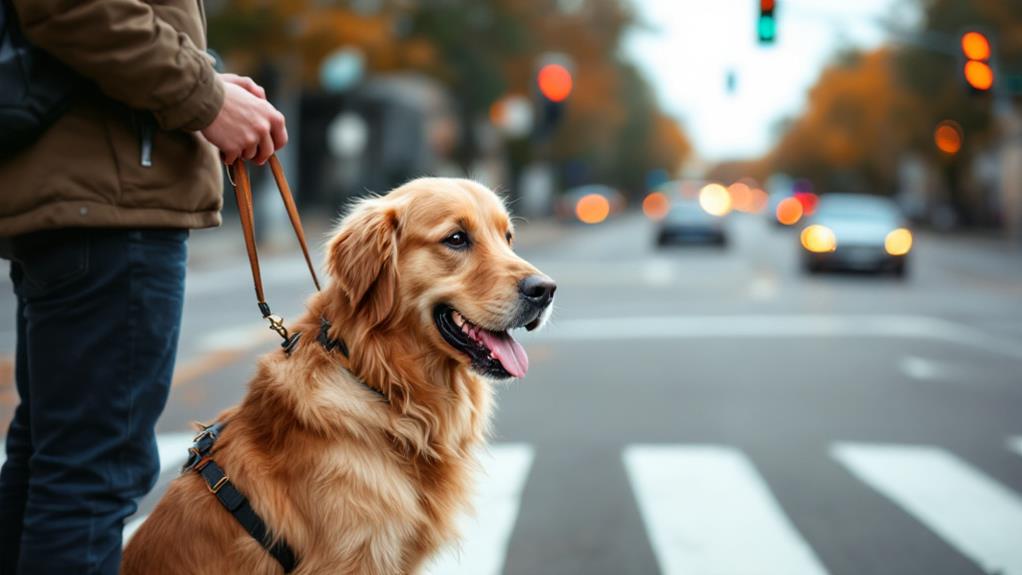
Begin your dog's street crossing training in low-traffic areas where they can gradually get used to the sights and sounds of passing vehicles without being overwhelmed. Start by allowing your dog to acclimate to vehicles, using positive reinforcement techniques like treats and praise when they sit and wait at the curb. This helps them associate calm behavior with rewards.
Teach your dog the essential safety step of looking left, right, and then left again before crossing the street. Consistently practice this routine and reward your dog each time they follow through correctly. This repetition builds a reliable habit, ensuring they focus on your commands even when distractions arise.
Keep your dog on a leash for control during these training sessions. This is important for their safety and helps manage their focus when distractions occur. Gradually increase the level of traffic and distractions as they become more comfortable with street crossing. To improve safety, especially in low-light conditions, consider equipping your dog with reflective gear. This makes them more visible to drivers and adds another layer of protection during your training exercises. With patience and persistence, your dog will learn to cross streets safely.
Utilizing Community Support Resources
To improve your dog's street crossing skills, tap into the wealth of community support resources available. Start by joining a private Facebook group focused on dog training. These groups are a goldmine for sharing experiences, seeking advice, and discussing street safety training. You'll find stories from fellow dog owners that highlight effective strategies for managing distractions and maneuvering busy roads.
Participate in community workshops on pedestrian safety to enhance your awareness of traffic risks. These workshops reinforce the importance of training your dog to handle street crossings safely, just like guide dogs are trained to lead their owners. Engaging with local campaigns on dog and pedestrian safety can also be incredibly beneficial. These initiatives promote proper training techniques and encourage responsible pet ownership, ensuring your dog becomes a safe member of the community.
Share your own success stories and challenges with others. Anecdotal evidence fosters motivation and continuous learning. Watching unedited training sessions from others allows you to witness real-life challenges and successes. These insights are invaluable for refining your dog's street crossing training, ultimately enhancing their safety and yours in traffic-heavy environments.