How to Take Care of Your Cat During Emergency Situations
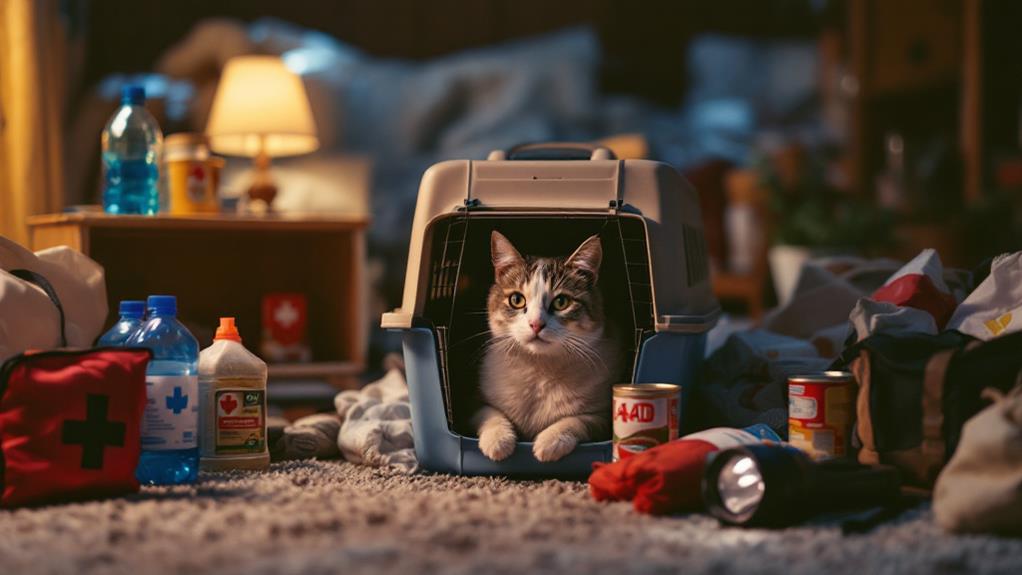
To care for your cat during emergency situations, start by assembling a kit with a 5- to 7-day supply of food, water, a litter box, and necessary medications. Have a sturdy carrier ready for quick transport and verify your cat's identification details are up-to-date. Plan specific evacuation routes and know pet-friendly hotels in advance. Attach a Rescue Alert sticker to your home to inform rescuers of your pet's presence. After the immediate crisis, monitor your cat for stress and establish a safe zone at home. Taking these steps guarantees your cat's comfort and safety, and it opens a door to supplementary crucial strategies.
Prepare an Emergency Kit
Preparing an emergency kit for your cat is significant to guarantee their safety and well-being during unforeseen situations. Start by confirming you have a 5- to 7-day supply of food and water, along with bowls and a manual can opener for convenience. This will keep your cat nourished and hydrated if an emergency arises. A sturdy carrier is fundamental for safe transport, providing a secure space for your cat during evacuation. Pair it with a litter box, litter, and garbage bags to maintain cleanliness and manage waste efficiently.
Store any important medications and copies of your cat's medical records in a waterproof container. This precaution guarantees that they're intact and accessible during a disaster. Including recent photos and copies of your cat's identification details, such as microchip information, is critical. These documents can help facilitate recovery if your cat gets lost.
Plan for Evacuation
Once you've assembled an extensive emergency kit, it's time to focus on evacuation planning. Start by developing a detailed disaster plan that outlines specific evacuation routes and destinations. Make certain all family members understand their roles in managing the cat during an emergency evacuation. Assign a designated carrier for each cat and keep it in a spot that's easy to access quickly. Regularly conduct evacuation drills to help your cat get comfortable with the carrier, reducing stress when you need to evacuate.
Research and compile a list of pet-friendly hotels, local animal shelters, and boarding facilities along your evacuation routes. This guarantees you'll have safe accommodations ready to keep cats secure when you need to evacuate. It's vital to have a checklist of important items, including food, water, medications, and identification documents. Don't forget contact information for your vet and a basic initial aid kit for your cat.
Attach a Rescue Alert sticker to your home's entrance, indicating you have pets inside. This informs rescue workers to save your animals if you're not home during an emergency. By planning ahead, you'll guarantee a safe, efficient evacuation for you and your cat.
Identify Safe Shelter Options
In the midst of an emergency, knowing where you can safely shelter with your cat is vital. Start by researching and compiling a list of pet-friendly shelters, hotels, and motels in advance. These safe accommodations are critical during an evacuation, especially if you're facing a natural disaster. While most Red Cross shelters do not accept pets, it's significant to confirm their policies and have alternative options ready. Consider reaching out to family and friends who might offer a safe space for you and your cat.
If you find yourself in a situation where you can't bring your cat along, identify emergency boarding facilities that can care for your pet. Verify these places are equipped to handle your cat's needs, including food, water, and exercise space. Incorporating these into your disaster plans can save you time and stress.
Keep a map or GPS coordinates of these identified safe locations in your emergency kit. This guarantees quick reference during an evacuation, allowing you to act swiftly. Taking these steps assures you have a clear path to safety for both you and your cat when emergencies arise.
Ensure Proper Identification
If you're caught in an emergency, guaranteeing your cat can be easily identified is vital for a swift reunion. Start by making certain your pet wears a sturdy collar with an ID tag. This tag should have your current contact information, which is critical if they become lost during an emergency. A collar and tag are often the primary line of identification, helping anyone who finds your cat to contact you quickly.
Additionally, consider microchipping your cat. Unlike collars or tags, microchips provide a permanent form of identification that can't be easily lost or removed. Verify that the contact information linked to your cat's microchip is up-to-date. This small step can greatly increase the chances of recovery if your pet goes missing.
Keep a recent photo of your cat handy. This can be invaluable for identification purposes, especially when creating lost pet flyers or reporting your cat missing to local shelters or online platforms. Finally, use visible rescue alert stickers on your front door. These stickers inform emergency responders of your cat's presence, enhancing their safety during a crisis. By taking these steps, you'll improve your cat's identification and safety in emergency situations.
Support Post-Disaster Recovery
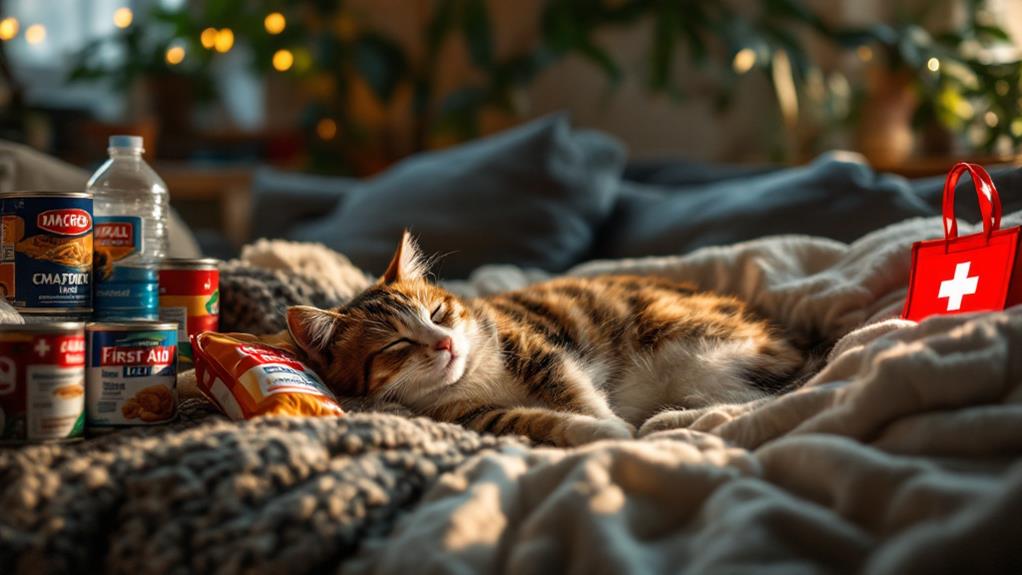
Having confirmed your cat's identification is secure, it's time to focus on supporting their recovery after a disaster. Start by monitoring your cat for any behavioral changes like increased anxiety or withdrawal. These signs may indicate stress from the event, and addressing them is vital. After evacuating, make certain your cat remains under control to prevent escapes, especially if their usual enclosures are damaged.
Create a safe place within your home or shelter as part of your emergency plan, where your cat can feel secure. Be vigilant about potential hazards at ground level, such as debris, chemicals, or sharp objects, which can pose significant risks. Your cat's safety should always be a priority during the recovery phase.
Re-establish routines as soon as possible. Familiarity and structure help stabilize your cat's emotional well-being and can ease their adjustment back to normalcy. If your cat continues displaying behavioral changes or if health concerns arise, consult a veterinarian. Professional guidance is essential to make certain your cat fully recovers and returns to their happy self. Remember, your cat is a cherished member of your family, and their recovery is a significant part of your comprehensive disaster recovery process.