How to Safely Ride a Horse in Mountainous Terrain: Essential Tips
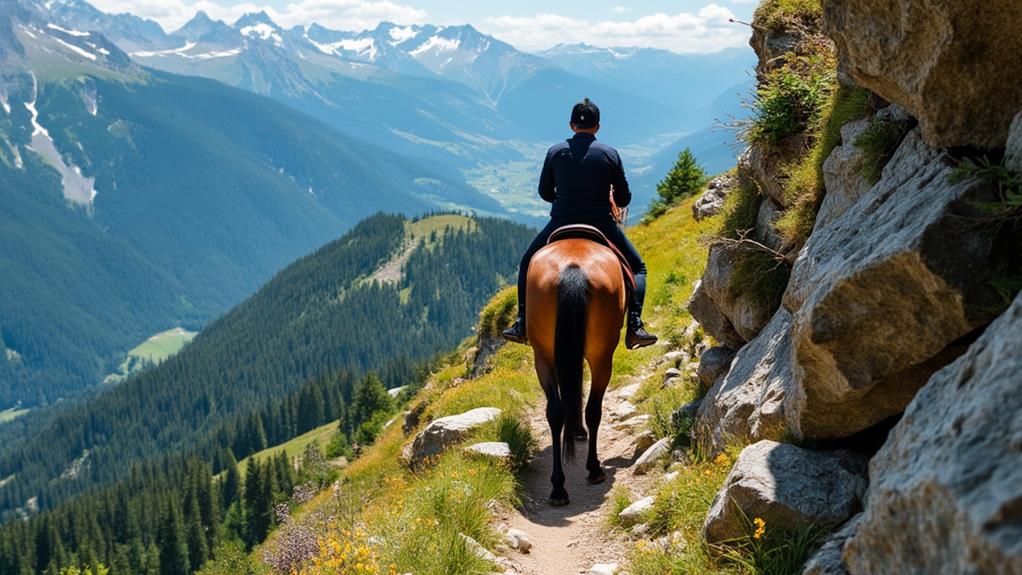
When riding a horse in mountainous terrain, start by evaluating the trail's conditions—watch for rocky or muddy paths and plan your route to avoid obstacles like loose rocks. Choose a horse suited for the terrain, and verify it's well-conditioned through a fitness regimen. Wear crucial gear like a certified helmet and sturdy boots, and check your tack for wear. Stay aware of quick weather changes by dressing in layers and carrying a waterproof jacket. Use clear communication with your horse and maintain a balanced seat on steep trails. There's plenty more to investigate for a safer mountain riding experience.
Assessing the Terrain
Before heading out on a mountainous ride, it's crucial to thoroughly assess the terrain. Start by identifying the different trail types you'll encounter. Mountain trails can range from well-marked paths to narrow, winding tracks that demand keen attention. Recognize the differences in these trail types to plan your ride more effectively. Some trails may be rocky, while others could be soft and muddy, each requiring different riding techniques and levels of caution.
Next, focus on the terrain features that could impact your ride. Look out for steep inclines and declines, which can be challenging for both you and your horse. It's significant to gauge the difficulty of these features beforehand to make sure you're prepared. Check for natural obstacles like fallen branches, loose rocks, or water crossings. Be aware of these potential hazards as they can affect your horse's footing and balance.
Selecting the Right Horse
Understanding the terrain sets the stage for selecting the right horse for mountainous rides. Not all horses are suited for the challenges of steep climbs and uneven paths. Your choice should factor in horse breed suitability and your own rider experience. Some breeds are naturally better adapted to mountainous conditions, displaying surefootedness and stamina. Breeds like the Mustang, Arabian, and Icelandic horse are renowned for their strength and agility in rugged environments.
Here's how to select the perfect horse for your adventure:
- Evaluate Horse Breed Suitability: Research breeds known for maneuvering tough terrains effortlessly. Confirm the horse has the right physical attributes like strong legs and a calm disposition.
- Consider Rider Experience: If you're a novice, choose a horse known for its gentle temperament. An experienced rider might handle a more spirited horse, but safety should always be your priority.
- Assess the Horse's Health and Temperament: Check for signs of good physical health, such as clear eyes and sound hooves. A horse that's alert yet calm is ideal for mountainous rides.
Conditioning Your Horse
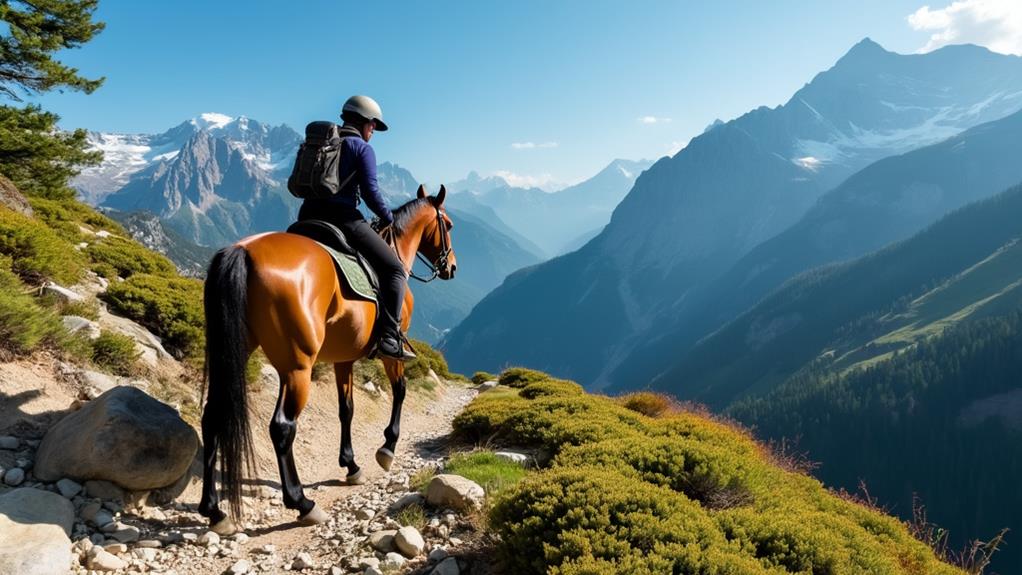
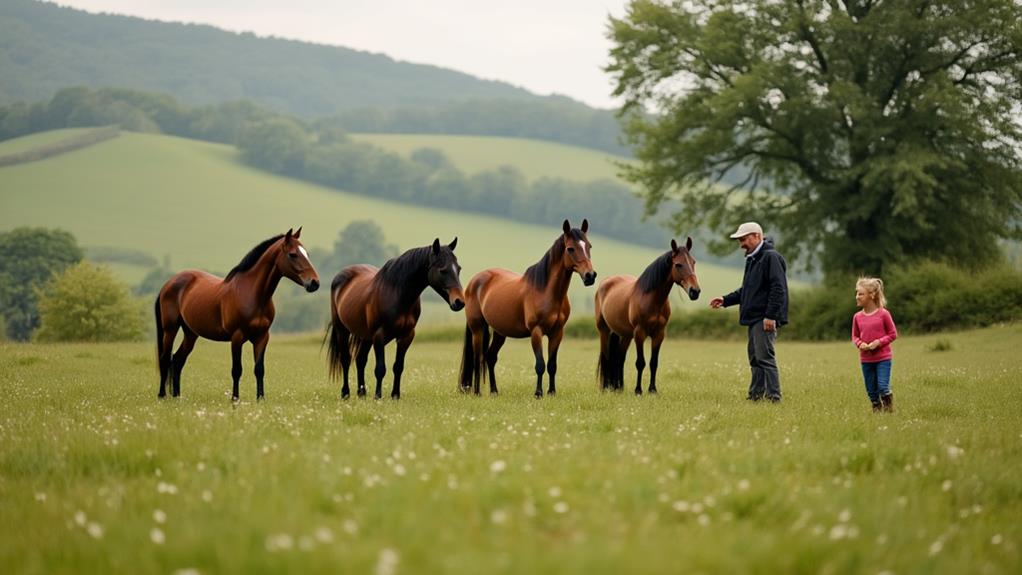
As you prepare for riding in mountainous terrain, conditioning your horse is vital to guarantee a safe and enjoyable experience. Begin by establishing a fitness regimen tailored to your horse's current condition and the demands of the terrain. Start with basic exercises, such as walking and trotting on flat surfaces, gradually increasing the duration and intensity. This consistent routine will build your horse's strength and stamina, setting a solid foundation for more challenging activities.
Incorporate endurance training into your horse's schedule. Gradually introduce hills and inclines, starting with gentle slopes and slowly progressing to steeper ones. These exercises will improve your horse's cardiovascular fitness and muscle tone, important for traversing uneven and steep paths. Pay attention to your horse's breathing, heart rate, and recovery time to gauge progress and avoid overexertion.
Monitor your horse's progress and make adjustments as needed. Include rest days to allow for muscle recovery and prevent fatigue. An adequately conditioned horse will handle the physical demands of mountainous terrain more efficiently, reducing the risk of injury. Remember, a well-prepared horse guarantees not just safety, but also a more enjoyable riding experience for both of you.
Essential Riding Gear
Equipping yourself and your horse with the right gear is vital for a safe ride in mountainous terrain. Your initial priority should be your own safety, starting with a reliable helmet. There are several helmet types designed specifically for horseback riding, including traditional, ventilated, and all-terrain models. Choose one that fits snugly and meets safety standards to protect against unexpected falls.
Next, focus on your footwear. Proper boots are important, offering grip and stability in rocky or uneven paths. Look for boot materials like leather or synthetic options that provide water resistance and durability. Make certain they have a heel to prevent your foot from slipping through the stirrup.
For your horse, invest in a well-fitting saddle and saddle pad to guarantee comfort and prevent injuries. Here's a simple checklist to help you prepare:
- Helmet Types: Choose a certified helmet suited for mountainous terrain.
- Boot Materials: Opt for durable, water-resistant boots with a sturdy heel.
- Saddle and Pad: Confirm they're well-fitted to keep your horse comfortable.
Weather Considerations
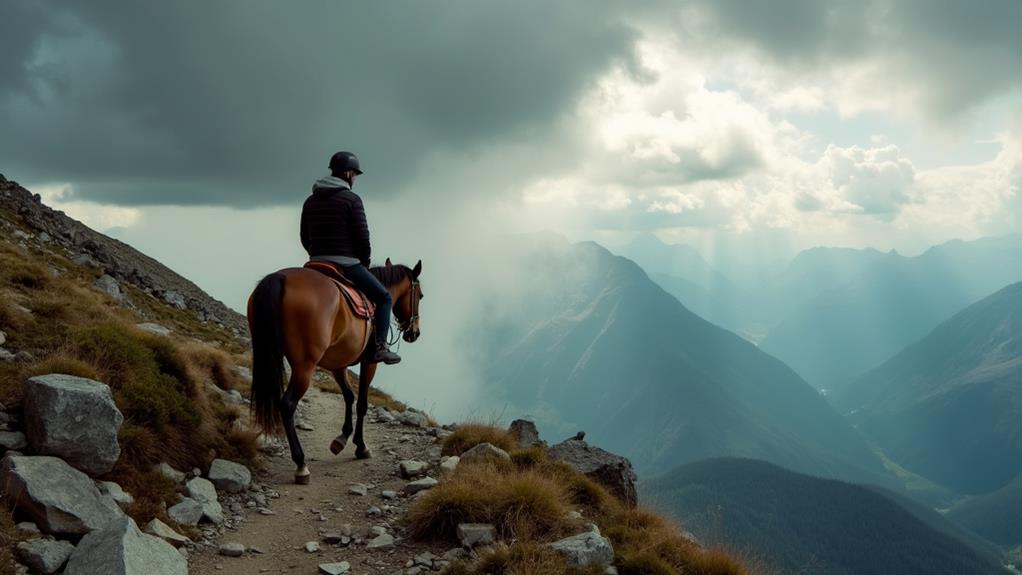
When planning a horseback ride in mountainous terrain, watch out for weather changes that could affect your safety. Mountains often experience sudden temperature fluctuations that can catch you off guard. One moment, you're basking in warm sunshine, and the next, a chilly breeze sweeps through. Dress in layers so you can easily adjust to these changes. Always carry a waterproof jacket, as it offers protection against both cold and unexpected rain.
Pay close attention to precipitation patterns, too. Mountain weather can change rapidly, and a clear sky in the morning might turn into a downpour by afternoon. Check the weather forecast before setting out, but also be prepared for surprises. Rain can make trails slippery, increasing the risk of a fall for both you and your horse. If you notice dark clouds or feel the air growing heavy, consider turning back or finding shelter.
Navigating Steep Trails
Tackling steep trails while horseback riding in mountainous terrain requires careful planning and steady execution. As you ride, you'll encounter several trail obstacles such as loose rocks and narrow paths. It's essential to employ effective navigation techniques to guarantee both your safety and your horse's well-being. Start by evaluating the trail's condition and identifying potential obstacles. Your awareness will guide you in making the right decisions as you progress.
Here are three key strategies to help you navigate steep trails effectively:
- Maintain a Balanced Seat: Keep your body centered over the horse, allowing them to move freely. Lean slightly forward when ascending, and shift your weight back when descending. This balance helps your horse tackle the incline or decline with ease.
- Communicate with Your Horse: Use subtle cues to guide your horse around obstacles. A gentle nudge with your leg can instruct your horse to avoid a rock or branch.
- Plan Your Route: Choose the safest path by analyzing the terrain ahead. Look for stable ground and avoid areas with loose debris or overly steep sections.
Tack and Equipment Check
Making certain your tack and equipment are in top condition is vital for a safe and enjoyable mountain ride. Start by checking your saddle fit, as an ill-fitting saddle can cause discomfort for both you and your horse. A well-fitted saddle distributes your weight evenly, preventing sores and allowing your horse to move freely over rugged terrain. To check the fit, verify there's enough clearance over the withers, and the saddle sits level without pinching.
Next, focus on bridle adjustments. A properly adjusted bridle guarantees effective communication between you and your horse. Check the bit placement; it should rest comfortably in your horse's mouth without pinching or causing stress. The browband should sit flat without pulling back the ears, and the throatlatch must be snug enough to keep the bridle secure but loose enough to allow comfortable breathing.
Inspect all straps, buckles, and stitching on your tack. Look for signs of wear or damage that could fail during your ride. Don't forget to examine your girth or cinch for fraying or stress points. Taking these steps guarantees your equipment won't let you down in the challenging mountain environment.
Rider Safety Techniques
Having checked your tack and equipment, it's time to focus on rider safety techniques to guarantee a secure expedition through the mountains. Initially, perfect your rider posture to maintain balance and control. Sit upright with a straight back, keeping your shoulders relaxed. Your knees should grip the saddle gently, allowing your legs to maintain a firm contact with the horse. This posture not only improves stability but also prevents fatigue during long rides.
Secondly, familiarize yourself with key emergency signals. You and your riding companions should agree on universal hand signals or verbal cues to communicate potential dangers or changes in the trail. This will make certain everyone stays informed and can react promptly to any obstacles or sudden shifts in terrain.
Finally, mentally prepare for the unexpected. Mountainous terrain can be unpredictable, so it's vital to stay alert and aware of your surroundings at all times. Here are three fundamental tips to remember:
- Stay calm in challenging situations to avoid spooking your horse.
- Keep a safe distance between riders to prevent collisions.
- Regularly assess your horse's condition to make sure it's fit for the adventure.
Implementing these techniques will promote a safer, more enjoyable ride.
Handling Emergencies
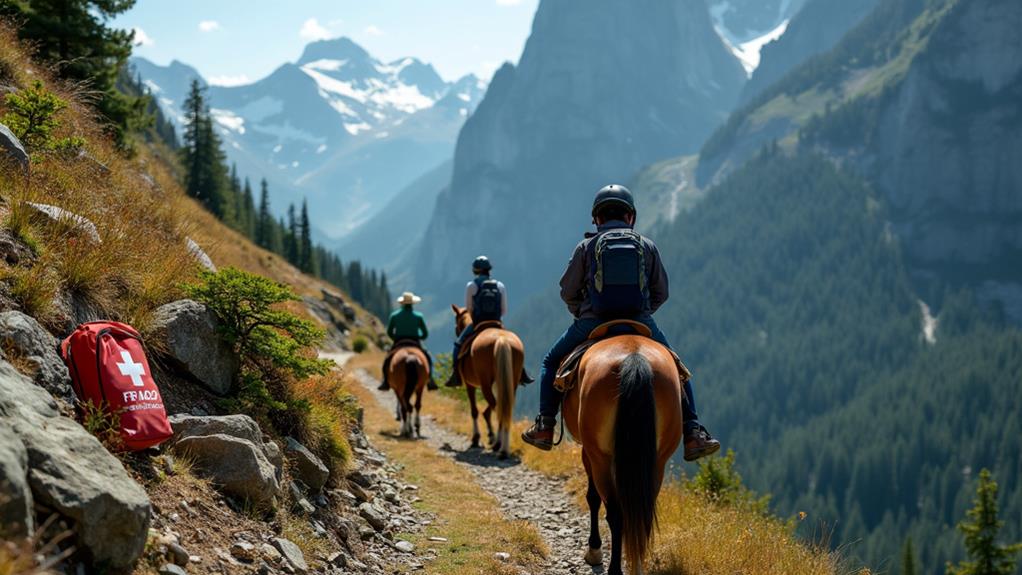
Emergency situations can arise unexpectedly when riding in mountainous terrain, so it's essential to be prepared. Initially, familiarize yourself with emergency signals. These could include whistle blasts or flare signals, which can alert others to your location if you're in distress. Make certain your riding companions are also aware of these signals to guarantee a coordinated response.
Next, always carry a basic primary aid kit. This should include bandages, antiseptic wipes, and any personal medications you might need. Knowing how to administer basic primary aid is critical. Practice how to handle common injuries like cuts, bruises, or sprains. If your horse gets injured, you should have some knowledge of equine primary aid as well, such as how to clean a wound or wrap a leg.
If you or your horse face a more serious injury, stay calm and use your emergency signals to get help. Remember, your smartphone might not always have service in mountainous areas, so consider carrying a satellite phone or a personal locator signal. By being prepared, you can confidently handle emergencies and keep both you and your horse safe on the trail.
Environmental Awareness
Being aware of your surroundings is fundamental when riding in mountainous terrain. Not only does it guarantee your safety, but it also minimizes your environmental impact. As you navigate these trails, keep an eye out for wildlife encounters. Animals like deer, bears, or smaller critters can appear unexpectedly, so maintaining a respectful distance is vital. Abrupt movements can startle your horse and the wildlife, escalating situations unnecessarily.
To improve your environmental awareness, consider these steps:
- Stay on designated paths: This reduces the risk of erosion and protects delicate ecosystems. Veering off-trail may harm plant life and disturb animal habitats.
- Pack out what you pack in: Leave no trace by taking all waste with you. This simple act prevents littering and keeps the landscape pristine for future riders and wildlife.
- Observe quietly: Keep noise to a minimum to avoid disturbing the peace of nature. Loud sounds can stress wildlife and disrupt their routines.
Related posts