How to Safely Remove Fleas From Newborn Puppies: Step-By-Step Guide
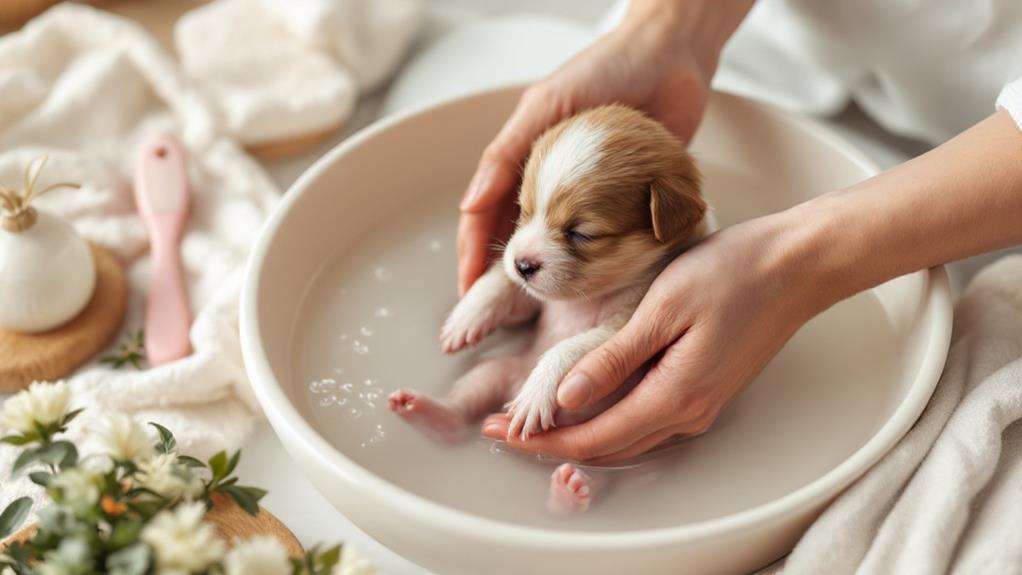
To safely remove fleas from newborn puppies, start by examining them for flea signs like red bumps. Prepare a warm, draft-free bath area and use slightly warm water with unscented baby soap. Submerge the puppies gently, keeping their heads above water. Comb through their fur with a flea comb, dipping it in soapy water to kill fleas. Regularly check for fleas until they're gone. Wash bedding in hot water and consider a vet consultation, especially for treating the mother dog who could carry fleas. Keep up the care routine to maintain a flea-free environment. For detailed guidance, investigate each step thoroughly.
Identifying Flea Infestations
To effectively identify flea infestations in newborn puppies, begin by closely examining their skin for small red bumps or scabs, which are telltale signs of flea bites. These marks indicate that fleas are present and feeding, which can quickly compromise a puppy's health. Use a flea comb to gently work through their fur, focusing on the neck, belly, and tail base, where fleas often congregate. The comb will help you identify the presence of fleas and flea dirt, which looks like small black specks.
Regularly check the puppies up to three times daily, especially if you notice symptoms like excessive scratching or hot spots. These behaviors can signal fleabite dermatitis, a reaction to flea saliva that causes irritation. Early detection is essential because fleas multiply rapidly, and even spotting a few can suggest a more significant infestation lurking nearby.
Preparing a Safe Bathing Area
Wondering how to set up a safe bathing area for your newborn puppies? Start by selecting a non-carpeted space, like a bathroom, to minimize flea reinfestation and make cleanup easier. Fill a small tub or sink with slightly warm water to create a comfortable environment for your puppies. This temperature is vital to prevent the puppy from getting too cold during their bath.
Before you begin, gather all necessary supplies. You'll need unscented baby soap, which is safe to use on newborns' sensitive skin, along with towels and a flea comb. Having everything at hand will make the process smoother and safer for your little ones. Verify the bathing area is free from drafts; maintaining a warm ambient temperature is key to keeping the puppies comfortable and helping them maintain their body temperature.
After the bath, use a clean, soft towel to dry each puppy immediately. Place them on a warm surface to guarantee they stay cozy and dry. With these preparations, you're all set to provide a safe and effective flea-removal bath for your newborn puppies.
Bathing Newborn Puppies
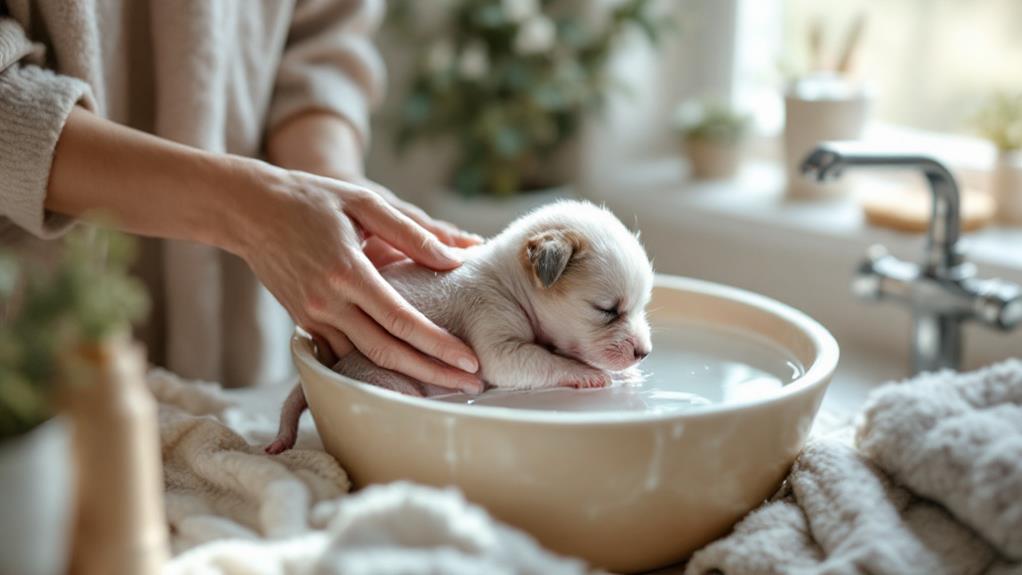
Bathing newborn puppies can be a delicate process, but with the right approach, you'll guarantee their safety and comfort. Start by preparing a bath with slightly warm water, similar to what you'd use for a baby. Keep the water depth minimal to prevent any risk of drowning. Add about ½ teaspoon of baby unscented pure Castile soap to create soapy water that helps remove fleas by breaking their exoskeletons.
When you're ready to begin, gently support the puppy's head as you submerge its body in the soapy water. Make sure the entire body gets wet, which is essential for ensuring that fleas come into contact with the water to kill them. After this, place the puppy on a towel to dry.
Here are a few tips to make the process smoother:
- Use a flea comb to carefully remove fleas, ensuring thorough cleaning.
- Rinse the comb in hot soapy water after each use to drown captured fleas.
- Keep puppies on a carpetless floor while drying to prevent re-infestation.
- Monitor for hypothermia, ensuring they stay warm and comfortable.
Combing and Removing Fleas
After gently bathing the newborn puppies, the next step is to focus on combing and removing fleas to guarantee they stay flea-free. Use a flea comb with closely spaced teeth to catch and remove fleas from the puppy's fur effectively. Start at the neck and work your way towards the tail. Be sure to dip the flea comb in hot, soapy water after each pass. This step helps drown the captured fleas and prevents re-infestation during the combing process.
Pay special attention to areas where fleas are commonly found, like the armpits, the base of the tail, and between the toes. These spots are more likely to harbor fleas, making them critical targets for thorough removal. After each use, rinse the comb in cold water. This cools it down, preventing discomfort for the puppy and guaranteeing a more effective flea control process.
Regularly check the puppy multiple times a day for any signs of fleas. Continue combing until no more fleas are detected. This diligence is vital to maintain effective flea control and guarantee your puppies remain healthy and comfortable in their early days.
Cleaning Puppy Bedding

To guarantee a flea-free environment for your newborn puppies, start by gathering all their bedding, including blankets and towels, for a thorough wash. Cleaning puppy bedding is vital in eliminating fleas, flea eggs, and flea larvae. Begin by washing the bedding in hot water, as high temperatures effectively kill fleas at all life stages. It's significant to use a detergent specifically designed to combat fleas. This improves the cleaning process, assuring a thorough removal of any unwanted pests.
After completing the wash, drying the bedding properly is fundamental. Utilize direct sunlight or a dryer, as this further eliminates any remaining fleas and their eggs. To maintain a flea-free environment and prevent reinfestation, regularly wash and replace the puppy bedding. Consistent cleaning not only keeps the bedding fresh but also guarantees that your puppies stay comfortable and healthy.
- Wash bedding in hot water to kill fleas, eggs, and larvae.
- Use a detergent specifically designed for fleas.
- Dry bedding in direct sunlight or a dryer.
- Regularly wash and replace bedding to prevent reinfestation.
Treating the Mother Dog
Taking care of the mother dog is crucial when dealing with a flea infestation, as she's often the source of the issue. When the puppies are infested, it's a strong indication the mother dog may be carrying fleas as well. To treat the mother effectively, start by consulting a veterinarian. They can recommend flea medications that are both safe for lactating mothers and effective in controlling fleas.
Topical flea treatments, like Frontline, are commonly used to treat the mother. However, verify the mother dog is at least eight weeks old before applying these products to avoid any potential risks to her and the puppies. Selamectin-based products, such as Revolution, are highly recommended as they're safe for lactating mothers, making them a reliable choice.
Environmental Flea Control

Fleas don't just live on your pets; they thrive in your home's environment, making environmental flea control an essential step in breaking the infestation cycle. Adult fleas lay flea eggs in your pet's surroundings, leading to a flea infestation if not addressed promptly. To effectively combat this, focus on cleaning and treating your home diligently.
Start by washing all bedding and soft furnishings in hot water to eliminate flea eggs and larvae. Regular vacuuming is imperative, especially in corners and crevices where flea larvae may hide. Remember to dispose of the vacuum bag or empty the canister outside to prevent reinfestation.
Using natural flea deterrents like diatomaceous earth can be advantageous. This powder kills fleas without harming your puppy and can be safely applied to carpets and areas where pets frequent.
Additionally, monitor places where other pets spend time, as fleas can easily transfer between animals, necessitating a thorough approach.
Here's a quick checklist to help with environmental flea control:
- Wash bedding and soft furnishings regularly in hot water.
- Vacuum thoroughly and dispose of waste properly.
- Use diatomaceous earth as a safe, natural flea solution.
- Monitor and treat areas frequented by other pets.
Consulting a Veterinarian
A veterinarian's expertise is invaluable when dealing with fleas in newborn puppies. If you notice a severe flea infestation in your puppies, consulting a veterinarian should be your initial step. They can recommend treatments that are both safe and effective, carefully tailored to the specific developmental stage and health status of your young puppies. This is especially vital for puppies in a litter, as their needs might vary based on individual health conditions.
A vet can also guide you in selecting appropriate flea control products that are safe for lactating mothers. This helps prevent reinfestation, guaranteeing the health of the puppies in the long run. Additionally, a veterinarian will assess the comprehensive health of the puppies, checking for signs of anemia or other flea-related health issues that might need urgent attention.
Regular veterinary check-ups are fundamental to monitor the health of your puppies and verify that prescribed flea treatments are working effectively. If visiting a clinic is challenging, online veterinary consultation services can provide convenient access to expert advice. This guarantees you get the professional guidance you need to manage flea problems and keep your puppies healthy and thriving.