How to Prevent Your Horse From Destroying a Vegetable Garden
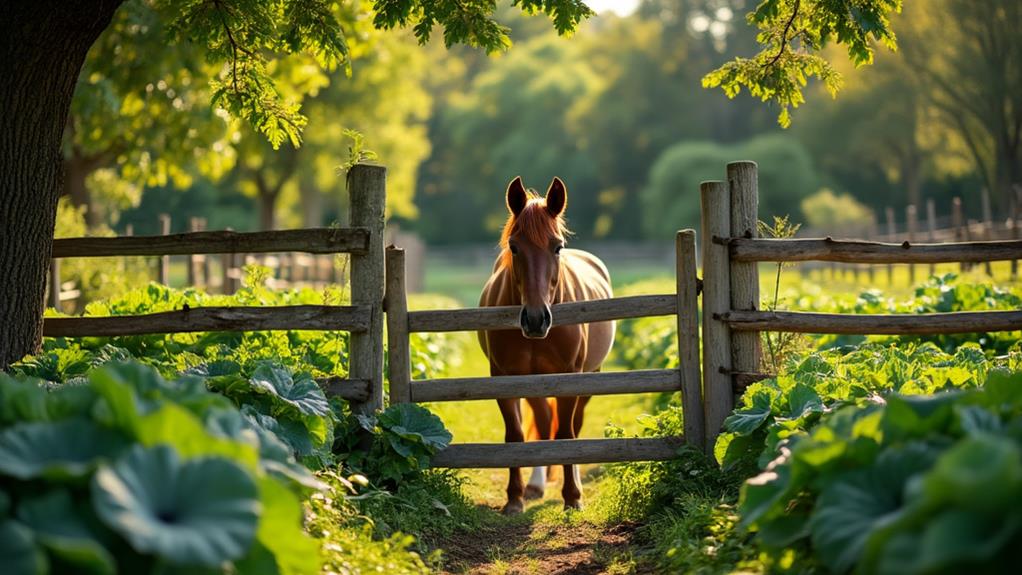
To keep your horse from destroying your vegetable garden, start by ensuring good quality fencing. Use sturdy stock wire topped with electric tape, making it at least 5 to 6 feet tall. Plant deterrent herbs like rosemary or lavender around the garden's edges. Regularly monitor your horse's behavior and provide plenty of forage and engaging activities to curb their curiosity. Homemade sprays with cayenne and garlic also work well as deterrents. Remember to keep open communication with neighbors and stay informed about local livestock laws. By considering these steps, you'll be equipped with effective strategies for protection.
Key Takeaways
- Install electric fencing at least 5 to 6 feet tall to deter horses effectively.
- Use strong-smelling herbs like rosemary and sage around the garden as natural repellents.
- Regularly monitor horses to identify and address potential garden exploration early.
- Provide enrichment activities and adequate exercise to reduce horse boredom and curiosity.
- Apply homemade deterrents like cayenne pepper spray regularly, especially after rain.
Understanding Horse Behavior
To effectively prevent horses from destroying vegetable gardens, it's important to understand their behavior and motivations. Horses are naturally curious creatures. Often, they nibble on plants out of boredom or hunger, so keeping horses adequately fed with ample forage is essential. When horses are bored, they might investigate your garden, leading to unwanted horse eating of your prized vegetables. By understanding horse behavior, you can anticipate these tendencies and mitigate potential damage.
Seasonal changes also play a significant role. During winter, when pasture options are limited, horses may be more inclined to munch on your garden plants. By recognizing these patterns, you can adjust your garden protection strategies accordingly. Regularly monitoring your horse near garden boundaries helps identify potential issues early on, allowing you to take action before significant damage occurs.
Additionally, horses can reach raised areas like steps and decks, meaning that thorough management strategies are important. Training and conditioning are effective tools in managing their curiosity. By fostering an environment that engages your horses and meets their nutritional needs, you create a space where your vegetable garden and equine companions can coexist harmoniously. Understanding these aspects is key to keeping horses and gardens thriving together.
Effective Fencing Solutions
How can you effectively protect your vegetable garden from curious horses? Installing electric fencing is a proven method to keep the horses away. Horses dislike the mild shock from electric fences, so they'll tend to avoid the area altogether. To guarantee they're not tempted to jump over, the fence should stand at least 5 to 6 feet tall. This height discourages even the most determined equine jumper.
In addition to electric fencing, incorporating physical barriers like stock wire fencing can create a robust defense. Positioning these barriers a few feet away from your garden prevents horses from reaching over and sampling your vegetables. To improve security, consider adding electric tape a few feet inside the boundary. This extra deterrent can greatly reduce the chances of your garden becoming a horse's snack bar.
It's crucial to regularly inspect and maintain your fencing. Any damage or wear can compromise its ability to keep the horses away. Regular checks will guarantee that your fencing remains effective, saving your garden from unwanted hoofed visitors. By strategically implementing these solutions, you can enjoy a flourishing garden safe from curious horses.
Safe Plant Choices
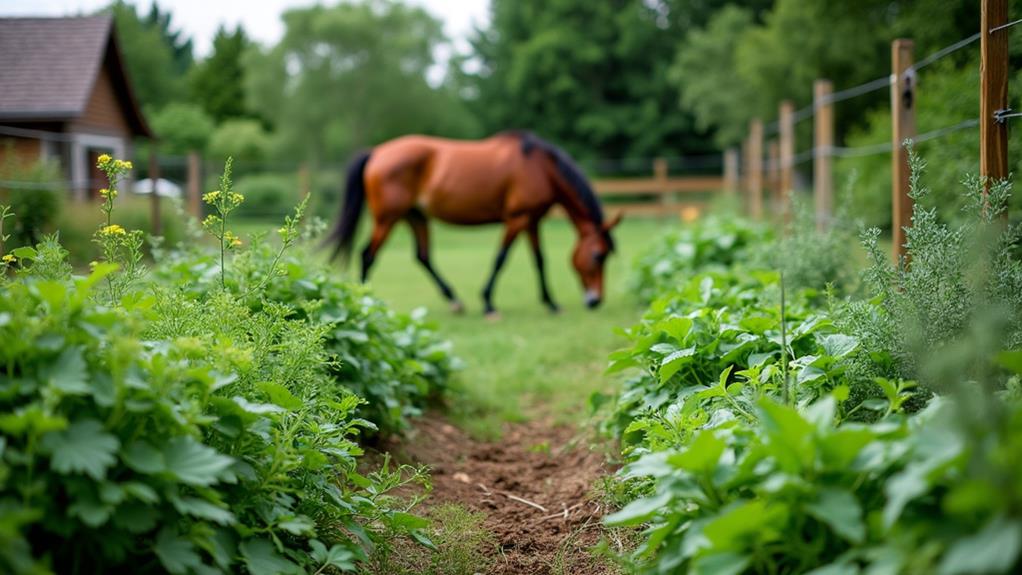
While fencing offers a sturdy defense, selecting the right plants adds another layer of protection to your vegetable garden. Safe plant choices can effectively deter your horse from munching on your crops. Consider incorporating non-palatable plants, like marigolds or lavender, as these are less appealing to horses. Their natural characteristics make them an unwelcome snack and a smart choice for garden borders.
Strong-smelling herbs, such as rosemary and sage, can serve as protective companions to your more desirable vegetables. Horses typically shy away from pungent scents, making these herbs ideal for companion planting. Mix them in with your veggies to create a less attractive environment for curious grazers.
You might also think about using toxic plants as a natural barrier. Vegetables like tomatoes and potatoes are not appetizing to horses, but take care to prevent accidental ingestion. By strategically placing these plants, you can form a protective boundary around your garden.
To engage and maintain interest, consider these options:
- Non-palatable plants: Marigolds, lavender
- Strong-smelling herbs: Rosemary, sage
- Toxic plants: Tomatoes, potatoes
- Companion planting: Aromatic flowers and herbs
These strategies will help you cultivate a flourishing garden while keeping your horse away.
Homemade Deterrent Techniques
Crafting homemade deterrents can be a practical solution to keep horses from invading your vegetable garden. One effective method is using a cayenne pepper spray. Horses are quite sensitive to spicy flavors, and a light misting of this spray on your plants can motivate them to steer clear. You can improve this homemade deterrent by mixing garlic with the cayenne pepper. The combination of these strong odors creates a powerful barrier that horses are likely to avoid.
Remember, regular reapplication is vital, especially after it rains, to maintain the spray's effectiveness. This persistence guarantees your garden remains protected from curious equine visitors. Furthermore, vinegar or citrus-based solutions work as natural repellents. Their potent scents can deter horses from even approaching treated areas, offering another layer of protection for your vegetables.
For a dual-purpose approach, consider sprinkling blood meal around your garden. Not only does it serve as a natural fertilizer, enriching the soil and elevating plant health, but it also deters horses due to its scent. These homemade deterrent techniques provide simple and environmentally friendly ways to safeguard your garden while maximizing its growth potential.
Maintaining Neighborly Relations
Addressing neighborly relations regarding horses wandering into vegetable gardens can be vital for maintaining harmony. Open lines of communication with your neighbors are imperative for preventing misunderstandings and fostering goodwill. As horse owners, taking the initiative to discuss potential concerns and past incidents can go a long way in preserving a friendly atmosphere.
Here are some ways to build strong neighborly relations:
- Offer horse manure as fertilizer: Demonstrate your willingness to contribute to their gardening efforts, creating a positive connection.
- Apologize for past damages: A sincere apology and discussion about proactive measures can help mend any strained relationships.
- Collaborate on fencing solutions: Propose installing an electric fence along shared boundaries or other barriers to show commitment to preventing future damage.
- Engage in regular check-ins: Regularly communicate about their gardening needs and your horse's behavior to improve trust and cooperation.
Legal Responsibilities
As a horse owner, you have a legal duty to guarantee your animals don't trespass onto neighboring properties, as any damage they cause can lead to strict liability. It's vital to understand your legal obligation to contain your horses effectively. Local laws regarding livestock containment can vary widely, so familiarize yourself with the regulations in your area to avoid legal issues. This means making certain that your fencing is adequate; otherwise, you might be financially responsible for damages caused by your horses if they wander into someone's vegetable garden.
Documenting any incidents of damage is important. Keep a record of any breaches and the steps you've taken to fix the problem. This documentation can be invaluable if disputes arise, as it establishes a history of responsibility and proactive behavior. Engaging with local zoning and animal control authorities can offer guidance on best practices for fencing and managing livestock. They can help guarantee you meet local standards and avoid legal disputes with neighbors. By taking these steps, you not only protect your neighbors' property but also safeguard yourself from potential legal and financial repercussions.
Monitoring and Supervision
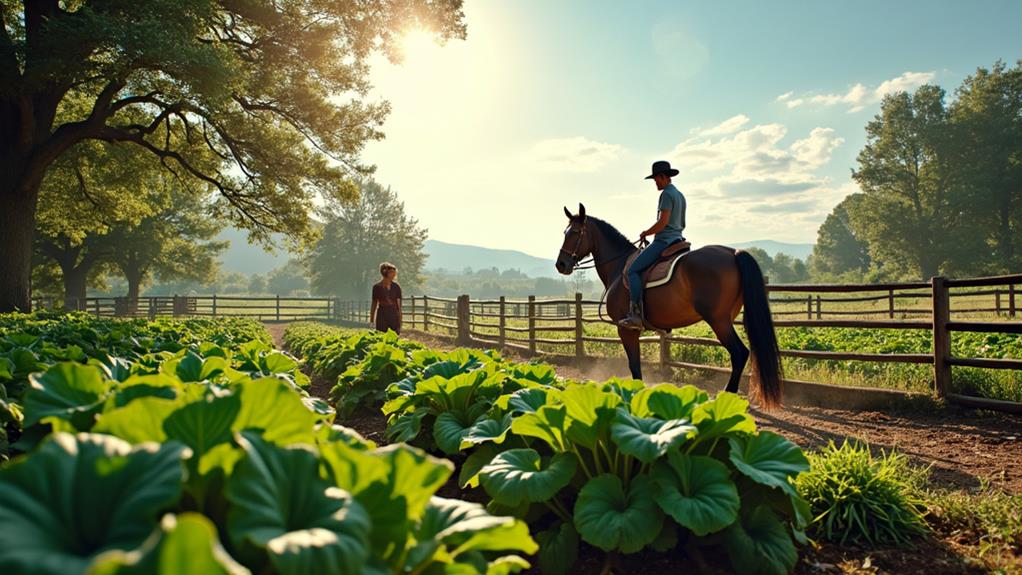
Keeping an eye on your horses can make all the difference in preventing them from trampling through vegetable gardens. Regular monitoring is key to understanding their behavior around your garden. By observing any signs of interest or potential mischief, you can act before any damage happens. Supervision during grazing times is essential, allowing you to step in quickly if your horse gets a bit too curious about your veggies.
To improve your supervision efforts, consider the following strategies:
- Maintain a schedule: Watch your horse during peak grazing hours or when they seem bored, as they may become more intrigued by the garden.
- Install a camera system: This allows you to observe real-time activity, even when you're not around, so you can respond immediately if needed.
- Focus on behavior training: Engage your horse in exercises that emphasize boundaries and commands to encourage better manners near your garden.
- Intervene promptly: Quick action when your horse approaches the garden can prevent curiosity from turning into destruction.
Engaging Your Horse
Engaging your horse is an effective way to prevent them from causing havoc in your vegetable garden. As a horse owner, you know that a bored horse is more likely to investigate areas you'd rather keep untouched. Providing regular exercise and varied activities can greatly reduce this boredom. Incorporate enrichment into their routine; this can include toys, puzzle feeders, or even simple obstacles to navigate. These distractions will keep your horse occupied and less inclined to wander into your garden for a snack.
Training sessions with positive reinforcement are another excellent strategy. By redirecting your horse's curiosity, you can encourage them to engage in behaviors that don't involve your precious plants. Developing a consistent routine that includes interactive grooming or groundwork can also strengthen your bond, making your horse less likely to seek entertainment elsewhere.
Socializing your horse with other animals or fellow horses offers companionship and mental stimulation, reducing their desire to investigate your vegetable patch. Remember, a busy horse is a happy horse, and by keeping them engaged, you're not only safeguarding your garden but also enhancing your horse's quality of life.
Related posts