How to Make Your Pet Dog Look Posh: Grooming and Styling Tips
To make your pet dog look posh, start with regular grooming tailored to their coat type. Long-haired breeds need daily brushing with a slicker brush to prevent matting, while short-haired dogs benefit from using a bristle brush every few days. Use rakes for double coats and remember, bathing every 2-4 months with dog-friendly shampoo keeps the coat healthy. Nail trimming every two weeks prevents injuries and improves their polished appearance. Don't skip ear and dental care; clean ears weekly and brush teeth 2-3 times a week for complete health and sparkle. Incorporate these strategies and uncover more refinements.
Importance of Grooming
Grooming is essential for your dog's health and happiness. By engaging in regular grooming, you guarantee your furry friend maintains a healthy coat, free from tangles and mats that could lead to skin issues. Regularly brushing your dog not only helps in keeping their coat shiny but also prevents painful snarls that can harbor dirt and parasites. A professional groomer can be a great asset, especially if you're uncertain about handling specific grooming tasks or if your dog has specific needs.
When you brush your dog, you're not just maintaining their appearance—you're also strengthening the bond between you two. This bonding experience creates positive touch associations, enhancing your dog's emotional well-being and comfort. Grooming sessions also allow you to familiarize yourself with your dog's body, making it easier to spot abnormalities like lumps or parasites early on, which is vital for proactive health care.
Moreover, regular grooming helps manage pet hair, reducing the amount of shedding around your home and keeping your living space cleaner. A well-groomed dog not only looks great but feels more confident, especially in social settings, showcasing their posh and polished demeanor effortlessly.
Understanding Coat Types
Your dog's coat type plays a critical role in determining the specific grooming practices necessary to keep them healthy and looking their best. Dog grooming varies considerably based on if your pup is among long-haired breeds, has a curly, wavy, or straight coat, or sports a double coat. Long-haired breeds like Shih Tzus and Goldendoodles demand daily brushing to prevent severe matting, ensuring their fur stays free from tangles and healthy. In contrast, short-haired dogs, such as Beagles, typically need brushing every few days to manage shedding and maintain a sleek appearance.
Understanding your dog's coat type also helps you choose the right tools and techniques. For instance, double coats, found in breeds like Huskies, require weekly brushing to remove loose fur and maintain coat health, especially during the heavy shedding seasons that occur twice a year. Meanwhile, coarse coats might need specific detangling solutions, while silky fur demands gentler care to avoid damage and maintain shine. By tailoring your grooming practices to your dog's unique coat type, you can improve both their appearance and comfort, making the grooming experience enjoyable for both you and your furry friend.
Tailored Grooming Routines
Once you've grasped the significance of coat types, it's time to craft tailored grooming routines that suit your dog's specific needs. Each dog has a unique coat, so consider those characteristics when planning your grooming sessions. Long-haired dogs, for instance, need more frequent brushing to prevent mats and tangles, while short-haired breeds can get by with less frequent sessions. A consistent grooming schedule is essential. For example, Golden Retrievers typically need weekly grooming, whereas Goldendoodles might require daily attention.
Adapt your routine according to seasonal shedding patterns. Huskies, known for heavy shedding twice a year, benefit from increased grooming during these times. Regular grooming not only improves your dog's appearance but also allows you to spot skin issues or parasites early on. Here are some tips to tailor your grooming routine:
- Establish a consistent schedule based on your dog's breed and coat type.
- Brush long-haired dogs more often to avoid mats and tangles.
- Adjust grooming frequency during heavy shedding seasons.
- Include evening wipe-downs to maintain coat cleanliness.
- Monitor for skin issues or parasites during grooming sessions.
Essential Grooming Tools
In relation to keeping your dog looking their best, having the right grooming tools is vital. A slicker brush is fundamental for detangling medium to long-haired coats, while a bristle brush is perfect for short-haired breeds to maintain a sleek appearance. For any mats, a rake will help break them up without damaging their coat. Regarding trimming and shaping, stainless steel scissors provide the precision you need for that polished, posh look.
Nail care is just as significant, so make sure you have nail clippers that offer clear visibility for safe trimming. Accidents can happen, so keep styptic powder on hand to quickly stop any bleeding if you accidentally cut too close. Using a grooming table can make this process much easier by providing stability and height adjustment, allowing you to groom your pet efficiently and comfortably.
For bathing, always opt for Dog-Friendly Shampoo, as human products might irritate your dog's skin. These shampoos are specifically designed to maintain a healthy coat and shine. With these vital tools in your grooming kit, you'll guarantee your dog looks and feels their best, embodying that posh style you're aiming for.
Bathing Guidelines
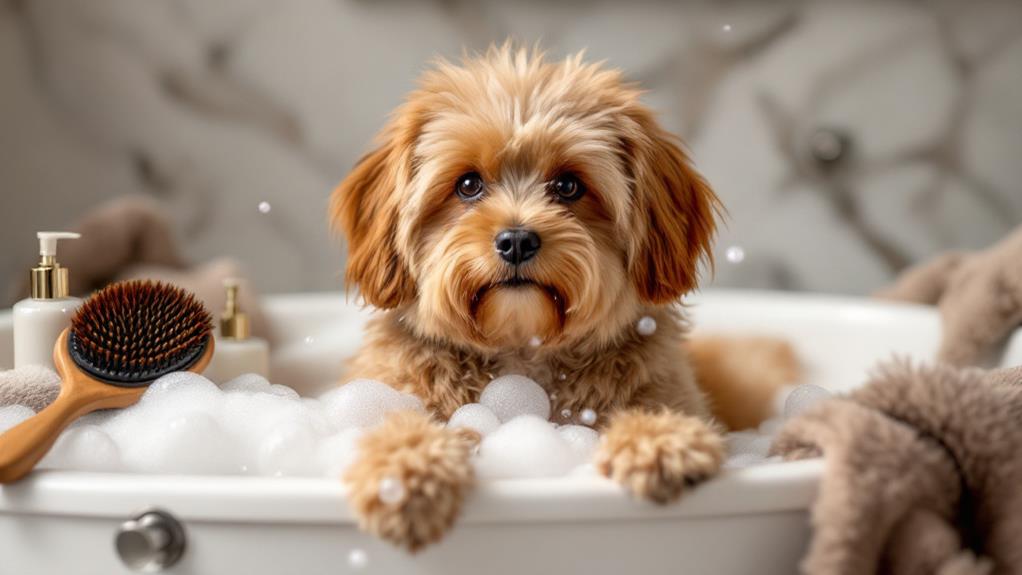
After equipping yourself with the necessary grooming tools, it's time to focus on keeping your dog clean with proper bathing techniques. Bathing your dog on a regular basis is an essential part of maintaining their overall hygiene and preventing potential issues like ear infections. Ideally, you should bathe your dog every 2-4 months unless they become particularly dirty. Over-bathing can strip natural oils from their coat, so moderation is key.
When choosing a shampoo, always opt for dog-specific options to avoid skin irritation. A thorough rinse is vital to prevent residue buildup, which can lead to skin problems. Consider incorporating a conditioning treatment to improve coat health and manageability, particularly in long-haired breeds.
To guarantee a safe and comfortable bath:
- Use a non-slip surface: This helps your dog feel secure and prevents accidents.
- Protect sensitive areas: Keep shampoo and water away from your dog's eyes, mouth, and ears.
- Check water temperature: It should be lukewarm to keep your dog comfortable.
- Brush before bathing: This can help remove loose fur and tangles.
- Reward your dog: Offer treats for a positive bathing experience.
These steps will keep your dog's coat clean and healthy while minimizing stress.
Brushing Techniques
To maintain your dog's coat in top condition, regular brushing is vital. Different brushing techniques cater to varying needs of short-haired and long-haired breeds. For long-haired breeds, daily grooming is fundamental to prevent mats and tangles. Use a slicker brush to effectively remove these mats and keep the coat smooth. Short-haired breeds, on the other hand, benefit from brushing every few days. A bristle brush works well for them by removing debris and distributing natural oils, which improves coat health.
Introducing the brush gradually helps reduce anxiety. Use positive reinforcement, such as treats or praise, to build a positive association with grooming. This approach makes brushing a more enjoyable experience for your dog. Start with short sessions to help your furry friend acclimate to the routine. As they become more comfortable, you can gradually increase the duration.
Regular brushing not only keeps your dog's coat looking great but also stimulates the skin, enhancing blood circulation. This practice allows you to detect any skin issues or parasites early on. By using the right brushing techniques and maintaining a routine, you guarantee your pet's coat remains healthy and posh.
Nail and Foot Care
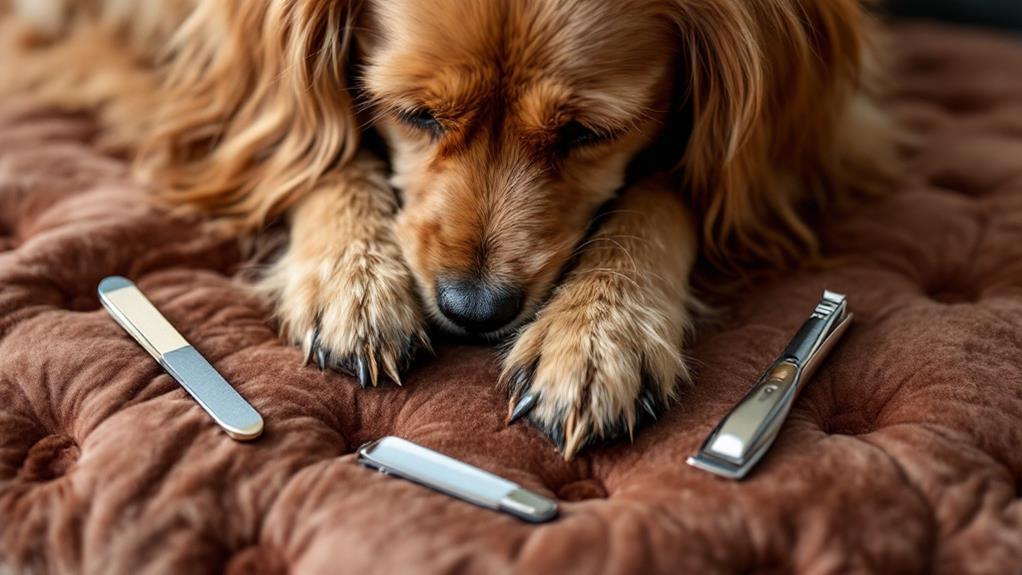
Proper nail and foot care is vital for your dog's general well-being. Regularly trimming your dog's nails not only maintains a neat appearance but also prevents painful injuries. Ideally, you should trim their nails every two weeks. This routine keeps them comfortable and reduces the likelihood of overgrown nails causing joint pain or affecting their gait.
When trimming, use sharp, comfortable nail clippers that offer clear visibility. This helps you avoid clipping the quick, a sensitive part of the nail that can cause bleeding and pain if cut. It's smart to keep styptic powder handy to address any accidental cuts swiftly. This guarantees a less stressful experience for both you and your dog.
To make the process smoother:
- Introduce nail clippers gradually to your dog.
- Allow your dog to get used to the sound and sensation of clipping.
- Trim the hair around their feet regularly to prevent debris accumulation.
- Confirm your tools are well-maintained and sharp for a precise cut.
- Use treats and positive reinforcement to create a positive nail-trimming experience.
Ear and Dental Hygiene
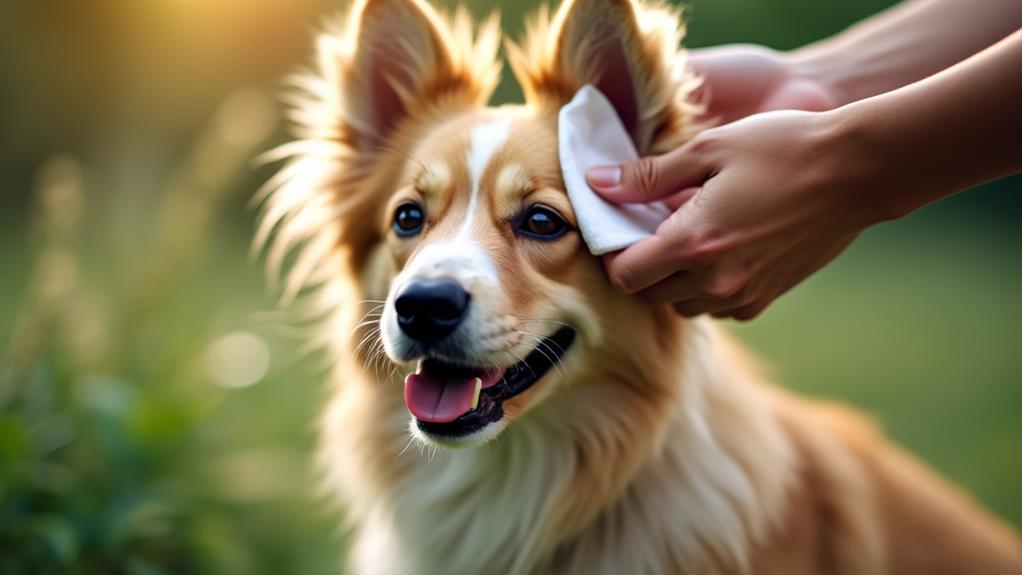
Maintaining your dog's ear and dental hygiene is crucial for their general health. Start by making ear cleaning a weekly routine. Use cotton balls or gauze to gently remove dirt and natural oils from your dog's ears, steering clear of water and Q-tips to prevent damage. Keep an eye out for unusual smells or discharge, as these could indicate infections or other health concerns that might need a vet's attention.
When it comes to dogs' teeth, brush them 2-3 times a week using dog-specific toothpaste. This routine is fundamental to prevent dental issues like tartar buildup and gum disease. Establishing this habit will not only help keep your dog's mouth healthy but also make grooming sessions more enjoyable for both of you.