How to Keep Your Horse’s Water Fresh and Clean: Essential Tips
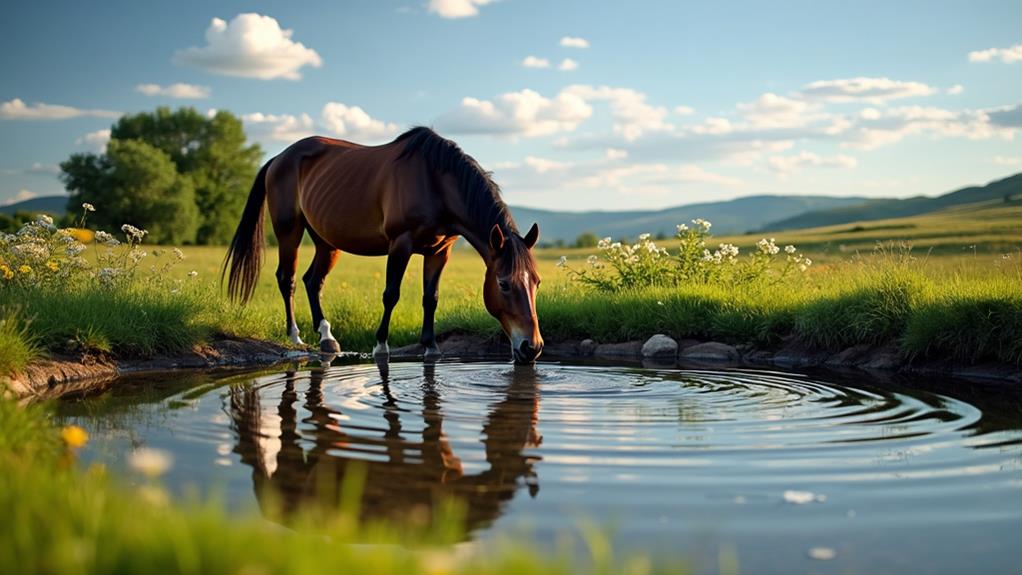
To keep your horse's water fresh and clean, regularly empty and scrub water buckets with a stiff-bristled brush, using mild dish soap or a 10% bleach solution. Rinse thoroughly to remove residues. Consider using beneficial bacteria products or apple cider vinegar to reduce bacteria and algae. Automatic waterers provide consistent fresh supply, while smaller stock tanks ease management. Check and clean hoses often to prevent algae buildup. Offering fresh, unpalatable water helps prevent dehydration and promotes health. Monitoring intake and recognizing dehydration signs are essential. If you delve further, supplementary effective methods await to optimize your horse's hydration management.
Key Takeaways
- Clean water buckets daily to prevent debris buildup and ensure freshness.
- Use mild dish soap or a 10% bleach solution for regular disinfection of troughs.
- Install automatic waterers for a consistent and fresh water supply.
- Introduce beneficial bacteria or apple cider vinegar to control algae naturally.
- Monitor water clarity and clean troughs weekly to maintain water quality.
Importance of Clean Water
Guaranteeing your horse has access to clean water is essential for its health and well-being. Clean water is one of the most significant nutrients for horses, and on average, a horse needs approximately 10 gallons daily to stay hydrated. It's imperative for maintaining equine health, as contaminated water can lead to severe issues like dehydration and colic, which can compromise your horse's overall condition.
In your horse care routine, you'll want to prioritize keeping water sources clean. Contaminants such as insects, dirt, and even feed can easily spoil the water, making regular cleaning necessary. By consistently maintaining and checking water sources, you guarantee your horse always has fresh water available. This vigilance helps prevent health problems and supports your horse's hydration needs.
Algae growth is another concern. It not only makes water unappealing but can also pose toxic risks. Incorporating regular upkeep of water sources into your horse care strategy protects against these dangers. By understanding the importance of clean water, you actively contribute to your horse's health and happiness, guaranteeing it remains hydrated and thriving in its environment. Your commitment to clean water is a cornerstone of responsible equine health management.
Daily Maintenance Tips
To keep your horse's water fresh and clean, daily maintenance is key. Start by using water buckets that are easy to clean. Every day, you should empty these buckets to remove debris like hay and grain bits, guaranteeing your horse consistently has access to fresh water. It's vital to thoroughly clean them, as this prevents bacteria and algae from building up.
Consider installing automatic waterers, such as the Drinking Post Waterer, to provide a steady supply of fresh water without the need for constant refills. These automatic waterers can be a great enhancement to your barn, reducing the time spent on daily maintenance while guaranteeing cleanliness.
For those using stock tanks, opt for smaller ones, as they're more manageable to dump and clean regularly. While a weekly scrub is important to prevent algae growth, make it a habit to inspect these tanks daily for any debris or dirt. This routine helps maintain the water's hygiene.
Don't overlook the hoses used to fill water containers. Regularly check them to prevent algae build-up and verify they're safe for providing drinking water. With consistent daily maintenance, you'll keep your horse's water supply clean and fresh.
Natural Cleaning Methods
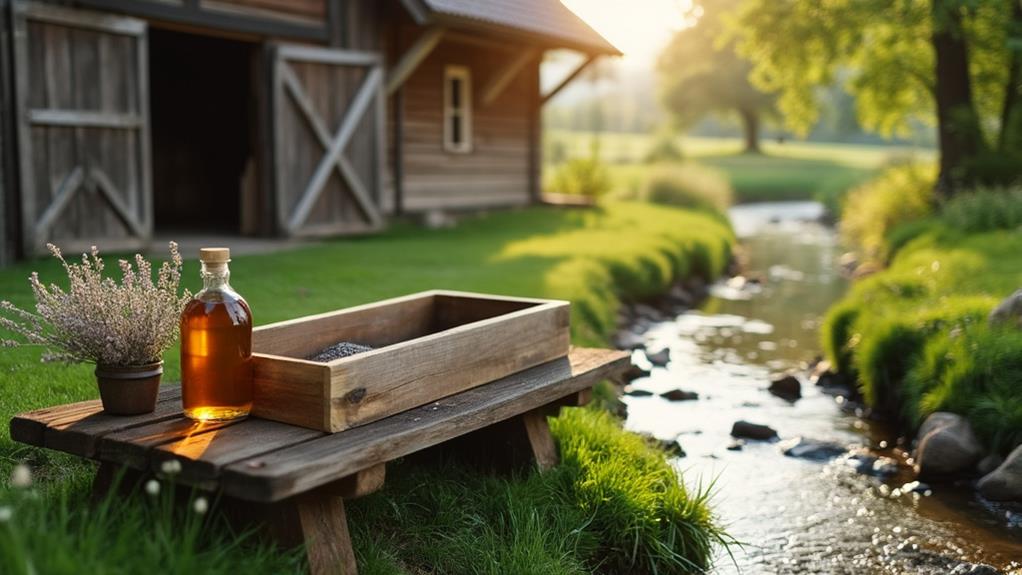
While daily maintenance lays the groundwork for keeping your horse's water fresh, incorporating natural cleaning methods can improve water quality without relying on harsh chemicals. One effective approach is using beneficial bacteria products. These natural cleaning methods work by breaking down debris and maintaining a water clean environment in your horse's water trough. By introducing beneficial bacteria, you help create a balanced ecosystem that minimizes the growth of harmful bacteria and algae.
Another natural option is apple cider vinegar. Adding a small amount to the water trough can help reduce bacteria and algae, promoting a fresh environment that's safe for your horse. Apple cider vinegar is non-toxic and offers a simple way to maintain clean water without endangering your horse's health.
You might also consider introducing goldfish or rosy red minnows into stock tanks. These fish can effectively control algae growth and consume insects, further enhancing water quality. Regular monitoring of their health guarantees they thrive and contribute positively to the ecosystem.
Regular checks for water clarity and debris will guide you when supplementary natural cleaning methods are necessary. By embracing these solutions, you make certain your horse's water remains fresh and clean consistently.
Chemical Solutions
Some horse owners prefer chemical solutions for maintaining water cleanliness due to their efficiency and ease of use. As a horse owner, you might find these products useful for keeping your horse's water clean and free of harmful algae. When choosing chemical solutions, prioritize those specifically formulated to combat algae without posing a health risk. Always make certain they're non-toxic and horse safe to avoid any adverse effects on your equine friend.
It's essential to follow the manufacturer instructions carefully, guaranteeing proper dosage and effectiveness. Incorrect usage could compromise water quality or even harm your horse. Regularly assess how well these chemical cleaners are working. If you notice any decrease in water quality, adjust your usage as necessary. This proactive approach helps maintain ideal conditions for your horse.
Combining chemical solutions with natural cleaning methods can offer a balanced approach, enhancing the water's general cleanliness. By integrating both, you can address a wider range of potential contaminants. Always verify that any chemicals you add are safe for equine consumption. This confirms that while you keep the water clean, you're also safeguarding your horse's health.
Cleaning Water Buckets
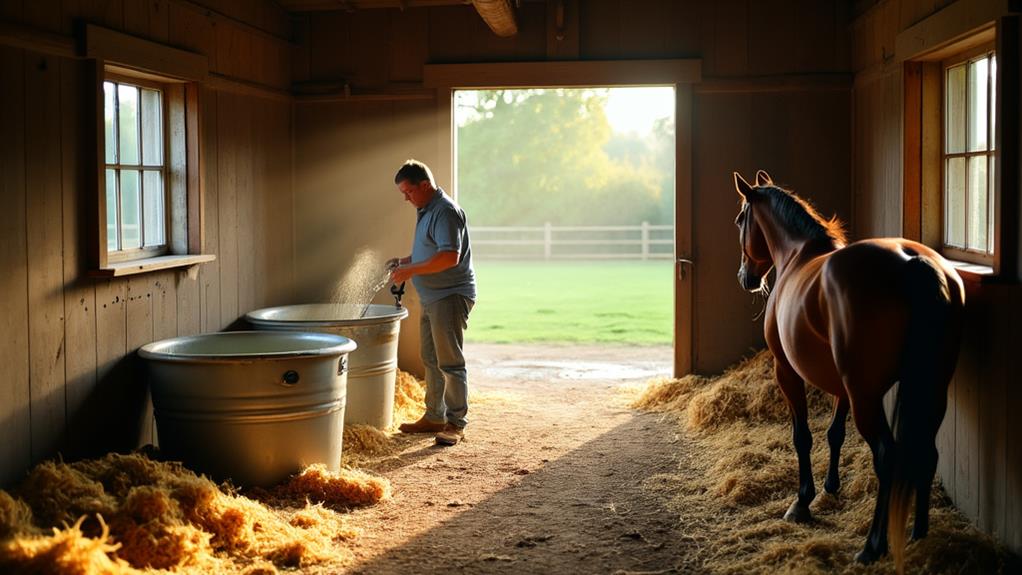
Keeping your horse's water buckets clean is a simple yet important task that shouldn't be overlooked. By focusing on cleaning water buckets regularly, you guarantee your horse has access to fresh water, which is crucial for meeting their hydration needs. Emptying 5- or 6-gallon buckets daily prevents the buildup of debris and contaminants. This practice not only keeps the water fresh but also helps eliminate any residues like hay and grain bits that may accumulate at the bottom.
Once you've emptied the buckets, rinse them thoroughly to remove any leftover particles. Scrubbing buckets with a stiff-bristled brush every day or every other day is significant. This routine helps maintain cleanliness and prevents algae growth, which could affect the water quality. After scrubbing, make sure to rinse the buckets again to remove all cleaning agents and debris before refilling with clean water.
Regularly checking the water level and cleanliness guarantees that your horse always has access to uncontaminated water. By maintaining this routine, you support your horse's health and well-being, ensuring they're properly hydrated. Remember, keeping a close eye on these details makes a notable difference in your horse's daily care.
Cleaning Troughs
Maintaining clean troughs is essential for providing your horse with fresh, uncontaminated water. Regularly cleaning troughs guarantees that your horse has access to clean and healthy water, free from harmful substances. Start by using a drain valve to efficiently remove water from your water troughs, which helps you avoid creating excess mud. This makes it easier to manage the cleaning process.
When it comes to scrubbing, a high-pressure nozzle is your best friend. It effectively removes debris from both the inside and outside of the trough. For routine cleaning, consider using a mild dishwashing liquid or a 10% bleach solution to disinfect the troughs. This not only eliminates bacteria but also tackles algae, a common issue in water troughs. Always remember to rinse thoroughly to remove any cleaning residues.
Scheduling weekly cleanings is a good practice to prevent algae and mineral buildup. You might need to adjust the frequency based on environmental factors and how often the troughs are used. Additionally, when filling troughs, use drinking-water-safe hoses. These hoses should be free from harmful materials and regularly checked for algae growth, guaranteeing your horse always has access to fresh water.
Recognizing Dehydration Signs
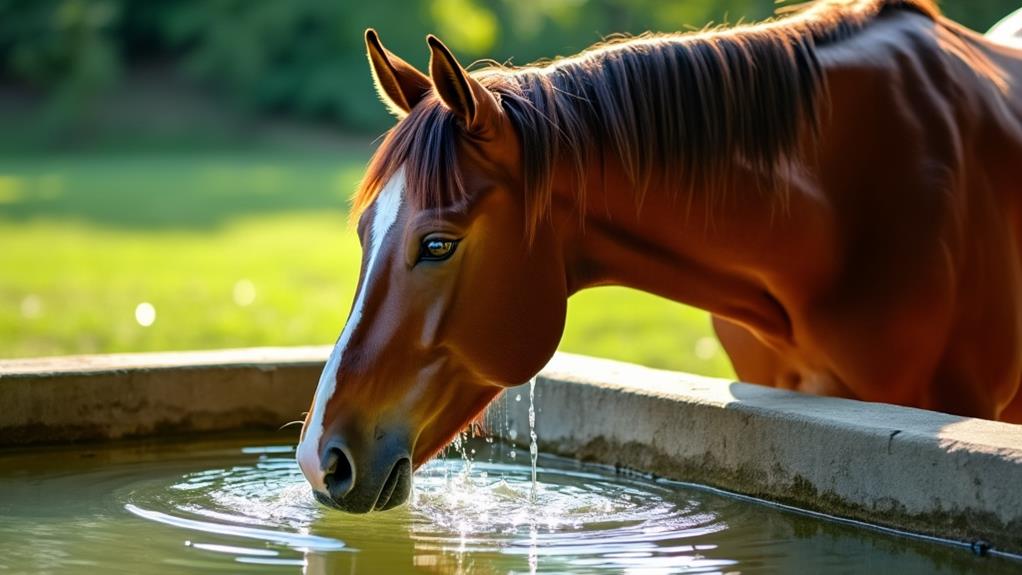
While ensuring your horse's water is fresh and clean is vital, it's likewise significant to recognize signs of dehydration. Dehydration can be a serious concern and often stems from causes like lack of access to water, unpalatable water quality, or underlying health issues. To help your horse stay hydrated, be vigilant about the symptoms. You may notice lethargy, depression, or a dry, white gumline. A slow capillary refill time can indicate low blood pressure, another dehydration warning sign.
One practical way to assess your horse's hydration is through the skin turgor test. Pinch the skin on your horse's neck; if it returns sluggishly to its normal position, your horse could be dehydrated. Monitoring your horse's average daily water intake is important, especially during hot weather or after exercise. They typically require 5-10 gallons of water daily.
If you suspect dehydration, provide immediate intervention by offering fresh water or administering electrolytes to restore hydration levels. Recognizing these symptoms early can prevent more severe health issues, ensuring your horse remains healthy and well-hydrated. Consistent observation and quick action can make all the difference in your horse's well-being.
Ensuring Horse Hydration
Guaranteeing your horse stays well-hydrated requires a proactive approach. Begin by keeping your horses' water clean and confirming they have access to fresh water every day. Horses typically consume between 5 to 10 gallons daily, so it's vital to provide multiple water sources. This reduces competition and encourages your horse to drink more regularly, especially in turnout situations.
To further encourage drinking, consider using free-choice salt blocks. These can stimulate thirst, prompting your horse to drink more water when necessary. Monitoring their water intake becomes especially significant during hot weather or after exercise, as dehydration can lead to serious health issues like colic. Always be vigilant, checking their water supply frequently to ascertain it's plentiful and appealing.
For stabled horses, soaking hay can be an effective method to increase water consumption. This technique helps maintain hydration levels, even when they have limited direct access to water. By incorporating these strategies, you can make sure your horse remains hydrated, healthy, and energized. Remember, consistent access to clean, fresh water is not just beneficial—it's fundamental for their well-being. Keep these tips in mind, and you'll encourage prime hydration for your horse.