How to Improve Your Horse Riding Skills: Tips for Every Level
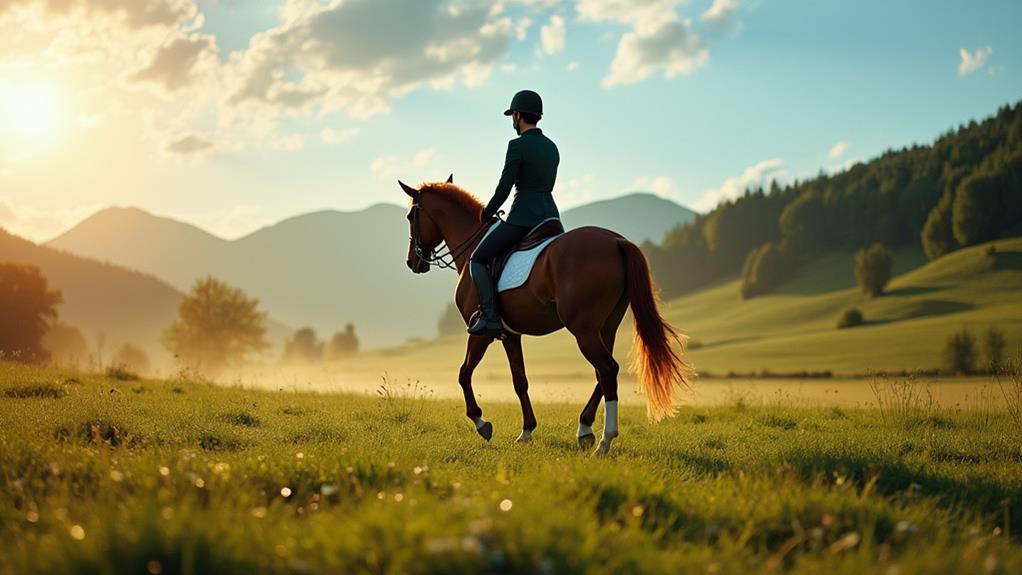
To improve your horse riding skills, start with self-care like balanced nutrition and regular fitness routines that include cardio and core strength exercises. Build a strong rapport with your horse through daily interactions and understanding body language for better communication. Prioritize safety by wearing a properly fitted helmet and inspecting your gear regularly. Expand your knowledge through lessons, workshops, and instructional videos. Don't forget to maintain and check your tack for comfort and safety. Consistent practice and seeking feedback from instructors will help track your progress. For a thorough approach to enhancing your riding abilities, consider these steps in detail.
Key Takeaways
- Consistent practice enhances skill development and rider confidence across all levels.
- Focusing on balance and posture improves riding effectiveness and stability in the saddle.
- Seeking feedback from experienced instructors aids in identifying areas for improvement.
- Incorporating various riding styles broadens skill sets and adaptability.
- Setting specific goals helps track progress and maintain motivation in riding practice.
Self-Care for Riders
Taking care of yourself is just as fundamental as honing your horse riding skills. Prioritizing self-care guarantees you're in top condition, similar to professional athletes. Regular health check-ups and a balanced diet keep your body ready for the physical demands of riding. Implement a fitness routine that combines cardio, strength training, and flexibility exercises like yoga. This approach boosts your endurance and riding skills, helping you maintain control and poise in the saddle.
Mental clarity is key to effective horsemanship. Incorporate mindfulness practices and visualization techniques to manage performance anxiety and sharpen your focus. These strategies allow you to stay calm and centered during rides, improving your overall performance. Committing to ongoing education is significant too. Continuously seek lessons from experienced professionals to refine your skills and adapt to new challenges, guaranteeing you stay ahead in your riding expedition.
Moreover, your emotional well-being is critical. Practice self-compassion and reflection to foster a positive mindset. By nurturing resilience and growth, you'll not only improve your riding abilities but also enjoy a fulfilling and balanced experience. Remember, a well-cared-for rider is a successful rider.
Building Rider-Horse Rapport
Now that you've prioritized self-care, it's time to focus on building a strong rapport with your horse. Start by engaging in daily interactions, like grooming and groundwork, to establish trust and familiarity. These activities not only help your horse feel comfortable but also strengthen the bond between you two. Pay attention to your horse's body language—understanding signals like ear positioning and tail movement improves communication and helps you connect on a deeper level.
To encourage cooperation, use positive reinforcement. Gentle rubs and kind words after your horse displays good behavior can go a long way in reinforcing desired actions. This approach not only rewards your horse but also solidifies the relationship you're building.
Patience and empathy are vital during training sessions. Recognizing when your horse is struggling or feeling anxious allows you to adjust your approach, creating a supportive environment where your horse feels safe and respected. This understanding fosters a partnership built on mutual respect.
Lastly, be mindful of your horse's emotions during rides. By observing and reacting appropriately to their cues, you'll not only improve your riding skills but also guarantee a more enjoyable and effective partnership.
Mastering Horse Behavior
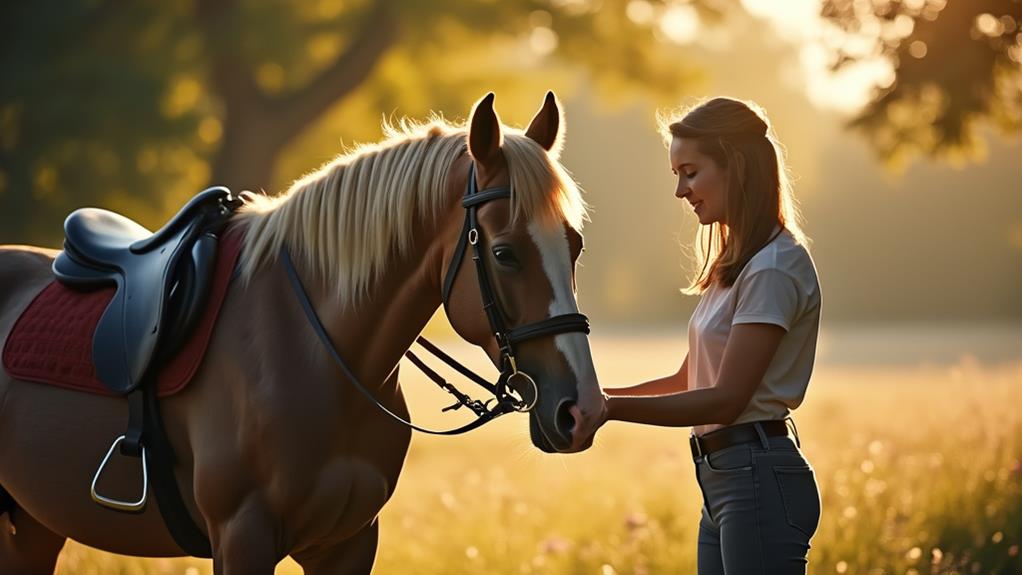
Understanding horse behavior is vital to becoming an adept rider. By observing body language, such as ear position and tail movement, you can improve communication and boost training effectiveness. Horses express themselves through these subtle cues, so paying attention helps anticipate their needs and reactions. Recognizing their flight response to perceived threats is essential. This awareness allows you to manage your horse's reactions and maintain control during rides.
A horse's energy level often reveals its emotional state. By being alert to changes, you can prevent misunderstandings and build a stronger relationship. If your horse seems unusually energetic or sluggish, it might be reacting to stress or excitement. Addressing these shifts can foster trust and harmony between you and your horse.
Additionally, understanding the importance of gut health can't be overlooked. A healthy gut contributes to a better mood and behavior, directly impacting performance and willingness to work. Daily interactions that treat horses as individuals nurture trust. Building rapport through consistent, positive experiences makes training more successful. By mastering horse behavior, you not only improve your riding skills but also deepen the bond with your horse.
Fitness and Conditioning
Enhancing your riding skills involves a focus on fitness and conditioning, which plays a significant role in your performance. Building your endurance through cardiovascular exercises like swimming or running is essential. These activities enhance your overall fitness, allowing you to stay energetic and focused during long rides. Strength training is another key component. By incorporating leg-specific exercises such as squats and lunges, you'll support your riding posture and manage the physical demands of different disciplines effectively.
Core strength is vital for maintaining stability and balance in the saddle. Activities like Pilates or yoga can markedly improve your core strength, ensuring you maintain proper riding posture and communicate effectively with your horse. Flexibility is equally significant. Regular stretching routines not only prevent injuries but also allow you to maintain a fluid and effective riding position.
Don't forget to add some variety to your fitness routine. Try alternative activities like kickboxing. It's a fun way to enhance your fitness levels while improving coordination and agility, which are essential for effective riding. By focusing on these aspects of fitness and conditioning, you'll see a noticeable improvement in your riding skills.
Essential Riding Safety
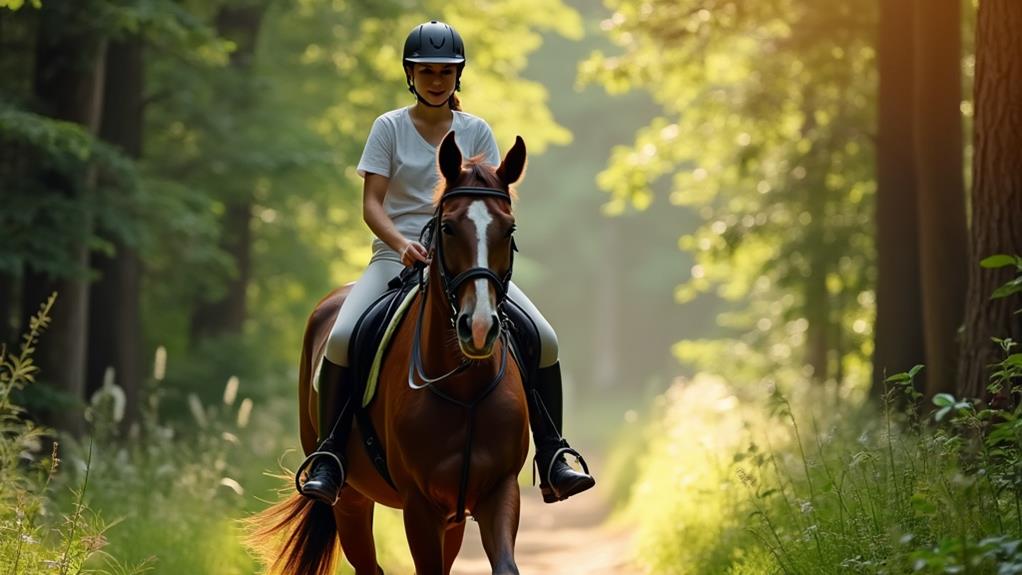
While fitness and conditioning lay the groundwork for effective horse riding, prioritizing safety guarantees you enjoy the ride with peace of mind. Start by always wearing a properly fitted riding helmet, as it can reduce the risk of head injuries by up to 85% if you fall. Making sure that all your riding gear, including saddles and bridles, is in top condition is vital. Regularly inspect these items for any wear and tear to prevent accidents caused by equipment failure.
Next, familiarize yourself with emergency procedures specific to your riding environment. Knowing how to safely dismount and handle a panicked horse can make a significant difference in stressful situations. Furthermore, appropriate footwear is indispensable. Opt for boots with a heel to prevent your foot from slipping through the stirrup, reducing the risk of being dragged if you fall.
Lastly, maintain a clear line of communication with your horse. Here are some tips to improve safety:
- Stay Calm: A calm demeanor helps keep your horse relaxed.
- Use Clear Commands: Make sure your horse understands you.
- Build Trust: Trust fosters a responsive and predictable horse.
Expanding Riding Knowledge
Expanding your riding knowledge is an essential step towards becoming a more skilled and confident equestrian. Start by reading books and articles that cover equine behavior, riding techniques, and training strategies. This not only broadens your understanding but also improves your effectiveness in the saddle. Furthermore, attending clinics and workshops led by experienced professionals provides invaluable hands-on learning. These events introduce you to a variety of training methods and philosophies, enriching your approach to riding.
Engage with online forums dedicated to equestrian topics. These communities are a goldmine of shared experiences, insights, and advice from fellow riders and experts. Don't underestimate the power of asking questions and exchanging ideas in these spaces. Watching instructional videos online is another fantastic way to learn. Visual demonstrations of skills and techniques can make complex concepts easier to grasp and replicate, helping you to refine your practice.
Tack and Equipment Care
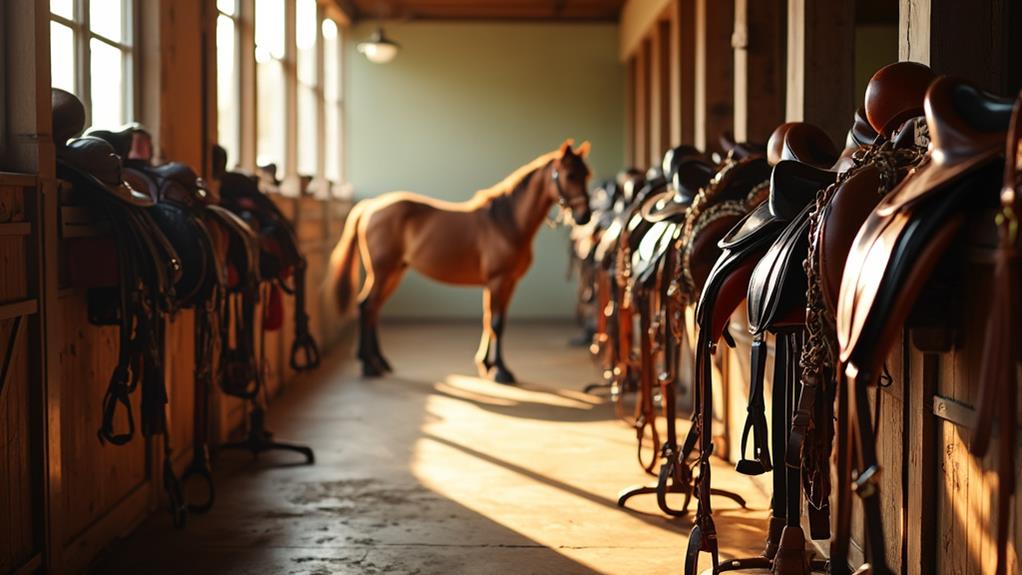
Taking good care of your tack and equipment is vital for guaranteeing both safety and performance during your rides. Regular maintenance not only prolongs the life of your gear but also improves comfort for both you and your horse. Here's how you can keep everything in top shape:
- Inspect Regularly: Check your tack for signs of wear and tear. Damaged equipment can compromise safety and performance, so address any issues immediately. Look for frayed stitching or cracked leather that could lead to mishaps.
- Clean Thoroughly: After each ride, clean your saddles and bridles to prevent dirt buildup and deterioration. A clean setup guarantees your horse's comfort and maintains the equipment's performance. Use suitable cleaning products and methods to avoid damaging the materials.
- Confirm Proper Fit: Properly fitting tack is vital. Ill-fitting bridles or saddles can cause discomfort for your horse and hinder effective communication. Always check that your equipment fits well before riding.
Store your gear in a cool, dry place to avoid mold and damage. Use covers to protect it from dust and sunlight. Opt for high-quality materials, as they usually offer better durability and performance. By following these steps, you'll guarantee a safe and comfortable riding experience.
Related posts