How to Handle a Stubborn Cat: Tips for Managing Independent Felines
Managing a stubborn cat starts with understanding their natural independence and intelligence. Build trust with patience and gentle training techniques. Redirect unwanted behaviors consistently without instilling fear. Use positive reinforcement, like treats or praise, to encourage good habits. Tailor activities to your cat's preferences and establish consistent routines to reduce anxiety. Incorporate regular playtime to satisfy their hunting instincts and stimulate their mind. In multi-caregiver households, make certain everyone agrees on rules and rewards to prevent confusion. By adopting these approaches, you'll find a harmonious balance with your feline companion, and there's more to uncover about effective management strategies.
Understanding Feline Independence
Cats are known for their independence, a trait that often baffles many pet owners. This independence stems from their natural instincts, driving behaviors like hunting and climbing. Unlike dogs, cats don't have a pack mentality, so they make their own choices rather than following commands. You might find your cat's autonomous nature frustrating during the training process, especially when they appear stubborn. However, understanding their independent behaviors is crucial to building a successful relationship.
To connect with your cat, you must recognize their social awareness and intelligence. Cats are selective about whom they choose to respond to, often preferring those they trust and have a strong bond with. Establishing this trust is vital if you want your cat to pay attention to you. Pay attention to your cat's unique love language and preferences. Some cats enjoy play, while others prefer quiet time with you. By catering to these preferences, you can strengthen your bond and encourage more cooperative behavior.
Gentle Training Techniques
Training a stubborn cat requires patience and a gentle approach. You can't expect immediate results, but with consistent efforts, you'll see improvements in your cat's behavior. Start by softly redirecting your cat's attention when you notice unwanted behaviors. This non-punitive method helps your cat learn without fear. For example, if your cat scratches the couch, guide them to a scratching post instead. Environmental modifications, like using tape or foil, can also deter unwanted behaviors, encouraging them to engage with appropriate items.
Positive reinforcement is essential. Reward your cat with treats or praise immediately after they display the desired behavior. This increases the likelihood of good behaviors being repeated. Consider what your cat enjoys during play time, as understanding their unique preferences can greatly improve training outcomes. Tailor activities to fit their interests, making learning enjoyable rather than stressful.
Consistency in your gentle training approach strengthens the bond between you and your feline friend. It helps address any underlying cause of stubbornness, fostering a more harmonious relationship. By focusing on positive interactions, you create an environment where your cat feels secure and more willing to learn.
Positive Reinforcement Methods
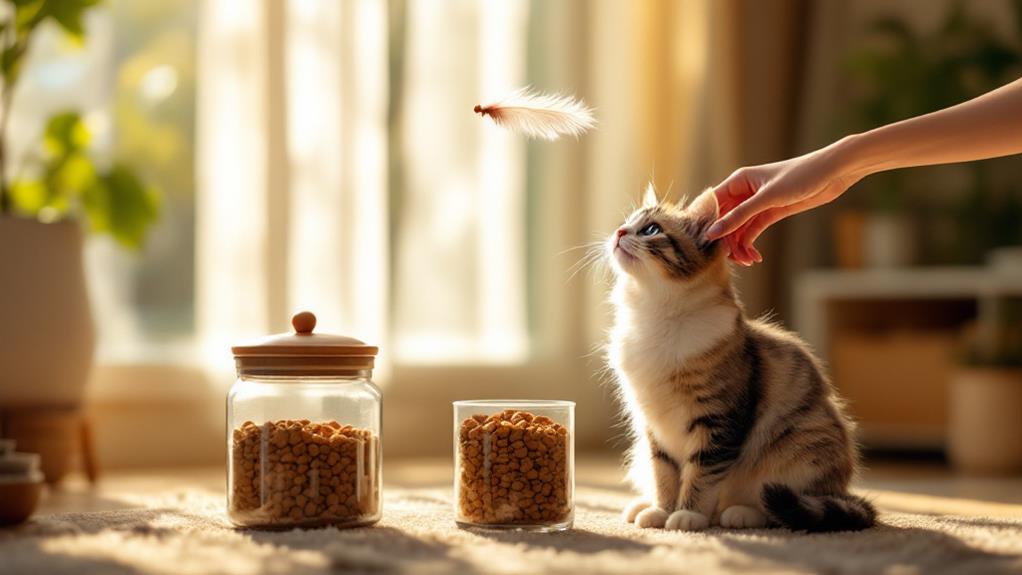
Building on gentle training techniques, positive reinforcement methods become your best ally in shaping your cat's behavior. To effectively use positive reinforcement, reward your cat immediately after they perform a desired action. This could mean offering treats, giving praise, or engaging in a brief playtime session. Teaching your cat becomes much easier when you identify treats that are appealing to them. Remember, every independent feline has unique preferences, so it's crucial to find what motivates your particular cat.
Consistency is key in positive reinforcement. Use the same voice commands and hand signals each time to help your cat associate specific behaviors with rewards. Over time, this consistency will reinforce good behavior and reduce bad behavior. When your cat connects positive actions with rewards, they're more likely to repeat those desirable behaviors in the future.
Moreover, incorporating playtime as a form of positive reinforcement not only rewards your cat but also aligns with their natural behaviors, such as hunting instincts. This strategy promotes comprehensive well-being while reducing the likelihood of destructive tendencies. By understanding and applying these methods, you'll find managing independent felines becomes a rewarding experience for both you and your cat.
Importance of Playtime
Your cat's playtime is more than just a fun activity—it's vital for their well-being. Regular playtime satisfies your cat's hunting instincts and provides important physical activity, keeping boredom and related behavioral issues at bay. Engaging in interactive play fulfills your cat's natural feline needs and strengthens the bond between you and your pet. It's not just about chasing toys; it's about tapping into their instincts while providing mental enrichment.
Incorporate activities like puzzle toys and foraging to stimulate your cat's cognitive abilities and promote problem-solving skills. This kind of mental enrichment keeps your cat's mind sharp and engaged. Rotating toys and introducing new ones helps maintain your cat's interest and prevents them from losing enthusiasm for playtime. Keep an eye out for signs of overstimulation, such as dilated pupils and excessive vocalizations, to guarantee play remains a positive experience.
Interactive play isn't just beneficial for your cat; it's rewarding for you too. Watching their natural behaviors unfold can be entertaining and enlightening. By understanding your cat's play needs, you'll provide an enriching environment that caters to their instincts and keeps them happy and healthy.
Establishing Consistent Routines
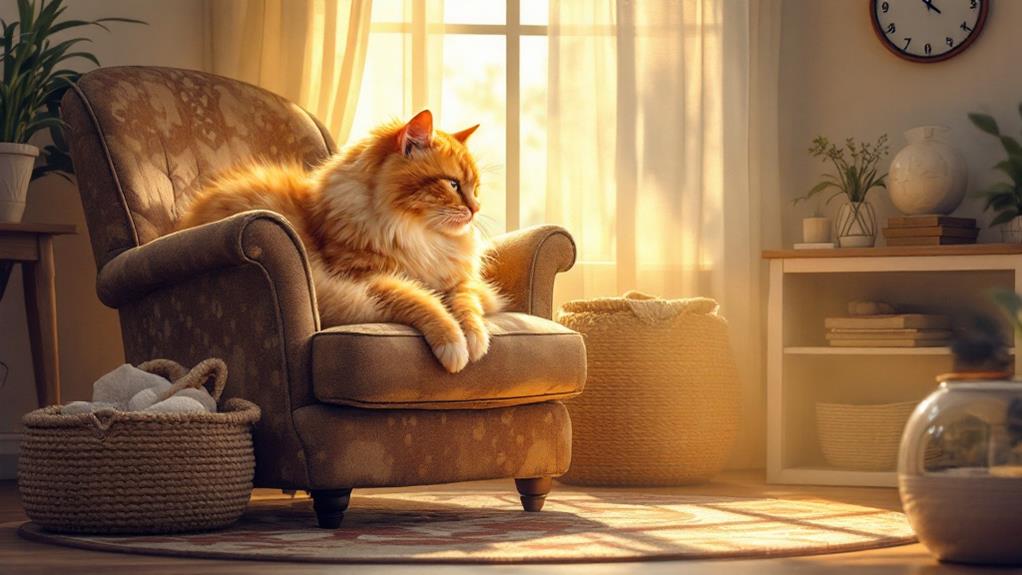
While engaging in regular playtime fulfills your cat's natural instincts, establishing consistent routines is likewise significant for their well-being. Cats thrive when they have a predictable daily schedule, which helps reduce anxiety and encourages better behaviors. Setting up a consistent feeding routine guarantees your feline friend knows exactly when to expect meals, making them feel secure and reducing stress.
Incorporate daily rituals such as playtime and grooming to reinforce structure. These activities allow your cat to understand household expectations and adapt to your cues. For instance, dedicating specific times for meals and quiet time not only improves your cat's well-being but also strengthens your bond. The familiarity of these established routines helps your cat anticipate what comes next, minimizing stress and making it easier for them to follow the rules.
Consistency in routines is key in managing a stubborn cat. By providing them with a predictable environment, you lay the groundwork for reinforcing positive behaviors. Cats are more likely to respond positively when they know what to expect. Ultimately, establishing consistent routines creates a harmonious environment where both you and your feline companion can thrive.
Managing Multi-Caregiver Households
In a household where multiple caregivers are involved, consistency is the cornerstone of effective cat management. To provide your cat with a stable environment, it's essential that everyone follows the same training practices. This means you need to make certain that rules, rewards, and discipline methods are agreed upon by all caregivers. Clear communication is key here; it helps create a unified approach, preventing any confusion for the cat.
Regular meetings or check-ins are an excellent opportunity for everyone to share observations. By doing so, you can adjust techniques as needed and ascertain everyone is on the same page. This is particularly vital when dealing with different cats in the household, as their needs and behaviors can vary. Documenting training progress and any behavioral changes can provide valuable insights into what works best for every cat involved.
Establish a shared schedule that includes feeding, playtime, and training sessions. This routine not only reinforces good behavior but also reduces anxiety in multi-cat environments. Consistency requires work on your part, but it contributes markedly to the cat's well-being. With these steps, managing a multi-caregiver household becomes a more harmonious endeavor.