
How to Get an Overview of Dog Training Programs: Finding the Right Fit

To find the right dog training program, start by evaluating your dog's stage of life, breed, and temperament to tailor the training effectively. Investigate positive reinforcement methods to guarantee an anxiety-free experience. Verify trainers' credentials and observe their interaction style with dogs. Consider different training formats like private lessons, group classes, or online courses, depending on your dog's needs. Set realistic goals and involve the whole family for consistent training. Budget wisely by comparing costs and seeking discounts or package deals. Investing in quality training can prevent future issues. Plunge deeper to uncover specific insights and tips that suit your situation.
Understanding Your Dog's Needs
In regard to understanding your dog's needs, taking into account factors like stage of life, breed, temperament, and specific behavioral issues is vital. You'll need to assess these elements to tailor a dog training regimen that addresses their individual needs. For puppies, specific training in basic obedience, such as potty training and socialization, lays the groundwork for lifelong good behavior. On the other hand, adult dogs might require behavior modification to tackle challenges like leash pulling or aggression.
Setting realistic training goals is significant, and understanding your dog's learning style and past experiences will guide you. Are they a quick learner, or do they need more repetition? Do they have a history of trauma that might affect their behavior? These insights will help you choose appropriate training techniques.
Regularly monitor your dog's progress and be ready to adjust your approach. This guarantees the training remains effective and aligns with their development. You might even consider consulting professional trainers for guidance. Remember, involving the whole household in the training process is key. Consistency from everyone helps reinforce learning and fosters a harmonious relationship between your dog and family members.
Exploring Training Methodologies
When exploring training methodologies, understanding the distinct techniques available can greatly improve your dog's learning experience. Positive reinforcement training stands out as a highly effective approach. By focusing on rewarding desired behaviors, you can boost learning while strengthening the bond between you and your dog. This methodology is especially beneficial when teaching your dog basic commands or addressing behavior problems like separation anxiety.
Many professional dog trainers advocate for positive reinforcement because it avoids the drawbacks of aversive methods, such as fear and anxiety. Clicker training is a popular subset of this approach, using a sound to precisely mark desired behaviors. This can greatly improve both communication and precision during the training process.
Different training methodologies cater to numerous needs, so it's vital to evaluate your dog's specific requirements. For example, behavior modification strategies are fundamental if you're dealing with issues like aggression or anxiety. Understanding your dog's learning style and temperament allows you to select a methodology that aligns with their unique needs, improving overall effectiveness. By working with professional dog trainers who understand these nuances, you can better navigate the training process and enhance your dog's behavior.
Evaluating Trainers and Credentials
Choosing the right dog trainer is crucial for your pet's development, especially in an industry where regulation is minimal. With anyone able to claim they're a trainer, it's imperative to verify their credentials and certifications. Look for recognized certifications like CPDT-KA or CBCC-KA, which indicate a trainer's commitment to professional standards and continuous learning. Evaluating a trainer's academic credentials in animal behavior and their professional experience, particularly with specific behavior issues, can give you confidence in their abilities.
Observe how trainers interact with dogs to understand their training philosophy. Positive engagement is key—seek trainers who use harnesses and avoid aversive equipment like prong collars. Such choices reflect a commitment to humane, effective methods.
Don't underestimate the power of client testimonials and success stories. They provide insights into a trainer's effectiveness and approachability. A few negative reviews might be normal, but numerous complaints could be a red flag. Moreover, researching online for any controversies or positive articles about trainers can offer a clearer picture of their reputation. By doing this due diligence, you'll make an informed decision that benefits your dog's growth and well-being.
Comparing Training Packages
Selecting the right training package for your dog can greatly influence their development and behavior. When exploring dog training options, you'll find a variety of training packages available. If you're looking for personalized attention, private lessons could be the perfect choice. They offer tailored training plans that address your dog's specific needs, making them ideal for behavior modification or complex issues. On the other hand, group classes are excellent for socialization and practicing commands in a structured environment.
If your schedule is tight, consider Adventure Camp training. This program takes care of daily training while you're at work, focusing on foundational skills, especially beneficial for young puppies. For those with variable schedules, online courses offer a flexible, self-paced learning option. They're often available through subscription models, allowing you to learn at your own pace.
Personalized training packages might be more effective for unique behavioral needs, ensuring that the training program is specifically designed for your dog. While standardized programs work well for basic obedience training, they may not address intricate issues effectively. By evaluating these options, you can choose the right path for your dog's training expedition.
Setting Realistic Training Goals
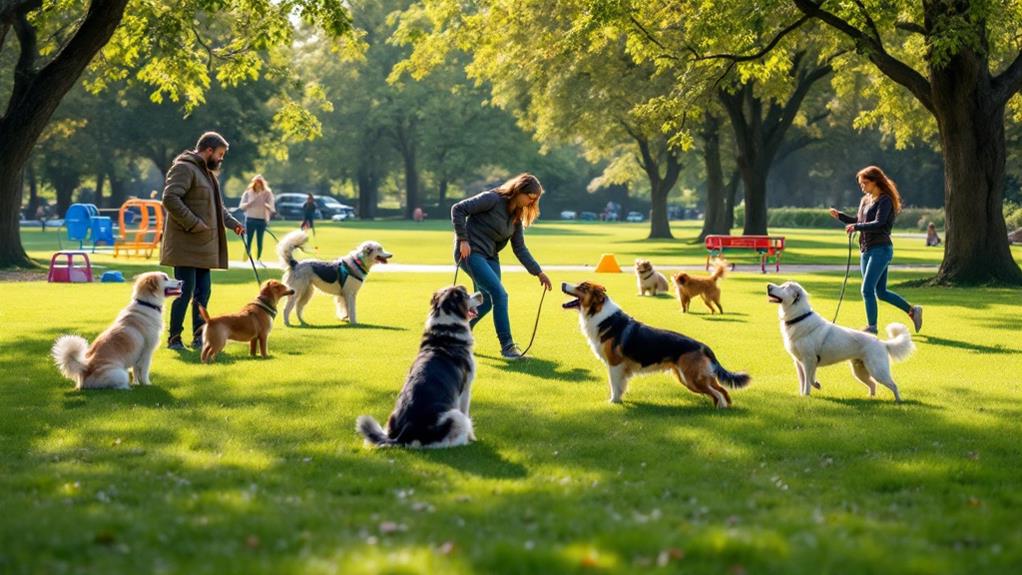
Understanding your dog's unique needs is vital for setting realistic training goals. Start by evaluating factors such as maturity, breed, and temperament to tailor your approach. This helps in pinpointing specific behavioral issues like leash pulling or excessive barking. Addressing these issues effectively lays the groundwork for structured training objectives. Here's a step-by-step approach to guide you:
- Evaluate Your Dog's Needs: Identify your dog's specific characteristics and behavioral issues. This guarantees training goals align with their learning style.
- Set Realistic Expectations: Understand that training takes time and patience. Be consistent and maintain a positive outlook to gradually witness behavioral changes.
- Use Positive Reinforcement: Focus on rewarding desired behaviors. This improves the training experience and solidifies learning outcomes.
- Review and Adjust Goals: Regularly revisit and modify training goals based on your dog's progress and evolving needs.
Budgeting for Dog Training
After setting realistic training goals for your dog, it's vital to reflect on how you'll budget for their training. Dog training programs can vary quite a bit in price, with potential trainers offering packages from $150 to $1,200. These costs depend on factors like the trainer's expertise, the program's duration, and the methods used. While sticking to your budget constraints is significant, keep in mind that investing in quality training can save money in the long run. Cheaper options might lack effectiveness, leading to further expenses down the road.
Start by researching and comparing quotes from multiple trainers or facilities. This step guarantees that the selected program aligns with both your budget constraints and your dog's training needs. Look for trainers who offer discounts or package deals, as these can provide substantial savings while maintaining high standards of quality training. Initial consultations with potential trainers are invaluable for understanding pricing structures and exploring customized training plans. These plans can address specific behavioral challenges your dog may have, all while fitting within your financial limits. By taking the time to plan and research, you can find a training program that effectively meets your dog's needs and your budget.
Making Your Final Decision

Deciding on the right dog training program requires weighing several vital factors to guarantee the best fit for you and your dog. Start by evaluating the trainer's philosophy. Aligning with a philosophy that emphasizes positive reinforcement techniques guarantees a nurturing environment. Here's a straightforward approach to making your decision:
- Trainer's Credentials and Experience: Look for certifications like CPDT-KA or CTC. These indicate the trainer's commitment to ethical practices and verified expertise.
- Specific Needs of Your Dog: Consider your dog's behavioral issues and learning styles. Opt for a program that provides a personalized approach, avoiding one-size-fits-all solutions.
- Trial Sessions: Schedule these to observe the trainer's communication style and see if their methods are effective for your dog. This firsthand experience can be revealing.
- Strong Rapport: Trust your instincts. A strong rapport with the trainer is vital for a successful training process, benefiting both you and your dog.
Ultimately, weigh these factors carefully. A trainer who matches your values, understands your dog's needs, and communicates effectively will lead to a productive and rewarding experience. Trust your judgment to make the best decision for you and your furry friend.