How to Choose the Right Pony for a Child: Essential Tips for Parents
To choose the right pony for your child, start by understanding their riding interests and level of experience. Look for a pony with a suitable temperament, guaranteeing they're calm and gentle with your child. It's vital to match the pony's size to your child's height for better control. Consider a pony between 10 to 15 years for a well-balanced temperament. Prioritize health checks to verify safety and factor in ongoing care and maintenance costs. Don't forget to try before you buy to gauge compatibility. With these tips, you'll be equipped to make an informed decision that's best for your child.
Understanding Your Child's Needs
Understanding your child's needs is the crucial initial step in choosing the right pony. You'll want to reflect on what excites them about riding. Is it the thrill of jumping, the elegance of dressage, or the adventure of trail riding? These preferences will guide you in selecting a pony that aligns with their interests. By pinpointing your child's interests, you can guarantee that their enthusiasm for riding remains strong, and they're motivated to learn and grow in their equestrian expedition.
Next, think about your child's riding goals. Are they just starting and need a gentle introduction to riding, or are they looking to compete in local shows? The level of experience and aspiration should influence your choice. A beginner-friendly pony with a calm demeanor is ideal for new riders, while an experienced young equestrian might benefit from a pony that's responsive and has training suited for competition.
Assessing Pony Temperament
When you're choosing a pony for your child, evaluating its temperament is crucial. A pony's temperament traits determine how well it will fit with your child's personality and riding experience. Start by observing the pony's behavior in different situations. Is it calm and patient, or skittish and unpredictable? A gentle, well-mannered pony is typically better for young or inexperienced riders.
Pay attention to how the pony interacts with people and other animals. Does it approach with curiosity or seem wary? A friendly disposition often indicates a pony that's easier to handle and train. Watch for signs of aggression, like biting or kicking, which might suggest it's not suitable for a child.
Spend time grooming and handling the pony to see how it reacts to touch and movement. Notice if the pony is responsive to commands and willing to follow instructions. Consistent behavior observations over multiple visits can reveal if a pony maintains a steady temperament.
Lastly, consult with the pony's current owner or trainer. They can provide insights into the pony's history and temperament traits that may not be immediately apparent, helping you make a well-informed decision.
Determining the Right Size
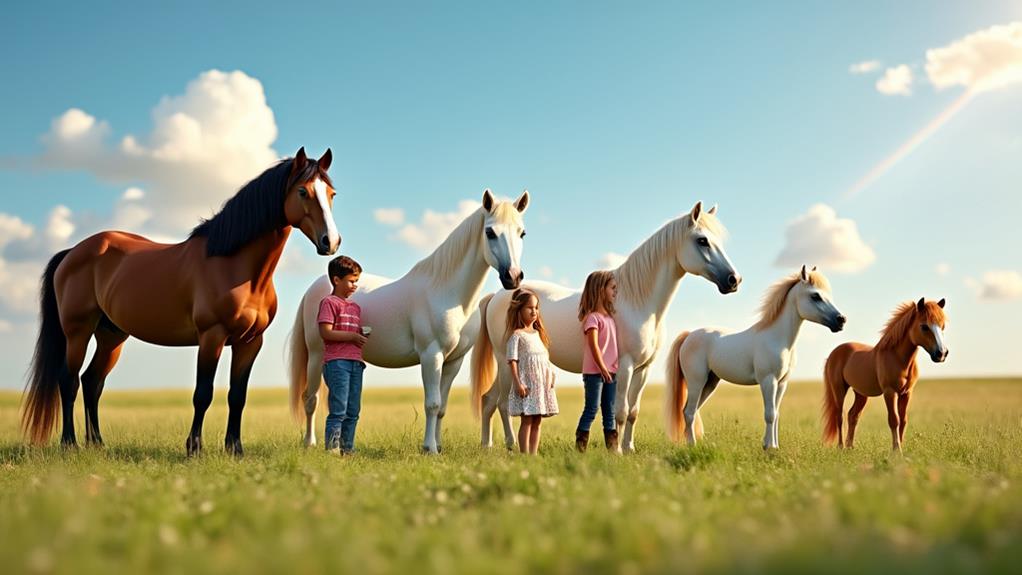
Choosing the appropriate size pony for your child is essential to guarantee a comfortable and safe riding experience. You'll want to match the pony's size to your child's riding height to make certain they can control the pony effectively. A pony that's too large might be intimidating, while one that's too small can be uncomfortable and challenging to manage.
Start by considering ponies with a height of about 10 to 14 hands high because they're often suitable for children. Ideal pony breeds like Shetland, Welsh, and Connemara are known for their manageable sizes and gentle dispositions. These breeds typically offer a good balance between size and temperament, making them excellent choices for young riders.
When determining the right size, have your child sit on the pony to check their posture and balance. Your child should be able to comfortably reach the stirrups without stretching and have secure contact with the pony's sides for better control. This connection is important for maintaining balance and building confidence while riding. Remember, it's not just about the pony's size but also how well your child can interact with the pony during their riding sessions.
Considering Pony Age
As you consider the pony's development, keep in mind that a pony's maturity level can greatly affect your child's riding experience. A pony's age is vital because it influences their behavior, training, and energy levels. Ponies, like humans, go through diverse growth stages, each with its own challenges and benefits. Younger ponies might still be in training and exhibit unpredictable behavior, which could be too much for a beginner child rider.
Typically, a pony's lifespan ranges from 25 to 30 years. Ideally, you should aim for a pony in its middle years, around 10 to 15 years old. At this stage, ponies are usually well-trained and have a calm temperament, making them more suitable for young riders. They've passed their rambunctious youthful period and aren't yet experiencing the slowdowns of old age.
However, each pony is unique, and their maturity can differ. It's essential to spend time with potential ponies to observe their behavior across different situations. This helps you gauge their maturity beyond just their age. Remember, a more mature pony can provide a safer and more enjoyable learning environment for your child.
Evaluating Experience Level
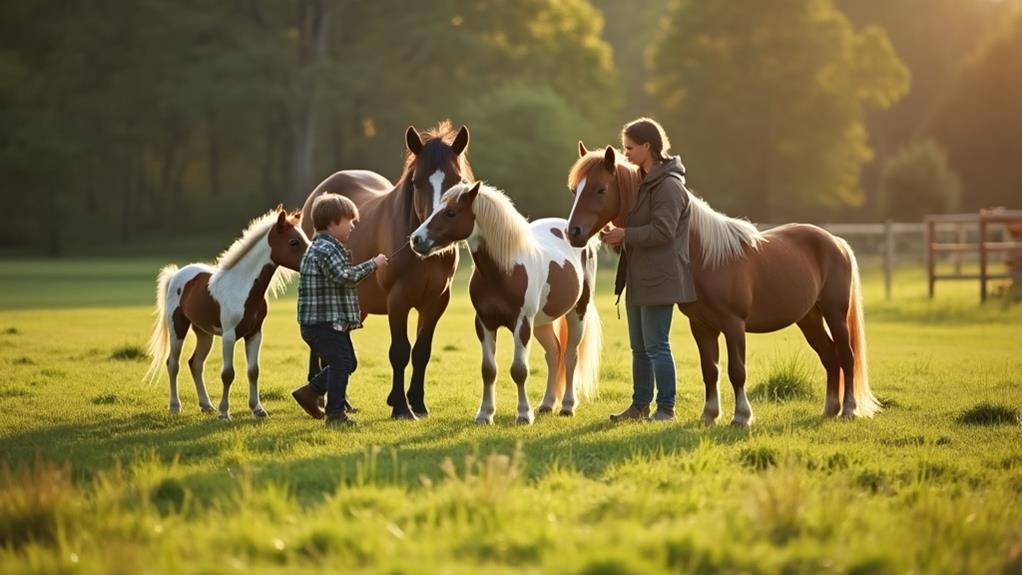
Understanding your child's riding experience is crucial when selecting the right pony. Start by conducting an experience assessment to determine their current level. Has your child taken riding lessons before, or are they new to the equestrian world? If they're beginners, you'll want a gentle, well-trained pony that can help them build confidence. For more experienced riders, a pony with a bit more spirit might be appropriate to challenge their skill development.
Pay attention to your child's comfort and control when riding. Are they able to handle basic commands and maintain balance? Observing them during a lesson or a ride can provide valuable insights. Communicate with their riding instructor for feedback on their progress and areas that need improvement. This collaboration helps guarantee you choose a pony that matches their current abilities and encourages growth.
Consider future skill development as well. A pony slightly above your child's current level can provide room for challenge and growth, fostering their riding skills over time. Remember, the goal is to find a pony that keeps your child engaged, safe, and excited about riding. With thoughtful consideration, you'll make a choice that supports their equestrian experience.
Health and Veterinary Checks
Once you've gauged your child's riding experience, it's important to prioritize the pony's health and veterinary checks. A healthy pony is fundamental for ensuring a positive and safe riding experience. Start by reviewing the pony's veterinary history. This will give you insights into past medical issues and any treatments the pony has received. Knowing this history helps you identify potential health concerns that might arise in the future.
Next, arrange for thorough health assessments conducted by a qualified veterinarian. These assessments should include checking the pony's teeth, hooves, skin, and general physical condition. Look for any signs of lameness or discomfort, as these can indicate underlying issues. Regular veterinary checks are critical for maintaining the pony's well-being and can prevent small problems from becoming major health concerns.
Don't forget to ask the seller about the pony's vaccination records and deworming schedule. Keeping up with these is significant for preventing disease and ensuring your pony remains in good health. By taking these steps, you're not only looking out for the pony's health but also creating a safer and more enjoyable environment for your child's equestrian adventures.
Safety Considerations
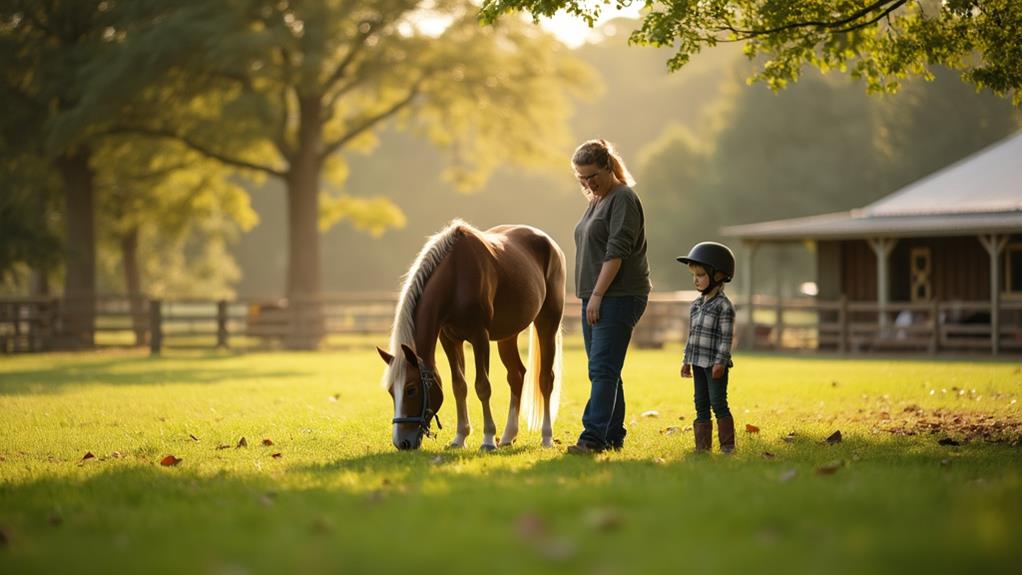
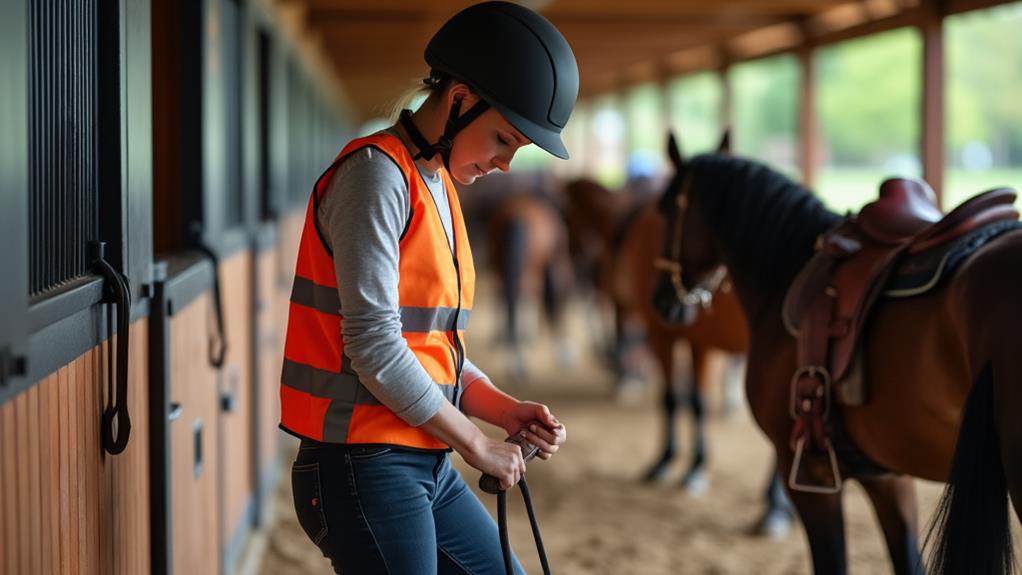
Safety considerations are paramount when selecting a pony for your child. Guaranteeing your child's safety will give you peace of mind and improve their riding experience. Begin by emphasizing the importance of wearing helmets. Helmets are required, not just recommended, for all young riders. They provide vital protection and can prevent serious injuries. Make certain the helmet fits properly and meets safety standards.
Next, prioritize riding lessons. Professional instruction is invaluable for teaching your child the fundamentals of riding and handling a pony safely. Riding lessons build confidence and help your child develop fundamental skills. Look for certified instructors who have experience teaching children.
Moreover, assess the pony's temperament. A calm, gentle pony is ideal for beginners, as it reduces the likelihood of unexpected behaviors that could lead to accidents.
Here's a quick checklist to guarantee safety:
- Helmets Required: Always wear a helmet that fits well and meets safety standards.
- Riding Lessons: Enroll your child in lessons with a certified instructor.
- Pony Temperament: Choose a calm pony suitable for beginners.
Budget and Costs
When considering a pony for your child, budget and costs play a significant role in the decision-making process. It's essential to start with a clear financial planning strategy. Begin by evaluating your overall budget and determining how much you're willing to spend not just on the initial purchase, but also on ongoing expenses. Ponies require regular care, including feeding, grooming, veterinary visits, and equipment. Each of these costs can add up quickly, so it's vital to have a thorough view of your financial commitment.
Conduct a cost comparison between different options available. Purchasing a pony can vary greatly in price depending on factors like size, breed, and training level. Consider associated costs beyond the purchase price, such as stable fees and transportation. Leasing a pony might be a more budget-friendly option, allowing for flexibility and reduced long-term commitment.
Try Before You Buy
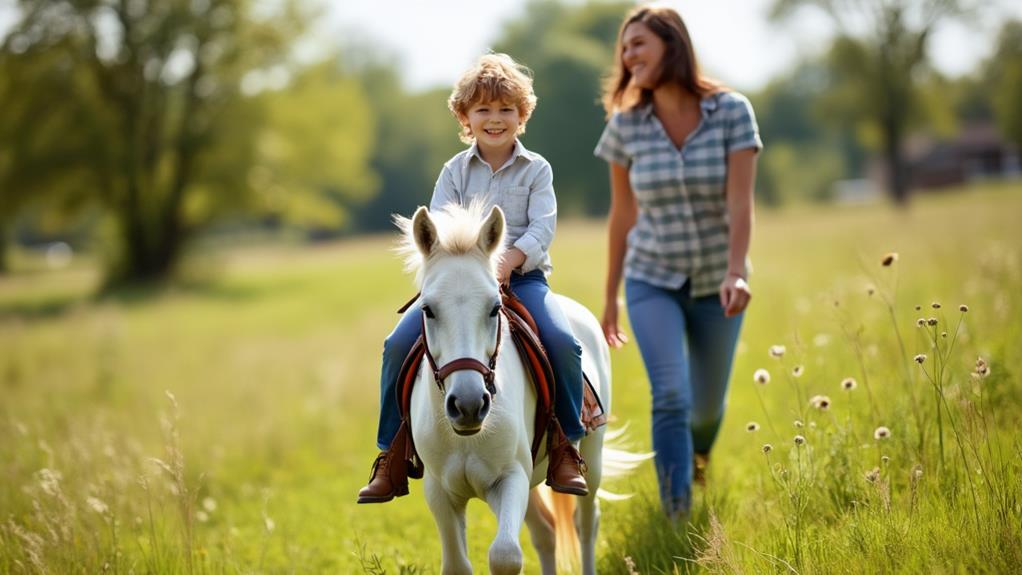
Exploring the option to "try before you buy" can be a smart approach when selecting a pony for your child. Pony riding is a significant commitment, and trial sessions can guarantee that both your child and the pony are a good match. Here's how you can make the most of this option:
- Schedule Multiple Trial Sessions: Don't settle for just one session. It's vital to see how your child interacts with the pony over several visits. This will give you a clearer picture of their compatibility and help your child build confidence.
- Observe the Pony's Behavior: During these sessions, pay close attention to the pony's temperament. Is the pony calm and patient, or does it seem skittish and easily agitated? A well-matched pony will be responsive and comfortable with your child.
- Assess Your Child's Excitement: After each trial session, talk to your child about their experience. Are they thrilled and enthusiastic to continue pony riding? Their excitement is essential, as it indicates if they're truly interested in this adventure.
Ongoing Care and Maintenance
Taking care of a pony is no small task and requires ongoing commitment to guarantee its well-being. You'll need to establish consistent feeding routines to keep your pony healthy and happy. Make sure you're providing a balanced diet that includes hay, grains, and fresh water. It's essential to adjust the amount and type of feed based on your pony's maturity, weight, and activity level. Regularly consulting with a veterinarian will help fine-tune these routines to meet your pony's specific needs.
In addition to feeding, grooming fundamentals are a critical part of your pony's care. Regular brushing not only keeps the coat clean but also encourages bonding between your child and the pony. You'll want to invest in quality grooming tools like brushes, combs, and hoof picks. Pay attention to areas like the mane, tail, and hooves, which require special care to prevent tangles and infections.