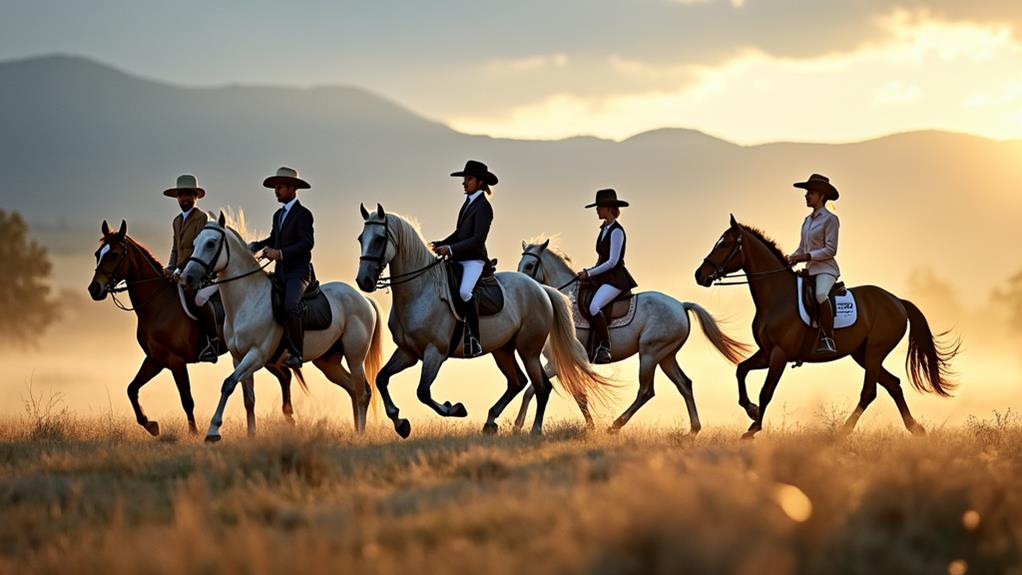
How to Choose the Right Horse for You: A Beginner’s Guide
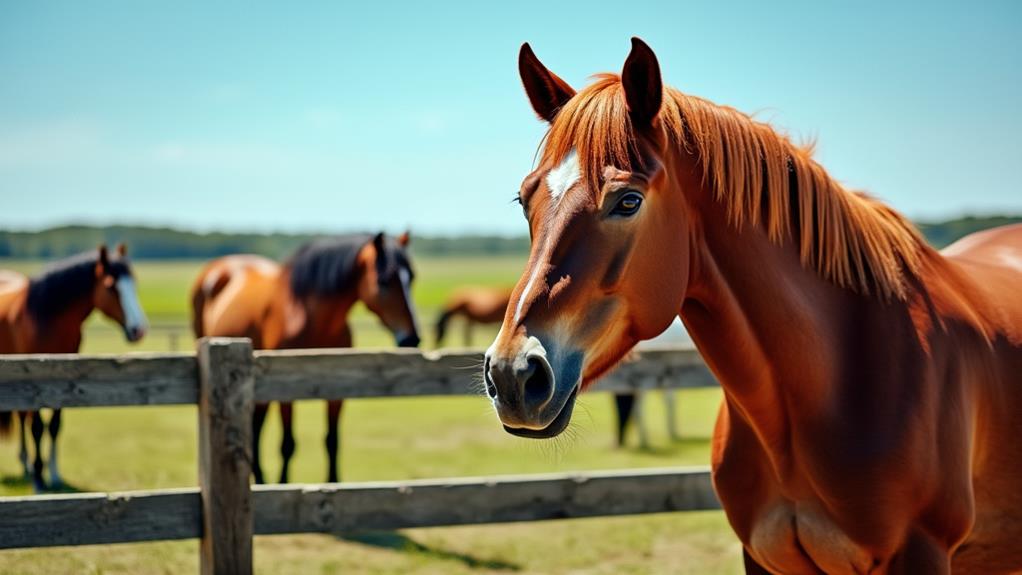
Start by evaluating your riding skills to guarantee you can mount, control, and understand horse behavior. Choose a horse breed that matches your needs, regardless of its versatility of a Quarter Horse or the endurance of an Arabian. Pay attention to the horse's temperament—calmness and responsiveness are key. Check the horse's health with a vet to confirm it's sound and well-structured. Consider the horse's lifespan; younger ones may require more training, while older ones offer reliability. Budget appropriately for all care costs. Following these steps will guide you towards finding the perfect equine partner for your expedition ahead.
Assess Your Riding Skills
Understanding your riding skills is the initial step in choosing the right horse for you. It's critical to honestly evaluate your abilities, focusing on basic riding techniques and skill progression. Start by identifying how comfortable you feel while riding. Can you confidently mount, control, and dismount a horse? These are fundamental basic riding techniques that set the foundation for your equestrian adventure.
Think about how you handle different situations while riding. Are you at ease with steering, stopping, and maintaining balance? Your proficiency in these areas reveals a lot about your current skill level. Consider how well you understand horse behavior and communication, as these are important in managing your horse effectively.
Skill progression is another key factor. Reflect on how quickly you've advanced in your riding lessons and your capacity to learn new techniques. If you're steadily improving and enthusiastic to tackle more challenging maneuvers, you're likely ready for a horse that matches your growing expertise. However, if you're still mastering the basics, a more experienced and patient horse might suit your needs better. Remember, choosing a horse aligned with your skills guarantees a safe and enjoyable riding experience.
Understand Horse Breeds
When addressing the selection of the right horse, it's essential to investigate the world of horse breeds to find the perfect match for your needs. Understanding the common horse breeds and their breed characteristics will help you make an informed choice. Each breed has unique traits that cater to different activities and rider experiences. For instance, if you're interested in a versatile and friendly companion, consider the Quarter Horse, known for its adaptability and gentle disposition.
If you're more inclined towards endurance and stamina, the Arabian horse, with its distinctive head shape and spirited nature, might be ideal. Those focused on equestrian sports like dressage or show jumping might look into the Thoroughbred, celebrated for its speed and athleticism. Conversely, if you desire a calm and steady partner for trail riding, the sturdy and sure-footed Morgan horse could be a perfect fit.
Evaluate Temperament
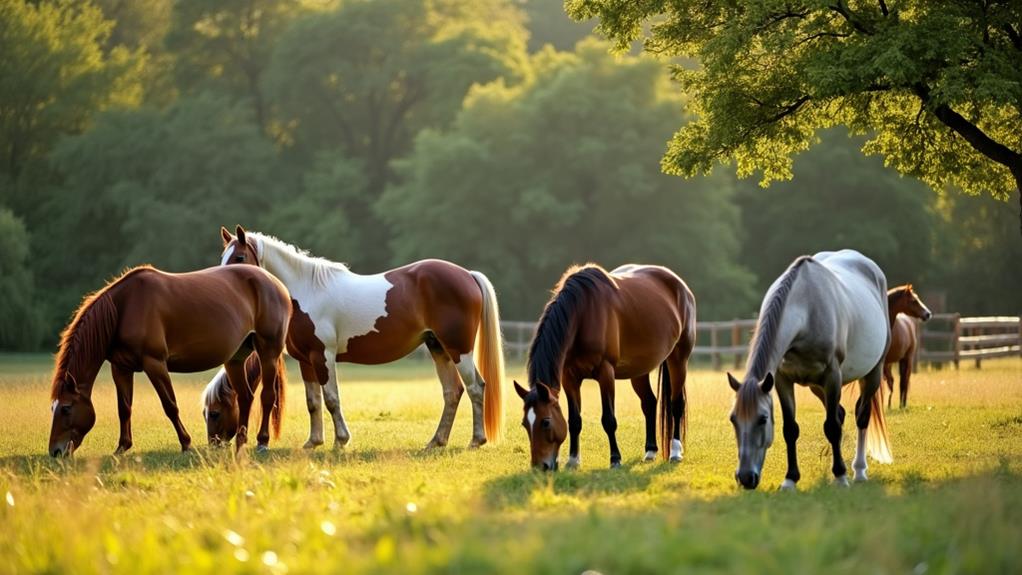
In choosing the right horse for you, it's crucial to, above all, evaluate the temperament of potential companions. A horse's personality plays a significant role in how enjoyable your riding experience will be. You want a horse that matches your level of confidence and skill. Consider how a horse behaves in different situations, such as during grooming or in a noisy environment. A calm, patient horse is often ideal for beginners, while more experienced riders might appreciate a spirited personality.
To gain deeper insights into a horse's temperament, examine its training history. A well-trained horse typically demonstrates predictable behavior and responds well to commands, which can be reassuring for new riders. Ask about any past issues and how they were addressed; this can reveal patterns in behavior and adaptability.
Here is a simple approach to evaluating temperament:
- Observe Interactions: Watch how the horse interacts with people and other horses. Are they calm or easily agitated?
- Ask About Training: Inquire about the horse's training history. Has it been consistently trained, or are there gaps?
- Test Ride: If possible, take the horse for a short ride to personally assess its temperament and responsiveness.
Check Health and Soundness
After evaluating temperament, it's essential to focus on the horse's health and soundness to guarantee a safe and enjoyable riding experience. Start by arranging a vet check with a qualified veterinarian. This examination is important to identify any health issues that might not be apparent at first glance. The vet will examine the horse thoroughly, checking critical signs, teeth, eyes, and overall physical condition, confirming there are no underlying problems.
Next, conduct a conformation assessment. This involves evaluating the horse's physical structure and how well its body parts are proportioned and aligned. A horse with good conformation is less likely to suffer from injuries and will generally perform better in diverse riding disciplines. Look for straight legs, a strong back, and a well-set neck, as these are signs of good conformation.
Don't forget to observe the horse in motion. Watch how it walks, trots, and canters, paying attention to any signs of lameness or discomfort. A sound horse should move fluidly without stiffness or irregularities. By taking these steps, you can guarantee the horse you're considering is healthy and ready for your riding adventures.
Consider Age and Experience

Choosing the right horse often boils down to evaluating both maturity and experience. You need to take into account the years of the horse and how it aligns with your riding goals. A younger horse typically has a longer horse lifespan ahead but might lack the training potential needed for a beginner. On the other hand, an older horse might have a wealth of experience but may face health challenges sooner. Here's a guide to help you decide:
- Young Horses (3-7 years): They offer great training potential and can be tailored to your riding style. However, they require a lot of time and patience, as they're still learning and might exhibit unpredictable behavior.
- Middle-aged Horses (8-15 years): These horses often strike the perfect balance between experience and energy. They usually have a solid foundation in training and are still young enough to adapt to new skills or disciplines.
- Senior Horses (16+ years): While they might have a shorter horse lifespan ahead, senior horses are often calm and reliable, making them excellent for beginners who prefer a steady, experienced partner.
Budget and Maintenance Costs
When you're considering horse ownership, budget-planning is vital. You need to account for both the initial investment and the ongoing expenses that come with caring for a horse. The initial investment includes the purchase price of the horse, which can vary widely depending on breed, training, and maturity. You'll also need to factor in the cost of equipment like saddles, bridles, and grooming tools.
Once you've made the initial investment, prepare for ongoing expenses. Horses require regular feeding, which means hay, grain, and supplements should be part of your budget. Don't forget about stable costs, regardless of whether you're boarding your horse or maintaining a stable at home. Routine veterinary care, vaccinations, and dental work are necessary to keep your horse healthy. You'll also need to budget for farrier services to guarantee your horse's hooves are well-maintained.
Consider insurance to protect your investment against unexpected veterinary bills or accidents. By planning for these costs early, you can enjoy horse ownership without financial stress. Remember, the right financial preparation guarantees you and your horse can have a happy and healthy partnership for years to come.
Related posts