How to Care for Your Puppy With Allergies: Tips for Comfort
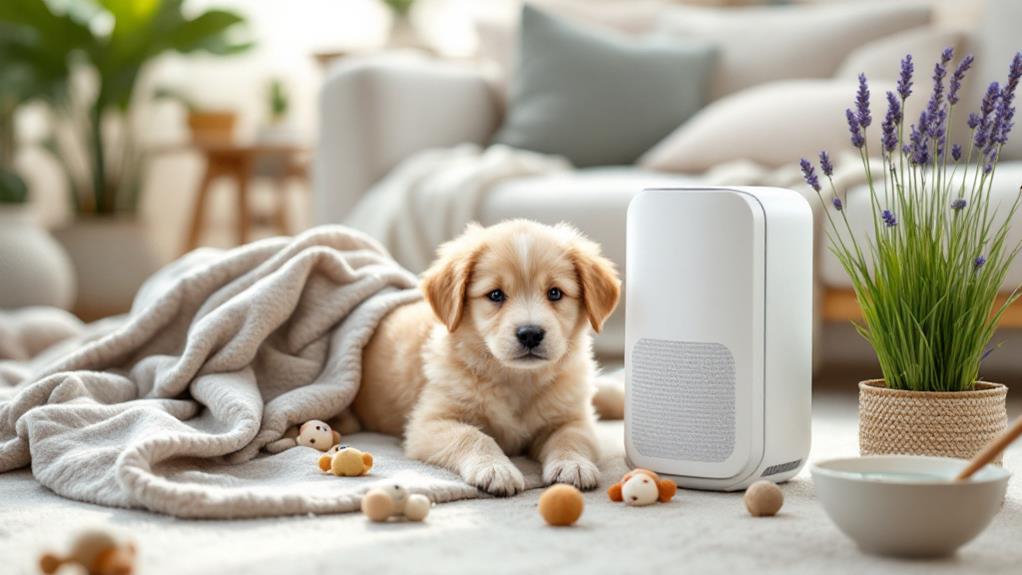
To care for your puppy with allergies, start by identifying key symptoms like excessive scratching, sneezing, or ear infections. Adjust walking routines to avoid allergens, wipe their paws after outings, and stick to urban paths. Improve indoor air quality with HEPA filters and frequent vacuuming. Keep sleeping areas allergen-free by washing bedding and toys regularly. Use hypoallergenic shampoos for bathing and consider dietary changes like adding fish oil. Consult your vet about medical treatments, including antihistamines or immunotherapy. Maintain a clean environment and log symptoms to track progress. By exploring these strategies, you'll find ways to ease your puppy's discomfort.
Identify Allergy Symptoms
When identifying allergy symptoms in your puppy, it's vital to watch for signs like excessive scratching, which can quickly lead to hair loss and skin infections if ignored. Puppies with itchy skin often exhibit behaviors such as licking their paws or chewing on their skin. These actions are usually attempts to relieve discomfort caused by environmental allergies. If you notice your puppy frequently engaging in these behaviors, it's important to assess the situation promptly.
Red inflamed skin is another common indicator of allergies. Sometimes it can resemble "elephant skin," signaling a need for veterinary evaluation. This inflammation might appear around their paws, belly, or any other area they've been scratching excessively. Ear infections are also a symptom you shouldn't overlook. Look for red, waxy discharge or unpleasant odors coming from your puppy's ears, as these can often be linked to underlying allergies.
Additionally, watch for sneezing, nasal discharge, and puffy eyes, which may suggest your puppy is dealing with seasonal allergies. These symptoms can make them quite uncomfortable and indicate a reaction to something in their environment. Addressing these signs early can greatly improve your puppy's well-being.
Adjust Walking Routine
Adjusting your puppy's walking routine can greatly help manage their allergies. During allergy season, it's essential to minimize their exposure to common allergens like pollen and grass. Avoid taking your dog for walks during the early morning and late afternoon when pollen levels are at their peak. Instead, choose times when allergen exposure is lower. Steer clear of fields and parks where these allergens are prevalent, opting for urban paths or beachside strolls instead.
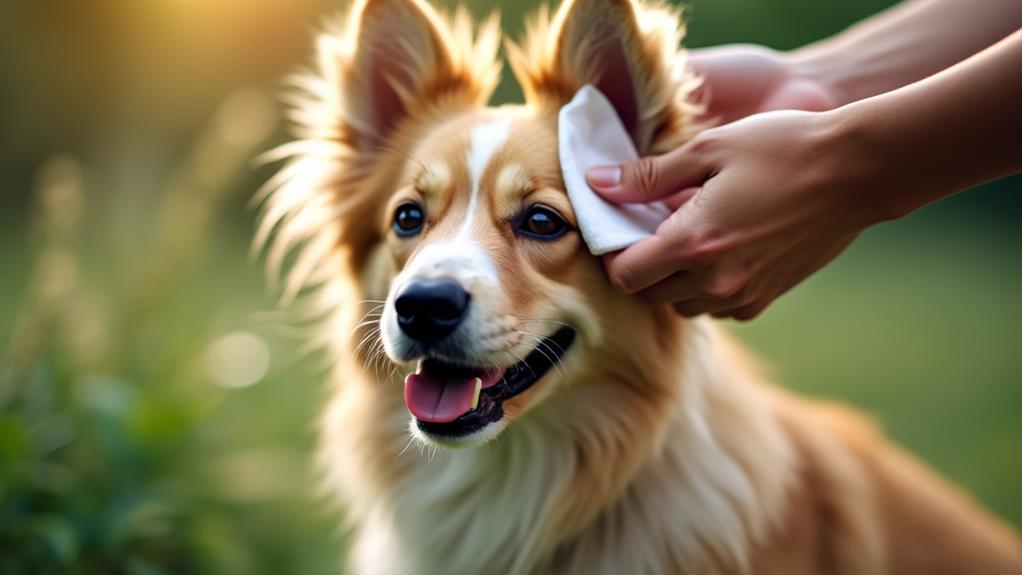
If outdoor allergens continue to make your puppy itchy, consider utilizing indoor play areas like Dogtopia. These spots offer a safe environment for exercise without the burden of outdoor allergens. After walks, always wipe your puppy's body and paws with a damp cloth to remove any allergens they may have picked up. This simple act can significantly reduce the potential for your dog to feel uncomfortable.
Additionally, protect your puppy's paws by using dog boots or applying an apple cider vinegar solution (mix two parts water to one part vinegar) to their feet. This barrier can further reduce allergen exposure and help keep your puppy comfortable and happy during allergy season.
Improve Indoor Air Quality
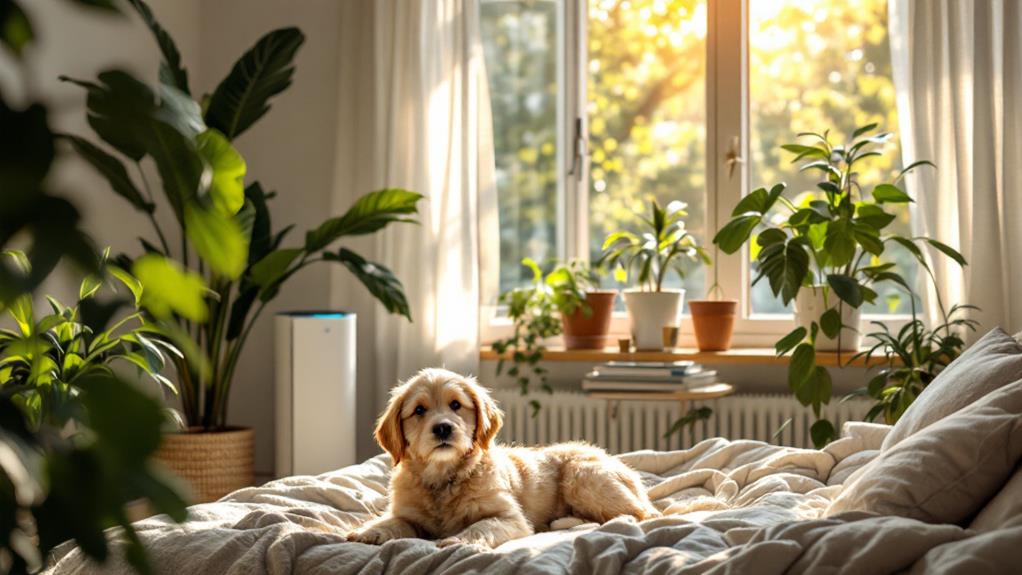
Beyond adjusting your puppy's walking routine, improving indoor air quality plays a crucial role in managing allergies. Dogs with allergies often react to airborne allergens like dust, pollen, and pet dander. To tackle these, regularly change your home's air filters. This simple step helps capture dust and other irritants, enhancing the air your puppy breathes.
Using air purifiers equipped with HEPA filters is another effective way to reduce airborne allergens. These filters trap tiny particles, ensuring a cleaner environment for your furry friend. Don't forget to vacuum weekly with a vacuum cleaner that has a HEPA filter. This will help remove pet dander, dust, and other allergens from carpets and furniture.
It's also vital to control indoor humidity. High humidity levels can lead to mold growth, which is a major allergen for sensitive dogs. A dehumidifier can help maintain ideal humidity levels, reducing the risk of mold.
During high pollen seasons, keep windows closed and limit your puppy's outdoor exposure during peak allergy times. This prevents seasonal allergens from entering your home, creating a safer haven for your puppy. By taking these steps, you can greatly improve indoor air quality and offer your puppy much-needed relief.
Maintain Clean Sleeping Areas
Your puppy's sleeping area is a sanctuary where allergens can easily accumulate, so keeping it clean is crucial for managing allergies. By maintaining a clean environment, you can help prevent irritated skin and guarantee your puppy remains comfortable. Here's how you can achieve this:
- Wash Bedding Weekly: Make it a habit to wash your puppy's bedding in hot water weekly. This helps eliminate allergens that can cause skin irritation. A clean resting area is key to keeping your puppy comfortable.
- Use Towels or Blankets: Place towels or blankets on beds and chairs. This makes it easier to wash away allergens quickly. Simply remove and wash them regularly to keep the area free from irritants.
- Clean Soft Toys: Wash your puppy's soft toys frequently. Dust mites and other allergens can build up in toys, worsening allergy symptoms. Keeping toys clean will contribute to a healthier environment.
- Vacuum and Rotate Bedding: Regularly vacuum the sleeping area and use allergen-proof covers on pillows and mattresses. Rotating and cleaning bedding materials periodically minimizes allergen buildup, guaranteeing your puppy has a clean and comfortable place to rest.
Grooming and Bathing Practices
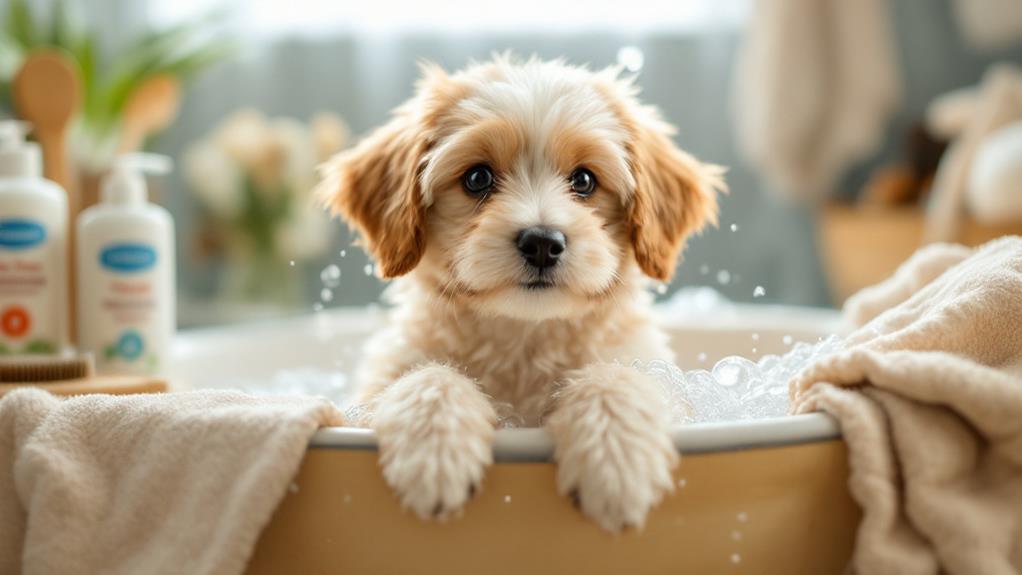
Grooming is a vital aspect of managing your puppy's allergies effectively. As a pet parent, you should increase bathing frequency to once a week using hypoallergenic shampoos with soothing ingredients. This helps alleviate skin irritation caused by allergens. Regular grooming sessions, including brushing, are important in removing loose fur and allergens, which reduces the risk of skin irritation and infections.
After your puppy enjoys outdoor activities, make it a habit to wipe down their coat and paws with damp cloths. This simple practice helps eliminate pollen and other allergens before they can cause discomfort. If you're unsure about handling this yourself, consider professional grooming services that specialize in allergy management, like those available at Dogtopia. They provide thorough cleaning and care, which can be a great relief.
Monitor your puppy's skin condition post-bath for any signs of irritation or allergic reactions. If you notice anything unusual, consult your veterinarian to adjust bathing frequency or products as needed. By staying proactive with grooming and bathing practices, you can greatly improve your puppy's comfort and manage their allergies more effectively, making sure they remain healthy and happy.
Dietary and Supplement Support
Managing your puppy's allergies goes beyond grooming; dietary and supplement support play a crucial role too. Making thoughtful dietary changes can greatly impact your puppy's immune system and skin health. Here are some steps you can take:
- Introduce Fish Oil and Omega Fatty Acids: These supplements are known for their anti-inflammatory properties, which can help reduce allergic reactions and improve skin health. Adding them to your puppy's diet may make a noticeable difference.
- Incorporate Coconut Oil: Adding a small amount of coconut oil to your puppy's meals can improve their coat condition and help suppress allergic reactions. It's a simple way to support their overall health.
- Keep Bowls Clean: Make sure your puppy's food and water bowls are clean and free from contaminants. This minimizes exposure to potential allergens and supports a healthier immune system.
- Consult with Your Veterinarian: If you suspect food allergies, discuss possible dietary changes or elimination diets with your vet. They can help identify specific food allergens affecting your puppy and recommend adjustments for best comfort.
Regularly monitor your puppy's response to these changes and adjust as needed to guarantee they remain comfortable and healthy.
Explore Medical Treatments
When managing your puppy's allergies, exploring medical treatments can offer significant relief. Start by consulting your veterinarian, who may prescribe different options based on what your dog experiences. Antihistamines like Benadryl or Zyrtec can help about 30% of dogs by alleviating allergy symptoms, but it's vital to get the right dosage for safety. For more severe reactions, corticosteroids such as prednisone provide immediate relief from itching, although their long-term use isn't advisable due to potential side effects.
For a more enduring solution, consider immunotherapy, including allergy shots. This approach gradually desensitizes your puppy to specific allergens, boasting an 80% success rate for environmental allergies over 6-9 months. Before starting, allergy testing through skin or blood tests can pinpoint exact allergens, allowing for a tailored treatment plan.
If immunotherapy doesn't work, immune-suppressants like Atopica and Apoquel are viable alternatives. These medications control symptoms effectively without the long-term side effects associated with steroids. Ultimately, the treatment depends on your puppy's specific needs and the allergens involved, so maintaining a close partnership with your veterinarian is key for achieving lasting comfort and health for your furry friend.