How to Care for Your Dog’s Ears: Tips for Healthy Canine Ears
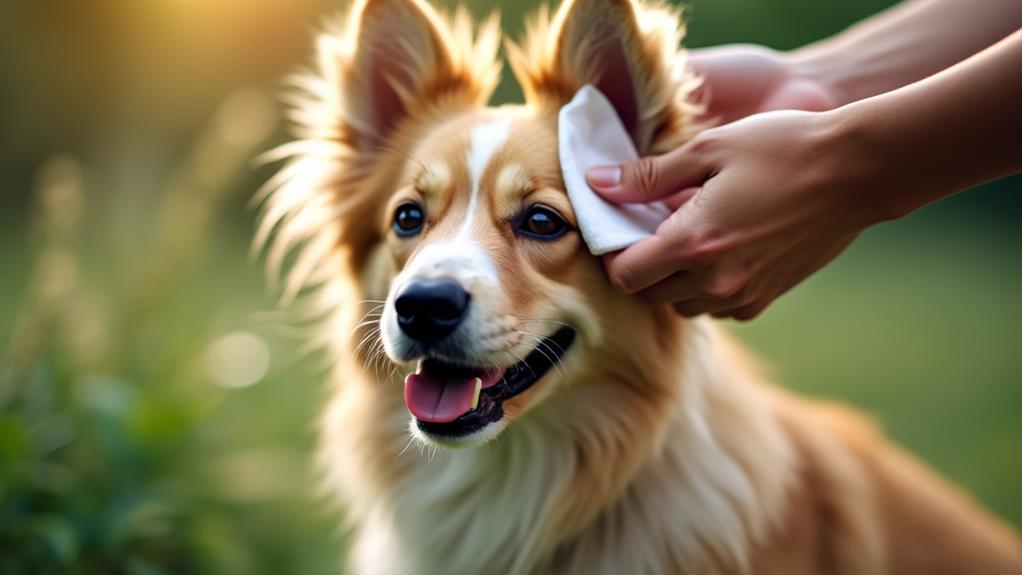
To keep your dog's ears healthy, clean them regularly to prevent infections. Use a gentle, alcohol-free cleaning solution and avoid harsh products like hydrogen peroxide. Check their ears for wax build-up, redness, or bad odors—signs it's time for cleaning. Gather the right supplies, such as cotton balls and a towel, and make the process stress-free with praise and treats. Remember, dogs with floppy ears need more frequent care. Regular inspections help identify issues early. Professional grooming and vet check-ups are also essential for maintaining ear health. Uncover more to guarantee your pet's ears stay in top shape.
Key Takeaways
- Regularly clean your dog's ears with a gentle, alcohol-free ear-cleaning solution to prevent infections.
- Inspect your dog's ears for signs of infection, such as redness or foul odors, during routine checks.
- Avoid using harsh cleaners or cotton-tipped swabs to prevent irritation and debris compaction.
- Choose calm times for ear cleaning and use positive reinforcement to reduce your dog's anxiety.
- Schedule regular vet check-ups and professional grooming to monitor and maintain ear health.
Importance of Dog Ear Care
Why is caring for your dog's ears so crucial? Regular attention to their ears can prevent painful ear infections. By cleaning dog ears regularly, you remove wax and moisture that harbor bacteria and yeast, which are common culprits behind infections. Dogs with long or floppy ears are especially prone to these issues and may require more frequent care than those with upright ears. This proactive cleaning process not only supports ear health but also promotes the growth of healthy skin cells, keeping their sensitive tissue in prime condition.
You should check your dog's ears on a regular basis to spot early signs of infection, such as foul odors, discharge, redness, or swelling. These symptoms indicate a need for immediate attention, as ignoring them can lead to long-term health problems. Ear cleaning solutions designed for dogs can aid in maintaining cleanliness and preventing the buildup of harmful substances. Remember, external factors like allergies and excessive moisture can increase infection risks, so staying vigilant is key. If you notice any signs of infection, consult your vet promptly to verify your dog's ears remain healthy and pain-free.
Anatomy of Dog Ears
Understanding the anatomy of your dog's ears can greatly improve your ability to care for them effectively. A dog's ear canal is L-shaped and lengthy, with a 90-degree curve that makes cleaning a bit challenging. This design helps protect the eardrum, located further in, reducing the risk of damage during cleaning. A healthy dog ear typically looks light pink and should be free from dirt, inflammation, and any unpleasant odors. However, the structure of the ear canal limits accessibility, so you'll need gentle, pet-formulated ear cleaning solutions to safely clean your dog's ears.
The ear flap, or pinna, is the visible part of the ear and acts as the primary line of defense against dirt and debris. Regular inspections of your dog's ears are vital. Look for signs of potential issues like increased head shaking, redness, or visible ear mites, which could indicate discomfort or ear infections. By conducting these inspections, you can detect problems early and prevent them from escalating. Remember, clean ears are healthy ears, so routine care is key to maintain your dog's ear health and prevent infections or infestations.
Recognizing When Cleaning Is Needed
How can you tell when your dog's ears need cleaning? Start by checking your dog's ears regularly. Healthy dog ears should be light pink, odorless, and free from dirt or inflammation. If you notice increased head shaking or your dog scratching at their ears, these might be signs that they require cleaning. Look for waxy buildup, as this can indicate a need for a routine ear clean.
Dog owners should be vigilant about the signs of an ear infection, such as redness, inflammation, or a yeasty or foul odor. These symptoms not only suggest cleaning is needed but also that medical attention might be required to prevent painful ear infections. Regular inspections, at least once a week, can help you catch issues early on before they become severe.
However, avoid over-cleaning, which can lead to irritation. It's essential to know when cleaning is necessary, rather than sticking to a strict schedule. Understanding these signs helps maintain healthy dog ears and prevents unnecessary discomfort. By being attentive and proactive, you guarantee your furry friend's ears remain in top shape, avoiding complications that could arise from neglect or excessive cleaning.
Essential Ear-Cleaning Supplies
Once you've identified that your dog's ears need attention, it's vital to gather the right supplies for a safe and effective cleaning. Dog Ear Care is a fundamental part of maintaining your pet's general health. Start by collecting the necessary items to guarantee the process is both efficient and stress-free for your furry friend.
Here's a handy list of what you'll need:
- Gentle Dog Ear-Cleaning Solution: Opt for a safe ear rinse that's free from alcohol, antibiotics, and steroids to avoid irritating your dog's ears. This is a significant component in keeping their ears healthy.
- Cotton Balls or Gauze: Use these instead of cotton-tipped swabs, which can damage the ear canal. Cotton balls or gauze allow you to clean safely and effectively without risking injury.
- Clean Towel: Have a towel ready to manage any mess and to dry off your dog's ears after cleaning. It helps maintain a clean environment and keeps your dog comfortable.
Make certain to gather all these supplies in a convenient location, like a bathroom or mudroom. Having everything within reach helps maintain a calm atmosphere, reducing stress for both you and your dog during the ear cleaning process.
Avoiding Harsh Cleaners
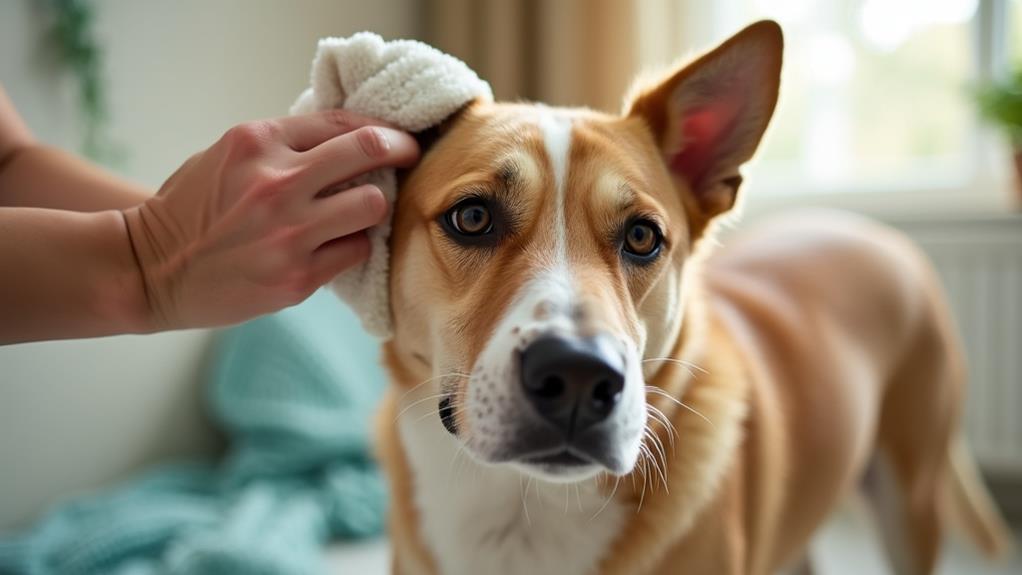
The sensitivity of a dog's ears demands careful attention when choosing cleaning products. Harsh cleaners, like alcohol-based wipes, can irritate the delicate skin in your dog's ears, leading to inflammation or discomfort. It's crucial to steer clear of such products to keep your dog's ears healthy. Instead, opt for a gentle ear cleanser specifically formulated for pets. These products are designed to clean effectively without harming the sensitive tissues within the ear canal.
Hydrogen peroxide might seem like a handy cleaning solution, but it's not recommended for regular ear cleanings. It can irritate healthy skin and tissues, potentially causing more harm than good. Always choose a product that's safe and gentle for your dog's ears.
When applying an ear cleanser, avoid using cotton-tipped swabs. They can push debris further into the ear canal, risking damage. Instead, use cotton balls or gauze to gently wipe away any dirt or debris. This method guarantees you clean your dog's ears without causing injury. By using the right products and techniques, you can maintain your dog's ears in a healthy, irritation-free state.
Step-by-Step Ear Cleaning
Gathering your supplies before you start cleaning your dog's ears is essential for a smooth process. You'll need a gentle pet ear-cleaning solution, cotton balls or gauze, and a clean towel. Having these items ready guarantees that your attention remains on your dog, making the experience less stressful for both of you.
Here's a step-by-step guide for regular ear cleanings:
- Apply Solution: Hold your dog's ear flap upright and apply the ear-cleaning solution into the ear canal. Be generous, as the solution helps break down debris.
- Massage: Gently massage the base of the ear for 15-20 seconds. This action helps loosen any wax or dirt, making it easier to remove.
- Shake and Wipe: Allow your dog to shake its head, which helps expel excess solution and debris. Use a towel to manage any mess, then gently wipe away the loosened debris with a cotton ball or gauze, being careful not to delve deeper than one knuckle.
During the process, watch for any signs of pain or discomfort. If you notice anything unusual, consult your veterinarian to guarantee your dog's ears remain healthy. Regular care can prevent potential ear issues.
Tips for Stress-Free Cleaning
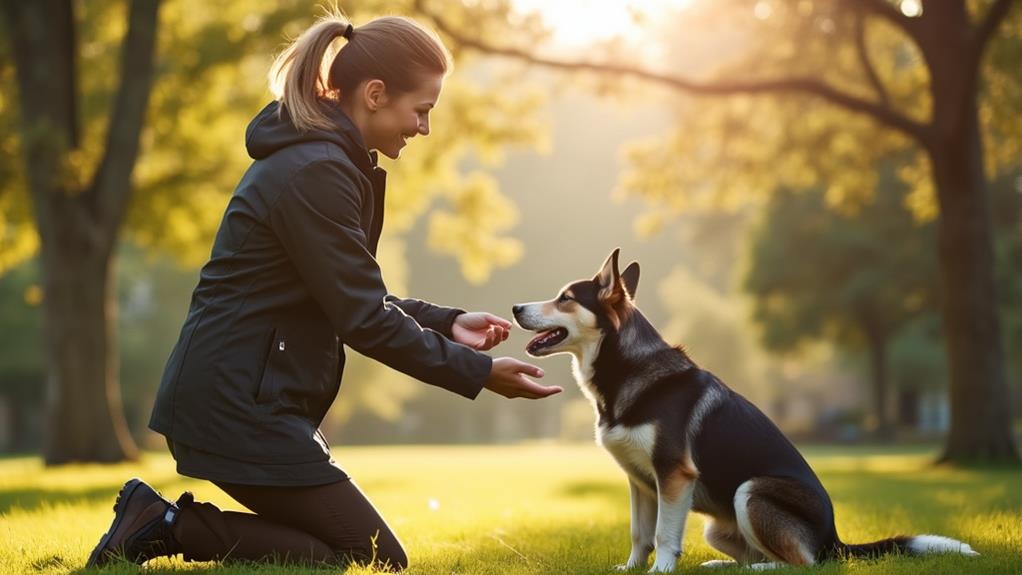
Anyone who has tried cleaning a dog's ears knows it can sometimes be a challenge. But with the right strategy, you can make it a stress-free experience for both you and your furry friend. Start by choosing a time when your dog is calm and relaxed, like just before bedtime. This helps reduce stress and makes the process smoother. Dogs need their ears cleaned regularly, and using positive reinforcement can turn this task into a pleasant activity. Have treats and gentle praise ready to reward your dog for being cooperative.
Before you begin, confirm your cleaning area is well-prepared. Gather all necessary supplies, like ear cleaners and cotton balls, and keep them within reach. This minimizes distractions and interruptions. Employ a gentle approach when handling your dog's ears. Avoid quick movements or harsh handling, as these can frighten your dog and make future cleanings more difficult.
Regular inspections of your dog's ears will help them get used to the process over time. Normal ears should look clean and odor-free, and by handling them gently, your dog will learn there's nothing to fear. With these tips, you'll master stress-free cleaning in no time.
Professional Care and Grooming
Ensuring your dog receives professional care and grooming is vital for maintaining ideal ear health. Regular veterinary check-ups are significant for monitoring your dog's ears and catching potential issues early. Professional grooming services play an important role in maintaining ear cleanliness, especially for breeds with long, floppy ears that tend to accumulate dirt and moisture.
Here's how you can prioritize your dog's ear health:
- Schedule Regular Veterinary Check-Ups: These visits provide an opportunity to discuss any changes you've noticed, such as odor, discharge, or excessive scratching. Early detection is key to preventing more severe issues.
- Invest in Professional Grooming Services: Groomers offer specialized ear cleaning using safe techniques and products that won't damage the ear canal. This is particularly beneficial for floppy-eared breeds prone to ear problems.
- Monitor Your Dog's Ear Health Consistently: Keep an eye out for any signs of discomfort or changes in your dog's behavior related to their ears. Routine professional grooming can address minor issues before they become significant.
Signs of Ear Infection
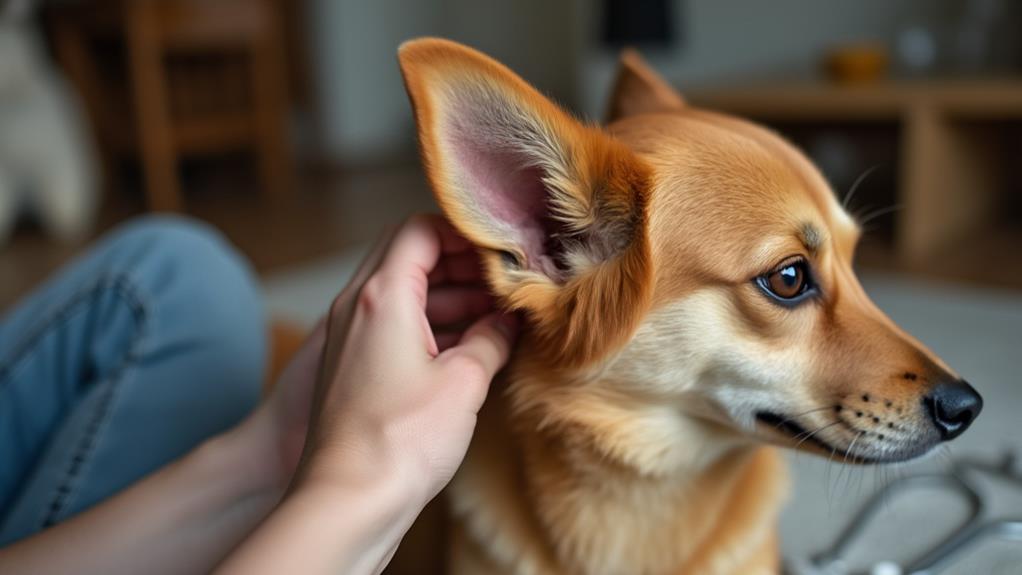
In relation to your dog's ear health, recognizing the signs of an infection is vital. You might notice your pup engaging in excessive head shaking or constantly scratching at their ears. These behaviors often indicate discomfort. An unpleasant odor wafting from your dog's ears is another red flag for ear infections. It's imperative to regularly inspect your dog's ears, as visibly red or inflamed ears are clear indicators that something's amiss. Discharge, which can be yellow, brown, or even bloody, should prompt immediate attention.
If your dog whines or pulls away when you touch their ears, they could be experiencing pain or discomfort. Increased ear wax production, along with a yeasty smell, are also signs that an infection may be brewing. Keep your dog's ears clean, but remember, cleaning alone isn't a cure for infections. These symptoms warrant a closer look.
When you notice any combination of these signs, don't hesitate to contact your veterinarian. Early intervention is fundamental to preventing complications and ensuring your furry friend's comfort. A professional can assess your dog's condition and recommend the right treatment to keep their ears healthy.