How to Care for Your Dog When You’re Sick: Keeping Both of You Healthy

When you're sick, it's crucial to plan ahead to guarantee your dog's needs are met without overwhelming yourself. Try using frozen Kongs or interactive toys to keep your dog mentally stimulated with minimal effort. Establish a backup caregiver, like a trusted friend or family member, who can step in for walks or feeding. Quiet play sessions and short training activities also provide engagement without overexertion. Keep a detailed care plan ready to ease changes if someone else must care for your dog. Consistently updating your pet care strategy will help you both stay healthy. There's so much more to uncover!
Managing Dog Care Challenges
When you're under the weather, managing your dog's care can feel overwhelming, but planning ahead makes it easier. As a dog owner, it's crucial to prioritize pet care, especially during your own health issues. Adult dogs might be more adaptable, but puppies and adolescent dogs still need engagement to prevent destructive behaviors. You should create a thorough pet care plan that includes veterinary care and prompt treatment for any potential issues. This plan will help you monitor your dog's health and guarantee they receive consistent care despite your illness.
One way to engage dogs during a caregiver's illness is by using frozen food-filled Kongs and interactive toys. These activities stimulate their minds without requiring much physical exertion from you. It's vital to incorporate these strategies into your pet care routine, making sure they're always ready for times when you're not at your best. By doing so, you'll make the experience less stressful for both you and your pet.
Finding Backup Caregivers
Planning for your dog's care during your illness involves more than just engaging activities; it's also smart to have backup caregivers lined up. Start by establishing a short-term emergency caregiver who can step in quickly for immediate pet care needs. This guarantees your dog has the necessary support even on short notice. Next, identify a longer-term caregiver, such as a trusted friend or family member, who can provide ongoing support if your illness or hospitalization extends. Discuss your dog's care plan with potential caregivers ahead of time, making certain they're prepared to meet your dog's specific needs during your recovery, including feeding schedules and exercise routines.
Create a detailed care plan to facilitate a smooth changeover. This plan should include:
- Feeding Schedules: Outline your dog's meal times and dietary requirements to maintain consistency.
- Exercise Routines: Detail your dog's preferred exercise needs to keep them active and healthy.
- Veterinary Information: Provide contact details for your vet and any medical requirements your dog may have.
- Long-term Planning: Consider setting up a trust or plan for your dog's care in case of your untimely death, guaranteeing their needs are always met.
Engaging Your Dog Indoors
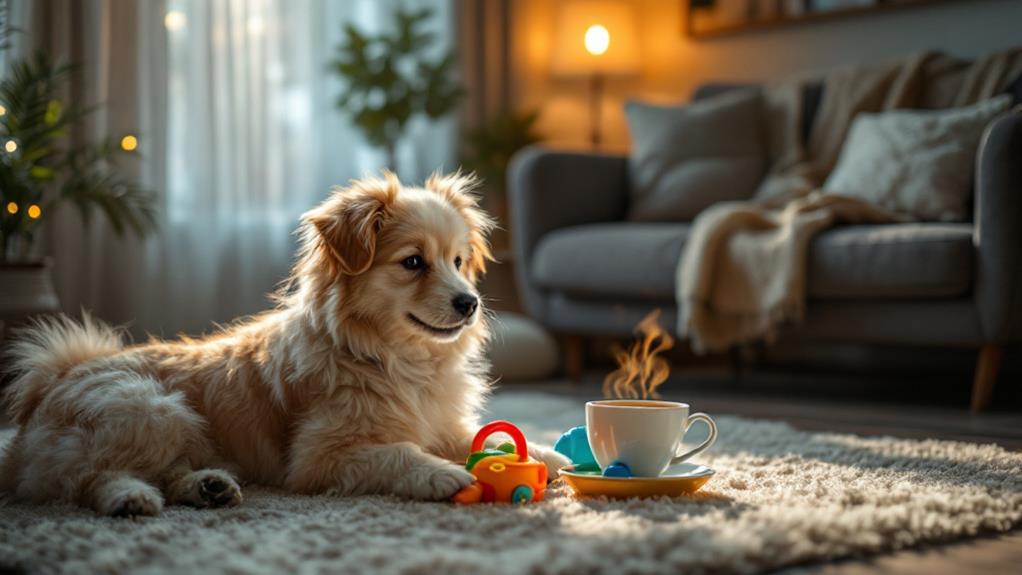
Keeping your dog entertained indoors can be a rewarding challenge, especially when you're not feeling your best. Start by using interactive toys like puzzle feeders to provide engaging mental stimulation for your dog. These toys keep your pet occupied and challenged, even as you focus on your recovery. You can also fill Kongs with frozen treats or their favorite foods, offering a long-lasting distraction that requires minimal effort from you.
Quiet play sessions are a great way to maintain physical interaction without overexerting yourself. Consider gentle games like tug-of-war or fetch within a confined indoor space. If you're feeling up for it, short training sessions are excellent for reinforcing simple commands and tricks, providing both mental engagement and a sense of accomplishment for your dog.
Don't forget the importance of socialization. Enlist a friend or neighbor to help arrange playdates with other dogs. This allows your dog to socialize and expend energy, which is vital for their happiness and your peace of mind. By creatively using these indoor activities, you guarantee your dog remains engaged and happy, allowing both of you to enjoy a smoother recovery process.
Planning for Future Illness
Inevitably, there will be times when you'll need to plan for your dog's care due to illness or hospitalization. As a responsible pet owner, developing a thorough pet care plan is vital. Start by compiling a list of emergency contacts and backup caregivers, like friends, family, or neighbors, who can step in when needed. This guarantees your dog's needs are always met, regardless of your health status.
Regularly reviewing and updating your care plans is fundamental. As your health or your dog's condition changes, make certain your caregivers are informed about any dietary changes and necessary veterinary attention. Craft a clear schedule outlining your dog's daily routines, such as feeding, exercise, and medical care. This will help caregivers maintain a consistent routine and monitor your dog's condition effectively.
Consider the following steps to guarantee your dog's well-being:
- Compile emergency contacts and identify backup caregivers.
- Regularly update care plans to reflect changes in health status.
- Create a detailed schedule of your dog's daily routines.
- Plan for long-term care in case of an untimely event.
Utilizing Pet Care Resources
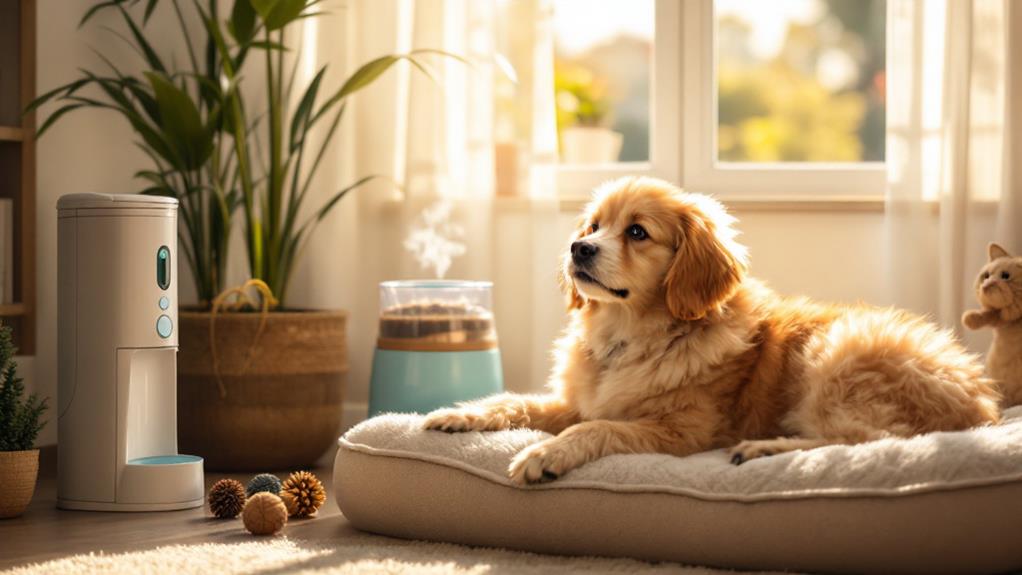
When you're feeling under the weather, it's vital to utilize available pet care resources to guarantee your dog's well-being. As a pet parent, you should establish a network of backup caregivers such as friends, family, or neighbors who can step in to meet your dog's needs. This way, if you're too ill or hospitalized, your dog won't miss out on important care.
To maintain your dog's exercise and engagement levels, consider utilizing professional dog care services like dog walkers or pet sitters. They can offer much-needed attention and keep your dog active when you're unable to. You might also investigate local dog owner communities or platforms like Rover to find reliable pet care resources and support.
Interactive toys and frozen food-filled Kongs can keep your dog mentally stimulated while you're recovering. These toys are great for occupying your dog and ensuring they're not bored. Always monitor your dog's response to these new activities.
It's vital to consult your vet regularly. They can provide advice on maintaining your dog's well-being and discuss any specific needs or dietary restrictions during your illness. A vet visit might be necessary if you notice any unusual behavior.