How to Care for Saltwater Fish: A Complete Beginner’s Guide
To care for saltwater fish, you need to start with the right tank, ideally 40 gallons or larger. Use 1-2 inches of aragonite sand and 1.5 pounds of calcium carbonate rock per gallon. Maintain water pH between 8.1 and 8.4, and use filters like HOB or a sump system to keep the water clean. Feed your fish a marine-specific diet, only what they can eat in three minutes. Regular water changes and monitoring of water chemistry are key. Engage with online forums and workshops to broaden your knowledge. Ready to investigate the world of saltwater fish care further?
Key Takeaways
- Choose a tank size of 40 gallons or larger for ease of management.
- Maintain water parameters: pH 8.1-8.4, salinity 1.020-1.026, and temperature 74°F-78°F.
- Implement effective filtration using HOB filters or sump systems for optimal water quality.
- Perform weekly water changes of 10-20% to manage waste and maintain water quality.
- Regularly observe fish behavior and health, removing uneaten food promptly to prevent water contamination.
Tank Selection and Setup
When you're starting with saltwater fish, choosing and setting up the right tank is fundamental. A 40-gallon or larger tank is recommended for beginners. This size not only provides ample space for your fish but also helps stabilize water conditions, which reduces stress on your aquatic inhabitants. You'll want to avoid tall tanks, as they require more lighting and can overheat, making shallower tanks a better choice for ease of management and for fish that prefer horizontal swimming.
For your tank's substrate, aim for a sand depth of 1-2 inches using off-white aragonite sand. This choice is ideal because it promotes beneficial bacteria growth and prevents anoxic pockets, ensuring a healthier environment for your saltwater aquariums. In terms of rock, use 1.5 pounds of calcium carbonate-based rock per gallon. This not only provides natural filtration but also offers buffering properties, which are vital in maintaining stable water conditions.
Consider implementing a sump system to increase water volume and improve filtration options. This supplement can greatly enhance the overall stability and health of your aquarium, creating a thriving environment for your saltwater fish.
Filtration Techniques
Mastering filtration techniques is fundamental for maintaining a healthy saltwater aquarium. A solid understanding of filtration systems helps you efficiently remove harmful substances like ammonia and nitrite, critical for your fish's well-being. Hang on Back (HOB) filters are popular for beginners, effectively eliminating ammonia and nitrite. To improve biological filtration, consider adding a biowheel. These filters are easy to use and maintain, making them a great starting point.
For those looking to further improve water quality, sump filtration systems are a fantastic choice. They not only remove debris using filter socks or pads but also increase the tank's water volume, promoting a stable environment. To tackle organic waste, incorporate a protein skimmer. This device is indispensable in saltwater aquariums, maintaining water clarity and quality by trapping organic waste.
Don't forget the importance of regular maintenance! Clean your filter pads and replace media as needed to keep everything running smoothly. Regular water changes also complement your filtration efforts, ensuring the aquatic environment stays pristine.
- HOB Filters: Easy to use, remove ammonia and nitrite
- Sump Systems: Improve water volume and quality
- Protein Skimmers: Fundamental for clear, clean water
Sand and Rock Preparation
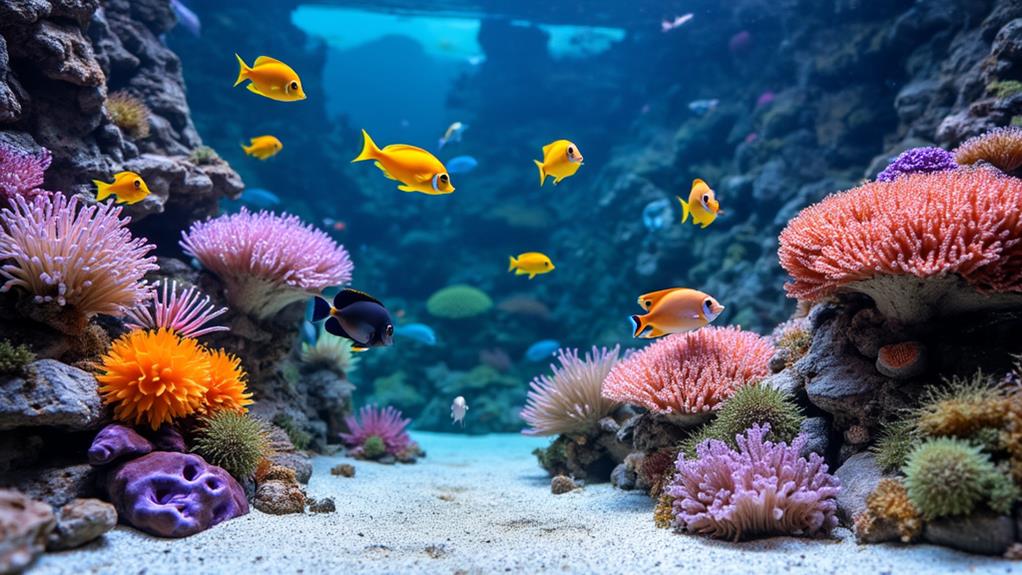
The foundation of a thriving saltwater aquarium often lies in the careful preparation of sand and rock. Start by choosing the right sand. Aragonite-based sands are ideal for saltwater tanks because they buffer pH levels and reduce diatom issues more effectively than silica sands. Before adding sand to your tank, rinse it in a bucket to remove silt and debris. This simple step minimizes cloudiness and inhibits diatom growth. Aim for a sand depth of 1-2 inches. This prevents anoxic pockets and allows fine grain sand to provide ample surface area for beneficial bacteria, which are essential for a healthy aquarium ecosystem.
When it comes to rock preparation, opt for calcium carbonate-based rocks. They not only offer a natural look but also help maintain stable water conditions with their buffering capabilities. For best filtration, use approximately 1.5 pounds of rock per gallon of tank water. If you're introducing fresh live rock, inspect it carefully for pests and consider curing it, especially if it's from non-cycled tanks. Alternatively, choose organic-free base rocks to reduce the need for extensive curing. Proper sand and rock preparation sets the stage for a lively and healthy saltwater aquarium.
Lighting and Equipment
Lighting and equipment play a vital role in maintaining a lively saltwater aquarium. The right lighting setup not only improves the beauty of your tank but also supports the health of your marine life. If you're setting up a reef tank, consider using T5HO lights. They're popular because they provide low heat output and even light distribution, making them ideal for coral growth. For those who prefer a bit more customization and energy efficiency, LED lighting systems are a great option. However, it's important to choose wisely since quality can vary greatly.
Here are a few tips to help you make the best choices for your saltwater tank:
- Standard Fluorescent Bulbs: Suitable for low-light tanks, but they don't offer the intensity needed for most reef tanks.
- Metal Halide Lights: Great for intense illumination but require proper ventilation to handle the heat they generate.
- 20k vs. 14k Lighting: A 20k setup improves coral color but may dim the complete brightness, while 14k provides a balanced spectrum.
Don't forget regular maintenance. Clean your bulbs and check their functionality to guarantee your aquarium inhabitants thrive under ideal conditions.
Essential Water Chemistry
Steering through the intricate world of saltwater aquariums requires a keen understanding of significant water chemistry. Maintaining your aquarium's water quality hinges on several key parameters. Initially, guarantee your pH level stays between 8.1 and 8.4 to replicate natural ocean conditions, fundamental for the well-being of your fish and corals. Regularly test for ammonia and nitrite, and aim for undetectable levels (0 ppm) to avoid toxic effects. Nitrate should be kept at or below 10 ppm to prevent stress and health issues in your aquatic community.
Water changes are important to sustaining a healthy environment. Regularly replacing a portion of the aquarium's water helps manage waste and nutrient buildup, maintaining stability in your tank. Use a reliable source, as tap water may contain impurities that could affect water quality. Consider using dechlorinated or reverse osmosis water to guarantee purity.
Specific gravity, a measure of salinity, should be checked frequently, staying between 1.020 and 1.026. This range supports marine life health by mimicking ocean salinity. Use a hydrometer or refractometer for accurate readings. Consistent monitoring and adjustments will keep your saltwater aquarium thriving and balanced.
Daily Care Routines
Maintaining a saltwater aquarium requires consistent daily care to guarantee a thriving environment for your fish. Start each day by checking the temperature with a reliable thermometer, ensuring it stays between 74°F and 78°F. This range is essential for the health of most saltwater species. Next, feed your fish a marine-specific diet, offering only what they can consume in about three minutes. This prevents excess food from polluting your marine aquarium. Remember to observe the fish during feeding to monitor their health and behavior, making adjustments to their diet as needed.
After feeding, promptly remove any uneaten food to maintain water quality and prevent algae growth. Daily care routines also include topping off the aquarium with fresh, dechlorinated water to compensate for evaporation. This practice helps maintain stable salinity levels, vital for a healthy marine environment.
Here are some daily tasks you should perform:
- Check water temperature: Maintain between 74°F–78°F.
- Feed fish appropriately: Only what they can eat in 3 minutes.
- Top off the aquarium: Use dechlorinated water to stabilize salinity.
Weekly Maintenance Tasks
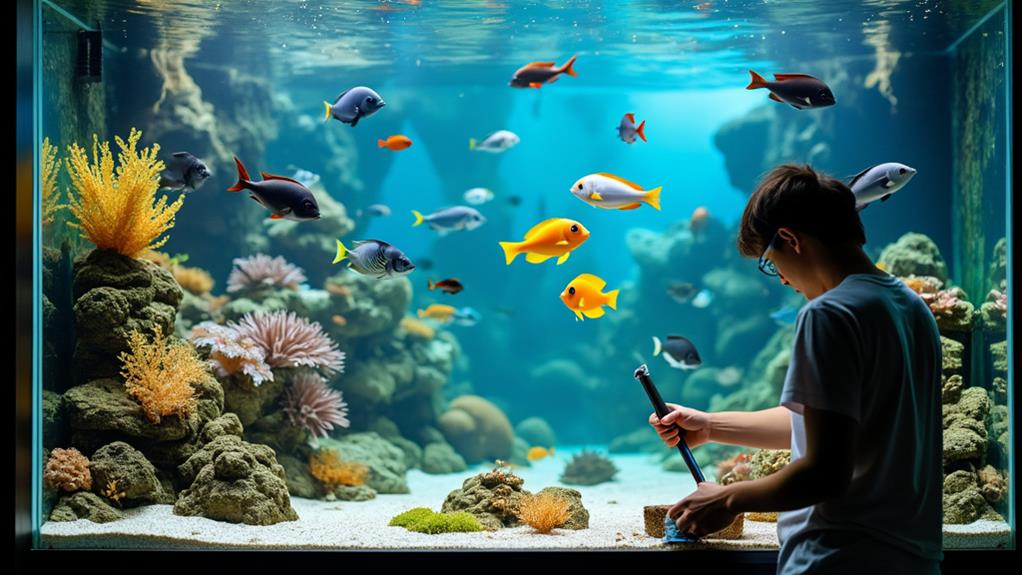
While daily care routines keep your saltwater aquarium stable, weekly maintenance tasks play a key role in sustaining long-term health for your aquatic environment. Start by performing water changes of 10-20% each week. This helps maintain ideal water quality and reduces nitrate levels, preventing annoying algae blooms and promoting general fish health. As you change the water, take the opportunity to vacuum the substrate. By doing so, you effectively remove debris and waste accumulation, ensuring a cleaner environment for your fish.
Don't forget to check and clean the filter media weekly. Rinse it in the waste saltwater to preserve beneficial bacteria while removing accumulated debris. This step is important for maintaining efficient filtration and supporting the biological balance of your aquarium.
Additionally, keep an eye on algae growth. Scrub any algae off the tank glass to maintain clarity and allow proper light penetration, which is crucial for coral and plant health. Ultimately, monitor water parameters regularly—look at pH, ammonia, nitrite, and nitrate levels. Ensuring these parameters remain within ideal ranges is necessary for a thriving aquarium ecosystem. By incorporating these tasks into your routine, you'll foster a healthy and lively saltwater environment.
Coral and Invertebrate Care
Caring for corals and invertebrates in your saltwater aquarium can truly improve your aquatic environment. To guarantee their health, start by regularly observing signs of bleaching, growth, and behavior changes. These indicators reflect their well-being and the state of your marine ecosystem. Adjust lighting to meet the specific needs of your coral species using a mix of actinic and full-spectrum bulbs. This supports photosynthesis and contributes to the general health of corals.
Maintaining stable water parameters is vital. Keep the pH within the ideal range of 8.1 to 8.4, as fluctuations can stress your corals and invertebrates. Regular water quality testing helps you manage nitrate and phosphate levels, which, if unchecked, can lead to algae overgrowth and harm the health of corals. Providing a varied diet, including phytoplankton and zooplankton, is necessary for their growth and resilience.
Here's a quick checklist to guide you:
- Observe regularly: Look for signs of bleaching, growth, and behavior changes.
- Lighting: Use a combination of actinic and full-spectrum bulbs.
- Water testing: Regularly check and maintain stable water parameters.
Community Engagement and Learning
Engage yourself in the lively world of community involvement to improve your saltwater fish care knowledge and skills. By joining online forums or local reef clubs, you'll gain valuable insights from seasoned aquarists who share tips and best practices for maintaining a thriving saltwater aquarium. Community involvement offers a platform to learn from others' experiences and challenges, providing a wealth of information that can guide your own expedition.
Participate in community events like frag swaps or aquarium tours to exchange knowledge and gather inspiration from established hobbyists. These interactions can open your eyes to new techniques and ideas you might not have considered before. Engaging with social media groups focused on saltwater aquariums also allows you to discuss common challenges and solutions with fellow enthusiasts, broadening your understanding of the hobby.
Take advantage of workshops or webinars hosted by marine biologists or aquarium specialists to deepen your comprehension of saltwater ecosystems and fish care techniques. Meanwhile, document and share your personal experiences, successes, and challenges on a blog or social media. This not only helps you reflect on your practices but also invites feedback and learning from the broader aquarium community.
Related posts