How to Care for an Abandoned Newborn Kitten: Essential Tips for Survival
To care for an abandoned newborn kitten, act quickly and attentively. Initially, assess if it's truly abandoned by watching for 12-18 hours and checking for distress signs like crying or dirty fur. If needed, maintain a warm environment with temperatures between 86°F initially, decreasing over weeks. Use soft blankets in a secure box. Feed every 2-3 hours with kitten formula, not cow's milk. Confirm hygiene by cleaning the feeding equipment. Monitor weight and hydration daily. Begin socialization gently at three weeks. Seek veterinary help if any distress signs emerge. There's more to uncover about nurturing these tiny creatures properly.
Assessing Kitten Abandonment
Before you decide a kitten's been abandoned, it's crucial to observe it from a distance for 12-18 hours. Mother cats often leave their kittens hidden while they hunt or seek shelter. During this period, evaluating kitten abandonment involves watching for signs of distress, such as excessive crying or dirty fur. These signs might indicate that the kitten requires immediate assistance.
Look for any evidence of the mother cat's presence, like paw prints or movement nearby. If the mother is around, she may be caring for her young in intervals. Remember, the ideal developmental stage for kittens to be separated from their mother is 5-6 weeks. If the kitten is younger and the mother cat is attentive, it's best to let them remain together.
However, if you observe that the kitten appears cold, dirty, or consistently in distress, these could be indicators of true abandonment. In such cases, you should take immediate action to provide care. By carefully observing and understanding these signs, you can make a well-informed decision about if the kitten truly needs human intervention or if its mother will return to care for it.
Establishing a Warm Environment
Once you've determined that a kitten has been abandoned and needs your help, establishing a warm environment becomes your top priority. Newborn kittens can't regulate their body temperature until they're about three weeks old, so you'll need to maintain a specific temperature range. For the initial week, aim for 30°C (86°F), then lower it to 28°C (82°F) in the second week, and ultimately to 25°C (77°F) in the third week. Use a reliable heat source like a hot water bottle or a heat lamp, but always guarantee there's a cooler area available so the kitten can move away if it gets too warm.
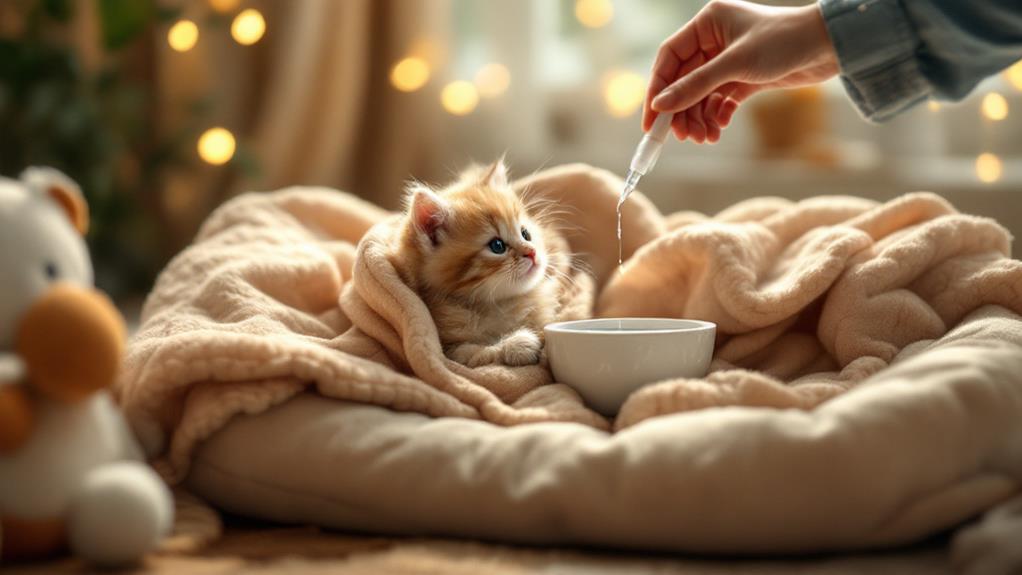
Creating a secure and cozy space is crucial. Consider using a queening box or a carrier lined with soft blankets. This enclosed bedding area helps the kitten feel safe and reduces stress. Regularly monitor the temperature to prevent hypothermia, as it can be life-threatening for these vulnerable newborns. Isolating the kitten in a quiet space will further assure its comfort. While you're focusing on warmth, gently clean any dirt or remnants around the umbilical cord with a soft cleaning brush to maintain hygiene and prevent infection.
Bottle-Feeding Essentials
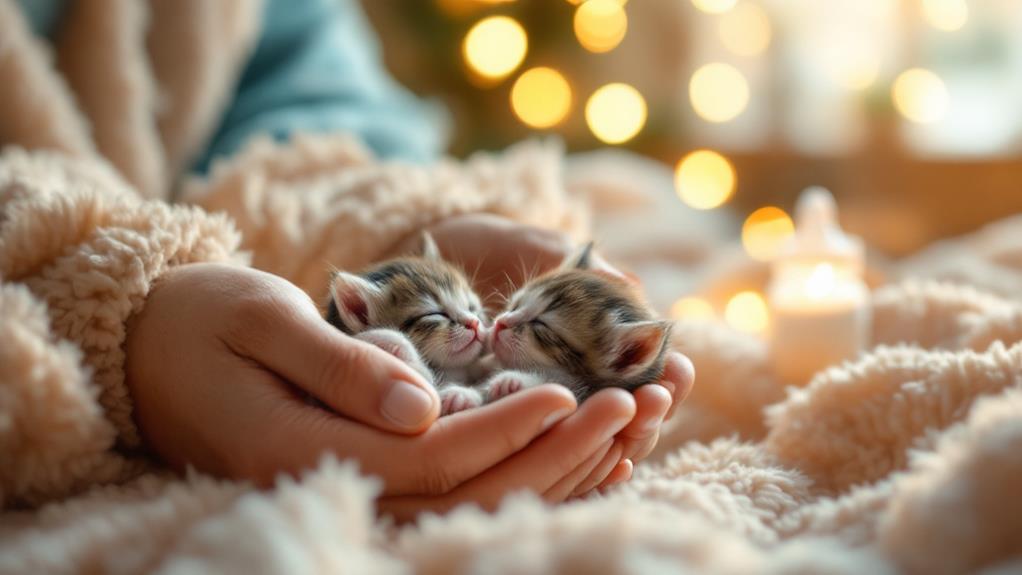
How do you guarantee your newborn kitten gets the right nutrition for a healthy start in life? Start by using a high-quality kitten formula, specifically designed for abandoned kittens, instead of cow's milk, which can cause diarrhea and malnutrition. When bottle feeding, position the kitten on its stomach to prevent aspiration pneumonia. For kittens under one week old, stick to feeding intervals of every 2-3 hours, offering about 1/4 ounce of formula per ounce of body weight each time.
As the kitten grows, adjust the feeding schedule. For those at 2 to 3 weeks, you can extend the feeding intervals to every 4-6 hours. Consistently monitor the kittens' weight daily, aiming for a gain of 10-15% per day. This helps you identify any potential health issues early on. A steady weight gain indicates they're able to properly digest the formula.
Around 4 to 4.5 weeks of development, start shifting them to solid food by introducing a gruel made from mixing the formula with wet kitten food. This gradual change guarantees a smooth weaning process. By following these bottle-feeding fundamentals, you'll provide your kitten with crucial nutrition for healthy growth.
Proper Nutrition Guidelines
In regards to guaranteeing proper nutrition for an abandoned newborn kitten, start by selecting a high-quality feline milk replacer designed specifically for kittens. Unlike cow's milk, which can cause gastrointestinal distress and malnutrition, a proper milk replacer meets the unique dietary needs of orphaned kittens. You'll need to feed the kitten every two to three hours, especially if it's under one week old. Calculate the feeding amount by providing approximately 1/4 ounce of formula per ounce of body weight each day, gradually increasing as the kitten grows.
Regularly monitor the kitten's weight; they should double their birth weight by the end of the initial week, aiming for around 4 ounces. This guarantees they're receiving adequate nutrition. Around 4-5 weeks, initiate the weaning process by introducing a gruel made from kitten formula mixed with canned kitten food. As the kitten shows readiness, shift to solid food to help them adapt to their evolving dietary needs.
Remember to maintain hygiene by cleaning feeding equipment like bottles and nipples regularly. This prevents infections and keeps the feeding process safe. By following these guidelines, you'll support the kitten's growth and development effectively.
Monitoring Health and Hydration

Guaranteeing proper health and hydration is fundamental for the survival of an abandoned newborn kitten. Start by conducting daily weight checks to ascertain the kitten is gaining weight. If you notice no weight gain or any weight loss after 24 hours, seek immediate attention from a veterinarian. These checks are imperative as they help you monitor health and catch potential issues early. Hydration is critical since kittens are composed of 82% water, and even mild dehydration can lead to serious health problems.
Check the kitten's hydration by examining the moisture level of their gums. Dry gums or lethargy are signs of dehydration and require veterinary expertise for an accurate assessment, possibly through a hematocrit blood test. Remember, the skin tent test isn't reliable for newborns.
Additionally, pay close attention to the kitten's body temperature. Cold kittens can't properly digest food and are at risk for hypothermia. Use a heating pad or hot water bottle to warm them up before feeding. Guaranteeing they are warm helps them maintain proper health and supports digestion, which is fundamental for their survival. Prioritize these steps to give your kitten the best chance at thriving.
Ensuring Cleanliness and Hygiene
Maintaining cleanliness and hygiene is vital for the health of an abandoned newborn kitten. Start by regularly cleaning the kitten's bedding. Change it daily to minimize bacteria and virus buildup. This helps prevent diseases and keeps the environment safe. Spot-clean any soiled areas instead of changing the entire bedding, preserving a familiar scent that comforts the kitten.
Use unscented baby wipes to gently clean the kitten, especially after feedings. This promotes hygiene without causing stress. Pay close attention to the kitten's ears and skin, checking for dirt and parasites. Gently clean these areas if needed to maintain general health.
Ensure all feeding equipment is clean and sanitized. Use kitten-safe disinfectants for non-soiled areas to prevent infections. This step is important for the kitten's well-being, as improper sanitation can lead to health issues.
Monitor cleanliness diligently, as newborn kittens are particularly vulnerable to infections and parasites. By maintaining a clean environment and practicing good hygiene, you greatly improve the kitten's chances of survival and health. Remember, these small but necessary actions contribute significantly to the kitten's general well-being.
Socialization Techniques
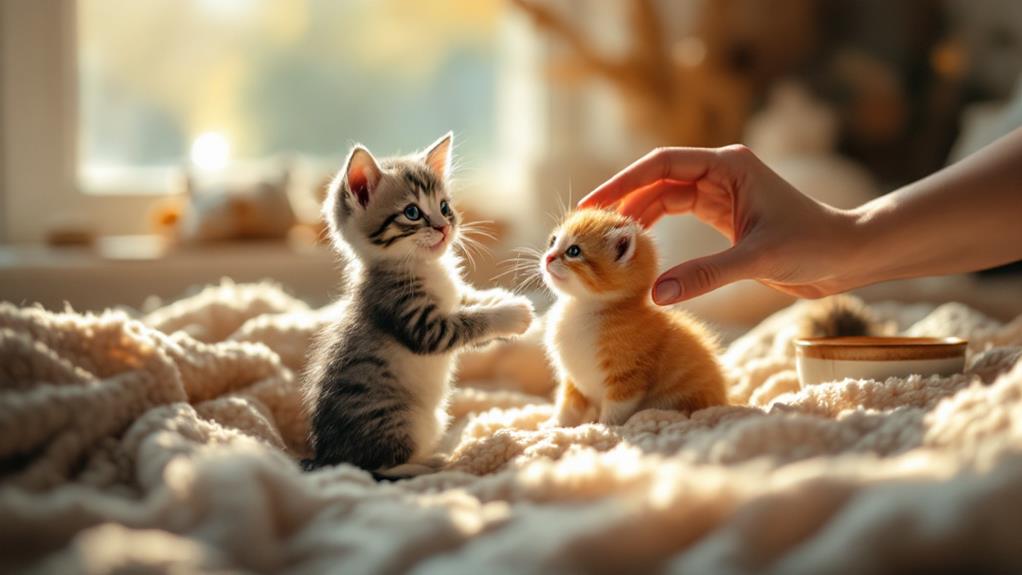
Often, the key to raising a well-adjusted abandoned kitten lies in effective socialization techniques. Start socializing the kitten as early as three weeks old. Gentle handling helps them get used to human interaction and reduces fear. At this stage, kittens start showing curiosity about their surroundings. Introduce them to a variety of textures and sounds gradually. This stimulates their senses and promotes adaptability to different environments, which is vital for their development.
Use playtime with safe toys to encourage motor skills and bonding. Engage in gentle wrestling or light play, as this teaches coordination and builds trust. Always monitor their behaviors during these sessions. If you notice any aggressive behaviors, correct them immediately to guarantee positive interactions. Every kitten has a unique personality, and understanding this will help tailor the socialization process to their needs.
Keep track of their progress in a journal. Documenting daily socialization milestones and behaviors helps you understand each kitten's unique personality and needs better. By keeping a detailed record, you can adjust your approach as necessary, making sure the kitten grows into a well-adjusted and social adult cat.
Identifying Health Issues
While socialization plays a significant role in a kitten's development, keeping an eye on their health is just as essential. Conducting daily health checks can help you identify early signs of potential issues. Here are some important things to monitor:
- Dehydration: Check for dry gums and verify the kitten is gaining weight. If not, they might be dehydrated, which is dangerous and requires immediate action.
- Hypothermia: Newborn kittens can't regulate their body temperature. If they seem lethargic or cold, they could be experiencing hypothermia and need a warm environment to recover.
- Weight Monitoring: Regularly weigh your kitten. A lack of weight gain or weight loss over 24 hours suggests that veterinary attention is necessary to rule out underlying health problems.
- Abnormal Behaviors: Watch for excessive crying, lack of response, or unusual bowel movements. These can be signs of infection or gastrointestinal issues and need prompt professional attention.
Additionally, observe for any difficulty breathing or lethargy. These abnormal behaviors might indicate respiratory issues that shouldn't be ignored. By staying vigilant, you'll guarantee your kitten grows healthy and strong.
Seeking Professional Assistance
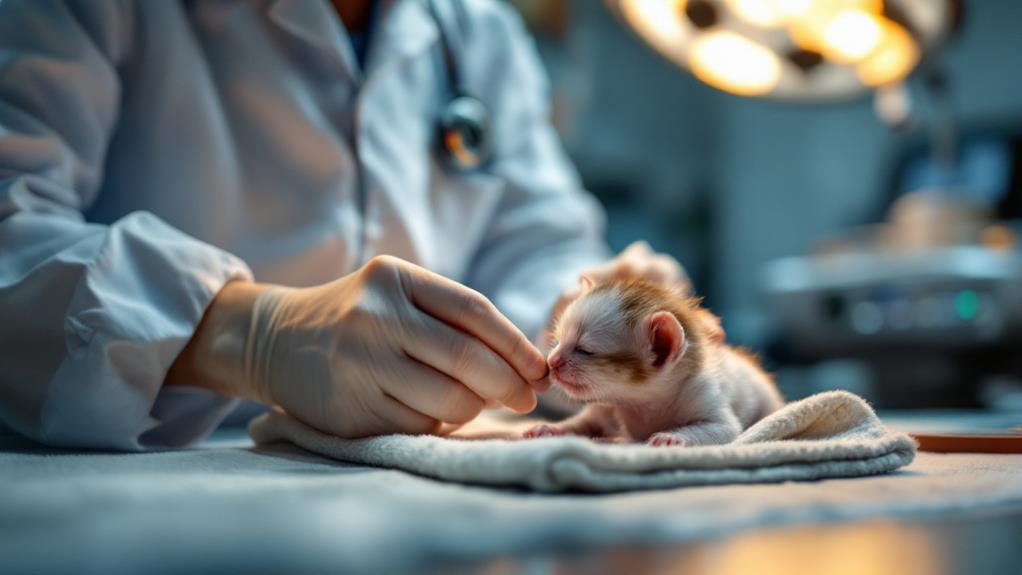
When caring for an abandoned newborn kitten, consulting a veterinarian should be a priority if you notice signs of illness or distress. These signs can include excessive crying, weight loss, or dehydration. Quick action is vital because kittens are fragile, and delay can worsen their condition. Many veterinary clinics offer free initial visits for rescued kittens, giving you an excellent opportunity for a thorough health check without financial stress.
It's essential to bring a stool sample to the vet. Testing it helps detect worms and parasites, common issues in abandoned kittens. Early detection and treatment can greatly improve the kitten's chance of survival. During the visit, discuss any unusual behaviors you've observed, as this information helps the vet assess the kitten's health more accurately.
Don't forget to regularly monitor the kitten's health at home. Keep track of their weight and watch for any new signs of illness. If the kitten doesn't show improvement within 24 hours after addressing its basic needs, seek veterinary assistance promptly. This proactive approach guarantees you're doing everything possible to support the kitten's health and well-being during this vital time.