How to Become a Responsible Cat Owner: Essential Tips for New Pet Parents

Becoming a responsible cat owner starts with evaluating if you can commit to a cat's 12-15 year lifespan. You'll need to dedicate time daily for interaction and play. Budget for necessities like food, litter, and vet care, and cat-proof your home with safety in mind. Choose a vet for vaccinations and health checks, opting for spaying/neutering when appropriate. Your cat's diet is vital; confirm high-quality proteins and incorporate wet food for hydration. Regular grooming, including brushing and dental care, is important. Invest in the right accessories like scratching posts and a suitable litter box. There's more to investigate about providing a harmonious home.
Assess Your Lifestyle Suitability
Bringing a cat into your home is like welcoming a tiny, furry roommate, and it's vital to assess if your lifestyle is a good fit for this long-term commitment. Cats typically live 12-15 years or more, so you need to guarantee your lifestyle can accommodate their needs. Being a responsible cat owner means considering how your daily routine will impact your new feline friend. Cats require daily interaction, playtime, and mental stimulation. Aim for at least 20 minutes of structured play each day to keep them happy and prevent destructive behaviors.
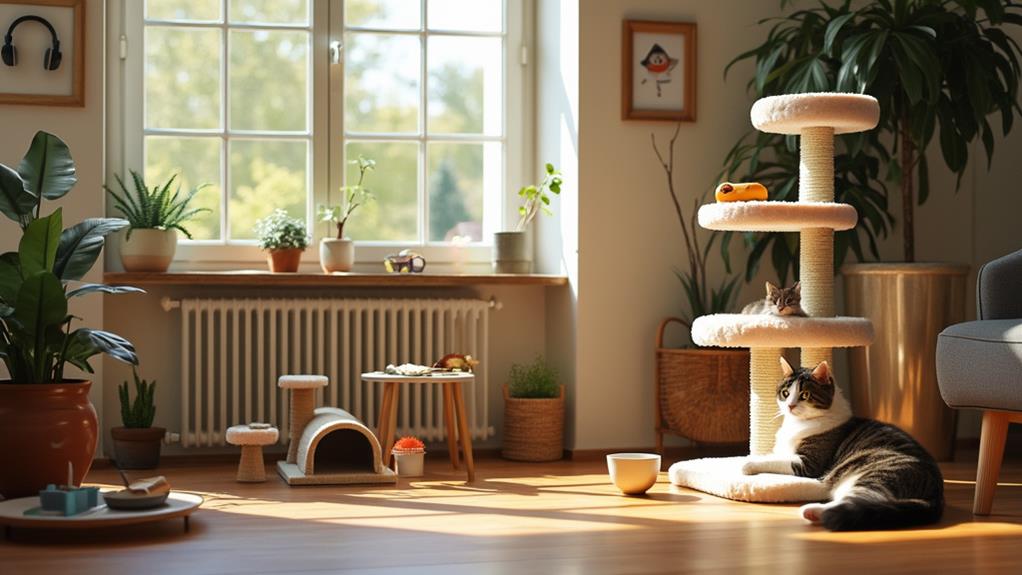
Financial responsibility is also key. Budget for necessities like food, litter, and veterinary care, along with potential emergency expenses. These costs can add up, so make certain you're prepared. Your home environment should be safe and secure. Cat-proofing is vital, with scratching posts, climbing structures, and cozy hiding spots to meet their natural instincts.
Consider your living situation, especially if you have children or other pets. This helps guarantee a harmonious environment that supports your cat's emotional needs. By evaluating these factors, new cat owners can determine their lifestyle suitability and create a loving, stable environment for their feline companion.
Choose the Right Veterinarian
Choosing the right veterinarian is a fundamental aspect of responsible cat ownership. A reputable vet guarantees your cat receives fundamental vaccinations and regular health check-ups. Starting at 8 weeks, kittens require a series of vaccinations and health evaluations until they reach 16 weeks. This routine builds a strong foundation for their immune system. As your cat grows, annual exams and booster shots become imperative to maintain immunity against common feline diseases. These visits also allow the veterinarian to conduct thorough health evaluations, catching potential issues early.
Spaying or neutering your cat around 6-8 months is strongly recommended. This procedure not only prevents unwanted litters but also reduces the risk of certain health problems later in life. Furthermore, microchipping your cat provides a reliable form of pet identification, making it easier to reunite with them if they ever get lost.
Keeping a detailed record of your cat's vaccination history and health evaluations is essential. Organized record keeping helps you and your veterinarian track health trends and guarantees continuity in care. Choosing a veterinarian who values these practices will greatly contribute to your cat's overall well-being and longevity.
Focus on Proper Nutrition

Guaranteeing your cat receives proper nutrition is vital for their health and longevity. Cats are obligate carnivores, so their diet should be rich in high-quality proteins. This will support their general health and energy needs. When choosing cat food, focus on providing a balanced diet that suits the specific requirements of your pet. For kittens, look for food with higher fat content and important nutrients to promote growth and development. Adult cats, however, require a different balance to maintain their health and prevent obesity.
To make certain you're selecting the best option, consult with a veterinarian. They'll help you determine the most suitable dietary choices based on your cat's maturity, weight, activity level, and any health concerns. Incorporating wet food into their diet is another excellent step, as it guarantees adequate hydration, which is vital given that cats often have a low thirst drive.
Additionally, regularly monitor your cat's weight and adjust food portions as needed. This helps prevent obesity, which can lead to numerous health problems. By paying attention to these factors, you'll guarantee your cat's nutritional needs are met, supporting a healthy and happy life.
Understand Grooming Needs
After establishing a nutritious diet, it's likewise vital to address your cat's grooming needs to assure their general well-being. Regular grooming is key for maintaining coat health. Long-haired cats need daily brushing to prevent matting, while short-haired cats can be groomed once a week. These grooming sessions not only keep your feline looking their best but also help you monitor their skin for any signs of irritation, parasites, or unusual lumps, which might indicate underlying health issues.
Nail trimming should be done every 1-2 weeks. This prevents overgrowth and discomfort, reducing the risk of injury to both your cat and yourself. Proper nail care guarantees your cat can move comfortably and safely around your home. Furthermore, don't overlook dental care; brushing your cat's teeth 2-3 times a week is vital for preventing dental disease and maintaining oral hygiene.
To make grooming a positive experience, introduce these routines gradually. Use appropriate tools suited for your cat's specific coat type. This approach minimizes stress, making grooming sessions more enjoyable for both of you. By investing in regular grooming, you're not just enhancing your cat's appearance but also supporting their overall health and happiness.
Invest in Essential Cat Accessories

A few significant accessories can make a world of difference in creating a comfortable and safe environment for your cat. As a new cat owner, verifying you have the right items is important. Start with a litter box that's at least 1.5 times your cat's length; this guarantees comfort and encourages regular use. Pair it with quality litter to reduce odors and keep the area clean. A sturdy scratching post or pad is fundamental to maintain your cat's claw health and protect your furniture from damage.
Invest in a cozy bed or a cat condo to give your cat a safe and comfortable place to rest. These pieces of cat furniture can help your feline feel secure and relaxed. Regarding feeding, choose high-quality food and water bowls. Raised bowls can prevent spills and make it easier for your cat to stay hydrated.
Ensure a Safe Home Environment
Creating a cat-friendly home environment is vital for your feline's well-being. To guarantee your cat's safety, start by identifying and removing potential hazards. Toxic plants, medications, and cleaning products should be stored securely out of reach to prevent accidental ingestion. Cats are naturally curious and love to investigate, so you'll want to make sure that windows and balconies are secure to avoid any risky falls.
Small items like rubber bands and plastic bags can pose choking hazards and entanglement risks, so keep these stored away. As your cat becomes more agile and adventurous, regularly inspect your home for new hazards and adjust your safety measures accordingly. This ongoing vigilance helps maintain a safe environment for your furry friend.
In addition to safety, providing a cozy space with hiding spots is significant. Cats appreciate having a designated area where they can retreat and feel secure. Consider putting boxes or cat caves around your home to create these comforting nooks. These spaces not only improve your cat's sense of security but also satisfy their natural instinct to investigate and hide. By taking these steps, you're creating a safe and inviting home for your feline companion.