How Much Land Do You Need for a Horse? A Guide for New Horse Owners
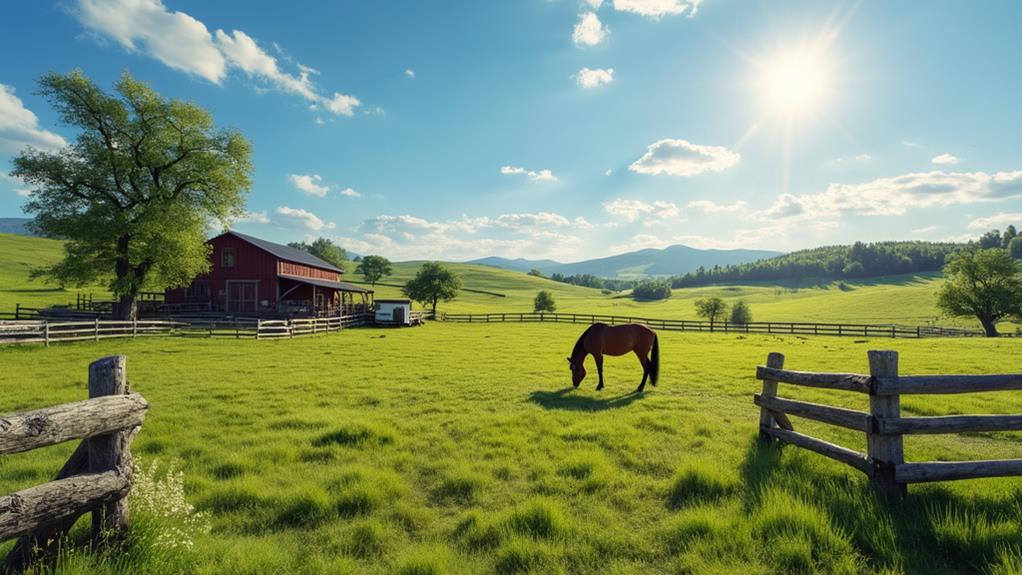
You'll need a minimum of 1 to 2 acres per horse to guarantee they have enough space to graze, roam, and exercise comfortably. The land should ideally feature quality pasture, which balances grasses and legumes for proper nutrition. Consider rotational grazing to maintain pasture health and reduce parasites. Don't forget adequate shelter and shade to protect your horse from harsh weather. Durable fencing is a must for safety. Be aware of local zoning laws that could affect horsekeeping. With these tips, you'll guarantee a happy environment for your horse and there's more to learn about optimizing land use.
Determining Minimum Land Size
When you're planning to keep a horse, it's important to determine the minimum land size required for its wellbeing. A well-considered space guarantees your horse exhibits healthy behavior and reduces stress. Typically, a single horse needs at least 1 to 2 acres of land. This allows for adequate movement and grazing, which are fundamental for their physical and mental health. Horses are naturally active animals, and the right amount of space helps them express their natural behaviors, such as running, foraging, and socializing with other horses, if applicable.
However, simply having enough land isn't the only consideration. Land maintenance plays a significant role in keeping the environment healthy and safe for your horse. Regularly check the land for hazards like sharp objects or toxic plants that could harm your horse. Managing the land includes maintaining the grass at a suitable length and confirming the soil is not overly compacted, which can lead to muddy conditions. Effective land management also involves rotation of grazing areas to prevent overgrazing and soil degradation. By understanding and implementing these considerations, you'll create a safe and fulfilling environment for your horse.
Importance of Pasture Space
Recognizing the significance of pasture space is fundamental for your horse's well-being. Horses need ample space to roam, graze, and exercise, which directly impacts their physical and mental health. Pasture quality plays an important role in meeting their dietary needs and ensuring they have a balanced diet. Good pasture quality includes a mix of grasses and legumes that provide necessary nutrients, and it helps prevent health issues related to poor nutrition or overgrazing.
Implementing rotational grazing is a smart strategy to maintain pasture quality. By dividing your land into smaller sections and rotating your horse's grazing areas, you allow the grass to regenerate. This approach prevents overgrazing and soil degradation, promoting a healthier environment for your horse. Rotational grazing also helps control parasites and improves forage availability, providing a consistent food source throughout the year.
Adequate pasture space contributes to your horse's happiness, as it allows them to engage in natural behaviors like grazing, running, and socializing. A well-managed pasture supports not only their physical health but also their mental and emotional well-being. As a result, ensuring your horse has sufficient, high-quality pasture space is imperative in maintaining their general health and happiness.
Grazing Requirements
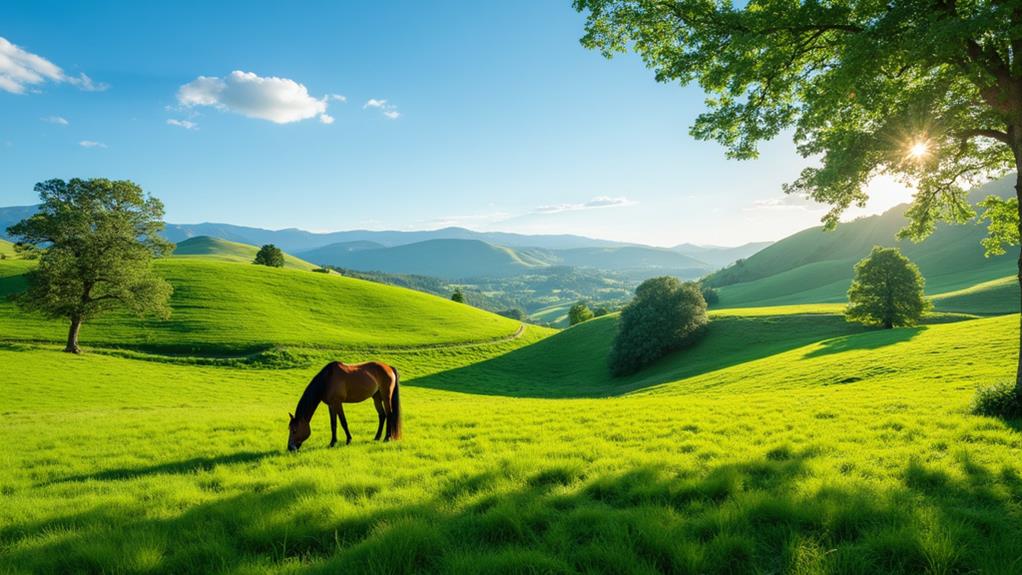
How much grazing time does your horse actually need? It largely depends on your horse's size, diet, and the forage quality of your pasture. Horses typically require about 1-2 acres of pasture per horse to meet their grazing needs. However, this can vary based on how lush and nutritious the grass is. If your pasture boasts high forage quality, your horse might need less time grazing to meet its nutritional needs.
Grazing rotation plays a crucial role in maintaining pasture health and providing your horse with consistent, high-quality forage. By dividing your pasture into sections, you can rotate your horse between them, allowing grazed areas to recover and regrow. This practice not only prevents overgrazing but also guarantees your horse has access to fresh, nutritious grass, which is fundamental for their health.
Pay attention to the condition of your pasture and adjust the grazing rotation schedule as needed. Monitor your horse's weight and health, making adjustments to their grazing time if necessary. Remember, the key is balancing between providing enough grazing time and maintaining a sustainable pasture, making sure your horse's dietary needs are met without depleting the land.
Shelter and Shade Needs
Providing adequate shelter and shade for your horse is a significant aspect of their care and well-being. Horses need protection from extreme weather, regardless of whether it's the blazing sun or a chilly wind. When thinking about shelter types, you might consider a traditional barn, a run-in shed, or a simple lean-to. Each option has its pros and cons. A barn offers complete protection and is ideal for harsh weather conditions, while a run-in shed provides a balance of shelter and freedom, allowing horses to come and go as they please.
In addition to these shelter types, don't forget about shade options. Natural shade, like large trees, can be an excellent solution. They offer not just shade but also a cooler environment on hot days. If natural shade isn't available, installing a shade cloth or a constructed canopy can be effective. These options guarantee your horse avoids overheating and sunburn.
Consider your land's layout and climate when choosing the right shelter and shade. It's imperative to provide your horse with a comfortable environment, enabling them to stay healthy and happy throughout the year. Prioritizing their shelter and shade needs is fundamental for good horse care.
Fencing Considerations
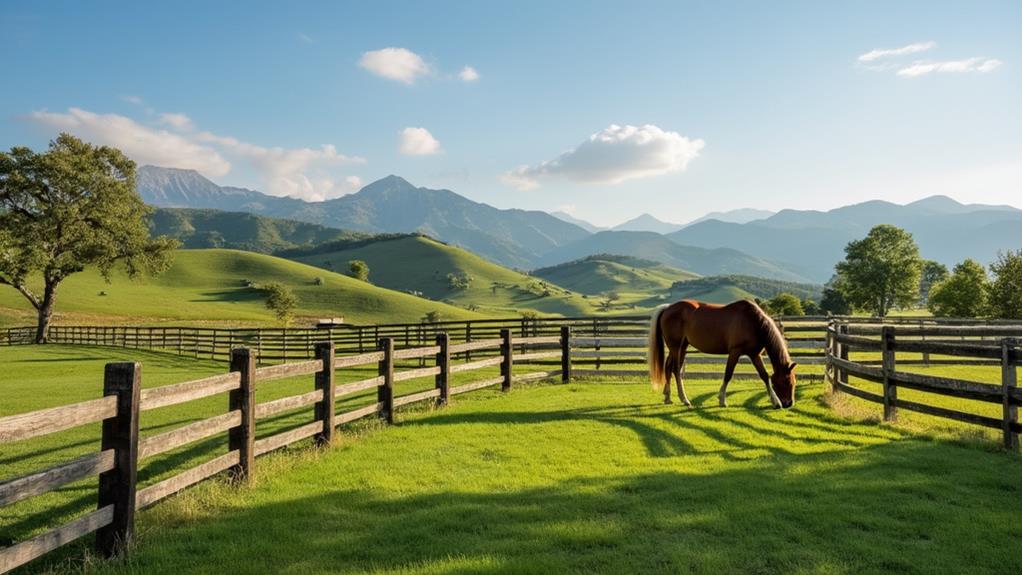
While ensuring your horse has proper shelter and shade is vital, fencing plays a likewise significant role in their safety and management. You need to select fencing materials that are both durable and safe for your horse. Traditional options like wood are popular, but they require regular maintenance to prevent splintering or rotting. Vinyl fencing offers a more modern, low-maintenance alternative, but it can be more expensive upfront. Electric fencing is also an option, providing a psychological barrier rather than a physical one, and is often used in combination with other materials for added security.
Regardless of the material you choose, fencing maintenance is critical. Regularly inspect your fences for any signs of wear and tear. Look for loose nails, sagging sections, or broken wires that could pose a risk to your horse. Keeping vegetation trimmed around the fence line will prevent damage and help maintain the fence's integrity.
Zoning and Legal Regulations
Before you can decide how much land you need for a horse, it's vital to understand the zoning and legal regulations in your area. Zoning laws dictate how land can be used and can vary greatly depending on where you live. Some areas might allow horses on residential properties, while others may require agricultural zoning. It's important to check with your local zoning office to determine if your property is zoned for horses.
Along with zoning laws, you may need to obtain legal permits to keep horses on your property. These permits can include animal permits or building permits for structures like barns and stables. Make sure to inquire about the specific permits required in your locality before making any land purchase or modifications. It's also wise to ask about any restrictions on the number of horses you can keep, as these can impact your decision on land size.
Understanding these regulations not only helps you avoid potential fines or legal issues, but it also guarantees that your horse has a safe and compliant environment. Do your research thoroughly to guarantee a smooth process in establishing your horse-friendly property.
Managing Multiple Horses
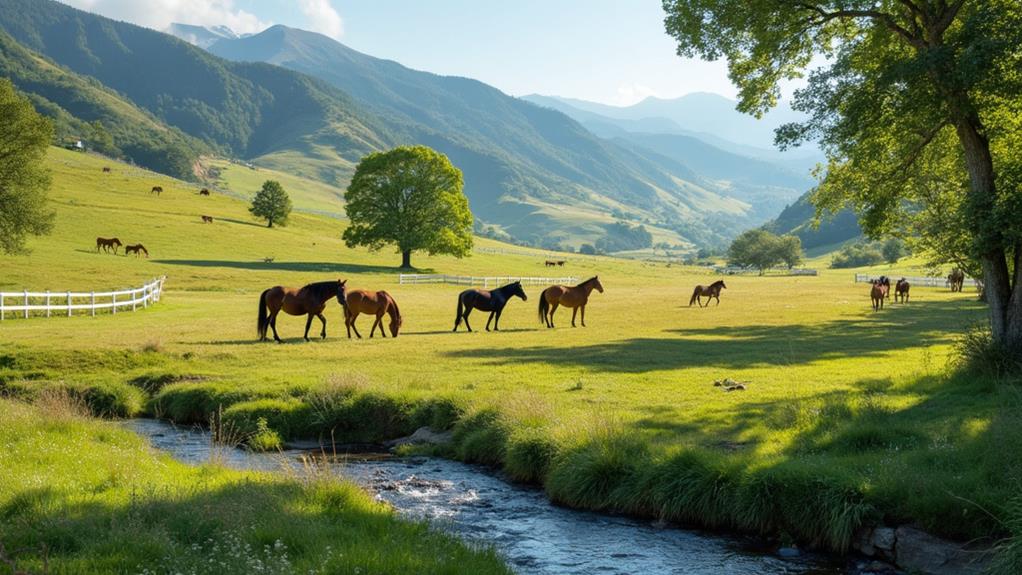
Managing multiple horses requires careful planning and organization. Initially, assess horse compatibility. Horses have unique personalities and establishing good herd dynamics is essential. Watch for signs of aggression or anxiety as you introduce them to one another. It's significant they get along, as behavioral considerations can impact their general well-being.
Address their training needs by developing individualized plans. Some horses may require more attention or specific techniques. Verify your feeding strategies are efficient; each horse may have different dietary requirements. Use separate feeding areas to prevent competition and confirm they all receive proper nutrition.
Exercise routines should accommodate all horses and consider their varying energy levels. Organize group activities but also allocate time for individual workouts. This helps maintain their fitness and strengthens your bond with each horse.
Health monitoring is crucial. Regularly check for signs of illness or injury. Schedule routine veterinary visits to keep them in top shape. Sharing space effectively means providing enough room for each horse to move freely. Make certain you have adequate space sharing arrangements, including shelters and grazing areas, so every horse feels comfortable and secure. By managing these aspects, you'll create a harmonious environment for your horses.
Seasonal Land Management
As the seasons change, it's important to adapt your land management practices to guarantee your horses thrive year-round. One effective method is rotational grazing, which allows you to manage pasture growth and maintain soil health. By dividing your land into several smaller paddocks, you can move your horses between them, preventing overgrazing and giving grass time to recover. This practice guarantees your pastures stay lush and nutritious throughout the year.
In spring, focus on allowing pastures to grow before heavy grazing begins. It's important to monitor grass height and move horses when it gets too short, usually around 3-4 inches. During summer, keep an eye on soil moisture levels, as dry conditions can stress vegetation. Consider resting some paddocks longer to preserve grass health.
Autumn is an excellent time to overseed pastures, as cooler temperatures and increased rainfall promote seed germination. This helps improve pasture density and diversity. In winter, protect your land from mud and compaction by limiting horse access to wet areas. Using designated sacrifice areas can prevent damage to your pastures, preserving soil health and guaranteeing a productive grazing season when spring arrives.
Environmental Impact Factors
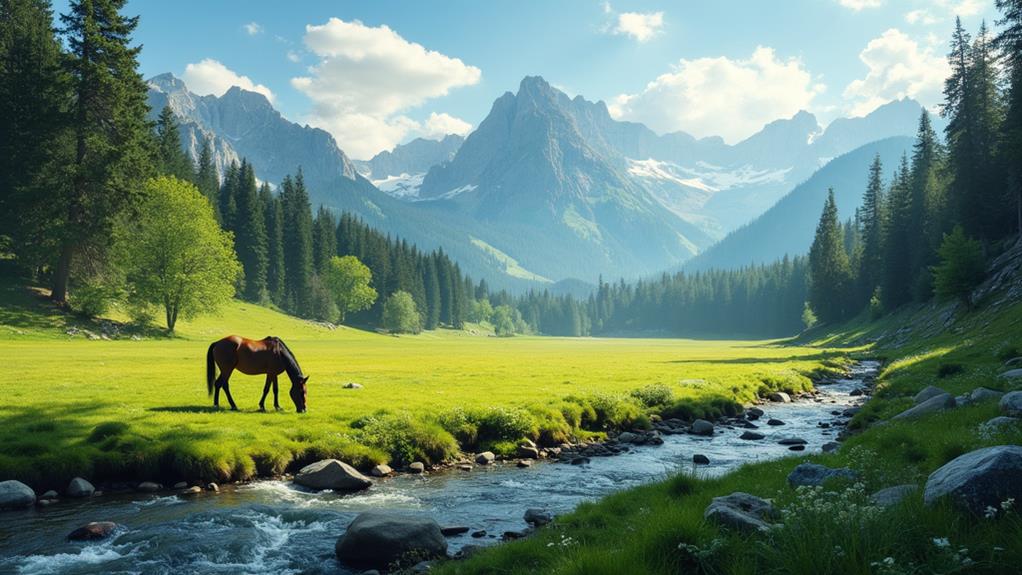
When you're planning to keep horses, it's important to contemplate the environmental impact factors that come into play. Horses can greatly affect land degradation if not managed properly. To maintain soil health and prevent erosion, you'll need to adopt sustainable practices. Rotating pastures and guaranteeing proper grass coverage can help in preserving soil structure and fertility.
Water management is another key aspect. Horses require substantial amounts of water, and improper water usage can lead to depletion and affect local ecosystems. Make sure that water sources are managed efficiently and aren't negatively impacting the surrounding environment.
Manure management is critical for reducing the biodiversity impact. Improper handling can lead to nutrient runoff, affecting waterways and the habitats of numerous species. Composting manure can be an effective way to recycle nutrients back into the land, promoting habitat preservation.
Lastly, consider the broader biodiversity impact your horse-keeping practices may have. Overgrazing can reduce plant diversity and affect local wildlife. By implementing thoughtful land management strategies, you can promote a balance that supports both your horses and the health of the local environment. Balancing these factors will guarantee your horse-keeping practices are environmentally sustainable.
Related posts