How Long Can You Safely Leave a Cat Alone? Important Considerations
Leaving a cat alone depends on their stage of life, health, and personality. Adult cats can be on their own for 4-8 hours, with some managing up to 24 hours if food and water are available. Kittens under 4 months shouldn't be left alone for more than a few hours, while those older can handle up to 8 hours. Senior cats need frequent check-ins, ideally every 12 hours, to avoid anxiety. Watch for signs like excessive vocalization or destructive behavior, indicating stress. Ensuring a safe, engaging environment helps. Stick around to uncover more about making your cat's life comfortable and stress-free.
Understanding Cat Independence
Cats, by nature, are more independent than their canine counterparts, allowing them to manage alone time quite well. This independence means that an adult cat can typically be left alone for 4-8 hours without issue. Many adult cats can even handle up to 24 hours alone, as long as they have access to food and water. However, it's vital to take into account the individual personality of your cat, as some may enjoy solitude while others might not.
Kittens, on the other hand, have different needs. Those under 4 months old shouldn't be left alone for more than a few hours at a time. Their high energy levels and frequent feeding requirements demand more attention. As cats mature, their ability to be alone also changes. Senior cats might need more frequent check-ins due to potential anxiety and health issues, with a recommended maximum alone time of around 12 hours.
Each cat's tolerance for being alone varies greatly. While some thrive in their independence, others can experience separation anxiety. Understanding your cat's unique personality and needs is fundamental in determining how long you can safely leave them alone.
Recognizing Separation Anxiety
When you leave your feline friend alone, they might not always handle it as well as you'd hope. Cats, despite their reputation for independence, can experience separation anxiety. Recognizing signs of distress is vital in ensuring their well-being. One of the most apparent signs is excessive vocalization; if your cat starts meowing or yowling excessively, it might be their way of expressing loneliness or anxiety.
Destructive behaviors, such as scratching furniture or knocking over objects, can also indicate distress. These actions may be your cat's way of coping with being left alone. Furthermore, changes in eating habits, like a sudden loss of appetite or overeating, may signal anxiety. Over-grooming or even developing patches of hair loss can be further indicators of stress in cats.
Monitoring behavior is fundamental. Pay attention to how your cat acts when you return home. If they seem unusually clingy or exhibit any of these signs, they might need more support to cope with being alone. Recognizing these symptoms early can help you provide the necessary care and comfort, ensuring your cat remains happy and healthy even when they're alone.
Preparing Cats for Alone Time
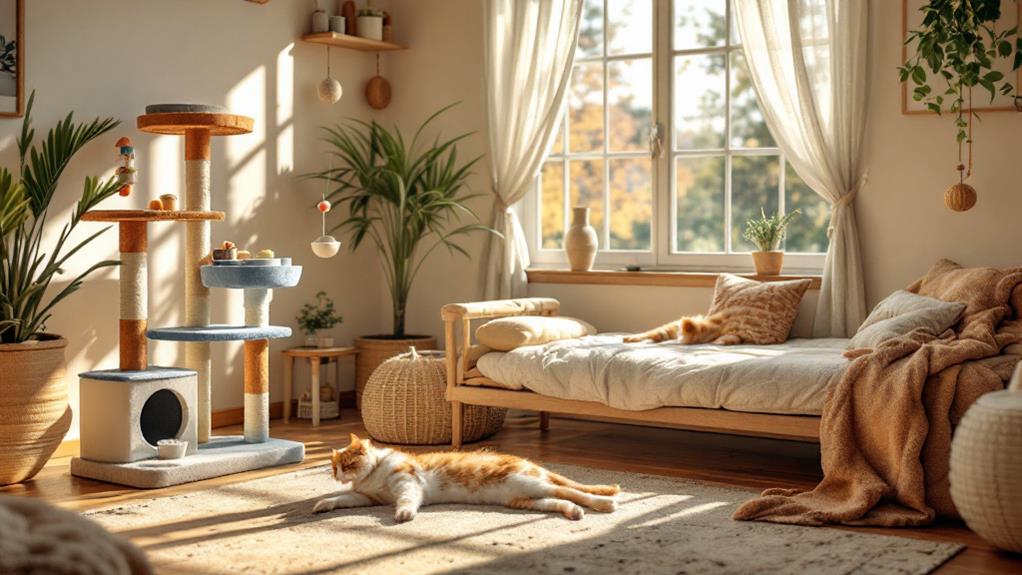
Understanding your cat's separation anxiety is the primary step to helping them feel more comfortable when alone. To prepare your cat for long periods by themselves, start with gradual desensitization. Begin by leaving them alone for short periods, then slowly increase the time. This builds their comfort level and eases anxiety.
Create a safe environment by making sure they have access to sufficient food, fresh water, and a clean litter box. An engaging environment is crucial too. Provide toys, scratching posts, and cozy resting spots to keep your cat entertained and content during your absence. Establishing a consistent routine for feeding and playtime helps your cat feel secure and reduces stress, making it easier for them to adjust to being alone.
Consider using calming products like pheromone diffusers to create a soothing atmosphere. Leaving background noise, such as a radio or TV, can also help in comforting your cat, mimicking the sounds of a busy home. These strategies guarantee your cat's well-being and make it less stressful for them when you need to leave a cat alone for extended periods.
Reducing Cat Anxiety
Ease your cat's anxiety by focusing on techniques that promote comfort and security during your absence. Start with gradual desensitization to alone time. Begin with short absences, gradually increasing the duration. This helps your cat build comfort and confidence when left alone.
Engaging toys are crucial in reducing cat anxiety. Provide your cat with stimulating environments, including scratching posts and cozy resting areas, to reduce boredom. These elements not only entertain but also provide mental and physical stimulation.
To create a soothing atmosphere, consider using pheromone diffusers. These calming products can ease stress and anxiety, making your cat feel more at ease while you're away. Furthermore, leave some background noise, like a radio or TV, to mitigate feelings of loneliness. This familiar sound can be comforting and reassuring.
Before leaving, engage in regular playtime with your cat. This helps expend their energy, reducing anxiety and restlessness when they're home alone. A tired cat is more likely to relax and nap, rather than stress over your absence. By incorporating these strategies, you can help your furry friend feel secure and content, even when you're not around.
Seeking Professional Help
If your cat still shows signs of anxiety despite your best efforts, it's time to contemplate professional help. Persistent anxiety can indicate deeper behavioral issues that require expert attention. Start by consulting a veterinarian to rule out any underlying medical conditions that might be affecting your cat's well-being. In some cases, destructive behavior or inappropriate elimination can stem from health problems that need immediate attention.
Once medical issues are ruled out, a veterinarian might recommend medication or therapy to manage your cat's anxiety. These treatments can help restore emotional comfort and improve mental well-being. It's essential to maintain regular follow-ups with your vet to adjust any care plans and guarantee your cat continues to thrive emotionally.
Additionally, consider reaching out to a feline behaviorist. These professionals specialize in cat behavior and can provide tailored strategies to address specific concerns. With their guidance, you can develop a plan that improves your cat's general comfort and happiness. They might suggest behavioral modifications that alleviate anxiety and promote a more harmonious environment.
Don't hesitate to seek professional help; it's a proactive step towards securing your cat's long-term emotional and mental health.
Age and Alone Time
As cats grow and develop, their stage significantly influences how long they can comfortably be left alone. Kittens under 4 months have small stomachs and high energy needs, so they shouldn't be left alone for more than 4 hours. Their frequent feeding and playtime requirements make extended alone time challenging. As kittens reach 4-6 months, they gain some independence and can handle up to 5 hours alone. However, their playful nature still demands regular interaction to prevent boredom.
Once cats hit 6 months, they can generally be left alone for up to 8 hours without significant distress. Adult cats, with their established independence, can manage up to 24 hours alone. Still, you should avoid longer absences to prevent boredom and stress. Senior cats, often more vulnerable, require more frequent check-ins. Ideally, they shouldn't be left alone for more than 12 hours, especially if they have medical needs or show signs of anxiety. Their comfort and well-being might suffer without regular human interaction.
Each stage group has unique needs and potential for distress, so adjusting your cat's alone time based on their stage is essential for their happiness and health.
Caring for Young Cats
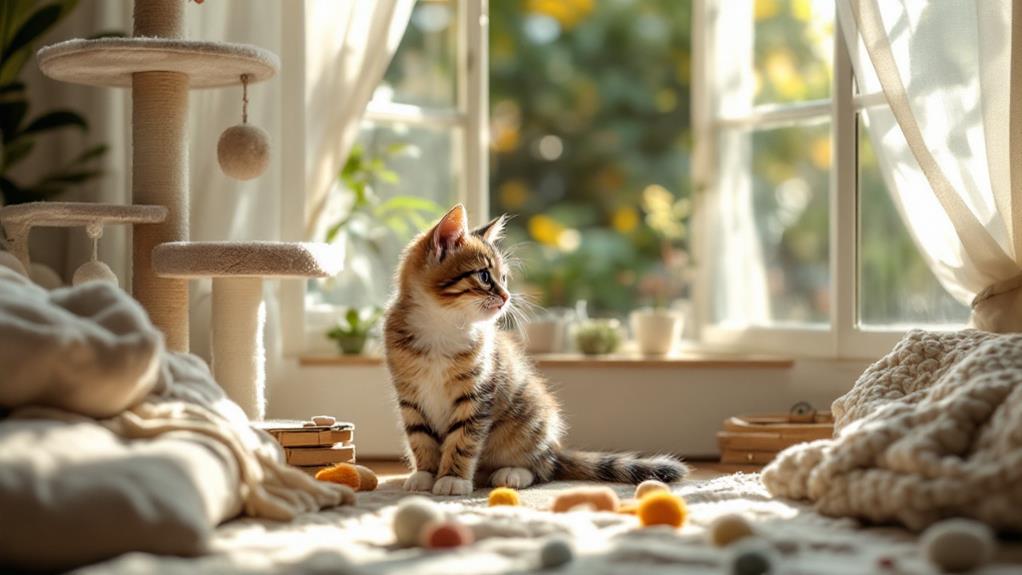
Understanding the appropriate amount of alone time for your cat is just one part of guaranteeing their well-being. Young cats, especially kittens under 4 months, have specific needs. They shouldn't be left alone for more than 4 hours due to their small stomachs and high energy demands. It's essential to provide them with frequent social interaction and companionship. As they grow, between 4 to 6 months, they can handle being left alone for up to 5 hours. However, they still require regular check-ins to verify they're safely entertained and cared for.
Once your kitten is older than 6 months, you can safely leave them alone for up to 8 hours. Despite this, it's still beneficial to arrange for someone to stop by, providing companionship and confirming everything's alright. To help your young cat acclimate to alone time, start by leaving them for short periods and gradually increase the duration as they become more comfortable. This gradual approach helps them adjust without feeling anxious. Whenever you're planning an extended absence, consider having a friend or family member check in to ascertain their safety and well-being.
Guidelines for Senior Cats
Golden years bring unique challenges for senior cats, and they often need a bit more attention than their younger counterparts. As they grow older, their health might necessitate more frequent check-ins, ideally every 12 hours, to guarantee their comfort. Leaving them alone overnight isn't advisable, as extended solitude can lead to anxiety or stress. These cats thrive on routine, so any disruption in feeding or medication schedules can impact their well-being.
To help your senior cat feel secure, maintain a consistent environment. Make sure they have cozy resting spots and easily accessible resources. Changes in their surroundings can exacerbate anxiety, making it essential to provide familiar comforts. Regular feeding is important, as older cats may have specific dietary needs that must be met consistently. Furthermore, if your cat is on medication, missing doses could adversely affect their health.
When you have to leave, consider enlisting someone to check in on your cat or use technology like pet cameras to monitor them. This way, you can address any issues quickly, making certain your senior cat remains happy and healthy even when they're alone. Prioritizing their environment and routine will greatly contribute to their general well-being.
Essential Supplies for Cats
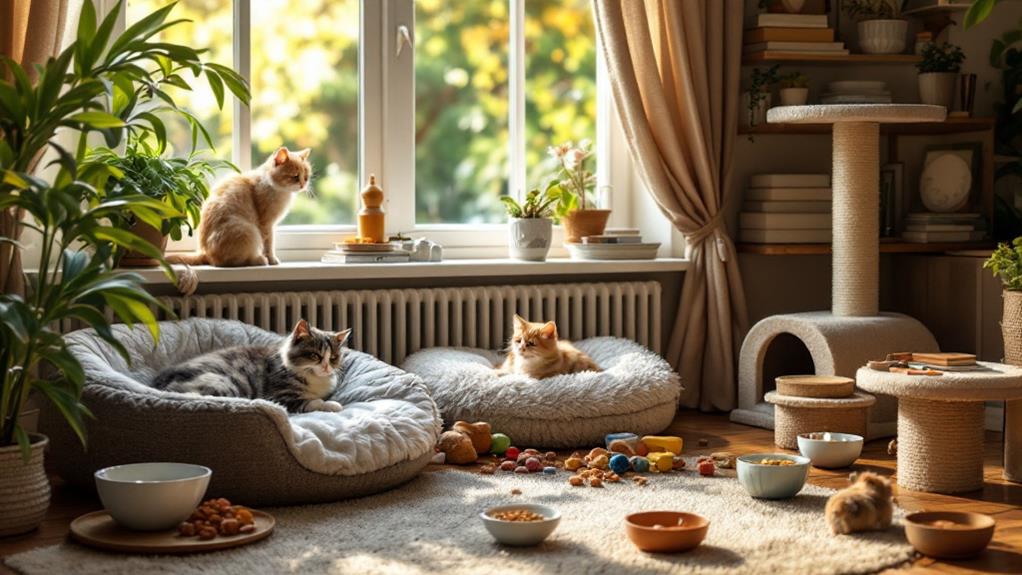
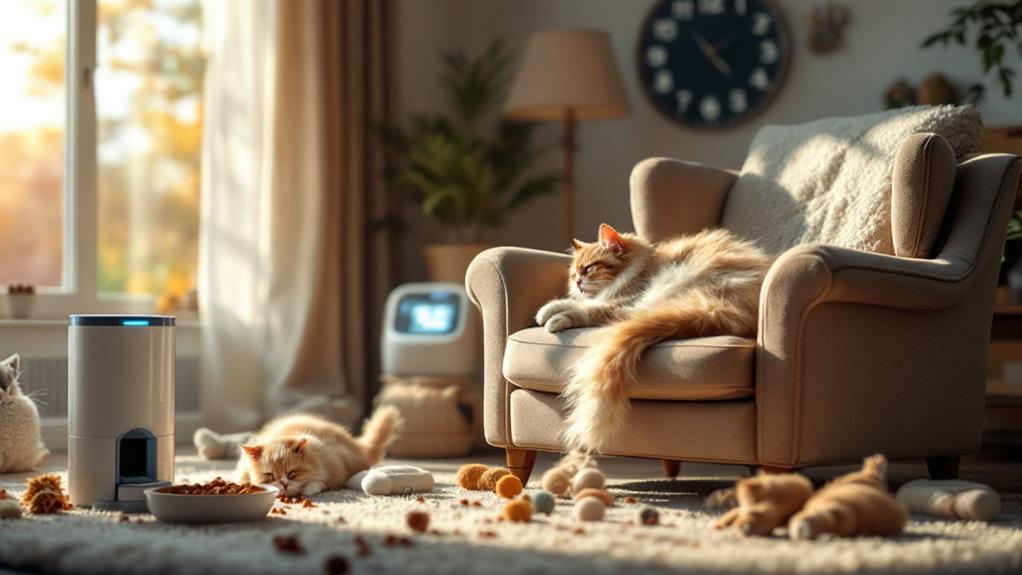
Caring for your cat involves more than just attending to their life stage-specific needs; it also means ensuring they have access to the right supplies. Initially and foremost, always keep fresh water around. Consider using multiple bowls or a pet water fountain to encourage hydration, vital for your cat's health, especially if you're gone for an extended amount of time. Regarding feeding, an automated pet feeder is a convenient choice for providing dry food at regular intervals, ensuring your cat sticks to their routine.
A clean cat litter box is fundamental. If you have more than one cat, include an additional box to prevent any territorial disputes or accidents. Don't forget about their mental stimulation—stock up on engaging toys like scratching posts and puzzle feeders to keep them entertained and prevent boredom.
Your cat also needs a comfortable resting area. Providing cozy bedding or blankets in a familiar spot will give them a sense of security. If you're planning to be away for a longer period, consider hiring a pet sitter to visit and care for your cat, ensuring all these needs are consistently met.
Monitoring Cat Loneliness
Loneliness can subtly manifest in your cat's behavior, leaving you clues about their emotional state when they're left alone. Monitoring cat loneliness involves being attentive to signs such as excessive vocalization or clinginess when you return. These behaviors might indicate your cat felt isolated during your absence. Destructive behavior and litter box issues are also signs of loneliness, suggesting stress and anxiety.
To support your cat's emotional well-being, engage in regular interaction and playtime when you're home. This helps mitigate feelings of loneliness and strengthens your bond. Provide engaging toys and scratching posts to keep your cat occupied. These not only offer stimulation but also prevent boredom-induced mischief.
Consider leaving background noise, like a TV or radio, on when you're away. This can help reduce your cat's perception of isolation. Companionship in the form of another cat is another effective way to address loneliness, offering your feline friend a constant buddy during the day.