How Knowing Horse Riding Can Help in Survival Situations

Knowing how to ride a horse can be a lifesaver in survival situations. You can quickly cover rugged terrain that cars can't access, making it easier to escape or find help. Horses can carry critical supplies, ensuring you have what you need when the unexpected happens. Their ability to navigate difficult paths sharpens your decision-making and route assessment skills. By building trust with your horse, you improve your leadership and adaptability. Understanding their body language also amplifies your overall communication and empathy. Immerse yourself in the details and uncover even more surprising benefits of horse riding.
Key Takeaways
- Horseback riding allows rapid travel across rugged terrains, crucial in emergencies.
- Navigating difficult landscapes becomes easier with horses' natural strength and agility.
- Horses can carry essential supplies, ensuring access to critical gear and resources.
- Building trust with horses enhances communication and leadership in survival situations.
- Understanding horse body language improves decision-making and hazard avoidance skills.
Quick Transportation Methods
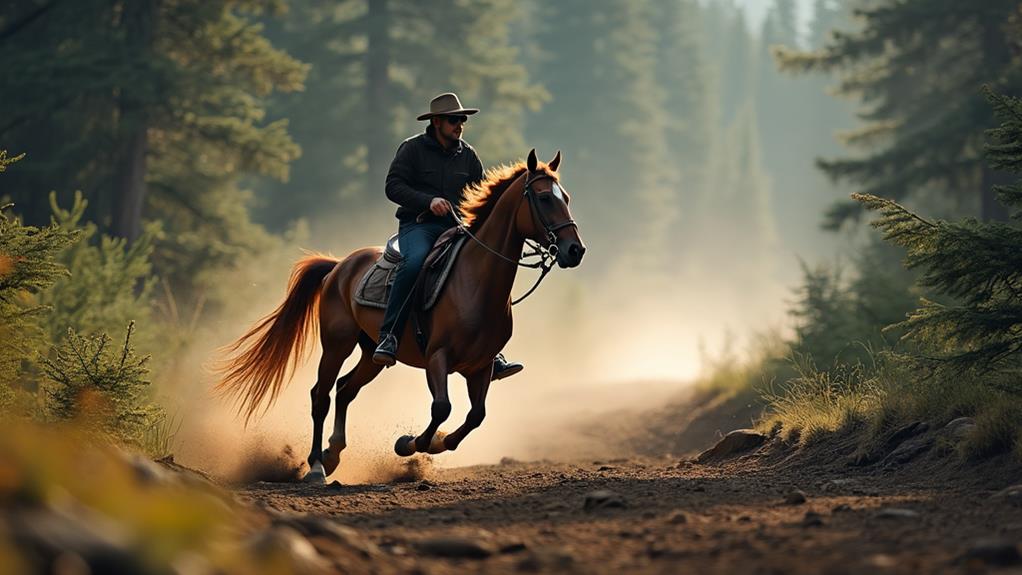
When you find yourself in a survival situation, speed and efficiency are critical, and horseback riding offers a quick transportation method to traverse rugged terrains. Horses can cover vast distances faster than walking, making them invaluable assets when every minute counts. Unlike vehicles, which may struggle with rough paths and require fuel, horses can navigate areas that are otherwise inaccessible. Their ability to sense trails and paths improves your navigation skills, allowing you to reach remote locations that might hold vital resources or offer safety.
Being adept at horseback riding also signals that you're a good leader in survival scenarios. Your ability to handle horses effectively can be the difference between reaching a destination safely or facing obstacles that slow you down. In emergencies, knowing how to manage horses quickly and efficiently allows you to relocate crucial supplies or people, ensuring that everyone stays ahead of any potential dangers.
Moreover, horses serve as a sustainable transportation option when fuel is scarce or unavailable. By relying on equine travel, you're not just conserving resources; you're also demonstrating adaptability, a key trait for any leader in demanding survival circumstances.
Navigating Difficult Terrain
Maneuvering difficult terrain becomes considerably more manageable when you're on horseback. Horses have an innate ability to traverse challenging landscapes like rocky paths, steep inclines, and dense forests with relative ease. When you're working with horses, their natural strength and agility become invaluable assets in survival situations. By developing your horsemanship skills, you learn to steer through difficult terrain effectively.
As a rider, you cultivate a keen sense of balance and coordination, essential for maintaining stability when the ground gets rough. These skills aren't just about staying in the saddle; they're imperative for ensuring both your safety and that of your horse. Understanding your horse's body language can alert you to potential hazards ahead, allowing you to adjust your course swiftly and safely.
Training in horsemanship also sharpens your decision-making abilities. You'll learn to assess the safest routes and make quick adjustments in response to unexpected obstacles. Furthermore, knowing horse behavior and instincts lets you utilize their natural abilities to traverse areas that might be too treacherous for a human alone. By using these skills, you're not just a passenger; you're an active participant in steering through the wild.
Carrying Essential Supplies
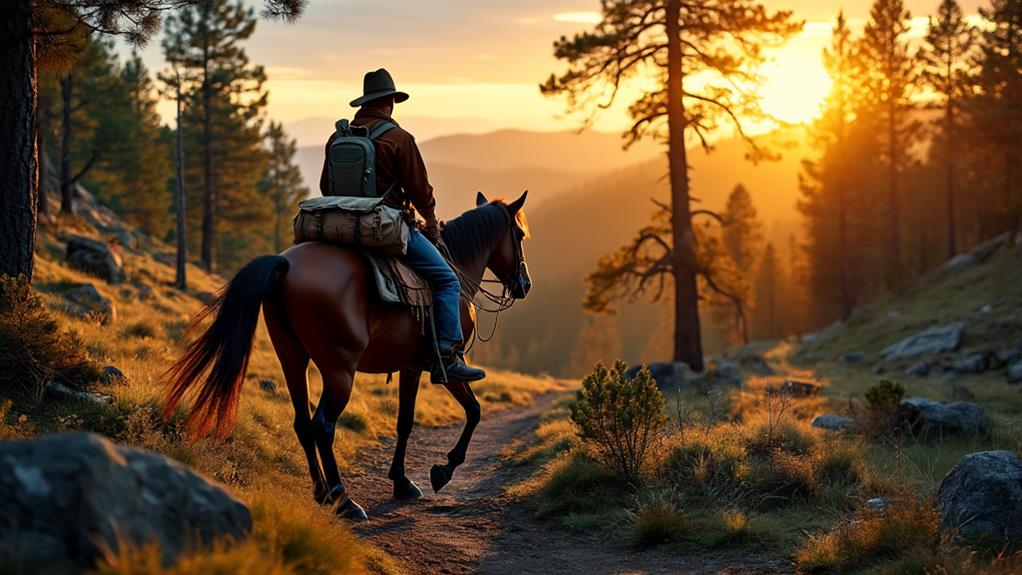
Horseback riding offers a practical solution for transporting critical supplies in survival situations. When you're out in the wild, carrying packs on a horse's back means you can take along fundamental gear and resources securely. It's much more efficient than lugging heavy loads on foot, and horses can cover significant distances quickly. This makes them ideal for transporting food, water, and medical supplies, especially when time is of the essence.
You'll find that specialized saddlebags are perfect for carrying emergency provisions. These bags guarantee your crucial items are easily accessible during extended travels or emergency evacuations. With the horse as your transportation partner, you can focus on the expedition ahead, knowing that your essentials are safe and sound.
In addition to carrying packs, horses are great for scouting for resources or safe locations. Their ability to navigate rough terrains that might be inaccessible by vehicle or on foot gives you a distinct advantage. Learning horsemanship includes mastering the art of load distribution, which guarantees that your supplies are carried efficiently without compromising the horse's comfort or performance. This skill is fundamental for making the most of your equine companion in survival scenarios.
Building Trust With Horses
While horses excel at carrying supplies, their true value in survival situations hinges on the trust you build with them. Establishing a bond through consistent, respectful interactions is key. Groundwork exercises play a significant role in this process. They help the horse focus on you, fostering a foundation of communication before you even mount. This groundwork is vital because horses are highly sensitive to human emotions. If you approach them with calmness and confidence, it can soothe their nervous system and alleviate fear, enhancing the trust between you and the horse.
Trust-building activities such as grooming and gentle handling create an environment where the horse feels safe. When a horse feels secure, it's more likely to respond positively in emergencies. This responsiveness is important during high-stress situations where quick, cooperative actions are needed. Additionally, establishing a leadership role through assertive yet respectful communication reinforces this trust. By showing the horse you're a reliable leader, you'll gain better control and guarantee safety in survival scenarios. Remember, a well-trusted horse won't just carry your supplies; it'll be a dependable partner when you need it most.
Enhancing Communication Skills

Understanding horse body language can greatly improve your communication skills. When you engage with horses, you're delving into a world where non-verbal cues speak volumes. Horses communicate through posture, ear position, and movement, demanding your active listening and keen observation. This need for attentiveness sharpens your awareness of others' emotions and intentions, a skill that's invaluable in social interactions and dangerous situations alike.
Horses react instantly to your cues, providing immediate feedback. This real-time response is telling us how well you're conveying your intentions, allowing you to fine-tune your approach. By interpreting their signals, you build empathy and emotional intelligence, becoming more adept at understanding and responding to people's feelings and needs. This is essential when clear communication can mean the difference between safety and peril.
Moreover, working with horses underscores the importance of clarity and intention in your actions. You're encouraged to express yourself with purpose, a valuable trait in both personal and professional dialogues. In survival situations, such precision can be life-saving. By honing these skills with horses, you become more attuned to the nuances of interaction, equipping you to navigate complex scenarios effectively.
Related posts