How Dogs Digest Their Food: A Look at the Canine Digestive System
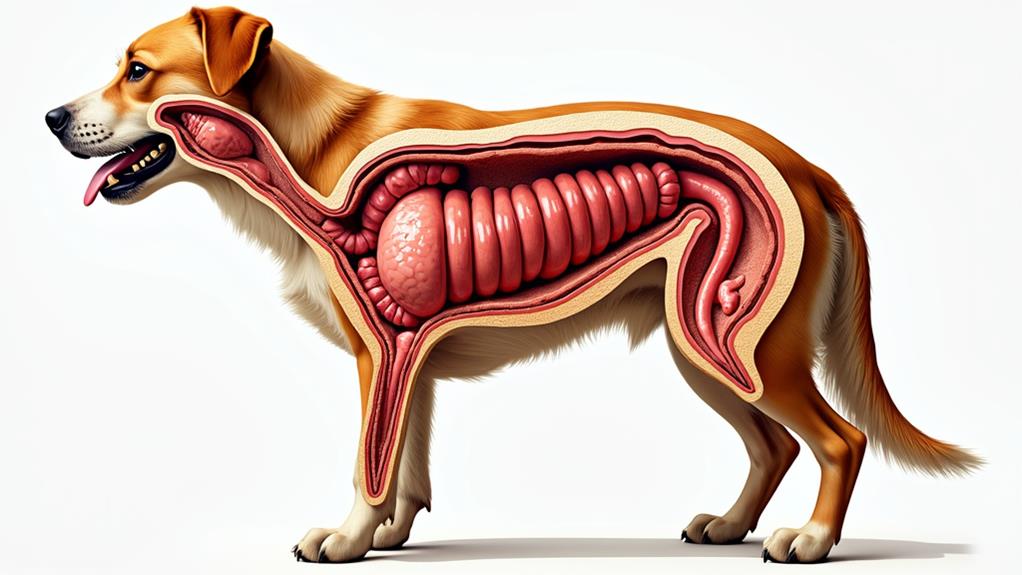
When your dog eats, digestion starts in the stomach with powerful gastric acids that break down food into chyme. Unlike humans, their acids are 100 times stronger, making the process efficient. From there, the small intestine is where around 90% of nutrients are absorbed, thanks to enzymes and structures like villi and microvilli. The large intestine then takes on the task of absorbing water and forming waste. With 70% of their immune system in the digestive tract, a healthy gut is essential. Understanding more about each stage can reveal how your dog's diet and health are deeply intertwined.
Key Takeaways
- Dogs begin digestion in the stomach, where powerful acids and enzymes break down food into chyme.
- The small intestine, with villi and microvilli, absorbs approximately 90% of nutrients from digested food.
- The large intestine primarily absorbs water and electrolytes, forming waste for elimination.
- Peristalsis in the esophagus efficiently transports food from the mouth to the stomach.
- A balanced diet and hydration are crucial for maintaining a healthy canine digestive system.
Canine Digestive System Overview
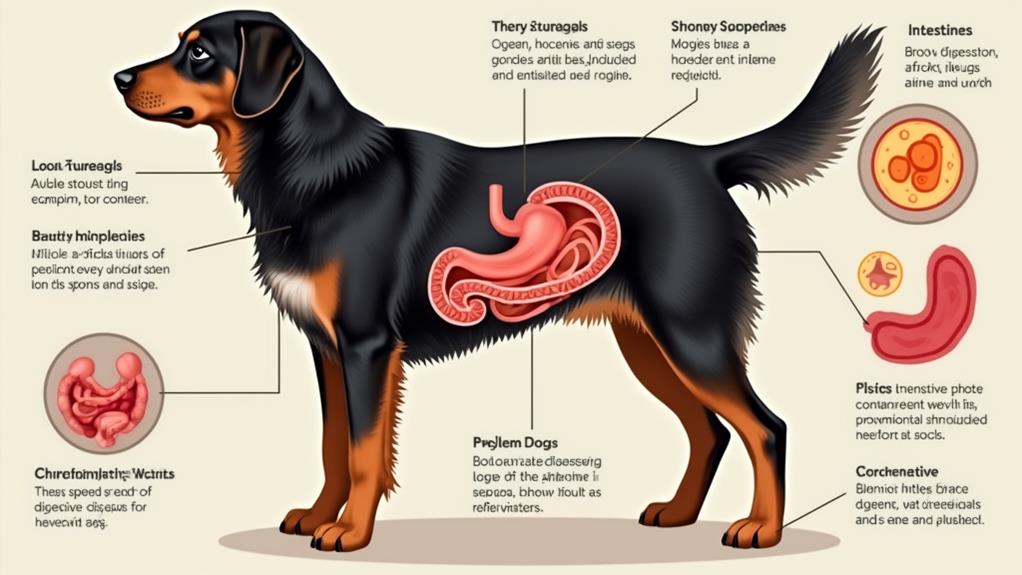
In the canine digestive system, food travels through a well-coordinated process involving several key organs: the mouth, esophagus, stomach, small intestine, large intestine, and rectum. Dogs have a unique digestion process that starts in the stomach, where food is mixed with powerful acids and enzymes. This is different from humans, whose digestion begins in the mouth. The stomach is essential in breaking down food into a form that allows for nutrient absorption later in the process.
After the stomach, the small intestine becomes the star of the show. It's divided into three parts: the duodenum, jejunum, and ileum. This organ is where most of the nutrients from the digested food are absorbed into the bloodstream. The small intestine plays a significant role in ensuring that dogs get the necessary nutrients to maintain their health and energy.
The large intestine then takes over, focusing on absorbing water and forming waste. Canine digestion is a swift operation, taking about 4-10 hours from ingestion to elimination. Approximately 70% of a dog's immune system is located in the digestive tract, highlighting the importance of a healthy digestive system for your furry friend's overall health.
Mouth and Esophagus Function
A dog's mouth is equipped with 42 specialized teeth, perfect for biting, gripping, and tearing meat, marking the true start of their digestion process. This mechanical breakdown is essential in preparing food for the passage through the canine digestive system. While humans rely on saliva to begin digesting carbohydrates, dogs don't have amylase in their saliva, so there's no significant enzymatic action happening in their mouths. Instead, their saliva mainly serves as a lubricant, helping you swallow the food more easily.
Once the food is chewed, it travels down the esophagus, a muscular tube connecting the mouth to the stomach. This passage is powered by peristalsis, which involves wave-like muscle contractions pushing the food efficiently to its next destination. The esophagus acts as a crucial conduit in the canine digestive system, guaranteeing that the food reaches the stomach safely, where the primary digestion process will continue.
Key points to remember about your dog's mouth and esophagus function include:
- Mechanical breakdown: Teeth play a significant role in food preparation.
- Saliva's role: Primarily aids swallowing, not digestion.
- Esophagus efficiency: Peristalsis guarantees smooth transport to the stomach.
Stomach's Role in Digestion
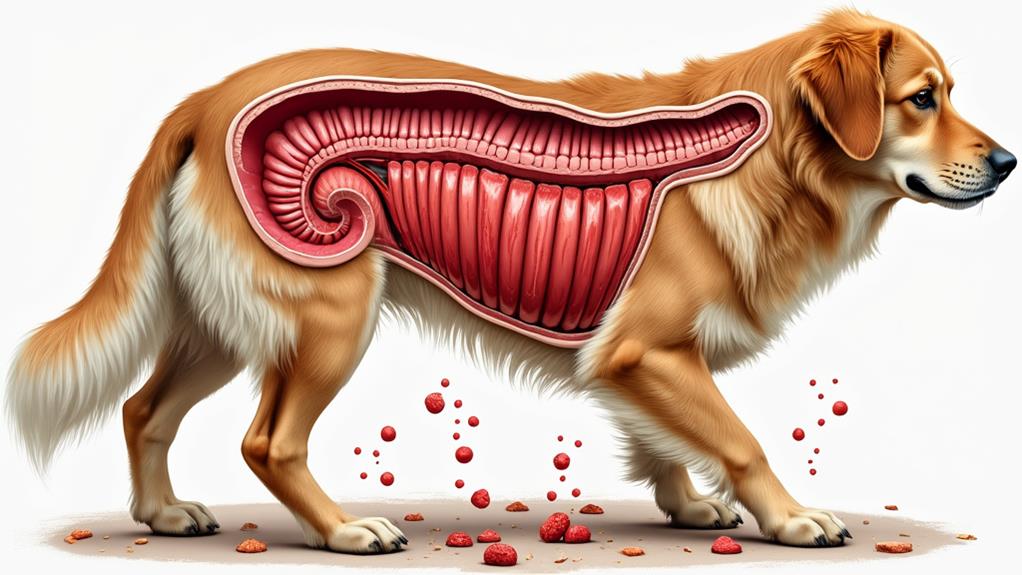
After the efficient movement through the esophagus, your dog's food arrives in the stomach, where the real work of digestion begins. Here, the canine stomach serves as the primary site for digestion, transforming food into a mushy liquid known as chyme. Powerful gastric acids, about 100 times stronger than those in humans, play a significant role by breaking down proteins and fats. These acids, along with digestive enzymes like gastric lipase and pepsinogen, guarantee that proteins are efficiently digested into simpler forms.
Gastric lipase targets fats, while pepsin, formed from pepsinogen in the stomach's acidic environment, focuses on proteins. The food spends approximately 4 to 8 hours within the stomach, allowing thorough digestion before it proceeds. The pyloric sphincter then regulates the movement of chyme into the small intestine, making sure that the shift supports ideal nutrient absorption. This carefully controlled process highlights the stomach's pivotal role in breaking down food components for your canine companion, setting the stage for subsequent nutrient absorption. The canine digestive system's precision guarantees your dog gets the nutrition needed for a healthy, active life.
Nutrient Absorption in the Small Intestine
The small intestine, which comprises three sections—duodenum, jejunum, and ileum—serves as the primary site for nutrient absorption in your dog's digestive process. As food moves from the stomach into the small intestine, digestive enzymes from the pancreas, including amylase, lipase, and proteases, are secreted. These enzymes play an essential role in breaking down carbohydrates, fats, and proteins into absorbable units like amino acids, fatty acids, and simple sugars.
The inner surface of the small intestine is lined with villi and microvilli, which significantly increase the surface area for improved nutrient absorption. These structures are vital in guaranteeing that approximately 90% of nutrient absorption occurs here, highlighting the small intestine's key role in your dog's digestive process.
Here's how it works:
- Digestive enzymes: Pancreatic enzymes break down nutrients for absorption.
- Villi and microvilli: These structures increase the surface area for nutrient absorption.
- Nutrient absorption: The small intestine absorbs amino acids, fatty acids, and simple sugars effectively.
Hormones like secretin and cholecystokinin regulate the release of pancreatic juices and bile, facilitating efficient digestion and nutrient absorption. This complex interaction guarantees your dog gets the nutrients needed for health and well-being.
Water Absorption in the Large Intestine
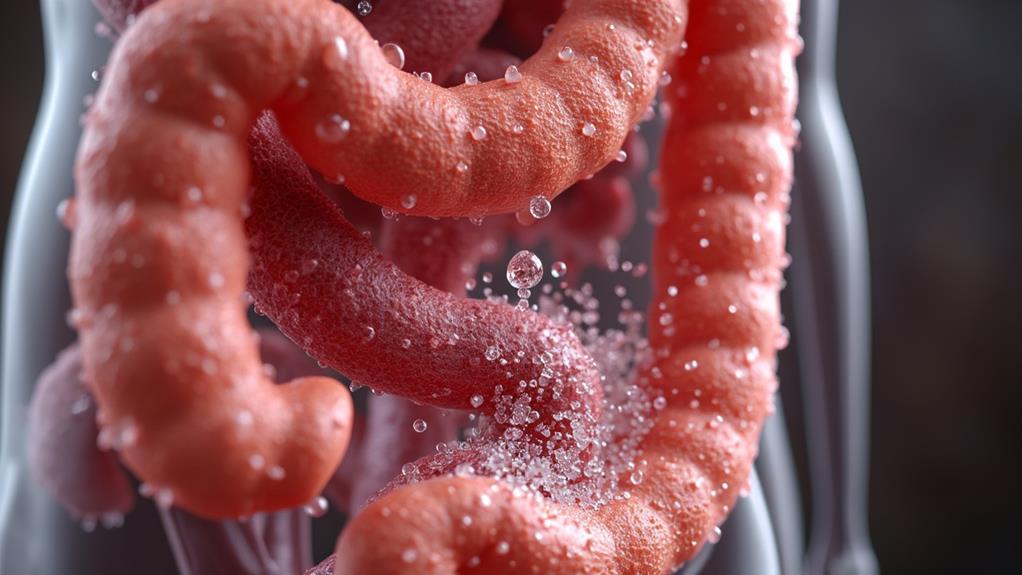
In your dog's digestive process, approximately 90% of the water and electrolytes from the remaining undigested food are absorbed in the large intestine. This absorption is vital for forming solid stools, which are important for maintaining proper hydration and preventing diarrhea. The large intestine is made up of the cecum, colon, and rectum, with the colon being the primary site for water absorption. Here, the compacting of waste occurs, ensuring that your dog's stool remains of healthy consistency.
Your dog's diet plays a significant role in this process. High-fiber diets can improve water retention, promoting ideal hydration and supporting the formation of solid stools. When your dog is adequately hydrated, the large intestine can effectively absorb the necessary water and electrolytes, preventing issues like constipation and ensuring efficient waste elimination.
Dehydration, on the other hand, can hinder the absorption process, leading to hard, dry stools and difficulty in eliminating waste. Ensuring your dog has access to fresh water and the right balance of fiber in their diet is key to supporting the large intestine's functions and maintaining your dog's general digestive health.
Maintaining Digestive Health
Many factors contribute to maintaining your dog's digestive health, and hydration is at the top of the list. Making sure your dog drinks enough water is essential, as it prevents constipation and aids in nutrient absorption. Regular exercise also plays a significant role in promoting digestive regularity. Physical activity stimulates gut motility, helping food move efficiently through the digestive tract.
To further support your dog's digestive health, focus on providing a high-quality diet. Opt for minimally processed foods rich in digestible protein and insoluble dietary fiber. This kind of diet improves nutrient absorption and promotes a balanced digestive system. Incorporating probiotics can also be beneficial. They help maintain a healthy balance of beneficial bacteria, which is important for comprehensive gut health.
Here are some key tips for maintaining your dog's digestive health:
- Hydration: Make sure your dog has constant access to fresh water.
- Exercise: Engage your dog in regular physical activity to improve gut motility.
- Diet: Feed a high-quality, balanced diet rich in nutrients, protein, and fiber.
Monitor your dog for signs of digestive distress, such as diarrhea or bloating. If you notice any issues, consult your veterinarian to make certain your dog's digestive wellness.
Identifying Digestive Issues
Spotting digestive issues in dogs isn't always straightforward, but it's fundamental for their health. You need to be vigilant about signs like diarrhea, vomiting, loss of appetite, and weight loss. These symptoms can indicate underlying digestive problems that shouldn't be ignored. Monitoring your dog's stool is imperative; any changes in consistency, frequency, or appearance can be a red flag. Lethargy, constipation, bloating, and excessive flatulence are also common indicators of digestive distress.
Digestive issues can stem from numerous sources, such as stress, poor diet, food intolerances, infections, parasitic infestations, or underlying health conditions. It's significant to reflect on these factors if your dog shows any symptoms. A poor diet and inadequate hydration can exacerbate these problems, so ensuring your dog receives a balanced and nutritious diet is crucial. Regular veterinary evaluations and fecal testing play a major role in diagnosing the causes of digestive issues and determining appropriate treatment plans.