Horse Care Basics: How to Take Care of a Horse
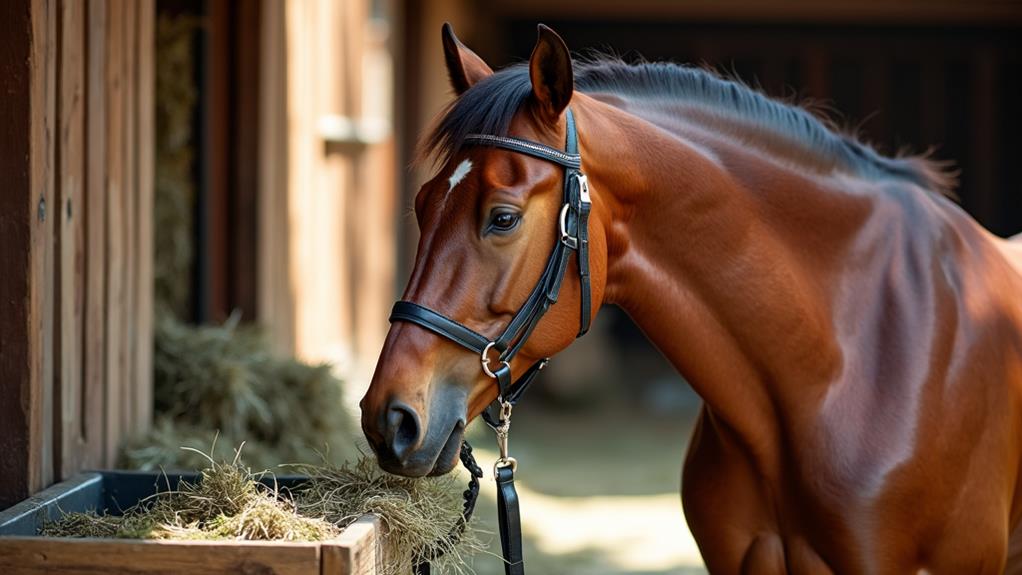
Taking care of a horse involves satisfying their basic needs and guaranteeing a healthy lifestyle. Start by providing fresh water and roughage daily to meet their nutritional demands. Make sure they have secure shelter from harsh weather, and regularly groom them to maintain their coat and check for injuries. Engage them in daily exercise, either through riding or turnout, to keep them fit. Regular vet visits and dental care help catch any health issues early. Ensure they have companionship to prevent anxiety. By exploring further, you'll uncover detailed tips and strategies to keep your horse thriving.
Key Takeaways
- Ensure horses have constant access to fresh water and consume 1-2% of body weight in roughage daily.
- Provide secure shelter to protect horses from harsh weather and regularly clean stalls to prevent parasites.
- Conduct regular grooming to maintain coat health and check for injuries, using appropriate brushes for different body areas.
- Facilitate social interaction with other horses or animals to reduce stress and improve overall well-being.
- Schedule regular veterinary check-ups, manage dental care and deworming, and maintain an emergency kit for minor health issues.
Basic Needs and Daily Care
To guarantee your horse thrives, focus on meeting its basic needs and providing attentive daily care. Start with horse care fundamentals by making certain your horse has continuous access to fresh water. An average horse consumes 25-45 liters daily, which is critical to prevent dehydration and maintain health. Don't forget about roughage; feed your horse a minimum of 1-2% of its body weight in roughage every day, translating to about 15-20 pounds for a 1,000-pound horse. This supports digestion and helps avoid health problems.
Providing secure shelter is another important aspect of daily care. A three-sided shed or stable protects your horse from harsh weather conditions and offers a safe, comfortable resting area. Regular grooming is significant, too. It not only keeps their coat healthy but also gives you a chance to check for any injuries or issues.
Your horse also needs social interaction, as they are naturally herd animals. Ascertain they have companionship, regardless of whether with other horses or compatible animals, to reduce stress and improve emotional well-being. Ultimately, maintain a consistent feeding schedule with small, frequent meals, and routinely inspect their environment for hazards.
Nutrition and Feeding Tips
Understanding equine nutrition is vital to maintaining your horse's health and well-being. Horses need a daily intake of 1.5% to 2% of their body weight in roughage. For a 1,000-pound horse, that translates to about 15-20 pounds of hay. This provides the fiber fundamental for their digestive system. Fresh, clean water is similarly important—horses can drink between 25 to 45 liters daily, especially in hot weather. Make certain they always have access to prevent dehydration.
Feeding grain requires careful management. Instead of large quantities, offer small, frequent meals to avoid digestive issues like colic and hindgut acidosis. To guarantee a balanced diet, consider:
- Ration Balancers: These can help meet nutritional requirements without excessive calories.
- Supplements: Use them to fill nutritional gaps, but only if necessary.
- Consulting an Equine Nutritionist: They can design a feeding program tailored to your horse's needs.
Exercise and Turnout
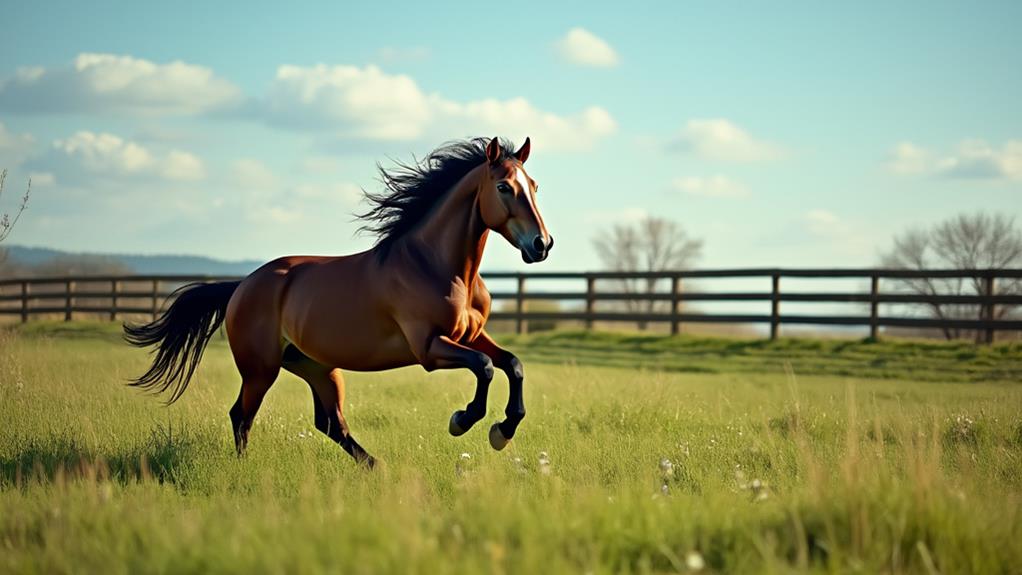
Why is exercise so important for your horse's well-being? Regular exercise is critical because it supports your horse's physical and mental health. Horses need a minimum of 1-2 hours of exercise daily, regardless of whether through riding, lunging, or daily turnout in a safe pasture. This activity helps maintain cardiovascular fitness and prevents soft tissue injuries. Without it, horses confined for too long can develop behavioral issues like restlessness or repetitive behaviors.
Daily turnout is significant as it allows your horse to move freely, echoing the natural movement patterns of feral horses, which roam up to 10 miles a day. Adequate physical activity is necessary, but it should be tailored to your horse's individual needs. Consider their lifespan, fitness level, and any health conditions. A well-planned routine care schedule guarantees your horse stays healthy without risking overexertion.
For horses with health concerns or limited turnout options, controlled exercise is imperative. This means finding a balance that provides enough activity while being mindful of their limitations. Remember, every horse is different, so adapting their exercise routine guarantees they remain happy and healthy, minimizing the negative effects of confinement.
Health and Veterinary Care
A stethoscope isn't just a tool; it's a gateway to your horse's health. Regular veterinary check-ups are crucial in detecting health issues early and ensuring vaccinations, like those for tetanus and West Nile virus, are up to date. Monitoring your horse's critical signs—pulse, respiration, and temperature—can alert you to potential problems, including respiratory diseases.
To keep your horse healthy, follow these fundamental guidelines:
- Routine Dental Care: Schedule biannual dental checks to prevent issues that affect eating and digestion, ensuring your horse maintains a balanced diet.
- Deworming Protocol: Implement a deworming strategy based on fecal egg count tests. This helps manage internal parasites, reducing the risk of a parasite overload that can harm your horse's health.
- Emergency Kit: Keep a well-stocked emergency kit with necessities like antiseptics, bandages, and a thermometer. Being prepared can make all the difference in addressing minor health issues before they escalate.
Grooming Practices
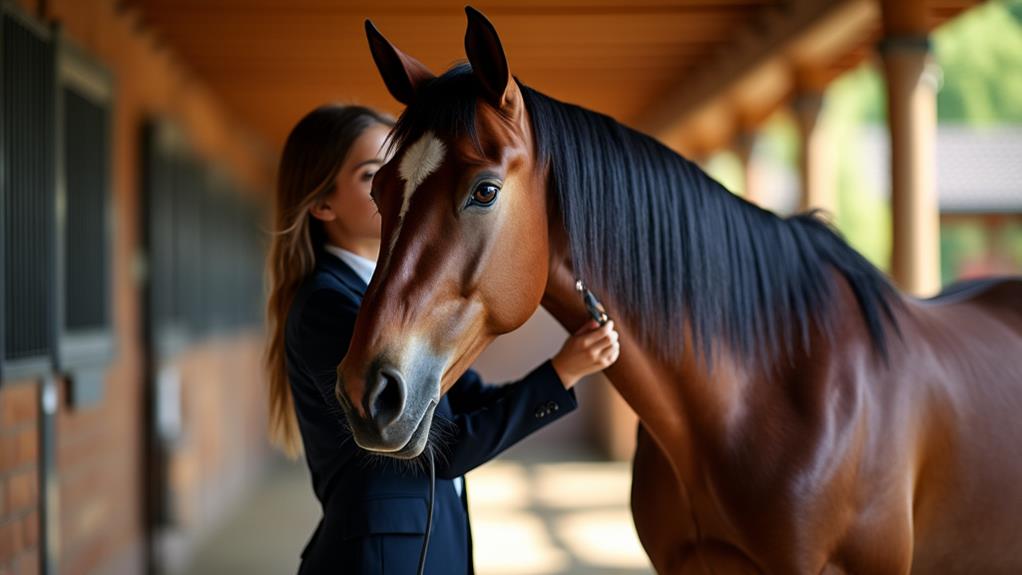
Proper grooming practices are essential for maintaining your horse's general health and well-being. Daily grooming not only keeps your horse's coat condition in check by removing dirt and debris, but it also allows you to inspect for skin irritations or parasites. Start with a curry comb to loosen dirt, then use a hard brush to remove it. Finish with a soft brush on sensitive areas to maintain hygiene.
Pay special attention to your horse's mane and tail. Use gentle brushing techniques to prevent tangling and breakage, making sure you don't cause any discomfort. This helps keep your horse looking its best while also promoting a healthy coat.
Hoof care is just as significant. Regularly check for debris and signs of infection. Schedule farrier visits every 6-8 weeks for trimming and shoeing to keep your horse's hooves in top condition.
Bathing should be done only as needed, especially avoiding cold weather to prevent illness. Always opt for horse-specific shampoos to avoid skin irritations and to maintain your horse's coat health. By staying diligent with these grooming practices, you'll guarantee your horse remains healthy and comfortable year-round.
Shelter and Environmental Needs
Just as grooming is fundamental for your horse's health, providing proper shelter and a safe environment is likewise significant. Horses need protection from harsh weather conditions, and a three-sided shed or run-in shelter is ideal. This type of shelter guarantees they stay comfortable and safe, regardless of whether it's sunny or stormy.
To maintain a healthy environment, you should:
- Daily Mucking: Dedicate about 15 minutes twice daily to muck stalls or shelter areas. This practice prevents the buildup of parasites and guarantees a clean area for your horse.
- Sturdy Fencing: Confirm all outdoor areas are enclosed with safe, sturdy fencing. Avoid barbed wire to prevent injuries, and regularly check for any loose or damaged sections.
- Weather Protection: In colder climates, equip your horse with waterproof rugs to shield them from cold and wet conditions. Daily inspections of these rugs are essential to prevent discomfort and skin issues.
Regularly inspect the pasture and shelter for hazards like holes or loose fencing. A clean, dry area for your horse to lie down is crucial for their well-being. Meeting these environmental needs is fundamental to their general health and happiness.
Social Interaction and Companionship
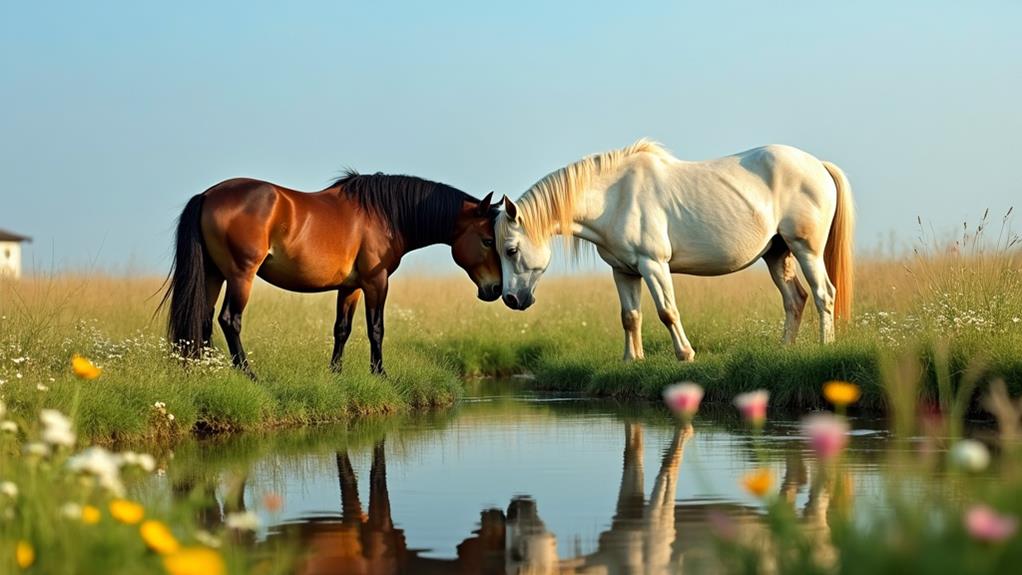
Social interaction is crucial for a horse's well-being, as they're inherently social creatures that flourish when they have companionship. Horses are herd animals, meaning they naturally live in groups and gain from being around others. When horses are isolated, they can experience behavioral issues like anxiety and develop stereotypic behaviors. To prevent this, make certain your horse has plenty of bonding time with others.
Creating safe social interactions is key. Design their living area so they can see and interact with other horses. Group living not only helps reduce stress but also improves behavior during training and weaning. If having other horses isn't possible, consider alternative companions like goats or sheep, which can provide the necessary interaction.
Companionship doesn't just affect behavior; it also influences their hydration behavior. Horses in social settings tend to drink more regularly, which is important for their health. By prioritizing social interaction, you're actively supporting your horse's general well-being. Remember, a socially engaged horse is a happy, healthy horse, so make companionship a core part of their care routine. It's a simple yet powerful way to improve their quality of life.
Emergency Preparedness
Regarding horse care, emergency preparedness is a crucial component that guarantees your horse's safety during unforeseen situations. Start by creating a robust emergency plan. This plan should include designated evacuation routes and contact information for local veterinary services. Make certain your plan also contains specific care instructions tailored to your horse's health.
For identification purposes, microchip your horse and obtain a Property Identification Code (PIC). This secures compliance with local regulations and aids in effective emergency management. Regularly review and update your emergency procedures to reflect any changes in your horse's environment or health.
Here are some crucial steps you should consider:
- Microchipping and Identification: Use microchips for easy horse recovery and identification during emergencies. Don't forget to have a PIC.
- Emergency Planning: Develop an emergency plan that covers all bases, including evacuation routes and local veterinary services.
- Stay Informed: Familiarize yourself with the Victorian emergency animal welfare plan. It offers valuable guidelines for maintaining your horse's safety and well-being during emergencies.
Related posts