Green Iguana Care Guide: Tips for Keeping Your Iguana Healthy
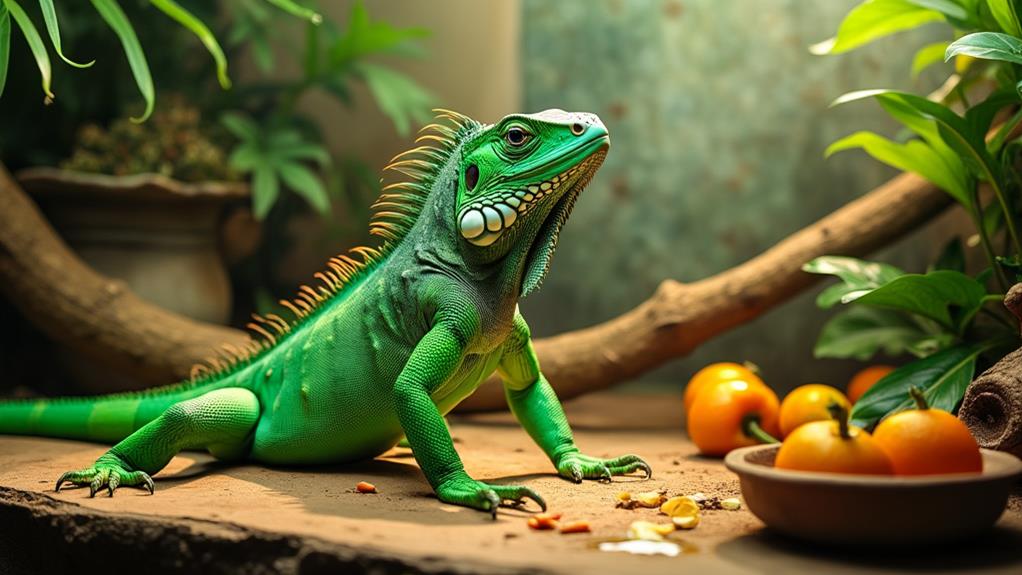
To keep your green iguana healthy, you'll need to meet their specific housing, dietary, and environmental needs. Provide a spacious enclosure with a basking area at 95-100°F and maintain humidity between 60-80%. UVB lighting for 10-12 hours daily is essential for vitamin D synthesis. Feed a balanced diet of 60% leafy greens, 30% vegetables, and 10% fruit, with weekly calcium supplements. Regularly mist and bathe your iguana to guarantee proper hydration. Handle them gently to build trust and monitor their health closely for signs of stress. Uncover more ways to keep your iguana thriving effortlessly.
Key Takeaways
- Maintain a large enclosure with temperatures of 75-100°F and humidity levels between 60-80% for a healthy environment.
- Provide UVB lighting for 10-12 hours daily to aid vitamin D synthesis and calcium absorption.
- Ensure a balanced diet of 60% leafy greens, 30% vegetables, and 10% fruit, with weekly calcium supplements.
- Watch for stress and health indicators like heavy breathing, lethargy, and abnormal skin color.
- Gradually handle your iguana to build trust, recognizing stress signals like tail thrashing and heavy breathing.
Natural History
Having its origins in the lush regions of Central and South America, the green iguana is a fascinating species with a rich natural history. As a native to these tropical regions, it has adapted to thrive in warm, humid environments. This large species can grow up to 7 feet long and weigh up to 20 pounds, which means taking care of one is a significant commitment. If you're considering a green iguana as a pet, you need to be prepared for their specific dietary needs and environmental conditions.
Green iguanas require proper care to prevent health issues, such as metabolic bone disease. This condition arises from inadequate calcium intake and insufficient UVB light exposure. To maintain their health, you must provide a balanced diet rich in leafy greens and guarantee they have access to appropriate lighting. These iguanas are also known for becoming invasive species in areas like Puerto Rico and southern Florida, where the climate mimics their native conditions.
Understanding their natural history and needs is essential to providing the best care. By replicating their tropical habitat and attending to their dietary needs, you can help your green iguana thrive.
Housing and Climate
Creating the perfect housing and climate for your green iguana is fundamental for its well-being. Start by investing in a large iguana enclosure, ideally measuring at least 12 feet long, 6 feet wide, and 8 feet tall. This spacious setup accommodates their size and active nature. Within this space, establish a basking area where temperatures reach 95-100°F (35-38°C) using a reliable heat source. Guarantee the rest of the enclosure maintains an ambient temperature of 75-80°F (24-27°C) to allow proper thermoregulation.
Humidity levels should be consistently between 60-80%. Utilize a misting system to mist the enclosure twice daily, which prevents dehydration and supports healthy shedding. Adequate UVB lighting is imperative, so provide it for 10-12 hours daily using proper reptile bulbs. This lighting aids in vitamin D synthesis and calcium absorption, critical for your iguana's health.
Incorporate climbing structures and hiding spots to mimic the iguana's natural habitat, enhancing their well-being. Proper ventilation is also necessary to prevent mold and manage humidity issues effectively. By meeting these requirements, you create a safe and comfortable environment that promotes your iguana's health and happiness.
Diet and Feeding
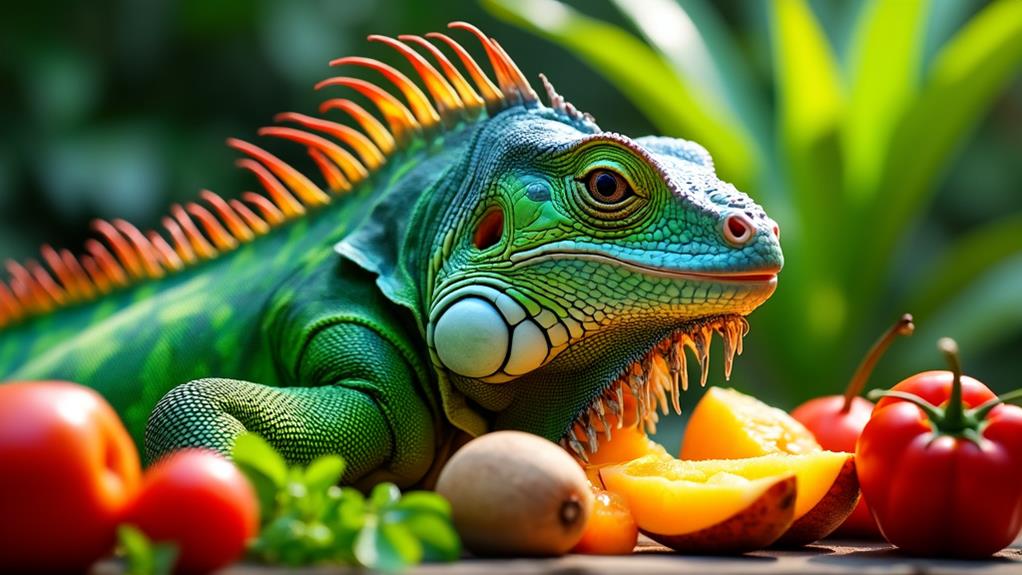
When caring for a green iguana, understanding its dietary needs is fundamental for its health. Your iguana thrives on a diet primarily composed of 60% dark leafy greens, 30% vegetables, and 10% fruit. Dark leafy greens like collard greens, kale, and dandelion greens should be your go-to staples. They provide critical nutrients that help maintain a healthy iguana. Remember, fruits should be given sparingly due to their high sugar content, which can lead to digestive issues like diarrhea.
Always provide fresh water, available in multiple shallow dishes to encourage drinking and support hydration. This guarantees your iguana stays healthy and active. Incorporating a calcium supplement into its diet weekly is crucial. Aim for a calcium to phosphorus ratio of 2:1 to prevent metabolic bone disease, a common health issue in iguanas.
Chop or grate food into manageable pieces to make feeding easier for your iguana. Pay attention to any picky eating behaviors, as this can help you adjust the diet to better suit its preferences. By following these guidelines, you can guarantee your green iguana receives the nutrition it needs to thrive.
Behavior and Health
While meeting your green iguana's dietary needs is essential, understanding its behavior and health is likewise significant. Temperature regulation is important, so make sure the ambient temperature is maintained around 85-90°F, with basking spots between 95-105°F. This setup supports their environmental needs and helps prevent health issues. Regular health monitoring is critical; watch for signs of illness such as lethargy, abnormal skin color, decreased appetite, or unusual behaviors like twitching or loss of balance. These can indicate potential health problems that need immediate attention.
Stress indicators in iguanas include heavy breathing, mouth opening, tail thrashing, and lethargy. It's necessary to handle them gently and gradually to avoid causing stress. Proper hydration is vital, so regular misting helps maintain ideal humidity levels of 70-80%, and occasional bathing aids in skin shedding. Early behavioral training can curb aggressive tendencies. Recognizing body language, such as head bobbing, is key to understanding their mood and dominance displays. By focusing on these aspects, you'll create a healthier and more comfortable environment for your iguana, safeguarding its long-term well-being and happiness.
Handling and Interaction

Handling your green iguana frequently, but with patience, is essential for developing a trusting relationship. Start with a two-week adjustment period before regular handling to allow your iguana to acclimate to its new environment. Gradual handling is key; rushing this process can lead to stress and anxiety. Building trust takes time, so begin by feeding your iguana by hand and offering gentle pats. This encourages positive interactions and helps in socialization.
Pay close attention to your iguana's body language during handling sessions. Signs such as heavy breathing or tail thrashing indicate distress. If you notice these signs of distress, pause and give your iguana time to relax. Understanding these cues will prevent stress and make your interactions more successful.
Keep in mind that iguanas can be aggressive if they feel threatened. Head bobbing, for example, might indicate dominance or aggression, so approach carefully if you see this behavior. Patience is essential, as it can take months for your iguana to feel comfortable with regular handling. By respecting your iguana's boundaries and maintaining calm, consistent interactions, you'll foster a strong bond over time.
Resources and Boarding
Finding reliable resources and boarding options is crucial for your iguana's well-being, especially during times when you can't be there to care for them yourself. As an iguana owner, you want to guarantee that your pet receives the best possible care. Long Island Birds and Exotic Pets offers specialized iguana boarding services, providing spacious enclosures that prioritize your iguana's comfort. During their stay, your iguana will enjoy daily herbivorous meals, carefully prepared to meet their dietary needs and guarantee proper nutrition.
When selecting iguana boarding, it's significant to evaluate facilities that cater to the individual needs of your pet. This includes offering handling options for iguanas that enjoy interaction. Regular health monitoring is another crucial aspect of good boarding services, allowing any concerns to be promptly addressed, maintaining your iguana's well-being.
Don't forget to investigate local resources. It can be helpful to:
- Check local reptile rescue organizations for potential boarding options.
- Visit facilities to guarantee they meet your standards for health and safety.
- Discuss your iguana's specific needs with the boarding staff to guarantee personalized care.