Great Pyrenees: The Vigilant Guardian Dog of the Mountains
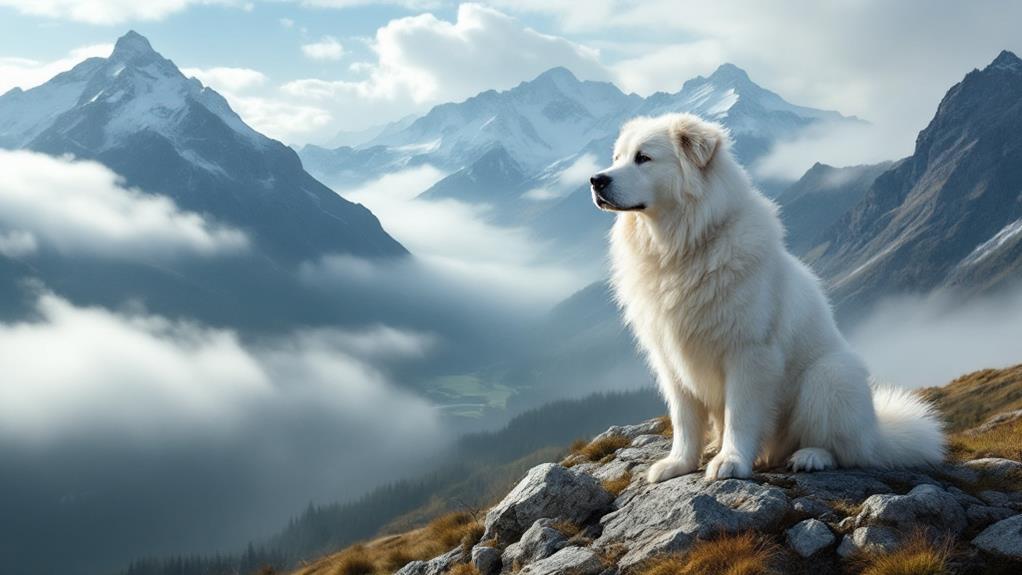
You'll find the Great Pyrenees are legendary for their vigilance and gentle nature, originating from the Pyrenees mountains as livestock guardians. They're large, with a striking white coat and unique double dewclaws that help them navigate rough, snowy terrain. Known as "Gentle Giants," they're incredibly protective yet calm companions who thrive in family settings. Regular grooming and positive reinforcement in training are essential due to their independent temperament. Engaging them in physical activities like hiking maintains their health and happiness. Continue exploring to truly appreciate their unrivaled guardian qualities and historical significance in mountainous environments.
Origins and History
Delving into the origins of the Great Pyrenees, you'd find a rich history that stretches back around 11,000 years to the Pyrenees mountain range. This majestic breed emerged as an essential livestock guardian for nomadic shepherds, protecting flocks from fierce predators like wolves and bears. The Great Pyrenees' guarding instincts have been honed over centuries, making them exceptional protectors and companions for those who relied on them in the rugged terrains of the Pyrenees mountains.
In 1675, Dauphin Louis XIV recognized the breed's noble qualities and designated them as the Royal Dog of France. This royal endorsement raised their status, spreading their popularity among the French aristocracy and elite. Their regal bearing and unwavering loyalty made them a symbol of prestige and protection.
However, by the early 1900s, the Great Pyrenees faced a decline in both popularity and quality. To preserve their legacy, the Club du Chien des Pyrenes was established, aiming to restore the breed to its former glory. Their expedition across the Atlantic began in 1824 when General Lafayette introduced them to the United States, where they continue to be cherished as vigilant guardians and beloved companions.
Physical Traits
When you take a close look at the Great Pyrenees, you'll quickly notice their impressive stature. As a giant breed, males typically stand between 27-32 inches tall and weigh 100-150 pounds, while females range from 25-29 inches and weigh 85-130 pounds. Their size is just one of the many physical attributes that make them excellent guardians of mountainous regions.
The Great Pyrenees' weatherproof double coat is a standout feature. It consists of a long, coarse outer layer and a dense, wooly undercoat, perfectly designed to shield them from harsh cold. This coat is primarily white, though you might spot permissible markings in colors like badger, tan, gray, and reddish brown. These subtle hues add to their majestic presence without detracting from their primary coloring.
One of the breed's most unique features is the double dewclaws on their back legs. These are not just for show; they assist with climbing and steering through snowy terrains, showcasing their adaptability and strength. Their large, proportionate heads, intelligent eyes, and black noses give them an imposing yet gentle appearance, capturing the essence of this remarkable guardian breed.
Temperament and Behavior
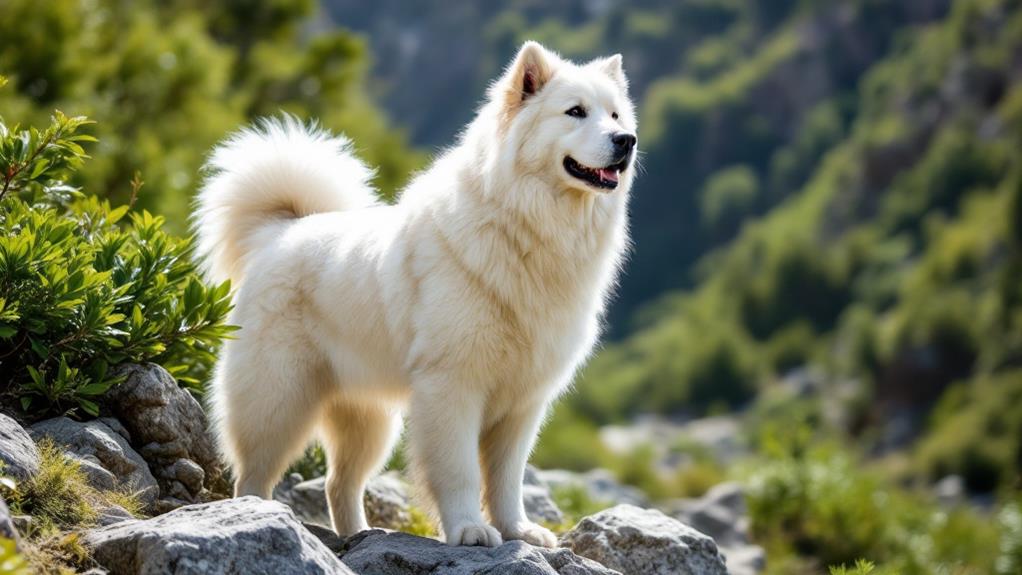
The Great Pyrenees' temperament is often described as a blend of gentleness and vigilance, making them exceptional companions and guardians. These dogs are renowned for their mellow demeanor, which makes them excellent family pets. They naturally possess strong protective instincts, ensuring they're always on alert, watching over loved ones. This watchful nature particularly shines around children and other pets, proving their worth as true guardian dogs.
However, early socialization plays a vital role in shaping their behavior. Introducing them to differing people, environments, and situations early on helps them develop a balanced temperament and prevents potential aggression towards strangers. While they're known for their gentle disposition, the Great Pyrenees can be quite independent, sometimes showing stubborn behavior. That's why consistent training using positive reinforcement is fundamental. Reward-based training encourages cooperation and strengthens your bond with your dog.
Despite their independent streak, their calm and gentle demeanor earns them the nickname "Gentle Giant." They're generally good with kids and other animals, which makes them ideal for families. With the right approach to training and socialization, you'll find these dogs to be steadfast protectors and loving companions.
Care and Grooming
Taking care of a Great Pyrenees involves more than just love and attention; it requires consistent grooming to maintain their majestic appearance and health. Their thick double coat demands regular upkeep, with weekly brushing vital to manage shedding. This is particularly significant during spring when their shedding is at its peak. Utilize slicker brushes and pin brushes to effectively tackle tangles and loose fur, preserving the coat's natural self-cleaning properties.
Regular nail trimming is another key aspect of grooming, guaranteeing that their mobility remains unimpaired. Don't forget the double dewclaws on their back legs; these should be trimmed but never removed. Weekly ear checks can prevent infections, as their floppy ears often trap moisture. If you notice any redness or bad odor, a trip to the vet is advised.
Beyond grooming, proper nutrition plays a significant role in maintaining the breed's health. Confirm your Great Pyrenees has a balanced diet to support their general well-being. Regular veterinary check-ups are vital, particularly to monitor for common issues like hip dysplasia and bloat. By prioritizing these care steps, you'll keep your Great Pyrenees healthy and looking majestic.
Training and Socialization
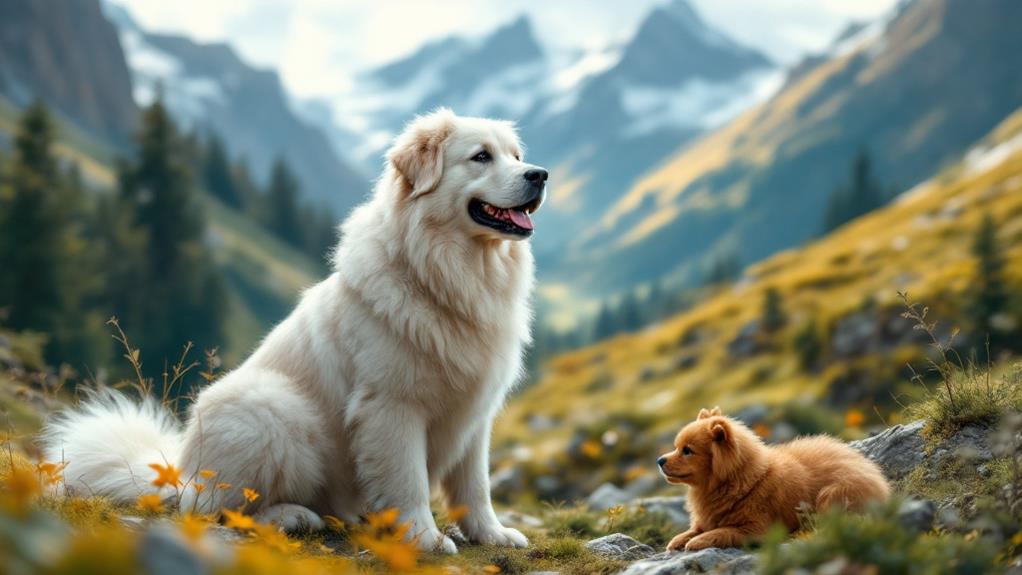
Caring for a Great Pyrenees extends beyond grooming; training and socialization are key components in raising a well-rounded dog. Early socialization is essential. Introduce your Great Pyrenees to different people and animals to prevent behavioral issues and guarantee they grow to be well-adjusted companions. Their independent nature can make training challenging, so patience and consistency are crucial. Use positive reinforcement techniques, such as praise and treats, to motivate them and improve their learning experience.
Keep training sessions short and engaging to maintain their interest. Puppy training classes can be incredibly beneficial, providing foundational skills and manners. These classes not only help your dog learn obedience training but also strengthen the bond between you both.
You'll notice that Great Pyrenees have a vigilant nature, which can lead to excessive barking. It's significant to manage this through specific training exercises. Teach them when barking is appropriate and when it's not. With time and consistency, you can reduce unnecessary vocalizations. Ultimately, a well-trained and socialized Great Pyrenees makes for a loyal and protective companion, ready to guard both your home and heart.
Health and Nutrition
Guaranteeing your Great Pyrenees stays healthy and well-nourished is an indispensable responsibility. With a life expectancy of 10-12 years, regular veterinary check-ups are fundamental for early detection of health issues like hip dysplasia and bloat. You should work closely with your vet to establish a balanced diet tailored for large breeds, considering your dog's weight, maturity, and activity level. This diet will help prevent obesity and other related health problems.
Maintaining a Great Pyrenees' coat health is another significant aspect of their care. Their thick double coat requires proper nutrition to minimize shedding, especially during seasonal changes. A well-nourished coat not only looks good but also functions effectively to protect them from harsh weather.
Exercise plays a key role in their health routine. Confirm your dog gets 20-40 minutes of physical activity daily, along with mental stimulation, to keep them fit and prevent behavioral issues linked to inactivity. Responsible breeding and health screenings can help mitigate common problems like patellar luxation, entropion, and degenerative myelopathy. By focusing on these aspects, you'll promote a long, healthy life for your vigilant mountain guardian.
Activities and Sports
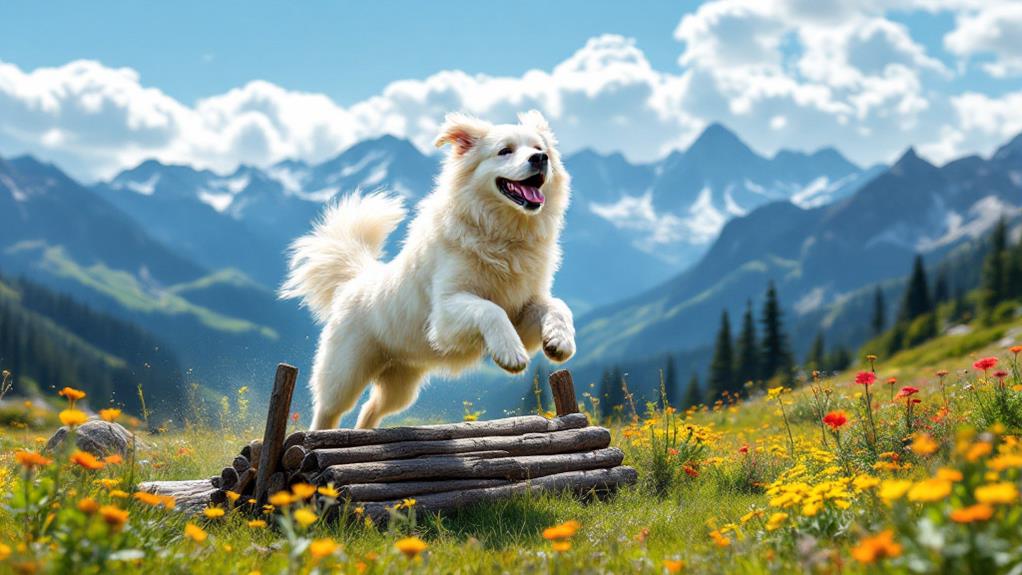
Beyond maintaining health and nutrition, engaging your Great Pyrenees in activities and sports is likewise crucial for their thorough well-being. This breed's historical role in pulling milk-delivery carts in northern France and Belgium highlights their impressive strength and endurance, making cart-pulling an ideal activity. Such activities not only exercise their physical capabilities but also provide valuable mental stimulation.
Participating in canine sports can be incredibly rewarding for your Great Pyrenees. These sports keep them engaged and happy, meeting their mental and physical exercise needs. For tracking and scent work, which mimic their natural instincts, you'll find these activities especially fulfilling. Incorporating these into your routine will allow your dog to use their keen senses and intelligence.
Training for these activities should focus on positive reinforcement techniques. Given their independent nature, positive reinforcement improves their willingness to participate and makes training more effective and enjoyable for both of you. Short hikes in colder weather also align with their history as mountainous guardians, providing a perfect way to bond and exercise together. By engaging them in varied activities, you'll guarantee your Great Pyrenees remains a happy and healthy companion.