Foods You Should Never Offer Your Horse: A Safety Guide
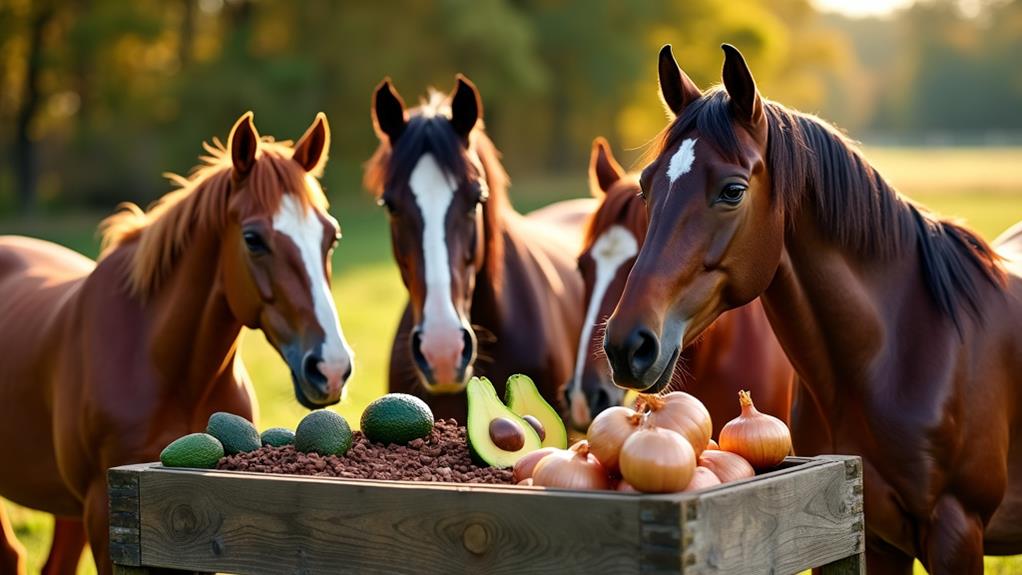
You need to be cautious about what you feed your horse, as some foods are harmful. Keep chocolate and caffeine away; they contain stimulants like theobromine that horses can't metabolize well. Avocados and their parts are toxic, causing respiratory and digestive issues. Onions and garlic may lead to anemia, while tomatoes and potatoes contain solanine, affecting digestion. Horses can't digest dairy, leading to digestive upsets. They are herbivores, so meat can cause severe digestive problems. Moldy or fermented foods produce harmful mycotoxins. Investigate further to uncover more on keeping your horse's diet safe and healthy.
Chocolate and Caffeine
When considering treats for your horse, chocolate and caffeine should be off the list. Both contain substances that can lead to caffeine toxicity in horses. Caffeine and theobromine—found in chocolate—are stimulants that horses metabolize much slower than humans. This slow metabolism can result in harmful levels building up in their system, leading to symptoms like restlessness, increased heart rate, tremors, and even seizures. It's crucial to guarantee that your horse's diet is free from these dangerous components.
Instead of chocolate, consider chocolate alternatives that are safe and healthy for your horse. Apples, carrots, and specially formulated horse treats provide a delicious and nutritious option. These alternatives not only satisfy your horse's sweet tooth but also offer nutritional benefits without the risks associated with chocolate and caffeine. Always be mindful of what you're feeding your equine friend, as their digestive systems differ greatly from ours.
Avocados
While chocolate and caffeine pose clear dangers to horses, another seemingly harmless food that should be avoided is avocado. You might find avocados nutritious and delicious, but they can be quite harmful to your horse. Avocado toxicity is a serious concern. All parts of the avocado plant, including leaves, fruit, and seeds, contain a substance called persin. This compound is toxic to horses and can lead to severe health issues.
Avocado toxicity can manifest in several ways:
- Respiratory Problems: Horses may experience difficulty breathing, which can be frightening and dangerous.
- Edema: Fluid accumulation, particularly around the head and chest, is another symptom that can cause discomfort and complications.
- Horse Digestive Issues: Gastrointestinal upset, including colic and diarrhea, are common responses to avocado consumption.
Even small amounts of avocado can trigger these reactions, so it's essential to keep avocados entirely out of your horse's diet. Ensuring your horse's safety means being vigilant about what they consume. By avoiding avocados, you'll help prevent unnecessary health risks and keep your horse in good spirits and condition. Always opt for horse-safe treats and consult with a veterinarian when in doubt.
Onions and Garlic
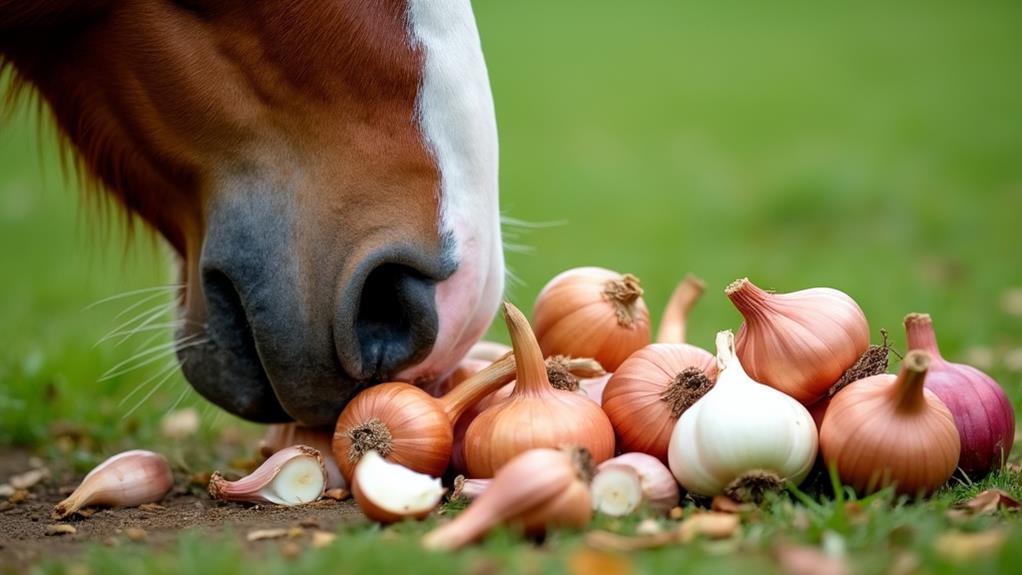
Surprisingly, onions and garlic are often overlooked as potential hazards for horses. You might think these kitchen staples, known for their health benefits in humans, could be harmless. However, they pose significant risks to your equine friends. Onion toxicity is a genuine concern for horses. Onions contain compounds that can damage red blood cells, leading to a condition called hemolytic anemia. Signs of onion toxicity include lethargy, weakness, and an increased heart rate. Even small amounts can harm a horse, so it's best to keep onions far from their reach.
Garlic effects, although sometimes used as a natural supplement for horses, also come with risks. While some believe garlic can help repel insects or enhance the immune system, excessive garlic intake can lead to similar blood-related issues as onions. In large quantities, garlic can damage red blood cells and cause anemia. Always consult your veterinarian before considering garlic supplements for your horse, and verify any garlic given is in minimal amounts.
Tomatoes and Potatoes
Both tomatoes and potatoes are plants you should keep away from your horse's diet. These plants contain compounds that are harmful to horses, and understanding the risks can help you keep your equine friend safe. Tomatoes belong to the nightshade family and contain solanine, a toxin that can disrupt a horse's digestive and nervous systems. Even small amounts can lead to tomato toxicity, causing symptoms like colic and diarrhea.
Potatoes, especially when they're green or sprouting, pose similar dangers. The potato greenery, including the leaves, stems, and any green parts of the tuber, contains solanine as well. This can lead to a toxic reaction in horses, resulting in lethargy, confusion, and gastrointestinal distress. To guarantee your horse stays healthy, it's best to avoid these foods altogether.
Here's a quick guide to remember:
- Avoid all parts of the tomato plant – The leaves, stems, and unripe fruit are particularly toxic.
- Never feed your horse green or sprouting potatoes – These contain high levels of solanine.
- Monitor your horse – If you suspect they've ingested these plants, contact a vet immediately.
Keep these points in mind to protect your horse from tomato toxicity and potato greenery dangers.
Dairy Products
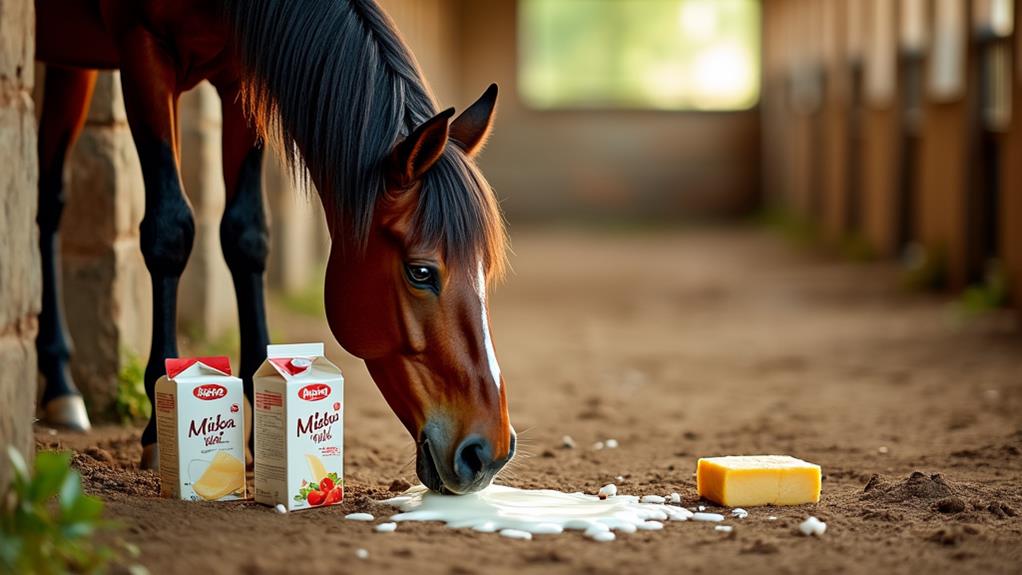
Dairy products might seem like a harmless treat, but they're best kept out of your horse's diet. Horses are naturally lactose intolerant, which means their bodies can't properly digest lactose, the sugar found in milk and other dairy foods. Unlike humans, horses don't produce enough lactase, the enzyme necessary to break down lactose efficiently. Feeding them dairy can lead to a range of digestive issues that you definitely want to avoid.
When a horse consumes dairy, it can experience uncomfortable symptoms such as bloating, gas, diarrhea, or even colic, a painful digestive condition that can be serious. These symptoms occur because undigested lactose ferments in the gut, leading to an upset stomach and potential discomfort for your horse. This isn't just a minor inconvenience—it can greatly impact your horse's total health and well-being.
Meat and Animal By-products
Horses are natural herbivores, which means they thrive on a diet rich in plant-based foods, not meat and animal by-products. Offering meat to your horse can lead to several health risks and complications. Here are a few reasons why you should avoid feeding horses any form of meat or animal by-products:
- Digestive Issues: Horses' digestive systems are not designed to process meat. Feeding them meat can lead to severe digestive issues, such as colic or diarrhea, because their bodies can't efficiently break down animal proteins.
- Meat Allergies: Just like humans, horses can develop allergies. Meat allergies in horses can manifest in skin irritations, respiratory problems, or other allergic reactions that can severely impact their health and well-being.
- Imbalanced Diet: Horses require a specific balance of nutrients, and meat disrupts this balance. Feeding them animal by-products means they might miss out on critical nutrients found in their natural diet, possibly leading to deficiencies.
To keep your horse healthy and thriving, always stick to a plant-based diet. Ensuring their meals are free from meat and animal by-products can prevent health complications and maintain their digestive system's integrity.
Moldy or Fermented Foods
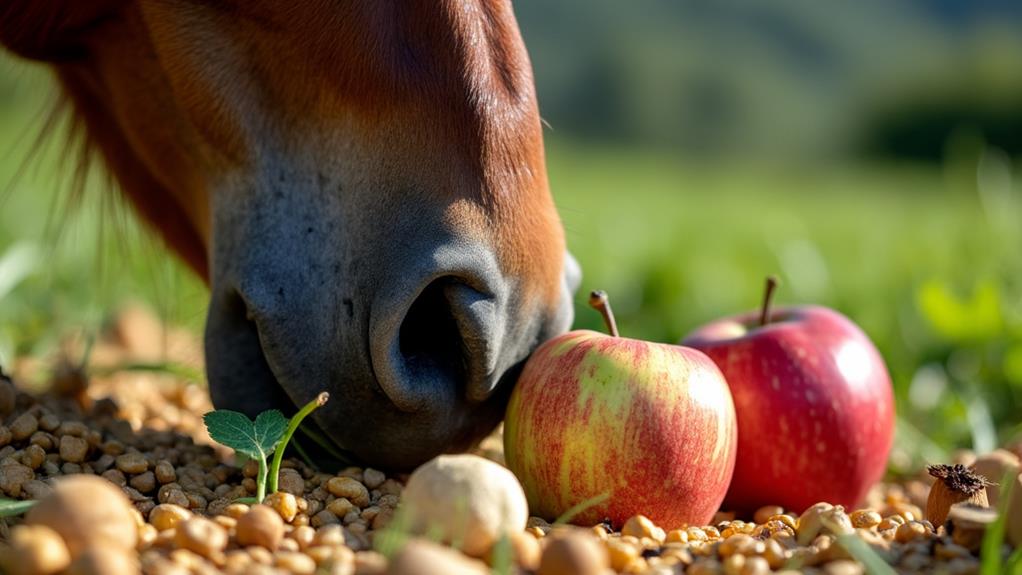
When considering your horse's diet, it's crucial to steer clear of moldy or fermented foods. Moldy hay and fermented grain are particularly hazardous to horses. Mold spores in hay can produce mycotoxins, which are toxic compounds that can cause respiratory issues, digestive disturbances, and even neurological problems in your horse. Eating moldy hay might lead to colic or severe respiratory distress, conditions that require immediate veterinary attention.
Fermented grain, on the other hand, can disrupt your horse's digestive system. Horses have sensitive stomachs and rely on a delicate balance of gut flora to process their fibrous diet. Fermented grains can introduce harmful bacteria and toxins, leading to gastrointestinal upset, laminitis, or colic. These conditions not only affect your horse's health but can also be life-threatening if not addressed promptly.
To keep your horse safe, always inspect hay and grain for signs of mold or fermentation. Look for discoloration, an unusual smell, or a dusty appearance. Store feed in a dry, well-ventilated area to prevent moisture build-up, which encourages mold growth. By remaining vigilant, you'll maintain your horse's health and well-being.