Finnish Spitz: The Fox-Faced Hunting Dog
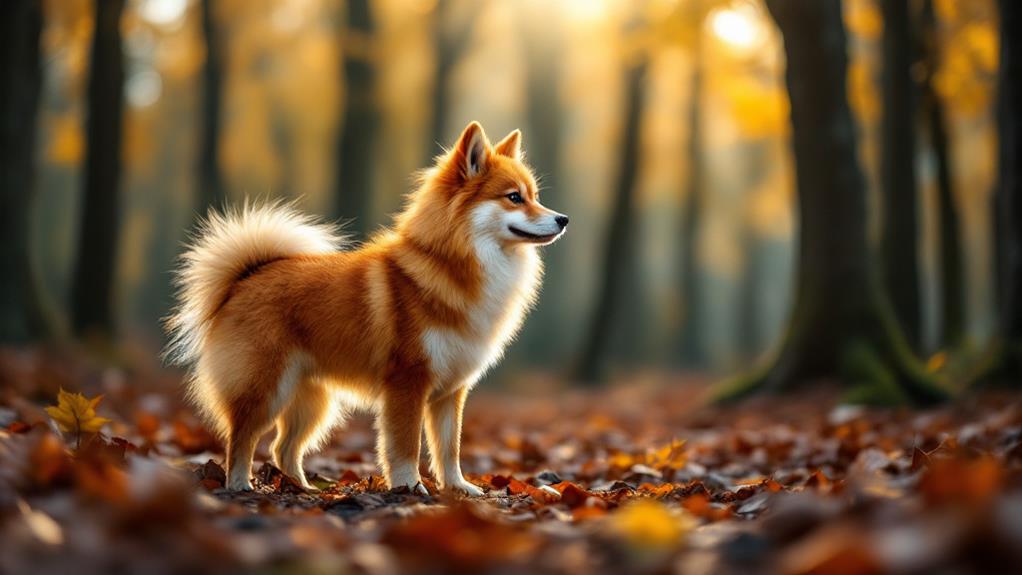
The Finnish Spitz, known as the fox-faced hunting dog, is a lively and enchanting breed with roots in Finland dating back 3,000 years. These dogs are medium-small, with a distinctive fox-like face, erect ears, and a bushy tail. They have a flame-colored coat and are particularly agile. You'll find them spirited, friendly, and affectionate, forming strong family bonds while requiring early socialization. Regular grooming and exercise keep these independent dogs happy. Known for their unique yodel-like bark, their strong-willed nature means training requires patience. Uncover how they became Finland's national dog and their expedition from near extinction.
Origins and History
Have you ever wondered about the ancient roots of the Finnish Spitz, often called the "Barking Bird Dog"? This fascinating breed traces its origins back to Finland about 3,000 years ago. It's believed that Russian migrants brought these versatile hunting dogs to the region. Initially, the Finnish Spitz served as all-purpose hunting dogs, excelling in game bird hunting by using their distinctive barking to alert hunters to their quarry's location.
By the 1880s, the Finnish Spitz faced the threat of extinction due to interbreeding with other dogs. Fortunately, Hugo Roos, a passionate advocate for the breed, initiated a revival effort. Through selective breeding practices, he helped restore the Finnish Spitz to its former glory. Roos's efforts were crucial in preserving the breed's unique characteristics and ensuring its survival.
Recognizing its historical significance and cultural value, the Finnish Kennel Club declared the Finnish Spitz the national dog of Finland in 1979. This breed has long been celebrated for its exceptional hunting skills and companionship, deeply embedded in Finnish culture. The Finnish Spitz's progression from near extinction to a national symbol underscores its enduring legacy and importance.
Physical Characteristics
The Finnish Spitz captivates with its striking physical characteristics, making it easily recognizable and admired. This medium-small breed stands between 15.5 to 20 inches tall and weighs 20 to 33 pounds, showcasing a perfect balance of size and agility. One of its most distinctive features is the fox-like face, accentuated by its erect ears that contribute to its alert and lively expression. The bushy tail, often curled over its back, adds to its unique silhouette.
The Finnish Spitz's coat is another standout feature. It boasts a dense, double-layered coat that not only provides insulation against cold climates but also highlights its beauty. Typically, the coat is a flame-colored golden-red hue, reminiscent of a flickering fire, making the dog easily noticeable in any setting. Remarkably, males often sport longer and coarser coats than females, whose fur appears more refined.
In terms of body conformation, the Finnish Spitz has a square build, with the body length equaling or slightly shorter than its height. This square structure improves its agile nature, enabling it to move gracefully and with purpose. Altogether, the Finnish Spitz's physical traits embody an elegant yet functional design.
Temperament and Behavior
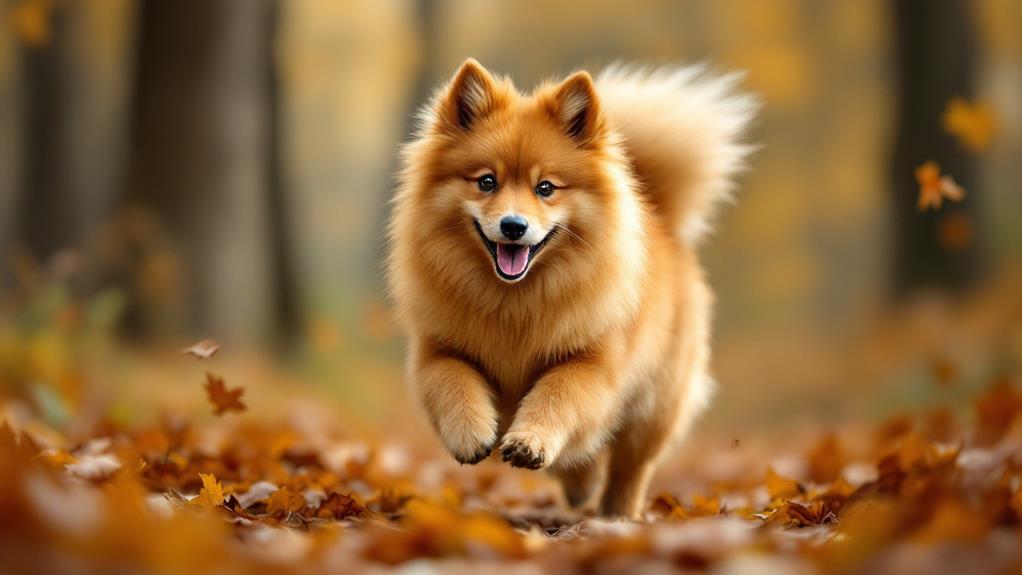
Beyond its enchanting physical appearance, the Finnish Spitz possesses a lively and alert temperament that endears it to many. Known for being an excellent watchdog with its distinctive yodel-like bark, this breed is both affectionate and friendly, especially towards children. Its behavior reflects strong bonds with family members, making it a suitable family pet. However, early socialization is vital. Without it, Finnish Spitz puppies might grow wary of strangers, which could lead to undesirable behavior.
You'll find that training a Finnish Spitz requires both consistency and patience. They're intelligent yet strong-willed, often testing boundaries. Thus, effective training should be consistent but gentle, making sure they learn proper behavior without stifling their independent spirit.
- Affectionate Companions: Make certain they receive plenty of love and attention from family members.
- Socialization Needs: Expose them to different environments and people early on to develop well-adjusted adults.
- Training Challenges: Be patient and consistent to manage their independent nature and hunting instincts.
Their independent nature, paired with natural hunting instincts, may pose challenges in homes with small animals. Supervision is fundamental to maintain harmony in such environments. With the right approach, the Finnish Spitz can become a cherished family member.
Care and Grooming
Caring for a Finnish Spitz involves regular grooming to manage its dense double coat. Daily brushing is a must during shedding seasons to keep the heavy shedding under control and your home relatively hair-free. It's significant to bathe your Finnish Spitz only when necessary. Over-bathing can strip the coat of its natural oils, which are vital for maintaining its health and shine.
Don't overlook dental care, as regular attention to their teeth can prevent oral health issues. Incorporate brushing into your routine to keep your Finnish Spitz's smile bright and healthy.
This breed's high energy levels mean daily exercise is vital. A Finnish Spitz thrives on activity, so regular playtime and walks are key to prevent boredom and potential behavioral issues. Having a securely fenced yard allows them to be active outdoors safely, giving them the freedom to roam and play without risk.
Health Considerations
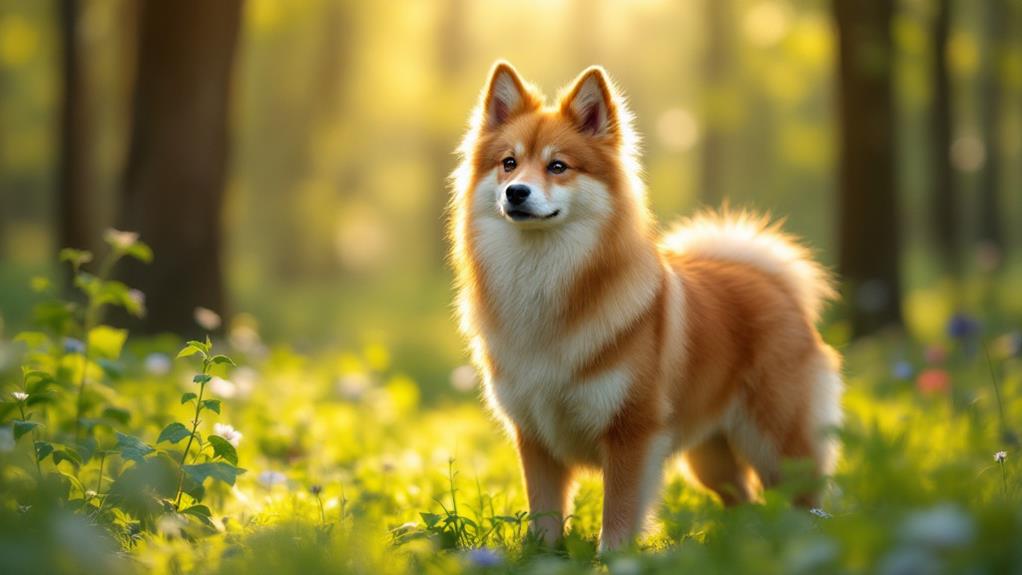
When looking after a Finnish Spitz, it's important to keep health considerations top of mind. This breed is generally healthy, with an average lifespan of 13 to 15 years. However, being aware of certain health issues can guarantee your pet leads a long, comfortable life. Common concerns include hip dysplasia, which may cause lethargy and lameness, and hypothyroidism, noted for excessive shedding and weight gain. Regular veterinary check-ups play a significant role in catching these conditions early, with puppy visits recommended every 3 to 4 weeks and annual check-ups for adults.
To maintain your Finnish Spitz's health, consider the following:
- Balanced Diet: Guarantees they receive the proper nutrients to prevent weight-related issues.
- Regular Exercise: Helps mitigate health problems and support joint health.
- Awareness of Genetic Conditions: Elbow dysplasia and patellar luxation can affect this breed, so knowing the symptoms is key.
Early intervention is critical for addressing these general health concerns. By staying informed and proactive, you can greatly improve your Finnish Spitz's quality of life. With these measures, your furry friend can remain the lively and energetic companion you love.
Training Tips
Training your Finnish Spitz can be a rewarding experience if you harness their intelligence and enthusiasm using positive reinforcement methods. These dogs respond best when you're consistent, patient, and generous with praise and treats. Their strong-willed nature means you have to be firm, yet gentle, to encourage obedience and establish good behavior patterns. Start with basic commands and gradually increase the difficulty as they master each one.
Early socialization is vital, but let's focus on training tips here. Engage them in interactive sessions that provide mental stimulation, like puzzle toys or agility courses. This keeps them mentally sharp and helps expend their high energy levels. It's important to make training enjoyable, turning it into a fun bonding experience rather than a chore.
Their vocal tendencies are another aspect to manage through training. Regular reinforcement of commands can help you control when and how they use their distinctive barks. Praise them when they're quiet on command, reinforcing the behavior you want to see. Consistency is key—keep up with regular training sessions and practice in diverse environments to guarantee your Finnish Spitz grows into a well-behaved companion.
Socialization Needs

Socialization needs for your Finnish Spitz are vital to guarantee they grow into well-adjusted adults. Early socialization is significant, as Finnish Spitz puppies can be wary of strangers and new environments. By exposing them to a range of experiences, such as meeting different people, animals, and visiting assorted settings, you're helping prevent behavioral issues later in life. Regular exposure to different sounds and sights during puppyhood can also reduce their tendency to bark excessively at unfamiliar stimuli.
To guarantee effective socialization:
- Engage your Finnish Spitz in socialization classes or playgroups. They thrive in active environments and enjoy interacting with other dogs.
- Use consistent positive reinforcement to encourage good behavior. This fosters their affectionate and loyal nature, strengthening the bond between you and your puppy.
- Introduce them to assorted settings and people. The more experiences they have, the more adaptable they become.
These steps help your Finnish Spitz become a well-rounded companion. Remember, positive reinforcement is key in guiding them through their socialization expedition. By investing time in their development, you're setting them up for a life filled with confidence and strong social skills.
Cultural Significance
As you nurture the social skills of your Finnish Spitz, you're also connecting with a breed rich in cultural heritage. Recognized as the national dog of Finland, the Finnish Spitz embodies the spirit and history of its homeland. Its status as a national symbol highlights its integral role in Finnish culture. Historically, the Finnish Spitz served as an indispensable hunting companion for indigenous peoples, particularly in hunting game birds. This role is deeply ingrained in Finnish folklore, where the breed is celebrated in stories and legends for its keen hunting abilities.
The Finnish Spitz is not just a symbol of the past; it continues to play a significant role in modern Finnish society. Its unique vocal abilities have given rise to the "King of the Barkers" competitions, where its barking prowess is showcased and celebrated. This tradition underscores the breed's cultural importance and enduring appeal. Beyond Finland, the Finnish Spitz has gained international recognition in diverse dog sports and activities, further cementing its place in the modern cultural landscape. By embracing this breed, you're not only enjoying a loyal companion but also participating in a rich cultural tradition that spans generations.