Fascinating Facts About Exotic Pets: What You Need to Know
When you think of exotic pets, you're entering a world filled with intriguing species like bearded dragons and ferrets. They captivate but also pose unique challenges such as specialized care requirements. Legal hurdles vary, with some states banning large cats and nonhuman primates. Health risks include zoonotic diseases like salmonella from reptiles and Herpes B from monkeys. The ethical and conservation dilemmas of keeping these pets are significant, as private ownership can harm wild populations and disrupt ecosystems. If you're ready to investigate deeper, you'll uncover the complexities and rewards of owning these incredible creatures.
Popular Exotic Pet Species
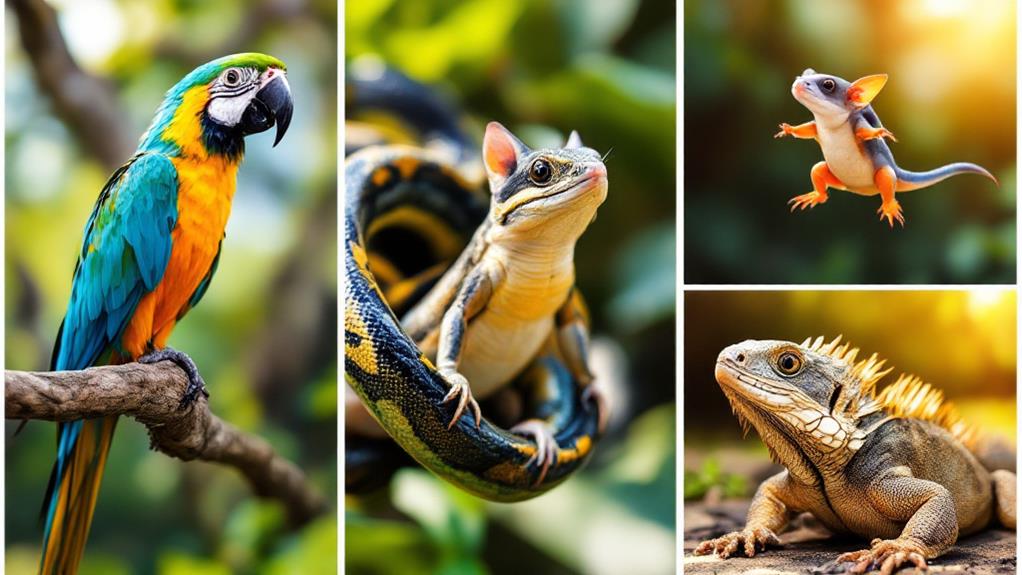
In regards to exotic pets, there's a diverse array of species that capture the fascination of pet enthusiasts. Popular exotic pet species include reptiles like snakes and lizards, each offering unique characteristics and manageable size that make them appealing to many. Ball pythons and bearded dragons are particularly favored for their relatively straightforward pet care requirements compared to larger species. Small mammals, such as ferrets, hedgehogs, and sugar gliders, are also frequently chosen due to their engaging behaviors and ability to form strong bonds with their owners.
However, it's significant to take into account the complex needs these creatures often have. Nonhuman primates and large cats, for instance, are part of the exotic pet trade but are highlighted by the American Veterinary Medical Association as unsuitable for captivity. Their intricate social and environmental requirements are challenging to meet in a typical household setting. Despite this, an estimated 6,000 to 7,000 tigers are kept as pets in the U.S., a stark reminder of the extensive reach of the exotic pet trade. When reflecting on exotic pets, it's vital to understand the specific needs and challenges associated with each species to guarantee their well-being.
Challenges of Exotic Pet Care
While the allure of exotic pets captivates many, caring for them presents significant challenges. Exotic animals often demand specialized care, housing, and diets that many owners find difficult to provide. These demands can lead to high rates of abandonment when the animals become unmanageable. For instance, the U.S. has an estimated 6,000 to 7,000 privately owned tigers, exceeding their wild population. Managing such powerful creatures in captivity is a formidable task.
Veterinary care is another hurdle. Many veterinarians lack training in treating exotic pets, as their education focuses on common species like dogs and cats. This gap complicates urgent care needs and makes addressing health issues challenging. Regular health exams are essential, as illnesses often stem from inadequate care or nutritional deficiencies.
The consequences of these challenges become starkly apparent in the fate of abandoned exotic pets. Most end up in overcrowded sanctuaries, where they face poor living conditions or even euthanasia due to the overwhelming number of unwanted animals. Here are some stark realities:
- Inadequate care leads to severe health issues.
- Overcrowded sanctuaries struggle to accommodate abandoned pets.
- Lack of proper training makes management difficult.
Owning exotic animals requires dedication and understanding to guarantee their well-being.
Legal Considerations for Ownership
Steering through the legal landscape of exotic pet ownership can feel like walking through a maze. With exotic animals, each state, and sometimes even local jurisdictions, have their own rules. Eighteen states in the U.S. have outright bans on the ownership of large cats, wolves, bears, and nonhuman primates like macaque monkeys. Meanwhile, ten states enforce partial bans on specific exotic species, contributing to the complexity. Thirteen states require a permit to possess exotic animals, creating a patchwork of regulations that can be tricky to navigate.
Local laws might introduce stricter rules than state regulations, so it's important to check these before pursuing ownership. The Endangered Species Act empowers the U.S. Fish and Wildlife Service to prosecute those with illegal possession of endangered species, making legal compliance necessary. Furthermore, the Public Health Service Act has restricted the importation of non-human primates since 1975, due to public health concerns. The Centers for Disease Control also plays a role in these health regulations.
Understanding these regulations is significant to guarantee you're not running afoul of the law when dreaming of owning exotic animals, and it requires diligent research and potential legal advice.
Health and Safety Concerns
When you're considering an exotic pet, health and safety concerns should top your list. Exotic animals might seem alluring, but they come with significant risks. For starters, private possession can lead to unpredictable behaviors, resulting in dangerous situations. Incidents have shown that these animals can cause serious injuries or fatalities to owners and the public.
Exotic pets can also be carriers of zoonotic diseases, posing threats not just to you, but to anyone they come into contact with. Consider these alarming facts:
- Monkeys: 80-90% of macaque monkeys may carry Herpes B, a disease fatal to humans.
- Reptiles: About 90% shed salmonella, potentially infecting vulnerable groups, especially children and the elderly.
- Veterinary Care: Lack of specialized veterinary care can leave you struggling to manage your pet's health, leading to untreated illnesses that worsen the risks.
Regulations on private possession exist for a reason. They aim to prevent these hazards and protect both you and the community. Before bringing an exotic animal into your home, weigh these health and safety concerns carefully. It's crucial to understand the potential dangers these fascinating creatures can pose.
Conservation and Ethical Issues

The exotic pet trade frequently raises significant conservation and ethical issues that merit careful consideration. When you keep exotic animals as pets, you might unknowingly contribute to habitat destruction and the decline of wild populations. With approximately 1 million species at risk of extinction, the illegal trade and environmental changes pose a severe threat to biodiversity. For example, the U.S. has more tigers kept as pets—around 6,000 to 7,000—than there are left in the wild, underscoring the ethical concerns of private ownership. These animals need specialized care, which many owners can't provide, leading to abandonment and overwhelmed sanctuaries.
From the perspective of public health, exotic pets can be risky. They can carry zoonotic diseases, like Herpes B in macaque monkeys, which is fatal to humans. The presence of these animals outside their natural habitats can disrupt ecosystems and raise significant animal welfare concerns. Conservation advocates argue that exotic animals should remain in the wild, as keeping them as pets is harmful to both them and their ecosystems. As you consider owning an exotic pet, it's essential to weigh these ethical concerns and prioritize the well-being of both the animals and our shared environment.