Essential Equipment You Need to Start Riding Horses
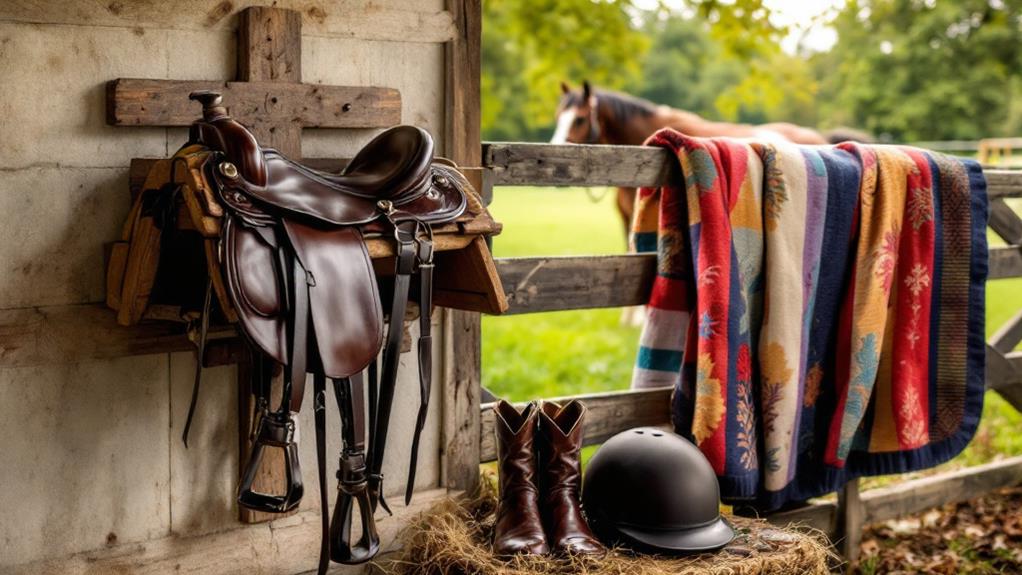
To start riding horses, you'll need crucial gear for safety and comfort. Invest in a quality riding helmet to protect your head and wear a safety vest to shield your torso. Choose riding boots with a small heel and snug riding pants for stability. Important riding shirts should be breathable and fitted. Secure a well-fitted saddle and complementary bridle for effective communication with your horse. Grooming tools like curry combs and hoof picks are critical for your horse's health. Consider budget-friendly options on second-hand equipment without compromising quality. There's more to uncover about equestrian gear fundamentals.
Riding Helmet Importance
Riding helmets are essential for any equestrian activity, as they significantly reduce the risk of head injuries, which are common in the sport. Falls are a leading cause of trauma in equestrian sports, so wearing a riding helmet is critical. Organizations recommend helmets that meet specific safety standards like ASTM/SEI, ensuring maximum protective capabilities. A proper fit is fundamental; your helmet should sit level on your head, with no more than two fingers' width above your eyebrows. It should stay secure even when you shake your head, providing reliable protection.
Modern riding helmets often include ventilation systems that improve comfort by reducing heat buildup. This allows you to ride longer without discomfort, making your riding experience safer and more enjoyable. Remember, helmets aren't just for beginners; they're an important piece of riding gear for everyone. Studies show that a properly fitted helmet can reduce the risk of head injury by up to 70%.
It's crucial to follow a replacement schedule, swapping your helmet every five years or after any significant impact, as materials degrade over time. By adhering to these guidelines, you're taking a proactive step in protecting yourself while enjoying equestrian sports.
Choosing Riding Boots
While a helmet protects your head, selecting the right boots is just as fundamental for your safety and performance in equestrian activities. Riding boots with a small heel, typically ranging from 1 to 1.5 inches, prevent your foot from slipping through the stirrup, a key safety feature. Moreover, textured soles provide traction, guaranteeing your foot maintains a firm grip in the stirrups, which is crucial for maintaining balance and control.
You have two main styles to reflect on: tall riding boots and paddock boots. Tall riding boots offer excellent ankle support and are often preferred for showing, while paddock boots are versatile, suitable for both schooling and barn work. When choosing materials, leather riding boots are durable and stylish, offering a classic look and long-lasting wear. However, synthetic options are also available, providing a more affordable and easier-to-maintain alternative.
It's significant to confirm your riding boots fit correctly. They should fit snugly without being overly tight, as comfort directly impacts your riding performance, especially during long hours in the saddle. Prioritizing comfort and proper fit will improve your general riding experience and safety.
Selecting Riding Pants
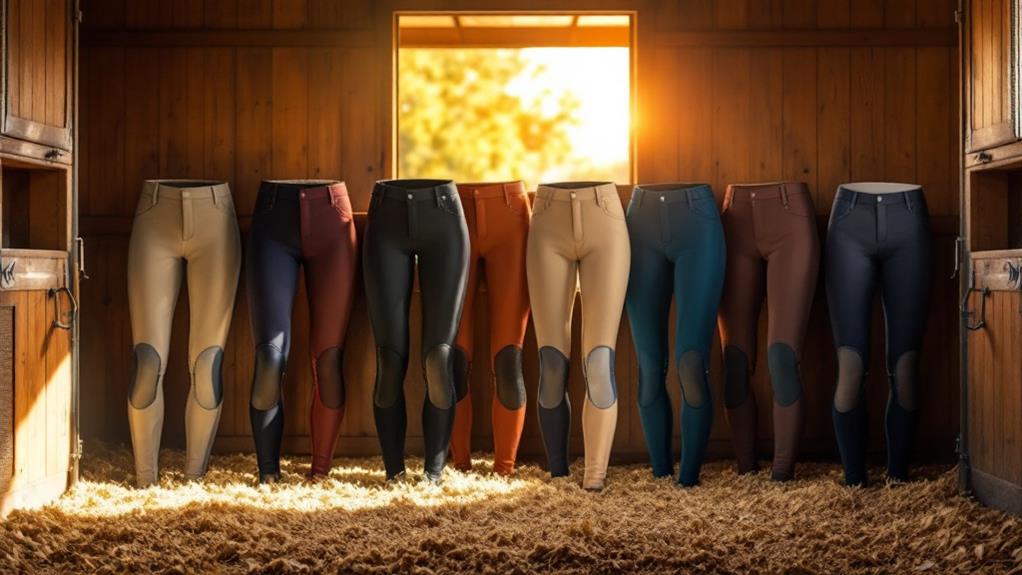
Choosing the right riding pants is vital for comfort and performance in the saddle. When you're selecting riding pants, focus on finding a snug fit that supports stability without being restrictive. The grippy fabric on the inner thighs is important, as it helps maintain your position and prevent chafing during horseback riding. You'll want pants that offer a full range of motion, so look for those made from stretchy materials that move with you.
Comfort is key, especially for long rides. Opt for riding pants that lack inside seams, as this greatly reduces chafing and improves comfort. If you prefer the full-seat or knee-patch options, choose the style that aligns with your riding discipline and personal preference. These options offer varying levels of grip and support, catering to different needs.
Riding often involves dirt and sweat, so picking pants that are easy to clean is a practical choice. Maintenance shouldn't be a hassle, allowing you to focus more on your riding experience. With the right pair of riding pants, you'll feel confident and comfortable, ready to enjoy every moment in the saddle.
Essential Riding Shirts
When gearing up for a day of horseback riding, you'll want to slip into a riding shirt that keeps you comfortable and protected. Choosing the right riding shirts is crucial for a pleasant experience. Prioritize those made from breathable fabrics, guaranteeing moisture-wicking properties to keep you dry and comfortable during long hours in the saddle.
Look for shirts that come with UV protection to shield your skin from harmful sun exposure, especially significant during outdoor riding sessions. Opt for fitted styles that offer ease of movement without being too baggy, as excess fabric can interfere with your riding. Layering is key, so consider having lightweight jackets on hand to adjust to changing temperatures or weather conditions.
Equestrian brands often design riding shirts with functionality and durability in mind, making them suitable for frequent use and diverse riding activities. These shirts are crafted to withstand the rigors of riding while maintaining comfort and style. By selecting riding shirts that meet these criteria, you guarantee a more enjoyable and safe riding experience. Prioritize quality and functionality, and you'll be well-prepared for your equestrian adventures.
Safety Vest Benefits
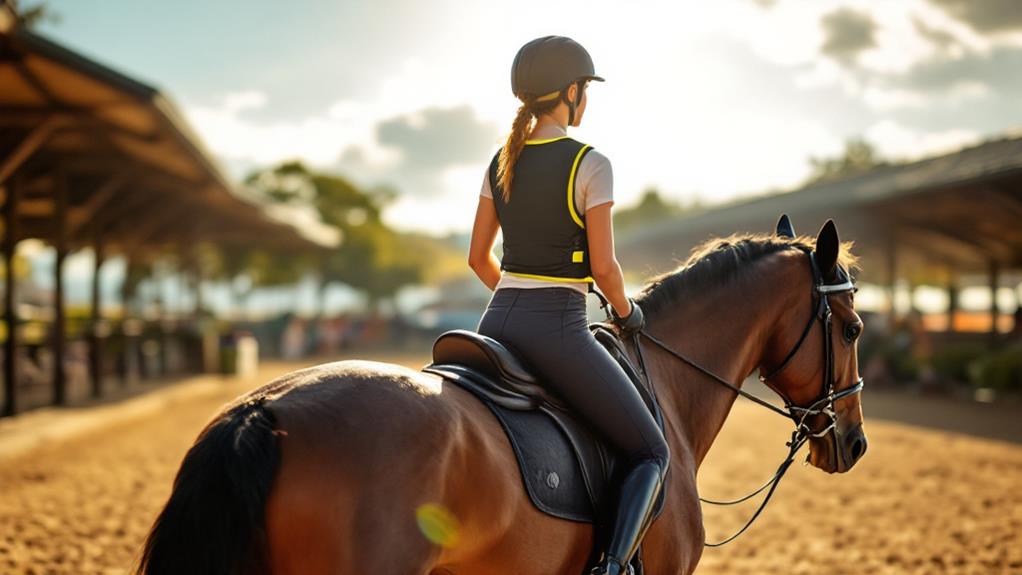
Safety vests are critical for anyone serious about horseback riding. They're designed to protect your torso during a fall, greatly reducing the risk of injury to your spine and important organs. Modern safety vests incorporate airbag technology, which inflates upon impact to provide extra cushioning. This feature is particularly beneficial during high-risk activities like jumping or cross-country riding.
When selecting a safety vest, look for options with adjustable straps. These allow for a personalized fit, guaranteeing the vest remains secure and comfortable during your rides. A secure fit is essential because a loose vest may shift or fail to offer adequate protection when you need it most. In many equestrian disciplines, wearing a safety vest is mandatory, especially in competitions. Governing bodies like the USEF enforce these rules to improve rider safety.
Regular maintenance is important for your safety vest's effectiveness. Inspect it frequently for wear and tear, as any damage can compromise its protective capabilities. Proper care guarantees that your vest continues to provide the necessary protection and security as you pursue your equestrian passions. Remember, a well-maintained safety vest is your best defense against potential injuries.
Saddle and Accessories
A well-fitted saddle is fundamental to both your comfort and your horse's performance, preventing injuries and guaranteeing effective communication between you and your horse. The right saddle fit is critical; it should conform to your horse's back, allowing freedom of movement without pinching. This not only improves rider comfort but also elevates horse performance by promoting natural motion.
Saddle pads are important accessories, providing necessary cushioning between the saddle and your horse's back. They help prevent rubs and discomfort while efficiently absorbing sweat. Make certain to choose a pad that complements your saddle and fits well to optimize benefits.
The girth is another significant component, securing the saddle in place. It must fit properly to avoid pinching or causing discomfort. Different riding disciplines may require specific girth styles, so consider your discipline when choosing one.
Regular cleaning and conditioning of your saddle are essential for maintaining its longevity and functionality. This practice helps preserve the leather and guarantees consistent performance. When selecting a saddle, consider your riding discipline and your horse's measurements for the best fit. With the right saddle and accessories, you can enjoy a more effective and comfortable riding experience.
Bridle and Reins Basics
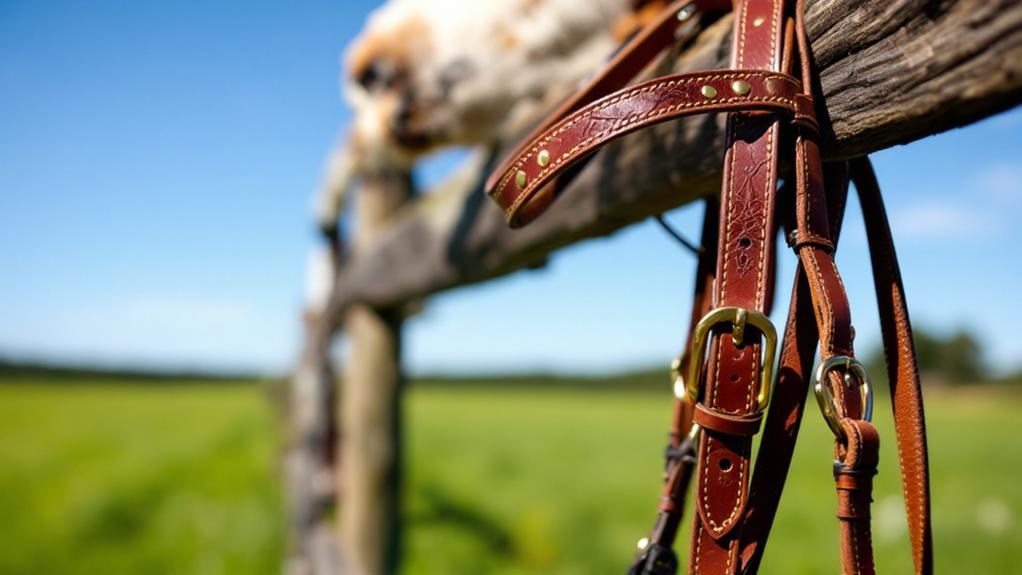
Understanding the bridle and reins is vital for effective communication between you and your horse. The bridle, made up of components like the crown piece, noseband, cheek pieces, and browband, is a key part of your riding equipment. It guarantees you can convey your intentions clearly to your horse. Proper fit is fundamental; if the bridle doesn't fit well, it can cause discomfort and disrupt effective communication.
Reins, attached to the bridle, are your direct line to control. Their length and material play a significant role in how comfortably and responsively you can guide your horse. Choose reins that suit your comfort and allow for precise control. For many riders, the snaffle bridle is a popular choice, especially in English riding. It offers gentle yet effective control via the bit, which is vital for maintaining a harmonious connection with your horse.
The type of bit you select can influence how well signals are transmitted. Different bits cater to multiple riding styles and horse training levels. Make certain to pick one that aligns with your riding style and your horse's needs, guaranteeing a smooth and enjoyable riding experience.
Grooming Tools Necessity
In regard to maintaining your horse's health and well-being, grooming tools are crucial. They're not just about keeping your horse looking sharp; they're a vital part of horse grooming that guarantees your horse stays healthy. Regular grooming with the right tools, such as curry combs, dandy brushes, and hoof picks, promotes good circulation and helps you spot potential health issues early on. Removing dirt, debris, and loose hair can prevent skin irritations and infections, making grooming tools a must-have in your important horse riding gear.
A well-groomed horse is not only more comfortable but also more cooperative during rides, enhancing the experience for both of you. Grooming sessions also serve as an interaction opportunity, fostering a bond between you and your horse. It's a time for trust-building, where your horse learns to associate touch with care and comfort.
Here's a quick list of vital grooming tools you should have:
- Curry comb: Loosens dirt and stimulates the skin.
- Dandy brush: Removes finer particles and smooths the coat.
- Hoof pick: Cleans the hooves, preventing infections.
- Soft brush: Provides a finishing touch for your horse's hygiene.
Confirm your grooming kit is complete; a well-groomed horse is a happy horse.
Fly Protection Options
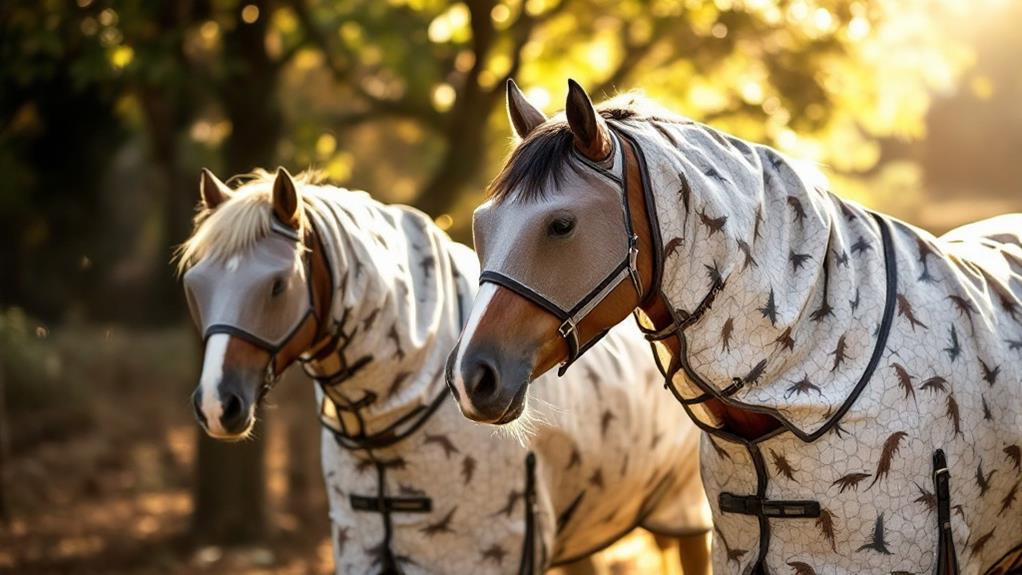
When riding horses outdoors, safeguarding your horse's comfort and safety from flies is important. Flies not only irritate your horse but can also carry diseases, making fly protection options a significant part of your horseback riding equipment list. Start with fly sprays, which come in both chemical sprays and natural repellents. Regular application, especially during peak fly seasons, guarantees your horse remains comfortable and protected.
Fly masks are another effective option, physically blocking flies from your horse's face and eyes. They offer a simple yet important barrier against pests. Complement these with fly sheets and fly wraps, which cover your horse's body and legs. These layers help prevent bites and alleviate irritation caused by pesky insects. It's important to take these gear pieces into account when preparing your horse for an outdoor ride.
For the best results, invest in a thorough fly control strategy. This means combining different methods like sprays, sheets, and even environmental management to tackle the fly problem from multiple angles. By doing so, you guarantee your horse's comfort and health, allowing you both to fully enjoy your riding experience. Remember, preparation is key to a pleasant ride.
Budget-Friendly Gear Choices
As you consider fly protection, it's also smart to investigate budget-friendly gear options that guarantee safety and comfort without breaking the bank. Start with crucial safety gear like a well-fitting helmet and sturdy riding boots. You can find helmets for $70 to $150 and boots for $100 to $200 at affordable prices. These are non-negotiables in your riding arsenal.
Consider exploring second-hand riding apparel and equipment. Local equestrian centers and online marketplaces often offer these items at up to 50% less than new ones. Here's a quick list of budget-friendly approaches:
- Choose brands like Ariat and Ovation, known for quality without the premium price tag. Breeches can be found for $80 to $150.
- Utilize versatile clothing, such as stretchy jeans and moisture-wicking shirts, which work both in and out of the saddle.
- Prioritize investing in a quality saddle from the start. While it might range from $500 to $2,500, it greatly impacts comfort and performance.
- Don't overlook second-hand options, which can be just as effective and more budget-friendly.
Related posts