English Foxhound: The Gentle and Strong Hunting Dog
You'll uncover that the English Foxhound is a superb blend of gentleness and strength, perfect for hunting and companionship. Bred in the 1750s for fox hunting, these dogs combine the stamina of stag-hunting hounds with a Greyhound's speed. Standing 23 to 27 inches tall, they're agile with a keen sense of smell for precise tracking. Their friendly, sociable nature makes them great with families and other pets. Regular exercise is a must due to their high energy. They require consistent training and routine, offering a challenge and joy to active owners. There's much more to investigate about this enchanting breed.
Breed History
Amid the rolling countryside of Great Britain, the English Foxhound emerged in the 1750s, purposefully bred for the thrill and demands of fox hunting. You'd find that its creation was a blend of the stamina from stag-hunting hounds and the speed reminiscent of Greyhounds. By the 1600s, fox hunting had captured the fascination of the British elite, sparking further refinement of the breed to improve its scenting abilities and endurance. The English Foxhound became a symbol of the hunt, perfectly suited to chase down foxes across the diverse terrains of Britain.
When fox hunting crossed the Atlantic, the English Foxhound's legacy continued to grow. By 1890, it was documented in the English Foxhound Stud Book of America, signifying its role in Colonial American hunting traditions. Curiously, George Washington, an enthusiastic fox hunter himself, played a crucial role in the development of the American Foxhound. By introducing French hounds, he contributed to a new lineage that merged traits from both breeds. Despite evolving hunting practices, the English Foxhound has retained its fundamental form and function, remaining a cornerstone of traditional fox hunting in the UK.
Physical Attributes
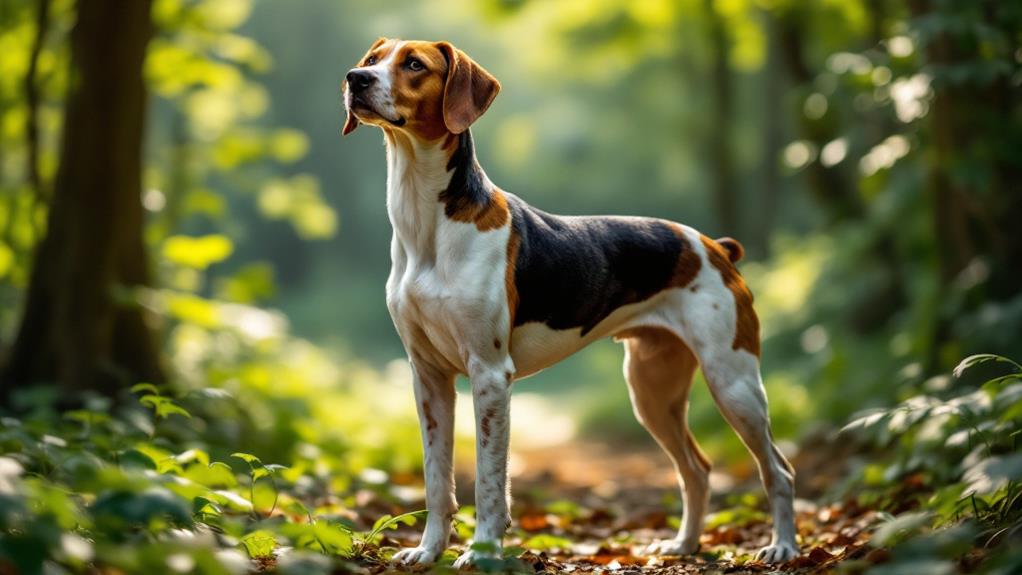
Characterized by their athletic build, English Foxhounds are typically 23 to 27 inches tall at the withers and weigh between 60 to 75 pounds. This stout and muscular frame highlights their impressive physical attributes, making them ideal for the rigors of hunting. Their short, dense, and glossy coat comes in a variety of color combinations like black, tan, white, and liver brown, and requires minimal grooming, which is perfect for an active lifestyle.
The English Foxhound's deep chest provides ample lung capacity, supporting their stamina and endurance during long hunts. Complementing this feature, their long, strong legs enable them to cover ground swiftly and maintain agility across different terrains. You'll appreciate their level back, which contributes to their balanced and efficient movement, crucial for tracking and guiding.
Adding to their striking appearance, English Foxhounds possess a full head with low-set, rounded ears that elevate their graceful look. Their design isn't just about aesthetics; it supports their role as a hunter with strong scenting abilities. Their physical attributes are the foundation of their effectiveness in the field, ensuring they remain one of the most reliable hunting companions.
Temperament and Behavior
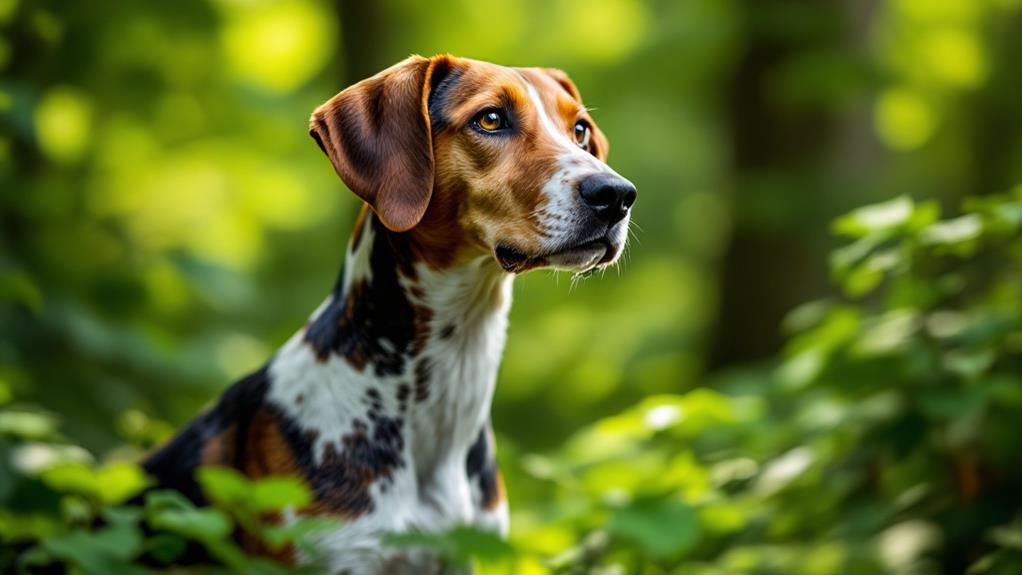
Beyond their impressive physical attributes, English Foxhounds also exhibit a temperament that's as compelling as their appearance. Known for their gentle, friendly disposition, these dogs easily get along with humans and other pets, including children. Their sociable nature stems from their pack-oriented instincts, making them well-suited for multi-pet households. However, their independent streak means they require consistent training and socialization to thrive. You'll want to establish clear leadership from the start to guarantee they understand boundaries and commands.
To truly bring out the best in an English Foxhound, you should consider:
- Regular exercise and mental stimulation: These high-energy dogs need ample physical activity to prevent behavioral issues like barking or digging.
- Social interaction: They thrive in environments where they can engage with people and other animals.
- Experienced ownership: Their independent nature benefits from guidance by someone familiar with the breed.
- Vocal tendencies: Expect natural vocalizations such as baying or howling, which are part of their communication style.
Meeting their exercise needs is essential, as it keeps them happy and healthy. By understanding and catering to their unique temperament, you'll foster a rewarding and harmonious relationship.
Hunting Abilities
The English Foxhound, a powerful scent hound, stands out for its remarkable tracking skills, making it a favorite in the domain of foxhunting. These hounds possess exceptional tracking abilities, honed through generations of breeding to pursue foxes and similar ground-dwelling prey. You'll find their hunting instincts are impressive, as they utilize their acute sense of smell to follow a scent trail with precision. Their strong, unwavering focus on the hunt is matched by their distinctive vocalizations, which play a crucial role in guiding mounted riders during a chase.
In the sphere of modern U.S. foxhunting, the emphasis is on the chase rather than the kill, creating an environment where the English Foxhound's tracking prowess truly shines. Celebrating a hunt where the fox escapes into an earth showcases their skill in pursuit rather than capture. These hounds excel in teamwork, seamlessly working in packs and collaborating with human riders to achieve a successful hunt. However, their strong hunting instincts necessitate consistent guidance to guarantee they remain on track and not distracted by other scents. In such a dynamic environment, English Foxhounds thrive, demonstrating their incredible abilities and commitment.
Training Guidelines

Training an English Foxhound demands a blend of patience, consistency, and expertise, making it essential for owners to take the lead with confidence. Their strong hunting instincts and independent nature mean they require a firm yet gentle approach. Early socialization is significant in shaping their behavior, helping them become adaptable and less stubborn. Introducing them to diverse environments and situations early on lays the foundation for a well-rounded companion.
Positive reinforcement is your best ally when guiding your Foxhound. Rewarding good behavior with treats or praise encourages them to respond enthusiastically to training, while harsh methods could hinder progress. Regular training sessions should be engaging to prevent boredom and curb behaviors like barking and digging.
Here are some effective training guidelines:
- Incorporate scent games and tracking exercises: These activities satisfy their hunting instincts and provide mental stimulation.
- Maintain a consistent routine: Regular schedules help your Foxhound understand expectations and reduce stress.
- Use short, frequent training sessions: This keeps them focused and prevents overwhelm.
- Be patient and persistent: Their independent streak can be challenging, but patience guarantees better results.
Health Considerations
When considering the health of your English Foxhound, it is essential to focus on proactive care. This breed generally enjoys a lifespan of 10-13 years, but like all dogs, it's not immune to health concerns. Common issues include obesity, hip dysplasia, and joint problems. To keep these at bay, regular vet check-ups are crucial. Your veterinarian can provide health screenings such as hearing tests and X-rays to detect potential issues early. This proactive approach guarantees that any minor concerns, like deafness or spinal disorders, are managed effectively.
Maintaining a healthy weight is key, so exercise and diet should be top priorities. English Foxhounds are active dogs that thrive on regular physical activity. Daily walks, runs, and playtime not only keep them fit but also help in preventing obesity-related health problems. A balanced diet tailored to their needs supports their overall health and well-being. Be mindful of portion sizes and the nutritional content of their food to avoid weight gain. By focusing on these health considerations, you're setting up your English Foxhound for a longer, healthier life, allowing them to remain the gentle and strong hunting dogs they are known to be.
Grooming Needs
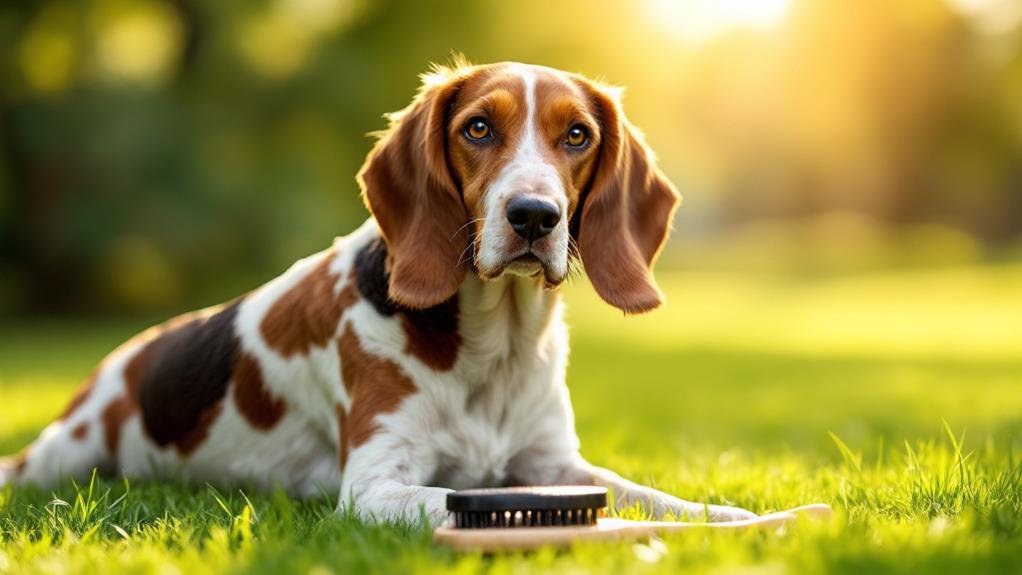
Grooming your English Foxhound involves a straightforward routine thanks to their short, dense, and glossy coat. You'll find that keeping your hound looking sharp and healthy doesn't require an extensive regimen. Weekly brushing is all it takes to remove loose hair and dirt from their coat, maintaining its natural sheen. Remember, over-bathing can strip the coat of vital oils, so only bathe them when necessary to keep them clean.
Incorporate these important steps into your grooming routine:
- Ear Checks: Regularly inspect their ears for signs of infection. Clean them as needed to maintain ear health.
- Nail Trimming: Trim their nails monthly to prevent discomfort and promote healthy paws.
- Teeth Brushing: Brush their teeth daily to support dental health and consider professional cleanings for ideal oral hygiene.
- Skin Inspection: Check for any unusual lumps or irritations during grooming sessions to catch potential health issues early.
Exercise Requirements
To keep your English Foxhound happy and healthy, you'll need to commit to a rigorous exercise routine due to their high energy levels and endurance demands. These dogs require at least 2 hours of exercise daily to meet their exercise requirements. Engaging them in activities like running, hiking, and playing fetch will help keep them physically stimulated. If you enjoy long walks, aim for at least 10 miles per week to maintain their physical health and prevent obesity. This breed thrives on plenty of exercise, so make sure their routine is varied and challenging.
Incorporate organized activities like tracking and agility to provide not only physical stimulation but also mental engagement. These activities complement their exercise routine and help keep their intelligent minds occupied. Without sufficient exercise, English Foxhounds can develop behavioral issues, underscoring the importance of keeping them active. If you're considering adding an English Foxhound to your family, be prepared to invest time and energy in their exercise needs. They'll reward your commitment with their loyalty and companionship. Consistency is key to ensuring they lead a healthy and happy life, so plan an exercise schedule that suits your lifestyle and meets their needs.
Living Environment

The English Foxhound's ideal living environment is spacious and active, making it a challenging fit for apartment living unless there's ample space to run and play. With their high energy levels, these dogs thrive best in rural settings where they have access to open spaces. Here, they can fully engage in the vigorous exercise and hunting activities they love. Meeting their exercise needs is vital; they require at least 2 hours of physical activity daily, which should include walks, runs, and playtime.
Consider these key aspects for the English Foxhound's living environment:
- Space to Roam: A large yard or nearby open field is necessary to accommodate their energy.
- Exercise Routine: A consistent routine that includes varied physical activities helps keep them healthy and happy.
- Social Interaction: As pack-oriented animals, they flourish with other dogs or pets, making multi-pet households ideal.
- Active Lifestyle: Owners who lead active lives will find it easier to meet their Foxhound's exercise and social needs.