Dressing Dogs: Should You Dress Puppies to Look Like Humans?
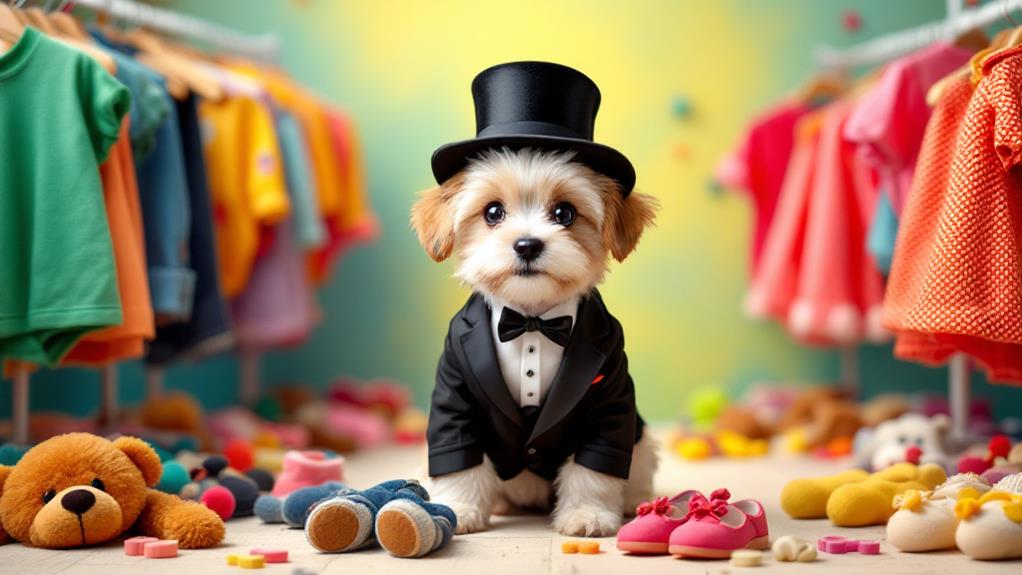
Dressing puppies like humans can be endearing, but it's essential to prioritize their health and comfort. Always choose soft, breathable materials to avoid overheating and skin issues. Clothing might confuse your puppy or hinder their social interactions, so introduce it gradually to reduce stress. Consider dressing for practical reasons, like keeping short-haired pups warm or protecting them during harsh weather. Avoid garments that restrict movement or interfere with their natural behavior. Pay attention to any signs of discomfort or stress in your pet. For those curious about the broader impacts of canine couture, there's more to uncover.
Health and Safety Concerns
When dressing your dog, prioritize health and safety to guarantee their comfort and well-being. Dog clothing can be beneficial but requires careful consideration to prevent skin conditions. Ill-fitting or irritating fabrics might lead to chafing, causing discomfort or even potential skin issues. Always choose clothing made of soft, breathable materials and verify a proper fit to avoid these problems.
Overheating is another significant concern, especially in warm conditions. Heavy clothing can cause your dog to overheat, particularly if they have dense fur or short noses. To prevent this, opt for lighter attire and monitor your dog's temperature closely. Protective gear, like boots and jackets, plays a fundamental role in safeguarding your dog during outdoor activities. These items can prevent injuries from rough terrains or sharp objects, enhancing general safety. However, confirm all gear is well-fitted to avoid any risks, such as choking hazards from loose attire.
Additionally, consider dog clothing with reflective materials to improve visibility during nighttime walks. This feature is essential for the safety of both you and your dog. By focusing on these aspects, you'll guarantee your dog stays safe and comfortable in their attire.
Psychological Effects on Puppies
Dressing puppies in human-like clothing can sometimes lead to confusion about their identity and role, potentially affecting their behavior and social interactions. When dogs are wearing clothes, they might not communicate as effectively with other pets, leading to misunderstandings and social anxiety. It's vital to reflect on these psychological effects when training your puppy. Without proper acclimation, introducing clothing for dogs can overwhelm them, causing stress and anxiety.
The psychological impact of clothing varies. Some puppies may find comfort and security, while others feel restricted or uncomfortable. It's important to observe your puppy's reactions. If they seem stressed or anxious, it might be best to avoid dressing them up. Moreover, constant dressing can inadvertently reinforce inappropriate behaviors. Puppies dressed in clothes may receive leniency for unwanted actions, complicating their training and socialization.
Furthermore, some puppies develop a reliance on clothing for comfort. This reliance can lead to increased anxiety during situations where they're not wearing clothes, like thunderstorms or fireworks. To minimize such impacts, gradually introduce clothing and verify it's a positive experience. Remember, understanding your puppy's temperament is key to deciding if clothing is appropriate for them.
Reasons Owners Dress Dogs
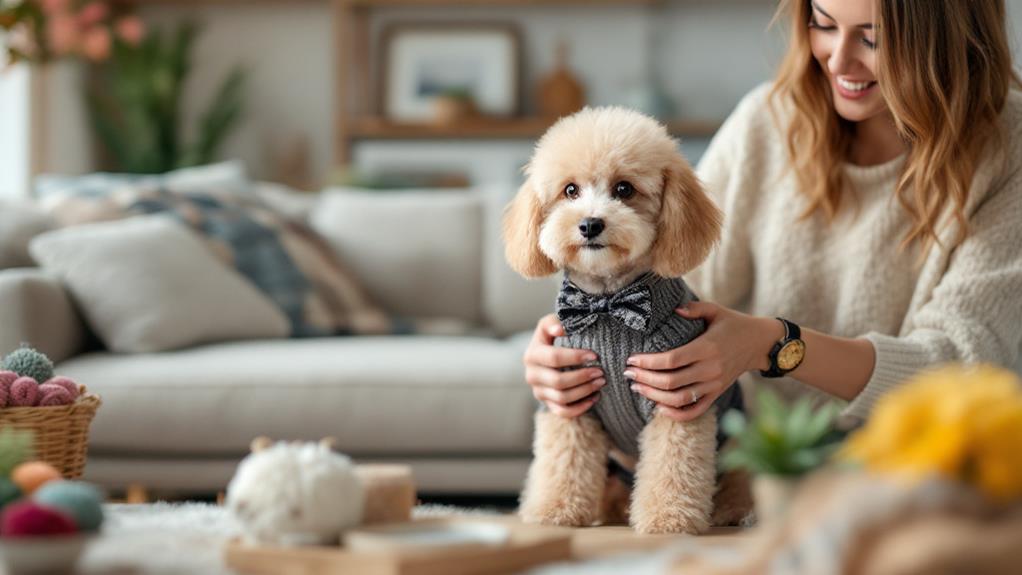
Although clothing dogs may initially seem like a fanciful trend, many owners dress their pets for diverse meaningful reasons. Emotional projection is one key reason; some owners dress their dogs as they would children, finding companionship in shared fashion experiences. This isn't just about aesthetics but about deepening the bond between you and your furry friend. Fashion trends and social media also play a huge role. Dressing your dog in stylish clothing can be a fun way to express their personality and even enhance your online presence.
Practical reasons are another factor. For instance, short-haired breeds can benefit from added warmth during colder months, making clothing a crucial part of their care. Harsh environmental conditions like rain or snow can be mitigated with the right attire, ensuring your dog stays comfortable. Visibility is also a consideration, especially for shelter dogs. Cute outfits can make them more appealing to potential adopters, increasing their chances of finding a forever home.
Cultural practices and personal enjoyment shouldn't be overlooked. Many pet owners find joy in expressing their dog's unique personality through clothing, turning fashion into a delightful and meaningful part of their relationship.
Situations for Clothing Use
Clothing your dog can often be a practical choice that addresses specific situations, guaranteeing their well-being and comfort. When the temperature drops, especially for short-haired breeds, clothes can provide vital warmth and protection against hypothermia. You'll find that during dog training sessions outdoors in cold weather, suitable types of clothing like sweaters or jackets can keep your puppy comfortable and focused.
After surgery, your puppy might need to wear clothes designed to protect healing wounds. Post-surgery garments can eliminate the need for cones, allowing your dog to move freely without irritation. For rainy days, consider a raincoat. This type of clothing not only keeps your dog dry but also reduces the frequency of baths, helping maintain their hygiene with less effort.
If you have a female puppy in heat, diapers are another practical clothing option. They help maintain cleanliness and prevent unwanted behaviors. And when special occasions like Halloween come around, costumes can be a fun addition. Just verify they're introduced gradually so your puppy doesn't feel stressed. In general, choosing the right clothes for your dog in specific situations can improve their comfort and ease daily routines.
Tips for Dressing Puppies
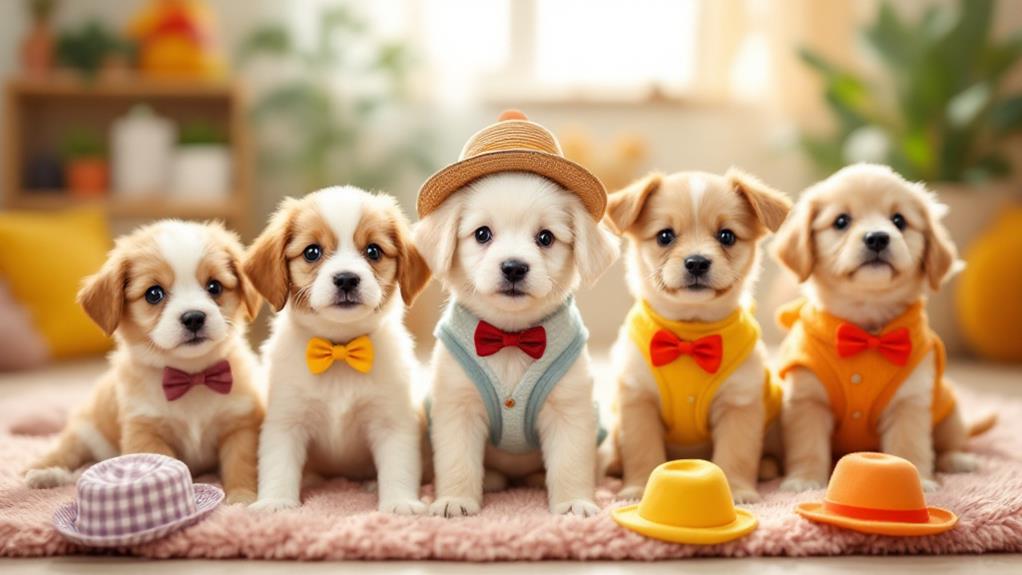
When introducing clothing to puppies, commence gradually to prevent overwhelming them. Begin with simple items like lightweight jackets or harnesses. These are easy to put on and help your puppy acclimate. To dress your dog successfully, verify each piece of clothing fits properly. Ill-fitting garments can cause discomfort and restrict movement, leading to negative experiences for your furry friend.
Dogs might feel anxious or restricted when initially wearing clothes, so use positive reinforcement. Offer treats and praise when they interact with or wear clothing. This creates a positive association and makes the process more enjoyable for them. Choose breathable, comfortable materials to minimize skin irritation and guarantee comprehensive comfort during the adjustment period.
It's crucial to monitor your puppy for any signs of stress or discomfort. If they appear uneasy, try adjusting the clothing or consider different alternatives. Not all dogs take to clothing naturally, so patience is key.
Potential Downsides
Steering through the world of dressing puppies involves understanding the potential downsides that come with it. When you dress your puppy in clothing, it can interfere with their ability to regulate temperature. Especially in warmer climates, this could lead to overheating or discomfort. Remember, their natural fur is designed to help manage temperature effectively. Furthermore, clothing can irritate their sensitive skin, leading to allergic reactions or discomfort.
Another significant aspect is how clothing affects your puppy's social development. Restrictive garments might limit their movement, making it tough for them to communicate through body language. This interaction is vital for their social skills. In addition, if they're not gradually introduced to clothing, they might experience anxiety or stress. This could make them uneasy and affect their general well-being.
Dressing puppies too much can also confuse their identity. They might struggle with understanding their role or place, which can influence their behavioral development. It could even reinforce dominant behaviors, which you certainly want to avoid. Always consider these factors to guarantee your furry friend's health and happiness aren't compromised by fashion choices.