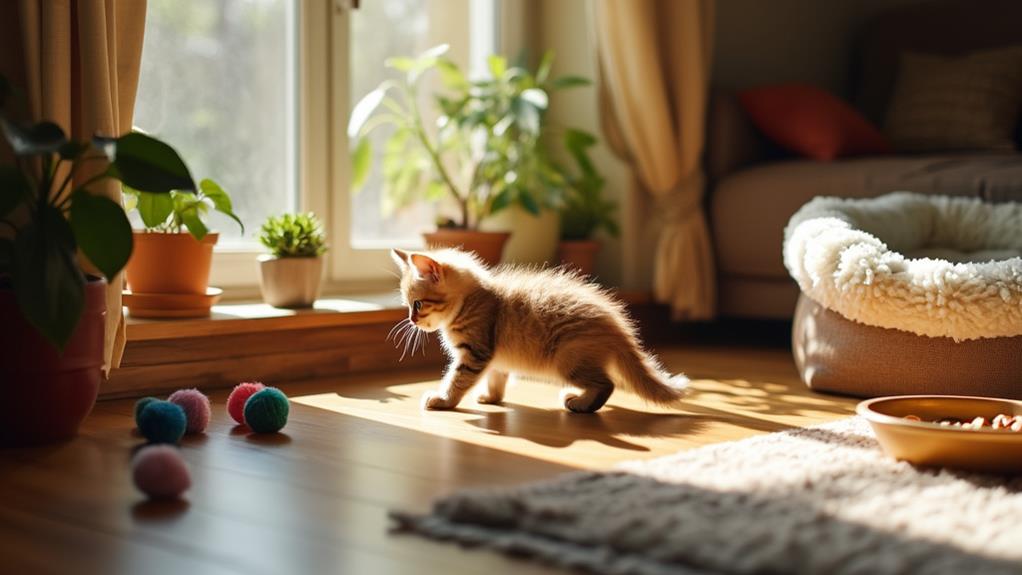
Drawbacks of Having a Cat: What to Consider Before Adopting

Adopting a cat means committing to a pet that might live for 12-20 years, requiring consistent care. You'll face financial responsibilities like from food, litter, and vet visits costing around $600 annually, with potential bills over $1,000 for emergencies. Cats need daily feeding, litter maintenance, play, and grooming, especially for long-haired breeds. You'll need a space devoid of hazards with vertical options for climbing and areas for hiding to reduce stress. Behaviorally, cats may exhibit issues like scratching or anxiety from past trauma, needing training and socialization. There's much more to understand about these challenges.
Long-Term Commitment
When contemplating a cat as a pet, it's crucial to recognize the long-term commitment involved. Cats can live for 12-20 years, and during that time, they'll need consistent care and attention. This isn't just about the day-to-day tasks like feeding them or cleaning their litter box. It's also about ensuring they receive proper veterinary care. Regular vet visits are necessary to keep your feline friend healthy, and these can cost upwards of $100 annually, not to mention potential emergency expenses that can exceed $1,000.
But the commitment doesn't stop at their physical health. The emotional aspect is just as significant. Cats form deep bonds with their owners and thrive on stability. If you're unable to provide a consistent and loving environment, your cat may experience stress or anxiety. Repeated rehoming or neglect isn't just disruptive—it can be traumatic for them.
Moreover, owning a cat requires planning for potential lifestyle changes. You'll need to take into account how travel plans, housing situations, or unforeseen circumstances might affect your ability to care for your pet. Adopting a cat means adapting to their needs and creating a nurturing environment that promotes their well-being throughout their life.
Financial Implications
Considering the long-term commitment of cat ownership, it's also crucial to weigh the financial implications. When adopting a cat, you'll encounter initial adoption fees ranging from $50 to $200, depending on the shelter or rescue organization. These fees are just the beginning. You'll face ongoing expenses for necessities like food, litter, and supplies, which can add up to around $500 annually for a single cat. It's vital to budget for these costs to guarantee your feline friend lives comfortably.
Veterinary care is another significant financial consideration. Routine check-ups and vaccinations typically cost around $100 or more each year. However, unexpected health issues can arise, potentially leading to veterinary bills that exceed $1,000. To manage these costs, you might investigate pet insurance options. While they can help mitigate high veterinary expenses, keep in mind that monthly premiums range from $20 to $50, depending on the coverage level.
If you're considering a long-haired breed, don't forget about grooming services, which can add to your budget over time. Being prepared for these financial commitments guarantees that you can provide the best possible care for your cat without straining your finances.
Daily Care Needs
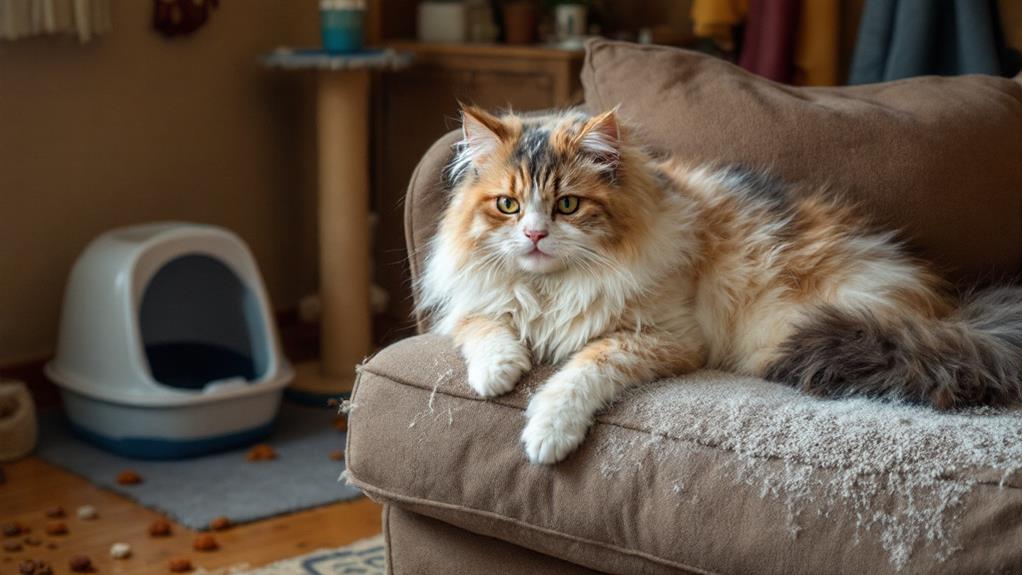
Caring for a cat involves several daily responsibilities that guarantee your feline friend stays healthy and happy. Daily care includes feeding them nutritious food and ensuring a constant supply of fresh water. Maintaining a clean litter box is fundamental, as it needs cleaning at least once a day to prevent unpleasant odors and hygiene issues. This task requires time and patience but is significant to your cat's comfort and health.
Engaging your cat in regular playtime is similarly significant. Cats require mental stimulation and physical activity, so you'll need to dedicate time each day for interactive play. This not only keeps them entertained but also helps maintain their physical health. Remember, long-haired breeds may require daily grooming to prevent mats and reduce shedding around your home, adding another layer to your daily routine.
Additionally, keeping an eye on your cat's health by monitoring changes in behavior, appetite, or litter box habits is crucial. Such changes can indicate health problems, and catching them early is key to effective treatment. Establishing a consistent routine for feeding, play, and litter box maintenance helps create a stable environment, supporting your cat's well-being and minimizing stress.
Space and Environment
While daily care routines guarantee your cat's health and happiness, their space and environment play a likewise significant role. Making sure your feline friend has a secure environment is essential. This means removing hazards such as toxic plants and small objects that could be ingested. Cats love to investigate, and having a safe space encourages their natural curiosity without risking their well-being.
Even if you live in a smaller home, like an apartment, cats can adapt as long as you provide plenty of vertical space. Cat trees or shelves satisfy their climbing instincts and keep them entertained. A window for observation is a great enhancement too, letting your cat watch the world go by and feel connected to their surroundings.
If you're considering adopting more than one cat, keep in mind that extra space is necessary to prevent territorial disputes. Managing their environment carefully can help maintain peace and harmony. Furthermore, providing adequate hiding spots is important. Cats need personal space at times to reduce stress and feel secure in their new home. These considerations in your cat's space and environment will guarantee a happier and healthier pet.
Behavioral Challenges
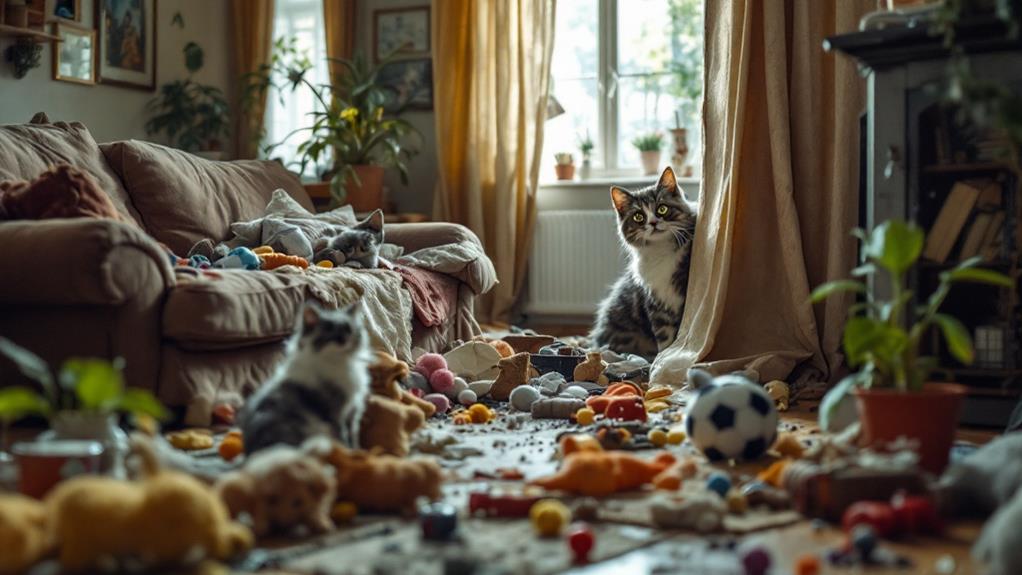
Although cats bring joy and companionship, they can present behavioral challenges that require attention and understanding. Some cats might exhibit strong-willed behaviors like scratching furniture or knocking items off surfaces. Establishing boundaries early is vital to prevent home damage. Training your cat to respect these boundaries involves patience and consistency, ensuring they understand what's acceptable.
Shelter cats might also have anxiety or aggression due to past trauma. Adopting such a cat means you'll need to be particularly patient, providing a secure and peaceful environment to help them adjust. Training can play a significant role in easing their anxiety, helping them feel more comfortable and secure in their new surroundings.
Cats are solitary hunters by nature, which can lead to socialization challenges. If they haven't been exposed to other pets or humans during their formative months, they might struggle with anxiety in social settings. Stress or changes in their environment can trigger undesirable behaviors like urine spraying or excessive vocalization. Maintaining a stable home environment is fundamental. Furthermore, keeping the litter box clean is vital, as neglect can lead to behavioral issues like refusal to use it, causing hygiene concerns and potential household damage.
Socialization and Training
Addressing behavioral challenges often leads to an fundamental aspect of cat ownership: socialization and training. Cats are naturally solitary hunters, which means they don't instinctively seek out social interactions like dogs might. Early socialization plays a significant role in helping your cat develop good interactions with people and other pets. Without it, you might face behavioral issues as your cat struggles to adjust to a more communal living environment.
If you're adopting a shelter cat, be prepared for potential behavioral issues due to past trauma. These cats often need a dedicated training period to adapt to their new surroundings. Patience is key here, especially when introducing your new cat to existing pets. Gradual exposure can help minimize territorial disputes and stress, making the change smoother for everyone involved.
Training isn't just about teaching tricks—it's about establishing a harmonious home. Basic training, like litter box use and boundary setting for scratching, requires consistent reinforcement to prevent undesirable behaviors. Understanding your cat's body language and communication cues is essential for effective training and socialization. This understanding fosters a strong bond and helps guarantee your cat feels secure and well-adjusted in your home.