Donskoy Cat: The Soft-Hearted and Spirited Hairless Cat
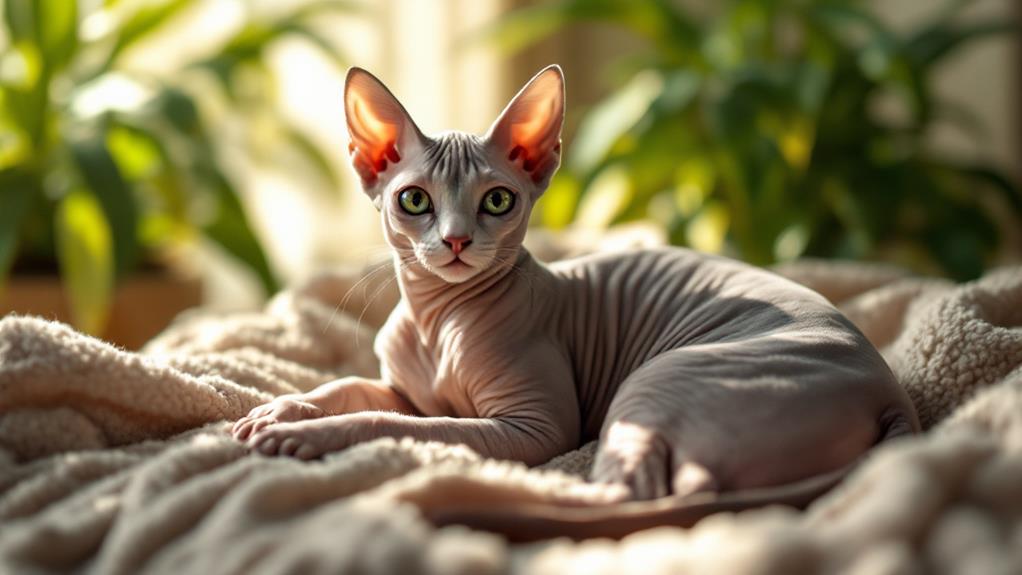
Reveal the Donskoy cat, a charming and soft-hearted hairless feline that's sure to captivate you. Originating from Russia in 1987, these cats are known for their warm, hairless skin and affectionate nature, the result of a unique genetic mutation. With a triangular head and large ears, they possess a striking look complemented by their characteristic wrinkles. Donskoy cats are not only intelligent and playful but also form strong bonds with their families, showing dog-like loyalty. Despite their lack of fur, they're not hypoallergenic. To uncover more about what makes these cats special, keep going.
Origins and History
The Donskoy cat's expedition began in the city of Rostov-on-Don, Russia, back in 1987. This unique hairless breed's origins trace back to a single kitten named Varvara. Varvara's adventure into the world of the Donskoy began when she started losing her fur at just four months old. This peculiar event marked the start of a genetic mutation that would define the breed. Her hairless offspring attracted the attention of cat enthusiasts, as they were not only unique in appearance but also incredibly affectionate.
The history of the Donskoy is deeply rooted in Russia, where its remarkable traits quickly gained popularity. Recognized by the World Cat Federation in 1987 and later by The International Cat Association in 2005, the Donskoy has carved its niche in feline history. Often referred to as the Don Sphynx, the Donskoy is sometimes linked to the Sphynx breed. However, it stands as a distinct breed with its own intriguing history.
With its characteristic hairlessness resulting from a unique genetic mutation, the Donskoy has become known for its playful and social personality. You'll find these cats are as affectionate as they are fascinating.
Physical Traits
Imagine a medium-sized, muscular cat with a triangular head, large ears, and intriguing almond-shaped eyes—that's the Donskoy cat for you. This fascinating breed stands out primarily because of its hairless appearance, a result of a unique genetic mutation. The lack of fur doesn't mean a lack of charm, though. Instead, the Donskoy's skin feels soft and warm, often displaying an array of wrinkles, especially around the face, neck, and chest. These wrinkles add character and uniqueness, making each Donskoy cat distinct.
You'll notice that the Donskoy's body temperature tends to be warmer than that of fur-covered cats. This is because the absence of an insulating coat prompts their bodies to generate more heat. It's like having a little heating pad curled up next to you, offering comfort and warmth.
While the Donskoy is primarily known for its lack of fur, its skin color and patterns can vary greatly, ranging from solid to tabby or even spotted. Their skin can also have different textures, enhancing their individuality. Whether you're drawn to their muscular build or their enchanting eyes, the Donskoy's physical traits are sure to enthrall you.
Coat Types
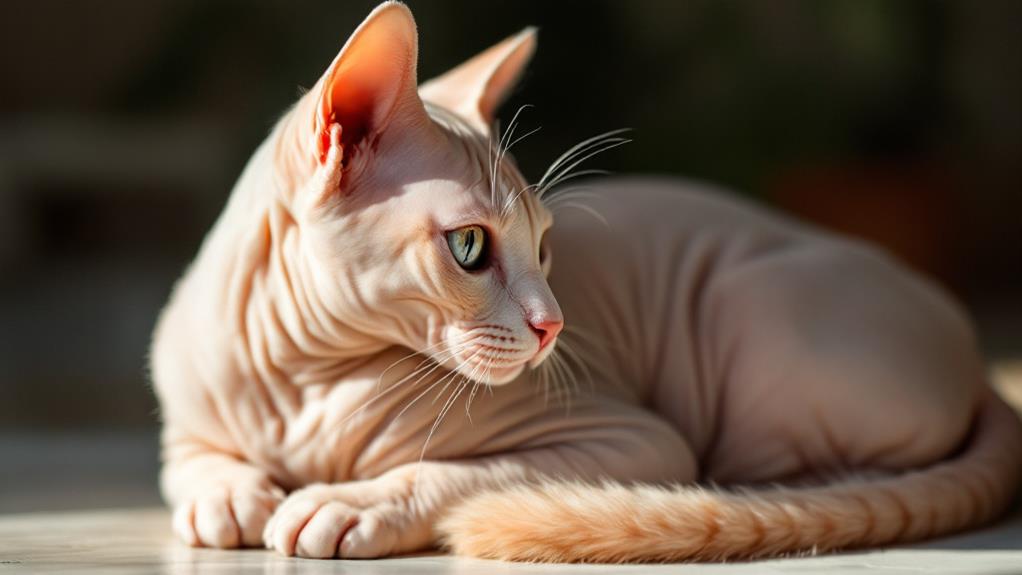
Picture a spectrum of unique textures when exploring the coat types of the Donskoy cat. This breed offers four distinct coats: Rubber Bald, Flock Coat, Velour Coat, and Brush Coat. Each type showcases a different aspect of the Donskoy's charm. The Rubber Bald is entirely bald from birth, staying hairless throughout its life. This coat type gives the Donskoy a strikingly smooth appearance, emphasizing its unique skin color and pattern variations.
The Flock Coat, in contrast, starts with a light fuzz that may eventually disappear, leaving a nearly hairless cat. Its delicate texture highlights the Donskoy's elegant yet spirited nature. Velour Coats feature a short, wavy texture with a typical bald spot on the head. Over time, these cats might lose their hair completely, adding to their distinctive look. Finally, the Brush Coat is characterized by short, bristly fur with bald patches, giving an intriguing mix of textures. While this coat disqualifies them from competitions, it improves their unique appearance.
Regardless of coat type, the Donskoy cat's genetic health remains robust, making them a fascinating and healthy choice for cat enthusiasts seeking a hairless companion.
Personality and Behavior
Beyond their unique coat types, Donskoy cats captivate with their warm and affectionate personalities. As a Donskoy owner, you'll quickly notice their friendly and social nature. These cats thrive in interactive environments, enthusiastically engaging with family members and other pets. Their affectionate demeanor means they form strong bonds with their humans, often seeking out companionship and participating in daily activities.
Donskoys are intelligent and playful, making them ideal companions for families. They enjoy interactive play sessions and can be easily trained with positive reinforcement. These cats are quick learners, delighting in puzzles and toys that challenge their agile minds. Their playful energy is a delight, and you can expect them to keep your household lively and entertaining.
Moreover, the Donskoy is known for being vocal, using a variety of sounds to communicate with you. This makes them engaging and interactive companions, as they're always ready to express their thoughts. Their dog-like loyalty is evident as they follow you around, enthusiastic to be part of every family moment. If you're searching for an affectionate and interactive pet, the Donskoy cat will surely enrich your life.
Health Considerations
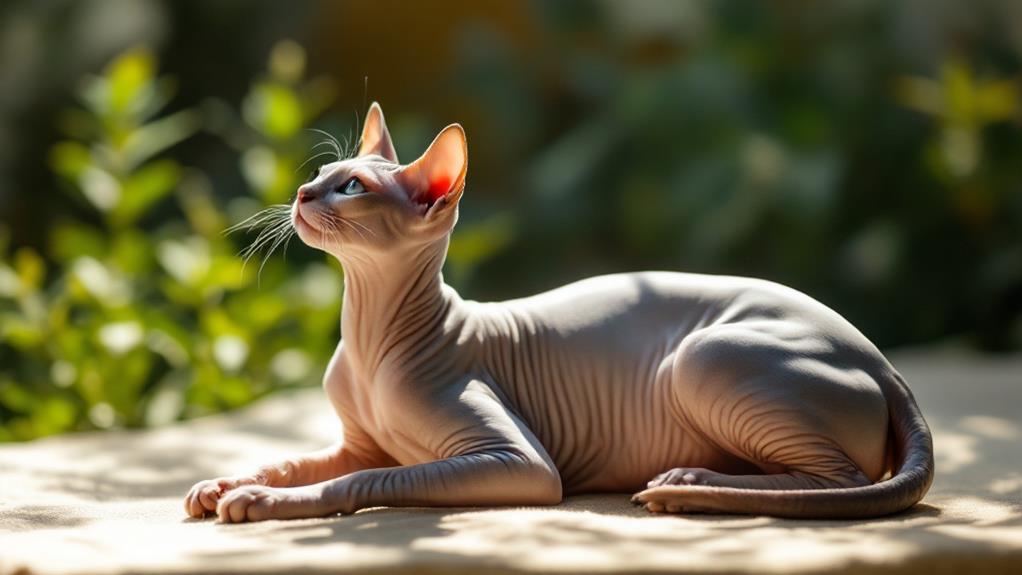
Caring for a Donskoy cat involves understanding their unique health needs to guarantee they thrive. While generally healthy, Donskoys are prone to genetic health concerns such as ectodermal dysplasia, impacting dental health and lactation. Regular check-ups with your veterinarian are important to monitor these conditions and address any emerging issues promptly.
Their hairless nature makes them more susceptible to skin issues, including irritation, infections, and sunburn. As a result, diligent skin care and frequent monitoring are necessary to prevent and treat these problems effectively. Ensuring your Donskoy's living environment is comfortable is significant as they're vulnerable to temperature extremes. Provide a warm space to avoid any adverse effects from the cold.
Despite being hairless, Donskoy cats aren't hypoallergenic. They produce allergenic dander, which might affect allergy sufferers. It's wise to take this into account if you or someone in your household has allergies.
In short, promoting your Donskoy's health involves a proactive approach—regular veterinary visits, attentive skin care, and a warm environment. By focusing on these areas, you can help your Donskoy lead a healthy, happy life.
Grooming Needs
When guaranteeing your Donskoy cat's health, grooming plays an fundamental role in maintaining their well-being. Their hairless skin requires daily attention to keep them comfortable and healthy. Use a damp towel to wipe their skin each day, removing excess oil that can cause irritation. Monthly baths are vital for a deeper clean, helping to prevent oil accumulation, which can lead to skin issues.
In addition to maintaining their skin, you'll need to check your Donskoy's ears and eyes regularly to verify they're clean, contributing to their overall hygiene. Trimming their nails is also significant to prevent them from becoming too long and causing discomfort or injury.
Because Donskoys lack fur, they're particularly sensitive to sunburn. If your cat spends time outdoors, consider applying feline-safe sunscreen to protect their delicate skin. Regular monitoring of your Donskoy's skin condition is crucial, as they can be prone to fungal infections and other sensitivities. Catching these issues early can prevent more significant problems down the line. By incorporating these grooming practices into your routine, you'll guarantee your Donskoy remains a happy and healthy companion.
Living Environment

Creating a cozy and safe living environment for your Donskoy cat is vital, considering their sensitivity to temperature and sun exposure. Donskoy cats thrive in indoor living spaces, where they are shielded from extreme temperatures and outdoor hazards. Their hairless bodies are susceptible to cold and heat, so guaranteeing they have warm sleeping spots is fundamental. You should monitor their sun exposure closely to prevent skin issues like sunburn, making areas with limited sunlight ideal.
Social interaction is similarly significant for Donskoy cats. They flourish in homes where companionship is plentiful, regardless of whether it's with multiple people or other pets. These active cats love engaging with family members and participating in daily activities. If you have a multi-pet household, gradual socialization is key to fostering harmonious relationships.
To cater to their inquisitive nature, provide climbing structures and safe spaces for exploration. This allows your Donskoy cat to satisfy its curiosity and expend energy. By creating an environment that supports their need for warmth, companionship, and activity, you'll guarantee your Donskoy cat leads a healthy and fulfilling life indoors. Remember, a happy cat makes for a happy home!
Nutritional Requirements
While your Donskoy cat enjoys a cozy and engaging indoor environment, it's just as important to focus on their nutritional needs. Donskoy cats thrive on a high-protein diet that supports their active lifestyle. To guarantee they get the right nutrients, offer a mix of quality dry kibble and canned food. This combination helps maintain a balanced diet, necessary for their general health. Remember, protein should be the primary focus, with moderate fat and low carbohydrates complementing their meals.
It's essential to provide fresh water daily. Place water bowls away from food to encourage regular hydration, which is critical for their well-being. During colder months, you might notice your Donskoy's caloric intake needs to increase. Their hairless bodies require extra energy to maintain warmth and energy levels, so adjust their diet accordingly.
Keep a close eye on their weight, as Donskoy cats can be prone to obesity if their diet isn't properly managed. Regular monitoring guarantees they remain fit and healthy. By focusing on their specific dietary needs, you'll promote a healthier, happier life for your spirited and soft-hearted Donskoy companion.
Similar Breeds
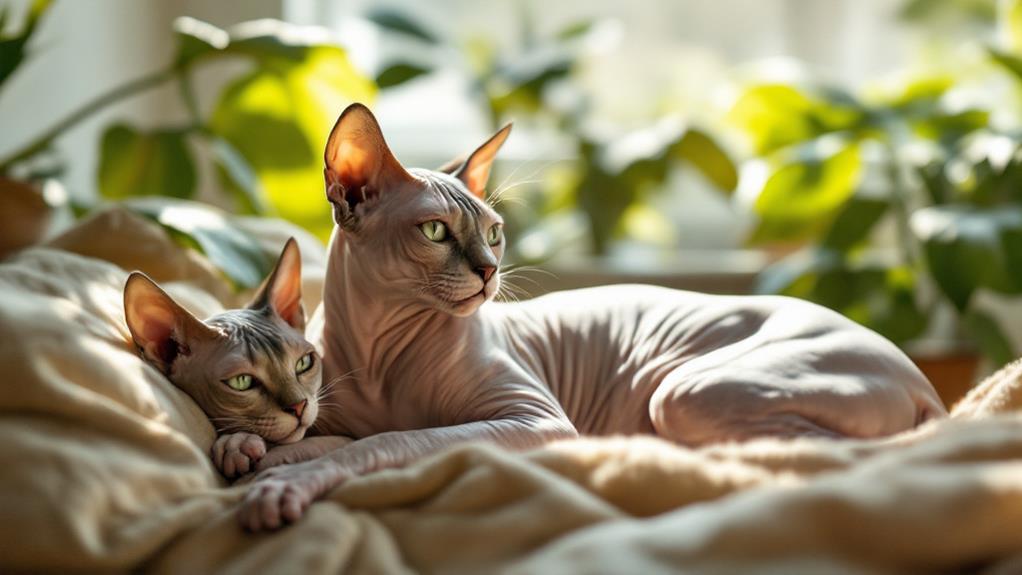
Among hairless cat breeds, each offers unique characteristics and charm. The Donskoy, known for its affectionate nature and spirited personality, is just one among several intriguing hairless breeds. The Sphynx, perhaps the most recognized, is celebrated for its energetic and affectionate demeanor, offering a spectrum of hairlessness. Despite its popularity, it requires diligent skincare due to its susceptibility to skin conditions.
Another fascinating breed is the Peterbald, originating from Russia. This hairless cat is distinguished by its oversized ears and varying coat types, ranging from completely hairless to having a light fuzz. Known for forming strong family bonds, the Peterbald thrives on social interaction and affection.
The Bambino, a cross between the Sphynx and Munchkin, sports a light peach fuzz and is highly social, making it a perfect companion for children and other pets. In the same way, the Dwelf combines the Munchkin, Sphynx, and American Curl, boasting elf-like features and a playful, affectionate nature.
Lastly, the Ukrainian Levkoy, a mix of the Donskoy and Scottish Fold, is medium-sized with an affectionate personality. This breed thrives in environments with climbing structures, encouraging playful social interaction.