Dog Sleeping Positions and What They Mean: Understanding Your Pet’s Behavior

Your dog's sleeping position can tell you a lot about their emotions and well-being. If your dog is a side sleeper, this shows they feel secure and relaxed. A donut position might indicate they need warmth or are adjusting to new surroundings. The Superman position signals playful energy, while the Lion's Pose suggests they feel safe yet alert. When your pup curls up in the cuddler bug position, it shows they trust you and feel bonded. Factors like maturity, activity, and health affect these habits. Uncovering more about these positions can deepen your understanding of your furry friend.
Key Takeaways
- Side sleeper position suggests a dog's comfort and trust in their environment.
- The donut position reflects a dog's need for warmth and security.
- Cuddler bug position indicates trust and affection, highlighting strong bonding.
- Environmental factors like temperature and noise can influence dog sleeping positions.
- Changes in sleeping positions or patterns may indicate stress, anxiety, or health issues.
Common Dog Sleeping Positions
Exploring common dog sleeping positions reveals much about your furry friend's comfort and personality. The Side Sleeper position suggests your dog feels comfort and security, indicating they trust their environment. This sleeping position is often seen in well-adjusted dogs who feel safe and content. If your dog curls into The Donut, it reflects a need for warmth and security. This position is typical among stray or newly adjusted pets, signaling they might still be getting used to their surroundings.
The Superman Position, where your dog lies flat on their stomach with legs stretched out, is favored by energetic pups. It shows readiness to play even when they're tired, a behavior that keeps them alert and playful. When your pet adopts The Lion's Pose, resting their head on their paws, it shows vigilance and a quick readiness to react. Dogs often choose this position for short naps, feeling secure yet alert.
Lastly, if your dog chooses the Cuddler Bug Position, snuggling close to you or other pets, it indicates a deep level of trust and affection. This affectionate position demonstrates strong bonding and comfort, revealing their loving and sociable nature.
Factors Affecting Sleep Habits
How do multiple factors influence your dog's sleep habits? Maturity plays a significant role; puppies and senior dogs require more rest compared to healthy adults. Their activity level also matters—more active dogs may sleep soundly and longer to recover energy. Health is another major factor. If your dog suffers from joint pain or breathing difficulties, you might notice frequent changes in their sleeping positions as they try to get comfortable.
Environmental conditions such as temperature, noise, and light exposure can disrupt sleep. A too-hot or too-cold room, loud sounds, or bright lights might lead your dog to change positions or even wake up repeatedly. Stress and anxiety can also alter sleeping habits; your dog might seek more secure spots or change their usual sleeping positions when feeling uneasy.
Changes in sleeping patterns, like increased wakefulness or reluctance to sleep in familiar spots, can signal underlying health issues. If you notice these changes, it's important to seek veterinary attention to rule out any medical concerns. By understanding these factors, you can better address your dog's needs and guarantee they get the restful sleep they deserve.
Creating a Cozy Sleep Environment
Understanding the factors affecting your dog's sleep habits can help you create a cozy sleep environment that meets their needs. Start by selecting a dog bed that's just the right size, providing adequate cushioning to support their joints and muscles. This guarantees ideal comfort and improves their sleep quality. Place the bed in a quiet area, away from heavy foot traffic, to minimize distractions and create a peaceful setting.
Next, focus on maintaining a comfortable temperature in the sleeping area. Adjust the bedding materials with the changing seasons to keep your dog from overheating in the summer or getting too cold in the winter. Regularly clean the bedding using pet-safe products to remove dirt, allergens, and odors, aiding in keeping their sleeping environment fresh and inviting.
Don't forget about hydration. Make certain your dog has access to fresh water throughout the night. This not only quenches their thirst but also enhances their general sleep quality by preventing disturbances. By thoughtfully arranging these elements, you'll provide your furry friend with a cozy sleep environment where they can rest peacefully and wake up feeling refreshed.
Interpreting Sleeping Locations
Observing where your dog chooses to sleep can provide valuable insights into their preferences and emotional state. Dogs often select sleeping locations based on comfort, security, and their natural instincts. For instance, if your dog frequently sleeps on the floor, it might be seeking cooler surfaces, reflecting a behavior geared towards temperature regulation. Alternatively, a dog that prefers the sofa likely enjoys the comfort and desires closeness with their owner.
Bed-sharing with you can signify a strong bond and a sense of security, suggesting that your dog feels safe and trusts you deeply. On the other hand, if your dog opts for a crate, it might find the enclosed space comforting, demonstrating a preference for privacy or a result of effective training. The choice of sleeping locations can reveal much about your dog's emotional needs and environmental adjustments.
- Dogs on the floor may prefer cooler surfaces for temperature regulation.
- Sofa sleepers often seek comfort and closeness to their owners.
- Bed-sharing indicates a strong bond and a sense of security.
- Crate sleepers may find comfort in enclosed spaces.
- Frequent location changes can indicate comfort-seeking behavior.
Understanding these preferences helps you cater to your dog's needs effectively.
Monitoring Health Through Sleep
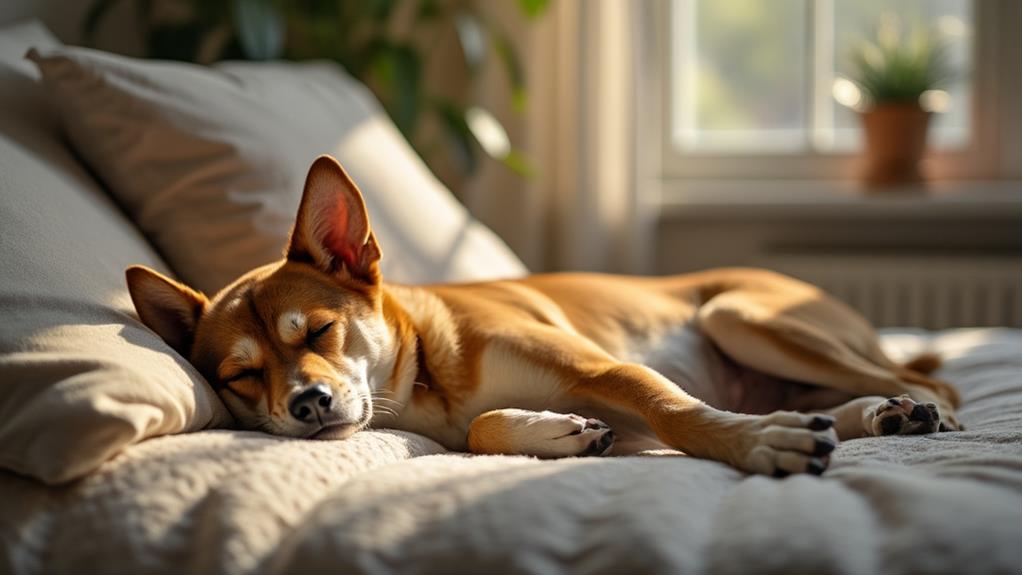
While understanding your dog's preferred sleeping locations offers insights into their comfort and emotional state, monitoring their sleep patterns is likewise informative for evaluating their health. Adult dogs generally need 11-12 hours of sleep daily, while puppies and senior dogs might require up to 20 hours. If you notice any sudden changes in their sleep duration, it could indicate underlying health issues. It's essential to schedule a veterinary consultation when such changes occur to rule out or address potential problems.
Keep an eye out for excessive restlessness or frequent waking during sleep. These signs might suggest discomfort, anxiety, or pain your dog is experiencing. Likewise, vocalizations like whining or barking during sleep might reveal distress or discomfort needing your attention. These observations can be important for identifying health problems early.
Regular veterinary check-ups are fundamental for guaranteeing your dog's general well-being and can help catch health issues that may affect sleep quality. By closely monitoring your dog's sleep, you can better understand their needs and guarantee they receive the care they require to maintain a healthy, balanced life. Being proactive in this regard can greatly improve your dog's quality of life.
Understanding Dog Dreams
During sleep, dogs enter the REM stage, where dreaming occurs, similar to humans. It's during this stage that you might notice your dog twitching or even barking. These behaviors are often linked to dream activity, reflecting their daily experiences and interactions. Understanding your dog's sleep behavior offers insight into their emotional well-being and helps guarantee they get adequate rest.
Puppies and senior dogs, in particular, spend more time in REM sleep, dreaming more frequently than adult dogs. This is because they have higher sleep requirements—puppies can sleep up to 20 hours a day. Observing your dog's sleeping positions and reactions during REM sleep can reveal a lot about their physical and emotional state.
Consider these observations:
- Twitching: Often seen during REM sleep, it indicates active dream activity.
- Barking: This can occur as your dog relives daily interactions in their dreams.
- Puppies' sleep behavior: They need more sleep and dream more as they process new experiences.
- Senior dogs: Like puppies, they require more sleep, reflecting changes in health and routine.
- Dog sleeping positions: These can indicate comfort levels and emotional states.
Pay attention to these signs to better understand your furry friend's needs and well-being.
Sleep Duration by Age
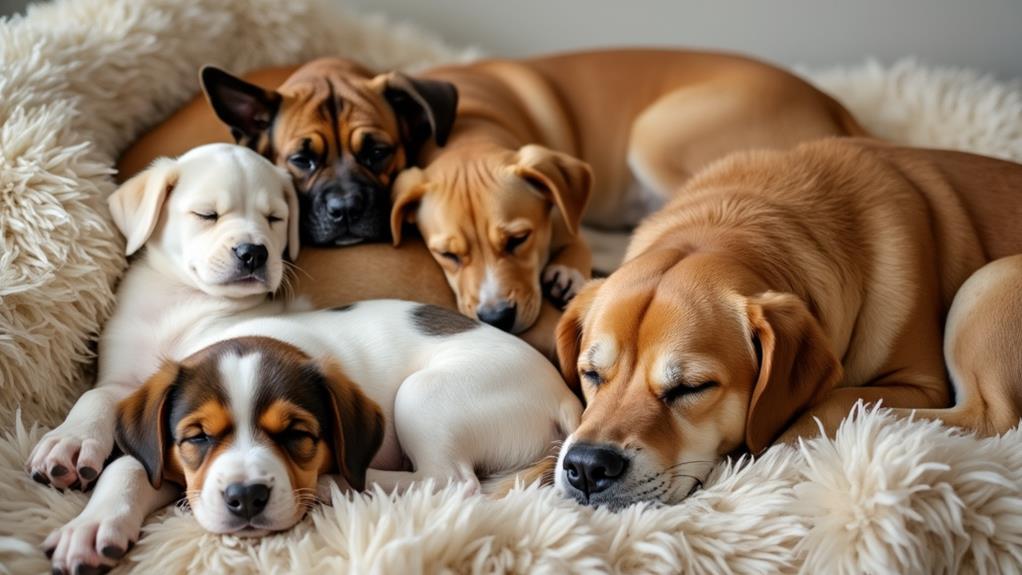
Dogs' sleep needs change as they grow older, and understanding these changes can help guarantee your furry friends are getting the rest they need. Puppies require the most sleep, typically between 18-20 hours daily. Their rapid growth and development mean their sleep duration is vital for supporting their energy levels and general health. As dogs mature, their sleep needs decrease. Adult dogs generally need about 11-12 hours of sleep each day, although active breeds might need a little more to recover from their energetic lifestyles.
Senior dogs, on the other hand, often sleep up to 20 hours a day. Maturing brings about different health conditions and changes, making increased rest important for maintaining their well-being. Sleep patterns in dogs are influenced by individual factors like energy levels, health conditions, and environmental factors. These variables can cause some dogs to need more or less sleep than the average.
Regardless of life stage, dogs typically have peak sleep hours between 9:00 p.m. and 6:00 a.m., but they also take naps during the day. These naps help supplement their nighttime rest, ensuring they stay healthy and energetic throughout their lives.
Improving Your Dog's Sleep
To guarantee your dog gets the best sleep possible, start by setting up a comfortable sleeping environment. Choose a bed that matches your dog's size and breed, making certain it provides adequate cushioning for their joints and muscles. This helps improve sleep quality by supporting their body fully. A quiet sleeping area is crucial to reduce stress and promote deeper rest. Dogs thrive in calm environments, so minimize distractions and noise.
Keep your dog's sleep area at a controlled temperature. This prevents overheating and makes sure they're comfortable throughout the night. Confirm they have access to clean, fresh water to avoid dehydration. Regularly clean your dog's bedding with pet-safe products. This not only keeps their space tidy but also contributes to a healthier sleep environment by eliminating dirt and allergens.
Monitor your dog's sleeping patterns. Observing changes can provide early indications of potential health concerns that might need veterinary attention. Here's a quick checklist to improve your dog's sleeping habits:
- Select a bed with adequate cushioning.
- Maintain a quiet sleeping area.
- Confirm a controlled temperature.
- Clean bedding regularly with pet-safe products.
- Monitor sleeping patterns for any changes.
Implementing these steps can greatly improve your dog's sleep.
Recognizing Sleep-Related Issues
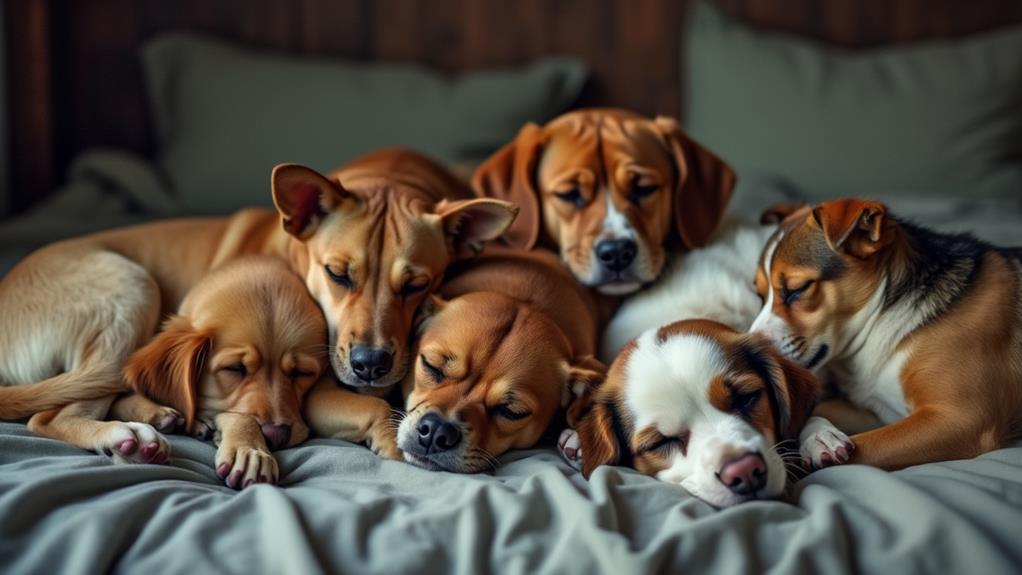
While a comfortable sleeping environment is fundamental for your dog's rest, it's likewise important to recognize potential sleep-related issues. If your dog is excessively barking or whining during sleep, it might indicate distress or discomfort. This behavior should prompt you to assess your dog's well-being. Pay close attention to their sleep patterns; frequent waking or an inability to settle may signal underlying anxiety or health issues. In such cases, consider evaluating your dog's environment and routine for potential stress factors.
Observe any changes in appetite or energy levels, as these can be indicative of physical or mental health concerns. Altered sleep patterns, coupled with these changes, may require veterinary attention. Moreover, reluctance to sleep in usual spots or significant changes in sleeping positions can suggest health problems such as joint pain or anxiety. These shifts might indicate your dog is seeking comfort elsewhere due to discomfort or distress.
Monitoring your dog's breathing patterns during sleep is critical. Irregularities might point to respiratory issues or other health-related concerns. Early detection of these signs is key to ensuring your dog's general health and comfort.