Doberman Pinscher: The Powerful and Noble Guardian Dog
You'll find the Doberman Pinscher to be an impressive guardian, bred in the late 19th century by Karl Friedrich Louis Dobermann in Germany. Combining traits from breeds like Rottweilers and Weimaraners, these dogs are both powerful and loyal. They're medium to large-sized, with sleek coats in diverse colors and a strong, muscular frame that supports their agility and speed. Their intelligence and protective instincts make them exceptional watchdogs. Early socialization and consistent training are essential for these energetic dogs. With proper care, they can lead healthy lives, usually spanning 10 to 12 years. Uncover more about these remarkable companions.
Breed Origins and Development
The Doberman Pinscher's origins trace back to the late 19th century when Karl Friedrich Louis Dobermann set out to develop the ideal protection dog in Apolda, Germany. With a vision for a versatile and loyal guard dog, Dobermann carefully selected breeds like Rottweilers, German Pinschers, Weimaraners, and Black and Tan Terriers. This unique blend resulted in a dog renowned for its intelligence and loyalty—traits crucial for a breed designed to protect.
You might find it fascinating that Dobermans were initially bred to accompany tax collectors, a job that required exceptional guarding instincts and the ability to form strong bonds with their handlers. These early Dobermans quickly proved their worth, showcasing remarkable versatility and trainability, which helped them gain popularity beyond their original purpose.
In 1908, Dobermans were officially recognized by the American Kennel Club (AKC), marking a significant milestone in the breed's history. This recognition further cemented their status as a beloved and reliable companion. By 1921, the Doberman Pinscher Club of America was founded to promote the breed's purity and support responsible breeding practices, ensuring that the Doberman Pinscher remains a powerful and noble guardian dog today.
Key Physical Attributes
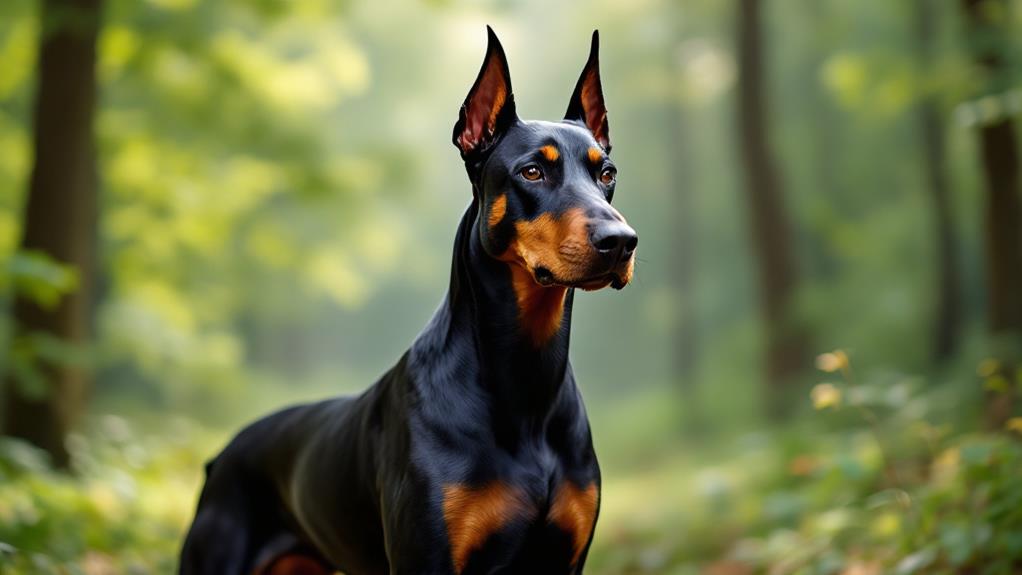
With their striking physique, Doberman Pinschers exhibit a blend of elegance and power that commands attention. As a medium to large-sized breed, these dogs stand tall, with males reaching 26-28 inches and females 24-26 inches at the shoulder. Weighing between 60 to 100 pounds, they possess a powerful and athletic physique that's well-suited for a variety of tasks. Their sleek, short, and smooth coat comes in colors like black, red, blue, and fawn, often accented by rust-colored markings that highlight their striking appearance.
Key Features of the Doberman Pinscher:
- Long Wedge-Shaped Head: Their head is characterized by a flat skull, long muzzle, and almond-shaped eyes, enhancing their noble appearance.
- Sleek Body and Proud Stance: Their body exudes confidence and strength, aligning with their natural guarding instincts.
- Medium to Large Size: They're a robust breed that can effectively serve as both a companion and protector.
- Black and Tan Markings: These signature markings add to their distinguished look.
- Powerful Build: Their muscular physique supports agility and speed, crucial for their active lifestyle.
Every aspect of a Doberman Pinscher's appearance speaks to their inherent dignity and capability.
Personality and Temperament
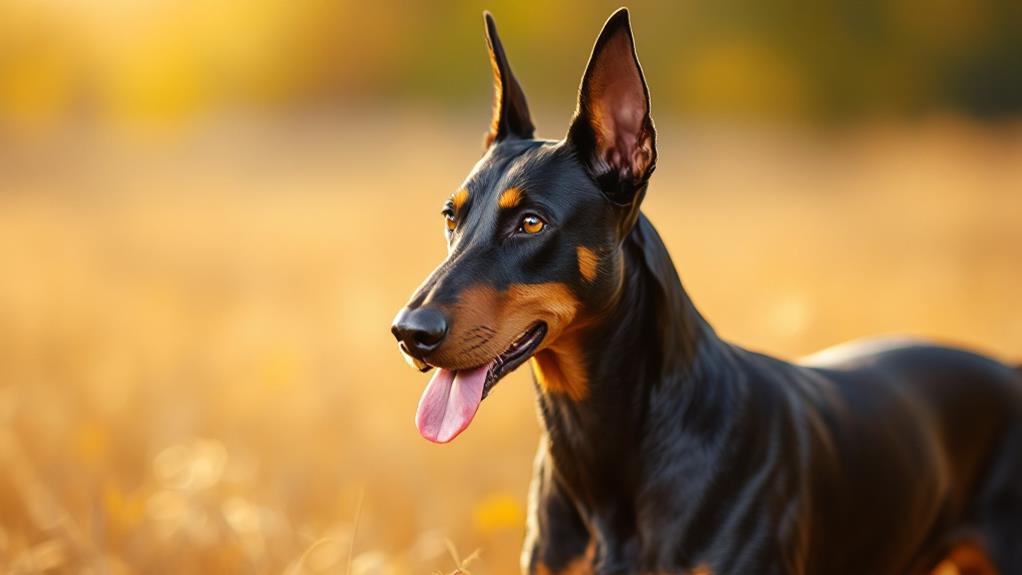
Frequently admired for their unwavering loyalty, Doberman Pinschers excel as guardians and companions. Their protective instincts make them exceptional watchdogs, always ready to alert you to any potential threats. This breed's intelligence means they quickly grasp new commands and tasks, enhancing their ability to safeguard your home and family effectively. With proper socialization and training, Dobermans develop a balanced personality, becoming affectionate and gentle with those they love while maintaining an alert demeanor around strangers.
Their high energy levels mean that Doberman Pinschers require ample exercise and mental challenges. Regular physical activity keeps them content and prevents boredom-induced behaviors. This dedication to exercise not only fosters a healthier lifestyle for your Doberman but also strengthens the bond you share. They form strong bonds with their families, showcasing a devoted and loving nature that endears them to those they trust.
While Dobermans might seem aloof with unfamiliar people, their affectionate side shines brightly in familial settings. This blend of loyalty, intelligence, and protectiveness makes them an ideal companion for those who can meet their needs. With the right approach, you'll find a steadfast friend and guardian in a Doberman Pinscher.
Training and Socialization
Starting early is essential in regard to training and socializing your Doberman Pinscher. Early socialization guarantees that your Doberman grows into a well-rounded and confident dog. Expose them to different environments, people, and animals while they're still puppies. This helps prevent aggression or fearfulness later in life. Focus on basic obedience training using positive reinforcement techniques. Commands like sit, stay, and come should be taught using treats and praise, which makes learning a rewarding experience for them.
To keep your Doberman mentally stimulated, incorporate regular puzzle toys and training exercises. These intelligent dogs need engagement to prevent boredom and potential behavioral issues. Consistency is vital in your training approach. Dobermans respond well to structured routines and clear expectations, which helps them understand what's required of them.
Leash training should also begin early. Proper leash manners will guarantee enjoyable outings since Dobermans can be strong pullers. Here's a quick checklist for training success:
- Early socialization: Introduce your Doberman to different settings.
- Positive reinforcement: Use treats and praise.
- Mental stimulation: Provide engaging activities.
- Consistency: Maintain structured routines.
- Leash training: Teach proper walking behavior.
Health and Wellness
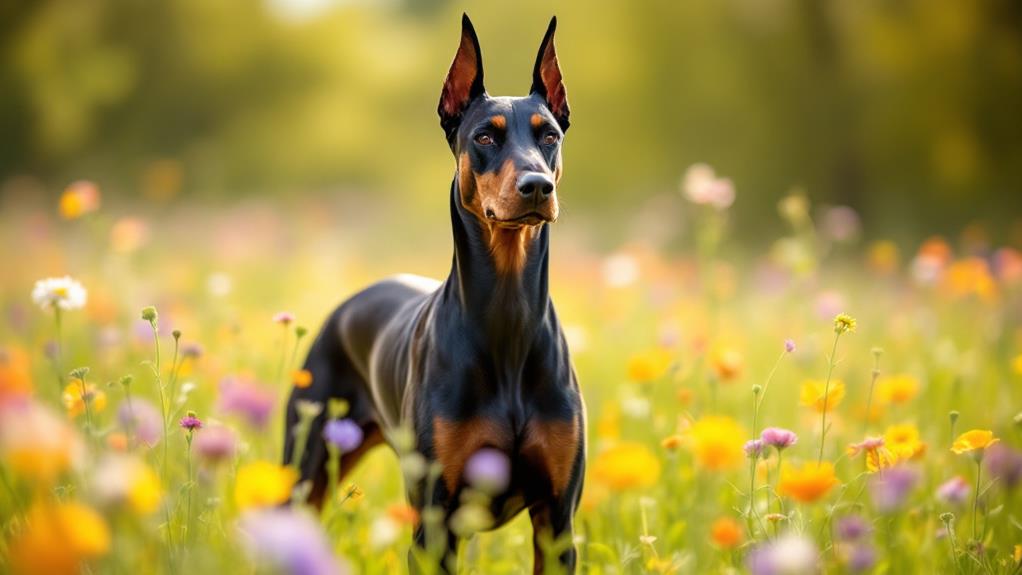
Caring for your Doberman Pinscher's health and wellness is fundamental to guarantee they live a happy and energetic life. Dobermans, like any breed, can face certain health issues, including dilated cardiomyopathy, hip dysplasia, and bloat. To guarantee early detection and effective management, it's critical to schedule regular veterinary care. Dobermans are also genetically predisposed to conditions like Pemphigus Foliaceus, an autoimmune skin condition, and Wobblers syndrome, which affects their gait. Staying vigilant and seeking advice from your vet can help manage these problems effectively.
Providing a balanced diet is another cornerstone of your Doberman's health. Opt for high-quality dog food with meat as the primary ingredient to maintain peak health and prevent obesity. Regular exercise is essential for meeting their high energy levels and providing the mental and physical stimulation they crave. Aim for at least one hour of physical activity daily to keep your Doberman fit and happy.
Though grooming Dobermans is relatively low-maintenance due to their short coat, weekly brushing can help control shedding and maintain skin health. Keeping their coat healthy will also help in spotting any potential skin issues early on.
Role as a Protector
Doberman Pinschers are renowned for their exceptional role as protectors, a quality that dates back to their origins in the late 19th century. Bred by Louis Dobermann to serve as loyal guardians for tax collectors, their innate protective instincts have been honed over generations. As intelligent and alert guard dogs, Doberman Pinschers assess threats effectively and respond with precision, making them ideal companions for those seeking both protection and loyalty. Their strong bonds with family members mean they'll often go to great lengths to safeguard their loved ones.
To guarantee your Doberman's protective instincts are well-directed, structured training and socialization are essential. Here's what you should focus on:
- Obedience Training: Establishes boundaries and guarantees your Doberman acts appropriately.
- Controlled Aggression: Helps prevent undesirable behaviors, keeping them well-adjusted.
- Early Socialization: Introduces them to different people and environments, curbing territorial instincts.
- Bonding Activities: Reinforces their loyalty and strengthens your relationship.
- Intelligent Play: Stimulates their minds, balancing their natural energy.