Different Types of Pet Lizards: Which One Is Right for You?
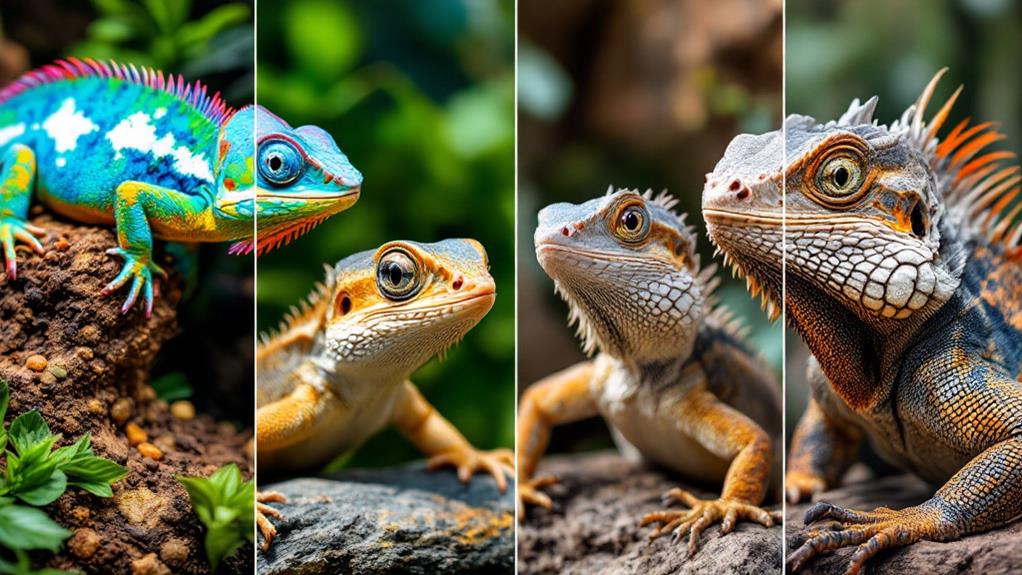
Choosing the right pet lizard depends on your experience level and lifestyle. For beginners, consider a Leopard Gecko or a Crested Gecko. Both are low-maintenance and relatively small. If you're up for a social and sizeable companion, a Bearded Dragon might be ideal. Those seeking a larger pet might prefer a Blue-Tongued Skink, renowned for easy care. Make sure you understand their habitat needs, like tank size and temperature, and meet dietary requirements. Balancing lifestyle compatibility with these unique needs is key. Exploring further will help you make an informed decision and deepen your understanding of each species' specifics.
Popular Lizard Species
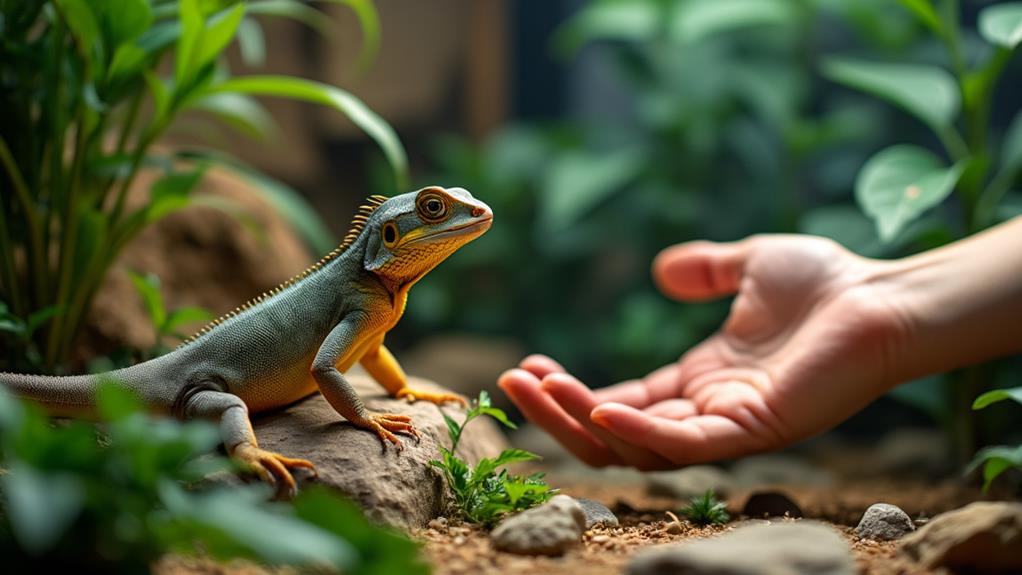
When considering a pet lizard, which species should you choose? Among the best reptiles for beginners, you'll find several popular pets that are easy to care for and enjoyable companions. The Leopard Gecko stands out as a favorite due to its manageable size, growing up to 10 inches, and long lifespan of 10-20 years. It requires only a 10-gallon tank and an insectivorous diet, making it a great starter lizard species.
Another excellent choice is the Bearded Dragon, known for its friendly demeanor. These lizards can grow between 18-24 inches and live for 10-15 years. They thrive in a 55-75 gallon tank and enjoy an omnivorous diet, including insects and vegetables.
The Crested Gecko offers a low-maintenance option, reaching up to 10 inches and living 15-20 years. It prefers a 20-gallon tank and thrives on a fruit-based diet. For those seeking a larger pet, the Blue-Tongued Skink is easy to care for, reaching lengths of 18-24 inches. It requires a spacious habitat and an omnivorous diet.
Beginner-Friendly Lizards
Choosing the right lizard as a pet can be exciting, especially for beginners. If you're new to pet reptiles, consider a beginner lizard like the Leopard Gecko. These friendly creatures grow up to 8-10 inches and thrive in a 20-gallon tank. Their insectivorous diet makes them easy to maintain as they primarily eat insects and require minimal humidity.
Another great choice is the Bearded Dragon. Known for their sociable nature, they grow to 18-22 inches and need a spacious 40-gallon tank. They have an omnivorous diet, enjoying a mix of insects and vegetables, and can live 10-15 years with proper care.
Crested Geckos are perfect if you prefer a low-maintenance option. These nocturnal lizards, reaching 6-10 inches, require a vertical 20-gallon habitat. They primarily consume fruit-based diets and have a lifespan of 15-20 years.
For an affordable, smaller option, consider the Green Anole. These lizards grow to 5-8 inches and need a 10-gallon terrarium with climbing space. They follow an insectivorous diet, which is simple to manage, though their lifespan is shorter at 3-6 years. Each of these lizards offers a unique, beginner-friendly experience.
Advanced Lizard Care
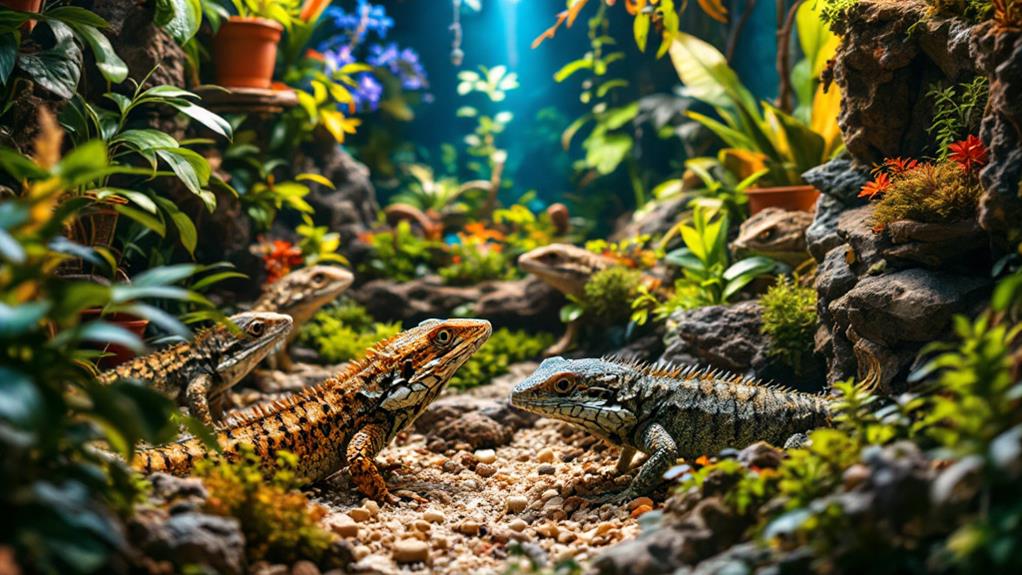
Venturing into advanced lizard care involves welcoming the complexities of maintaining more challenging species like chameleons and iguanas. You'll need specialized knowledge to meet their unique habitat requirements, which often include specific temperature and humidity needs. Chameleons, for example, thrive in well-ventilated enclosures with high humidity levels, while iguanas require ample space and precise environmental conditions.
Advanced lizard care demands more than just a suitable habitat. You'll also need to provide a balanced diet, which might include live insects, calcium supplements, and varied plant matter tailored to each species. Feeding routines can get complicated, so it's vital to understand their dietary needs thoroughly.
Health monitoring becomes paramount, as these lizards are particularly sensitive to environmental changes and stress. Recognizing signs of illness early can make all the difference. Furthermore, proper UVB lighting is indispensable for their health, aiding in calcium metabolism and preventing metabolic bone disease.
Handling advanced lizards like the Tokay Gecko or Frilled Dragon requires experience, as they can exhibit aggressive behaviors. Ensuring enriched environments and experienced handling techniques will help reduce their stress and promote well-being. Welcome these challenges, and you'll find advanced lizard care a rewarding endeavor.
Lizard Habitat Essentials
Caring for lizards involves more than just advanced techniques; creating an ideal habitat is fundamental to their health and well-being. Understanding lizard habitat essentials is vital, especially if you're welcoming your initial lizard. Start with the minimum terrarium size suitable for your pet. For example, Leopard Geckos need at least a 10-gallon tank, while Bearded Dragons require 55 to 75 gallons. Confirming an appropriate temperature gradient is a must. Create basking areas between 85-100°F and cooler zones around 70-80°F to meet your lizard's care requirements.
Humidity levels are another key factor. Most lizards thrive with humidity levels between 30-60%, but always check the specific needs of your species. Substrate options vary; you can choose reptile carpet, coconut fiber, or even paper towels. Improve your habitat by adding hiding spots with rocks, logs, or commercial hides.
Proper ventilation prevents respiratory issues, so verify your setup has adequate airflow. Regular cleaning is part of proper care—spot clean daily and perform a full cleaning every 2-4 weeks.
Here's a quick checklist for your setup:
- Minimum terrarium size: Match your species' needs
- Temperature gradient: Confirm basking and cooler areas
- Regular cleaning: Keep your habitat fresh
Nutritional Requirements
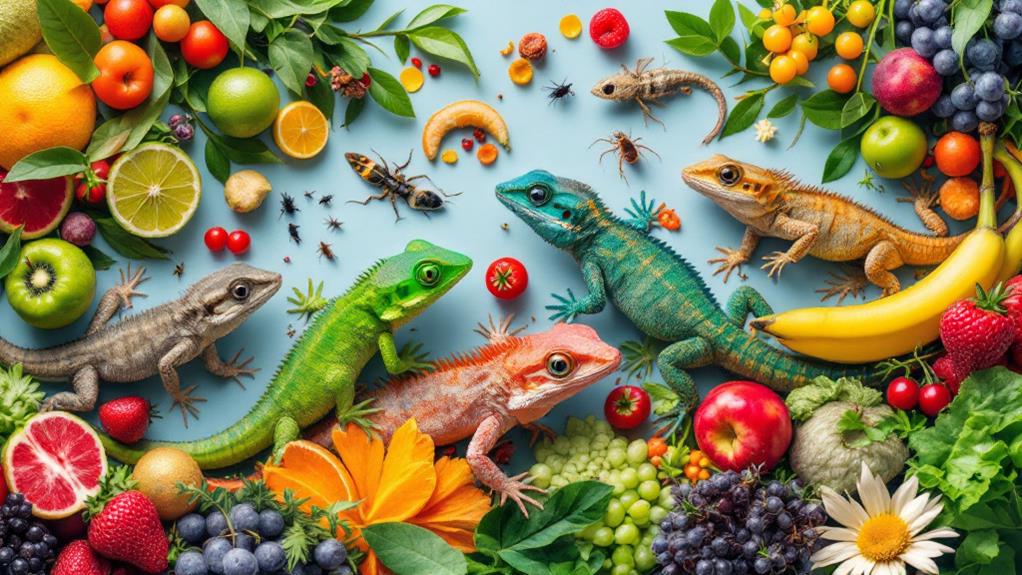
Understanding the nutritional requirements of your pet lizard is fundamental for guaranteeing its health and longevity. Different species have varied dietary needs. Insectivorous lizards, like Leopard Geckos, thrive on diets rich in live insects such as crickets and mealworms. On the other hand, omnivorous lizards, such as Bearded Dragons, need a balanced mix of live insects and leafy greens. It's imperative to understand these specific needs to provide the best diet for your pet.
Calcium and vitamin supplementation play an important role in preventing metabolic bone disease. Dusting your lizard's food with calcium and multivitamins guarantees it receives the necessary nutrients. Offering fresh water daily in shallow dishes prevents drowning and keeps your lizard well-hydrated. Don't overlook the importance of gut-loading prey; feed nutritious foods to insects before offering them to insectivorous species to enhance their nutritional value.
Feeding frequency depends on your lizard's maturity and species. Juveniles generally require daily feedings, while adults may only need food every few days. By carefully considering these nutritional requirements, you'll help your lizard maintain a healthy weight and comprehensive well-being.
Common Care Mistakes
After mastering your lizard's nutritional needs, it's just as important to steer clear of common care mistakes that can negatively impact its health. Many beginner reptile owners overlook the significance of researching specific care requirements for their chosen species. This oversight can lead to improper habitat setups, causing environmental stress and health problems. Providing a balanced diet is vital; neglecting this can result in nutritional deficiencies. For instance, calcium and vitamin D are essential supplements for many lizard species.
Temperature control is another key aspect often mishandled. Each species requires specific temperature ranges for their wellbeing. For example, Bearded Dragons need a basking area between 85-100°F. Not maintaining these conditions can lead to stress and other health issues.
Improper handling is a common mistake that can cause injury. Avoid grabbing your lizard by the tail and make sure you're using proper techniques suited to your pet's species. Regular cleaning of your lizard's habitat is also important. Failing to do so can result in harmful bacteria and parasites building up.
- Research specific care: Know your lizard's needs.
- Maintain temperature control: Make sure proper environmental conditions.
- Practice proper handling: Avoid stress and injury.
Community and Resources
In regards to enriching your experience as a lizard owner, tapping into community and resources is invaluable. By engaging with online communities and forums, you can improve your understanding of lizard care while connecting with experienced owners enthusiastic to offer advice and support. These platforms are goldmines for insights, helping you navigate the nuances of caring for your pet.
Local reptile clubs and expos offer fantastic opportunities to meet fellow enthusiasts. Here, you can learn from experts and find reputable breeders and suppliers, ensuring you start your adventure with a healthy pet. These gatherings are perfect for deepening your knowledge and becoming part of a lively community.
Don't overlook educational resources such as care guides and videos. They're crucial for understanding the specific needs of different lizard species, especially if you're a new pet owner. Quality Cage provides reliable supplies and resources to keep your lizard's habitat ideal.
Social media groups dedicated to lizard keeping can foster a sense of community and provide a platform for sharing experiences and tips. These groups are great for staying updated on the latest in lizard care, making your adventure as a pet owner both enjoyable and informed.