Debunking Common Cat Myths: What Every Cat Owner Should Know
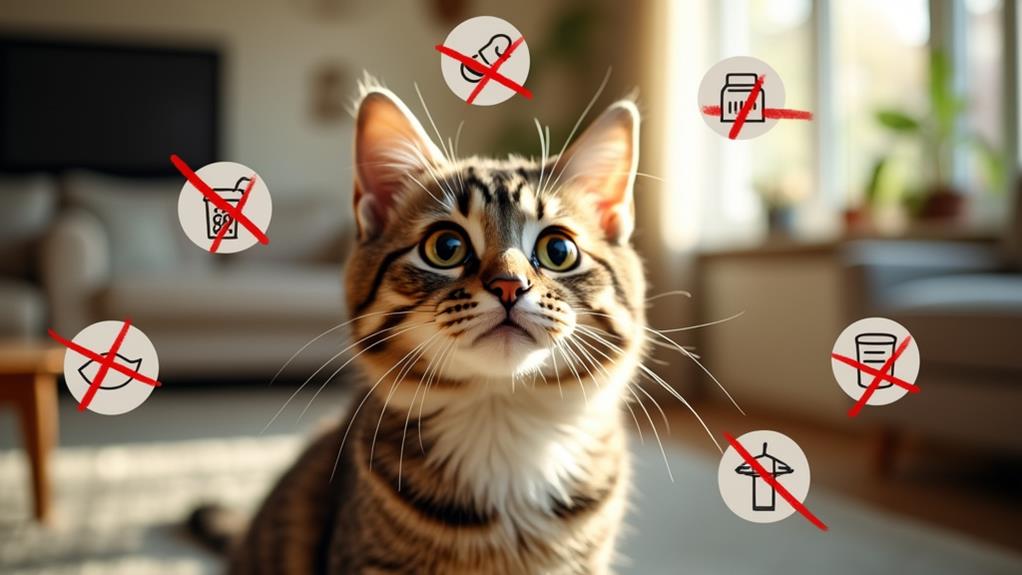
Cats aren't as mysterious as myths suggest. Black cats don't bring bad luck; they're affectionate companions. Cats' supposed water aversion has roots in their ancestors' dry environments, but some enjoy a splash. They don't actually have nine lives, just great survival instincts. Despite landing on their feet, falls can harm them, so safety matters. Their vision excels in dim light, but they can't see in total darkness. Contrary to being solitary, many cats love social interaction and can live harmoniously with other pets. Positive training improves your bond, adding joy to their sharp instincts and playful quirks. Uncover more insights.
Key Takeaways
- Black cats are affectionate and loyal, contrary to superstitions linking them to bad luck.
- Cats' aversion to water varies; positive reinforcement can help them enjoy water play.
- Despite their agility, cats can suffer injuries from falls; window safety is important.
- Cats excel in low light but need some ambient light; they don't see in complete darkness.
- Regular vet visits and care are crucial for cats' health, longevity, and disease prevention.
Black Cats and Superstitions
Black cats have long been subjects of superstition, especially during the Middle Period in Europe, when they were linked to bad luck and witchcraft. You've probably heard the old tales—black cats are bad omens that bring misfortune. While these superstitions have persisted over time, it's essential to recognize that not everyone sees them this way. In fact, in cultures like Japan, black cats are considered symbols of good luck and prosperity. This stark contrast highlights the cultural differences that shape our views on these mysterious felines.
Despite the myths, black cats are known for their loving traits and strong bonds with humans. If you ever adopt one, you'll likely find that their unique personalities make them just as charming as any other cat. They're affectionate, loyal, and often develop close connections with their owners. These qualities challenge the negative stereotypes that have haunted them for centuries.
Cats and Water Aversion
Many cats exhibit a strong aversion to water, which can be traced back to their ancestral roots in arid environments. This aversion is largely due to their thick coats that retain moisture, making them feel uncomfortable and heavy. While the majority of cats dislike being submerged in water, individual preferences can surprise you. Some cats enjoy water play, such as splashing in sinks or bathtubs, challenging the common myth that all cats inherently dislike water.
If your cat needs a bath or you want to help them acclimate to water, positive reinforcement is key. Gradually introduce water by using treats or toys to create a more pleasant experience. Start with small amounts of water and let your cat investigate at their own pace. Over time, this approach can reduce their water aversion and make necessary bathing less stressful.
Interestingly, there are videos and anecdotes of some cats swimming or enjoying water activities. These outliers remind us that each cat is unique, with their own set of likes and dislikes. By understanding your cat's individual preferences, you can better cater to their needs and debunk the water aversion myth.
The Nine Lives Myth

The "nine lives" myth surrounding cats is a fascinating blend of historical reverence and their impressive survival skills. This common myth likely stems from their agility and ability to escape precarious situations, making it seem as if cats have nine lives. In ancient Egypt, cats were associated with supernatural qualities, further fueling this belief. Their behavior patterns, like seemingly always managing to land on their feet, contribute to the perception that they can survive almost anything.
However, it's essential to keep in mind that cats have only one life. They face injuries and health issues just like any other pet. As a responsible cat owner, you should guarantee your feline friend receives regular veterinary care and enjoys proper living conditions. This is vital to their longevity and well-being. Cats' remarkable survival skills shouldn't lead you to underestimate the potential dangers they face.
Landing on Feet Myth
Cats have long captivated our imaginations with their seemingly magical ability to land on their feet. However, the belief that cats always land safely is a myth. Cats possess a righting reflex, which allows them to twist their bodies mid-air to prepare for landing. While this reflex is impressive, it doesn't guarantee they'll always land on their feet without harm. In fact, many cats sustain injuries from falls, especially when they plummet from great heights.
The term "high rise syndrome" describes the injuries cats suffer after falling from significant heights. The risks of fall-related harm are real, and it's essential for cat owners to understand this. Cats have better chances of orienting themselves during higher falls due to the increased time to adjust their position, yet shorter falls might not provide enough time for correction.
Veterinarians frequently report fall-related injuries in cats, emphasizing the need for window safety measures. To protect your feline friend:
- Confirm windows are securely closed or fitted with screens.
- Avoid leaving your cat unsupervised in high places.
- Be aware of open balconies.
- Create a safe indoor environment.
Vision Capabilities of Cats
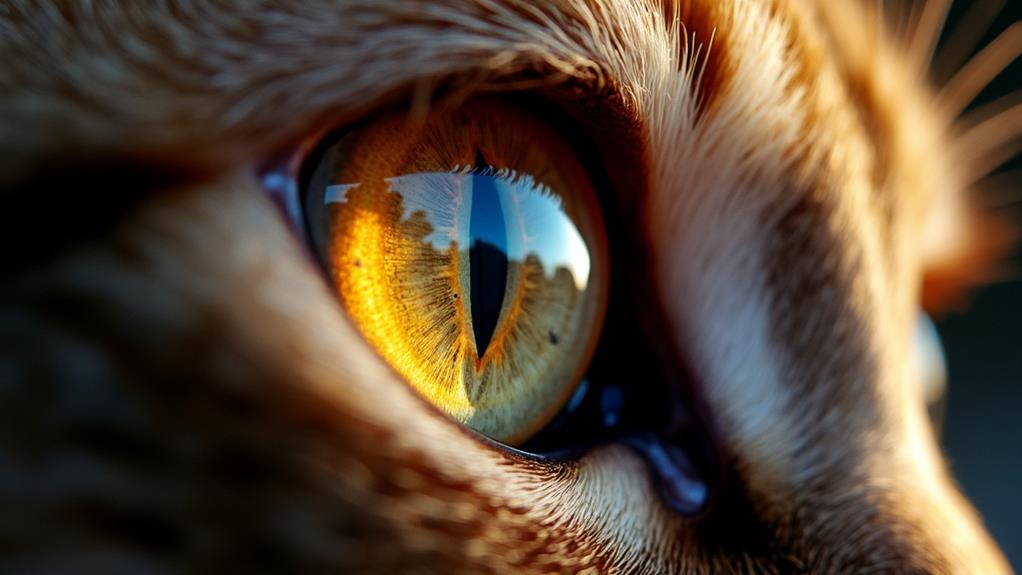
Ever wonder how your feline friend navigates so gracefully in dim light? Cats can see exceptionally well in low light conditions, thanks to their remarkable vision capabilities. Their retinas contain a higher density of rod cells compared to humans, allowing them to detect even the faintest light. This adaptation makes them skilled nocturnal hunters. However, it's crucial to acknowledge that while cats can see in low light, they can't see in complete darkness. They still need some ambient light to move around effectively.
Adding to their prowess is a reflective area in their eyes known as the tapetum lucidum. This layer enhances their night vision by bouncing light that passes through the retina back into the eye, giving the impression their eyes glow in the dark. The structure of a cat's eye, with its thin corneas and wide irises, also helps them gather more light, improving their ability to see in dim settings.
When it comes to color, cats have a limited ability to perceive color. They primarily see shades of blue and green, lacking the full spectrum that humans enjoy. This unique combination of features showcases just how specialized and effective their vision truly is.
Social Nature of Cats
Many people mistakenly believe that cats are purely solitary creatures, but these fascinating animals often seek social interaction and form strong bonds with their human companions. Contrary to the stereotype, cats are social creatures that can thrive on companionship. While their individual personalities play a significant role in determining their social preferences, many cats actively engage with their owners and even other pets.
Understanding your cat's social nature can improve your relationship and elevate their well-being. Here are some key points to reflect on:
- Individual Personalities: Each cat has a unique personality that influences how social they want to be. Some cats keenly seek out interaction, while others may enjoy solitude.
- Body Language: Cats use vocalizations and body language to communicate their desire for attention. Recognizing these signs can help you respond to their social needs effectively.
- Multi-Pet Households: Cats can form strong relationships with other pets, including dogs, if introduced properly and given the time to adjust.
- Time to Adjust: Some cats need more time to acclimate to new environments or companions, so patience is crucial.
Training and Interaction
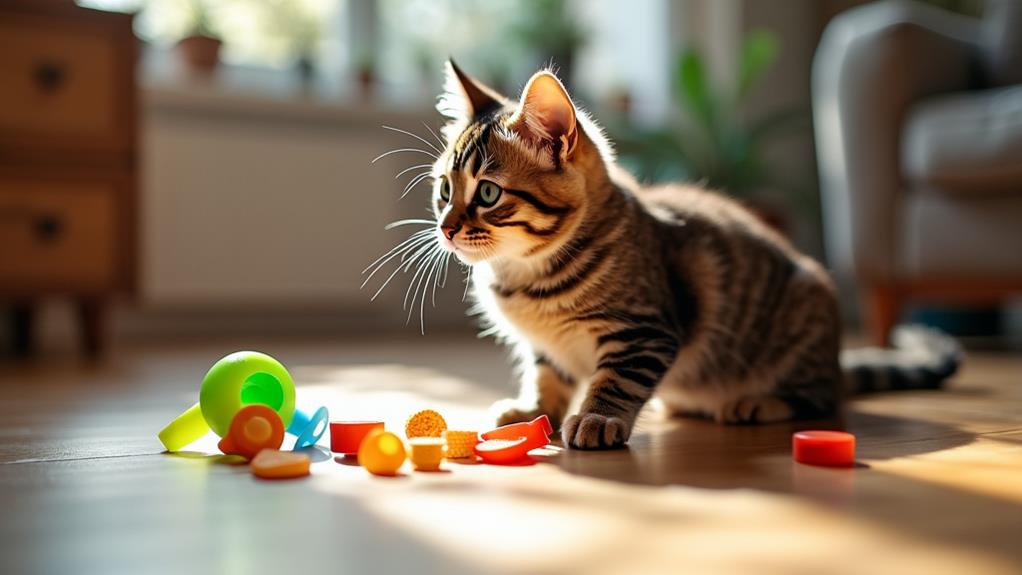
Training your cat may seem challenging, but with positive reinforcement techniques, you can effectively teach them desired behaviors and even fun tricks. Cats, unlike dogs, have an instinctual knack for using the litter box, making house-training a breeze. To encourage good behavior, try using treats or praise. This method is particularly effective for domesticated cats, who thrive on consistent interaction and engagement with you.
Active breeds, like Bengals, can be trained to learn unique skills such as leash walking. It's crucial to align training sessions with your cat's interests to keep them motivated. Introducing scratching posts can also help redirect their natural scratching instincts productively. In terms of creating a harmonious home, successful coexistence between cats and dogs is achievable. Proper introductions and ensuring each pet has its own resources can foster a peaceful environment.
Training doesn't only develop your cat's skills; it strengthens your bond through shared experiences. Regular interaction helps in understanding your cat's cues and preferences, making your relationship more rewarding. By dedicating time to train and interact with your cat, you're investing in a fulfilling companionship that benefits both of you.
Veterinary Care Importance
Regular veterinary care is vital for your cat's health and well-being, as it aids in early detection and prevention of illnesses that cats often hide. Despite more pet cats than dogs, cats visit the vet less frequently, creating a gap in preventive care. Many believe cats are "low maintenance," leading to neglecting health check-ups and vaccinations. However, timely veterinary care can greatly impact your cat's lifespan.
Here's why regular vet visits are important:
- Early Detection: Cats are masters at hiding health issues, and regular check-ups can catch problems before they become severe.
- Vaccinations: Necessary for preventing diseases, even if your cat is an indoor cat, as some viruses can be brought into the home.
- Increased Lifespan: Indoor cats receiving proper care can live up to 14 years, while outdoor cats average only 5 years.
- Community Support: If transportation or finances are barriers, seek community resources offering affordable or mobile vet services.