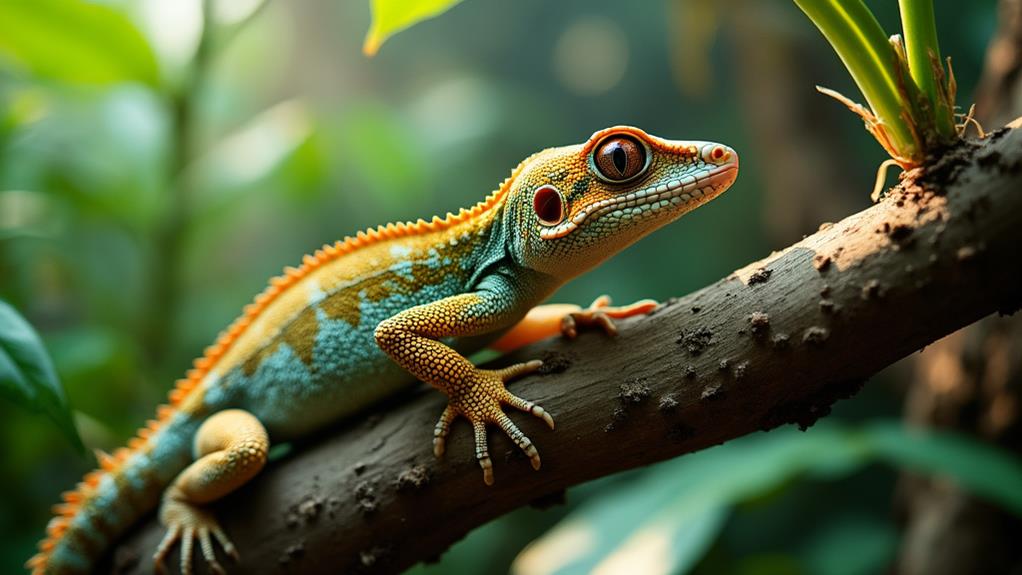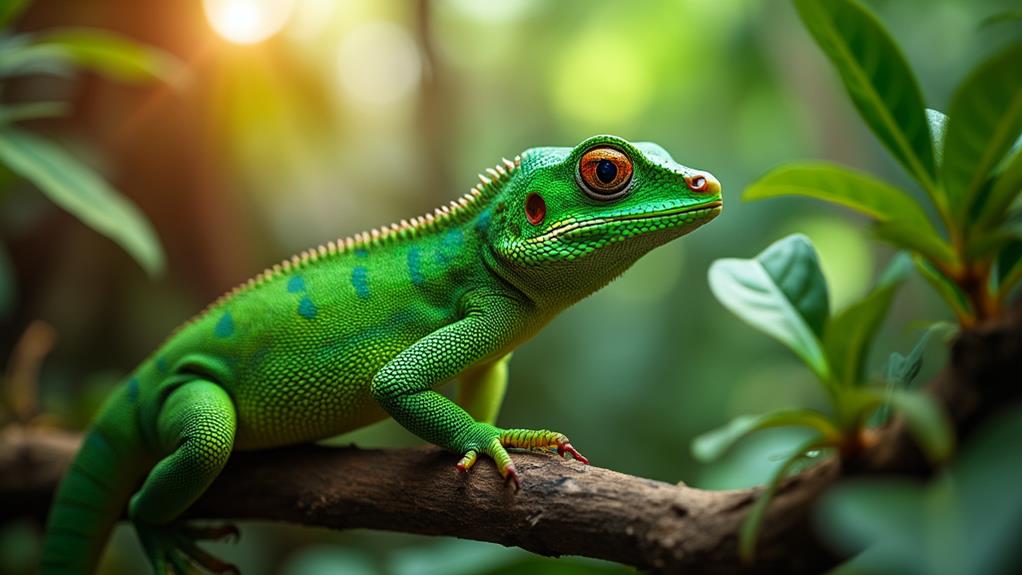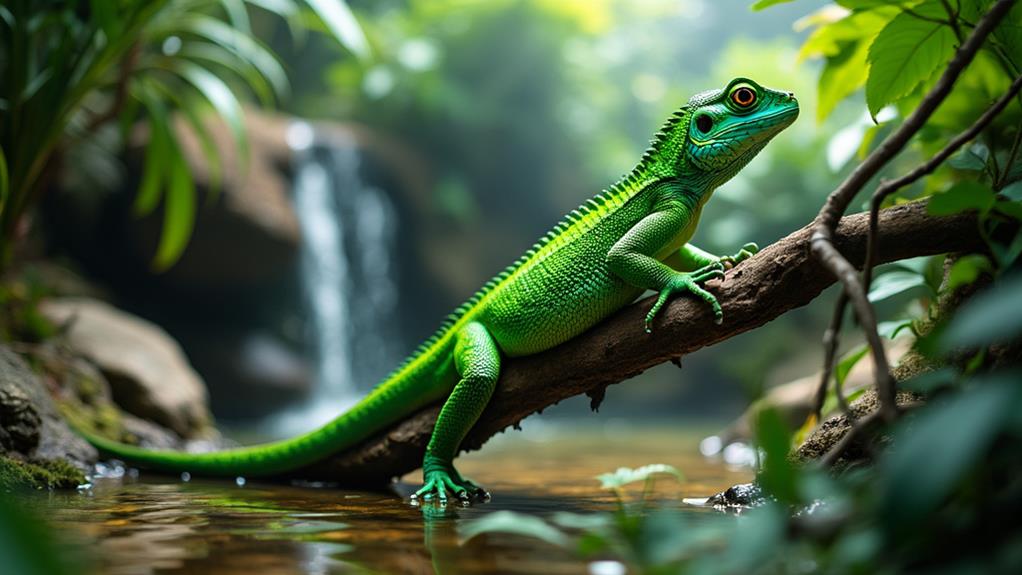
Crested Gecko Care: A Complete Guide for Beginners
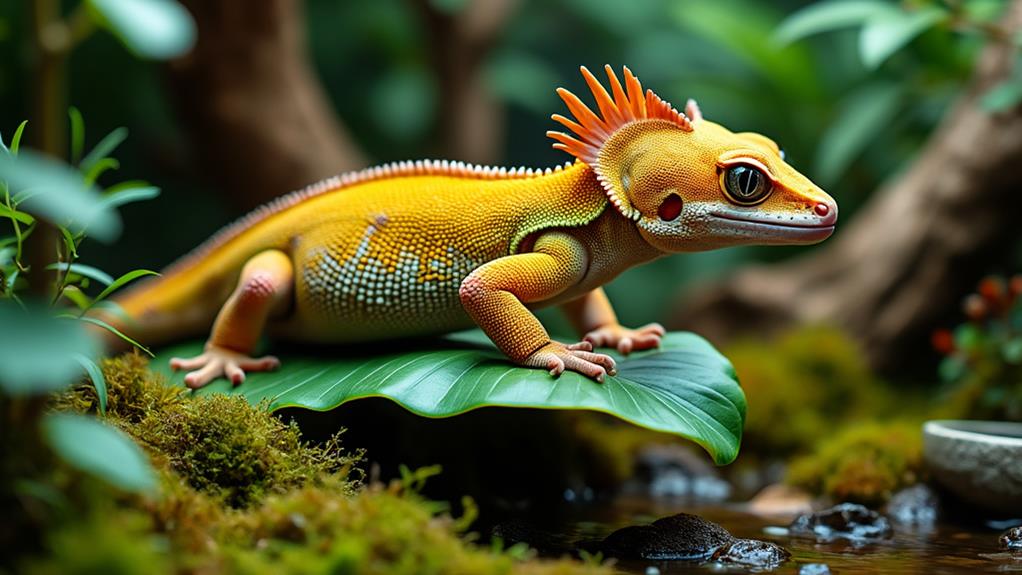
Crested geckos are wonderful pets with their friendly demeanor and distinct appearance. To care for them, set up a habitat that mimics their natural rainforest environment with climbing structures and proper humidity. Guarantee their enclosure temperature stays between 70-78°F, and feed them a balanced diet of commercial food and live insects. Regular misting and a clean water dish are crucial for hydration. Maintain a clean habitat to prevent health issues like metabolic bone disease. Initial setup costs can be around $200-$300, with monthly expenses for food and care. Uncovering more guarantees your gecko thrives happily and healthily.
Key Takeaways
- Ensure a minimum enclosure size of 18x18x24 inches for adult crested geckos with climbing structures and hiding spots.
- Maintain humidity levels between 50-70% with regular misting and use suitable substrates like cypress mulch.
- Provide a balanced diet of commercial crested gecko food, live insects, and occasionally fresh fruits for nutrition.
- Monitor health regularly, ensuring proper husbandry to prevent metabolic bone disease and other illnesses.
- Budget for initial setup costs around $200-$300 and ongoing monthly expenses of $20-$30 for food and maintenance.
Understanding Crested Geckos
Crested geckos are fascinating creatures that you'll enjoy learning about. Native to New Caledonia, these pet lizards captivate owners with their friendly demeanor and unique appearance. Understanding crested geckos is fundamental for providing them with proper care. They're arboreal, meaning they love climbing, so offering climbing structures within their terrariums is imperative. You should guarantee these structures mimic their natural habitat to keep them healthy and happy.
Humidity plays a significant role in crested gecko care. These geckos thrive in humid environments, so maintaining adequate levels within their terrariums is necessary. Regular misting and choosing the right substrate can help maintain the required humidity levels. As an omnivorous species, crested geckos have a varied diet that includes insects and specialized commercial crested gecko food. Providing a balanced diet secures their long-term health.
Their nocturnal nature means they're most active at night, which aligns with their large eyes adapted for 360-degree vision. This remarkable feature improves their ability to navigate their environment efficiently. With proper understanding and care, crested geckos can live up to 15 years, offering you many years of companionship and exploration.
Essential Habitat Setup
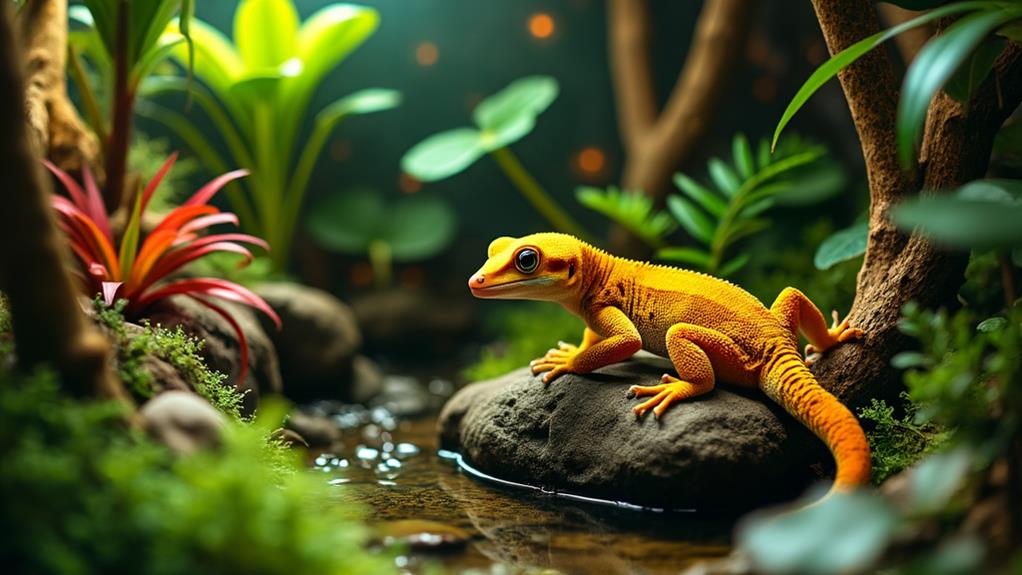
Setting up an ideal habitat for your crested gecko is essential for their well-being and happiness. Start by choosing an enclosure with a minimum size of 18x18x24 inches for adults, ensuring ample height for climbing and exploration. Juveniles need at least a 12x12x18-inch space. Your crested gecko will thrive in an environment that mimics their natural rainforest, so incorporate plenty of climbing structures, hiding places, and foliage. These elements provide vital enrichment and security.
Selecting the right substrate is key. Options like paper towels, cypress mulch, or orchid bark are excellent choices, as they retain moisture and keep the habitat clean. Maintaining proper humidity levels between 50-70% is crucial for your crested gecko's health. Use regular misting or a humidifier to achieve this, while also ensuring adequate ventilation to prevent overheating and promote air circulation.
Monitor the temperature range carefully, keeping it between 70-78°F. Temperatures above 82°F can cause stress, so investing in a reliable thermometer is a must. By following these guidelines, you'll create a comfortable and safe habitat for your crested gecko to flourish.
Feeding and Nutrition
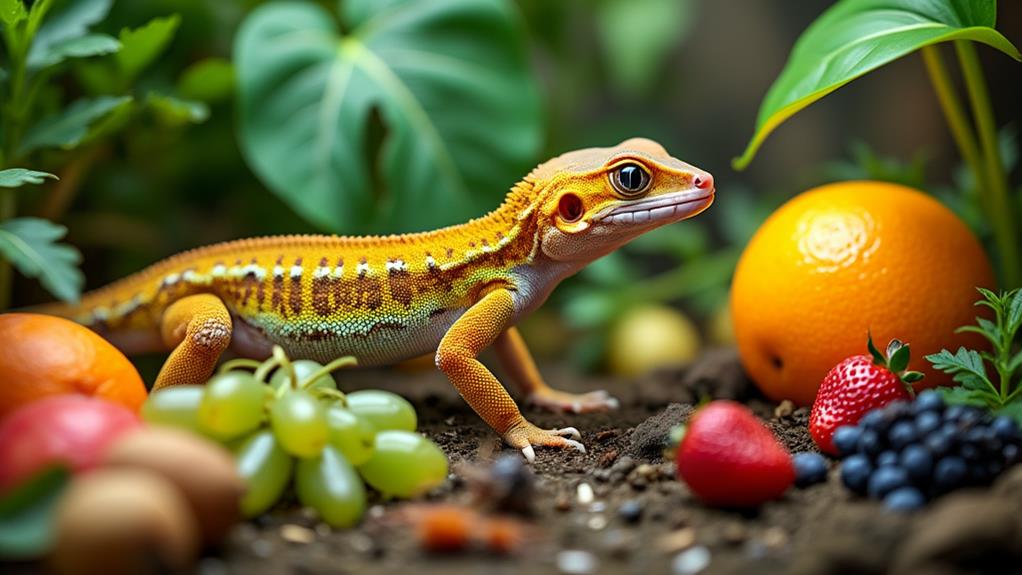
Providing a balanced diet is fundamental for your crested gecko's health and well-being. As omnivores, crested geckos require a mix of commercial crested gecko food and live insects to meet their nutritional needs. A good feeding schedule includes offering commercial diets like Pangea Fruit Mix Complete Diet 3-4 times a week. Incorporate live insects such as crickets or locusts 2-3 times weekly, guaranteeing you offer 70-100 crickets per session.
Dusting these insects with calcium and vitamin D3 is critical to prevent metabolic bone disease and guarantee proper nutrient absorption. This practice helps maintain strong bones and general health. Don't forget hydration; mist your gecko's enclosure daily to create drinking droplets and always provide a clean water dish filled with dechlorinated water.
To prevent nutritional deficiencies, offer a varied diet that includes both powdered diets and fresh fruits. Options like fruit baby food can complement commercial diets, providing fundamental vitamins and minerals. By adhering to this feeding schedule and focusing on their nutritional needs, you'll support your crested gecko's thriving health and vigor while avoiding common dietary pitfalls.
Health and Wellness
Maintaining your crested gecko's health and wellness requires careful attention to their habitat and nutritional needs. Proper husbandry practices are critical for preventing health issues like metabolic bone disease and infections. A clean habitat achieved through regular spot cleaning and disinfection prevents harmful bacteria and parasites. Maintaining your gecko's environment is a significant part of habitat maintenance, as poor conditions can lead to health problems ranging from poor sheds to serious infections.
A balanced diet is fundamental to prevent nutritional deficiencies. Female crested geckos, in particular, need ample nutritional reserves to avoid egg-binding, a potentially life-threatening condition. Regularly check for signs of illness such as lethargy, lack of appetite, or abnormal stool. If you notice any of these, it's essential to seek prompt veterinary care. Regular check-ups can prevent minor issues from becoming medical emergencies by catching them early.
Veterinary care is not just for emergencies; it's a proactive approach to keeping your gecko healthy. By focusing on these aspects, you guarantee your crested gecko thrives under your care, enjoying a long and healthy life. Prioritizing their health and wellness is both rewarding and fundamental for any responsible pet owner.
Financial Considerations
While caring for your crested gecko's health and wellness guarantees they thrive, it's likewise important to contemplate the financial aspects of their care. The initial setup costs for their habitat typically range from $200 to $300. This includes necessities like the terrarium, substrate, plants, and food to create a comfortable environment. Once you've established their home, you'll encounter ongoing expenses, primarily consisting of food. Expect monthly costs of about $20 to $30 for specialized gecko diets and live insects, depending on how often you feed them.
When choosing your gecko, consider the wide price range. High-end crested geckos with unique morphs can exceed $3,000, but there are also budget-friendly options starting at around $30. It's important to factor in potential veterinary visits, as regular check-ups can help maintain your gecko's health. Though costs vary, budgeting for occasional vet visits and emergencies is wise.