Costa Rican Zebra Tarantula: A Great Pet Spider? Here’s What You Need to Know
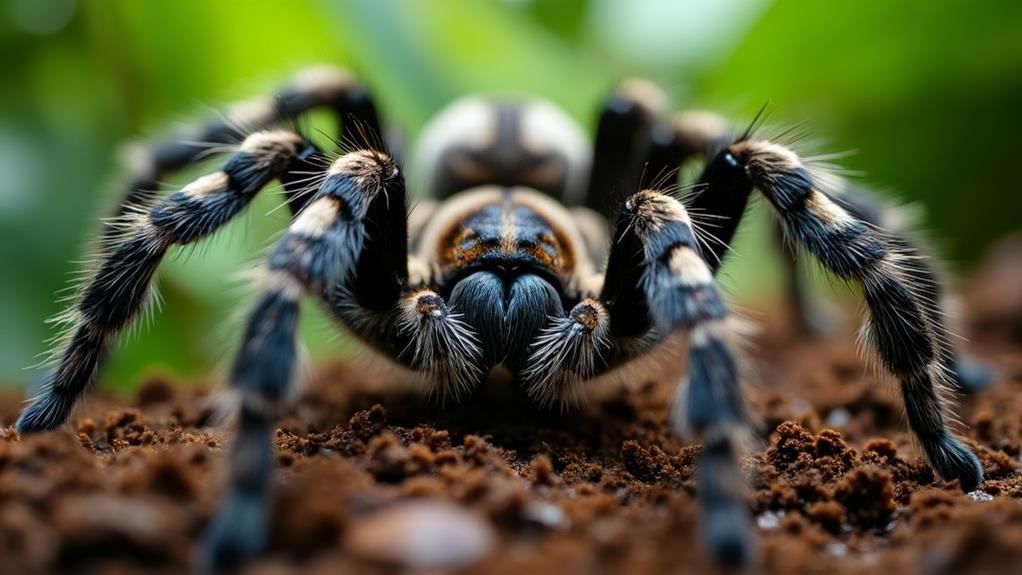
Considering a Costa Rican Zebra Tarantula for a pet can be rewarding, as they combine fascinating behaviors with relatively straightforward care. These tarantulas, native to Central America, prefer a solitary lifestyle and boast visually striking, striped legs. They typically require a 10-gallon enclosure with specific humidity and temperature settings, and handling them can be challenging due to their quick movements. Feeding consists mainly of live insects, and they thrive when their environment is well-maintained. However, they may flick hairs defensively, and proper handling is necessary to reduce stress. Investigate further to guarantee you provide the best for this intriguing companion.
Key Takeaways
- Costa Rican Zebra Tarantulas are generally docile but can be skittish with quick movements when startled.
- They require a 10-gallon enclosure with humidity of 75%-80% and temperatures between 70°F-85°F.
- Females live 15-20 years, while males live around 5 years, requiring different long-term care commitments.
- They feed primarily on live prey such as crickets, with feeding frequency depending on age.
- Regular health checks and environmental monitoring are essential to maintain optimal health and prevent stress.
Species Overview
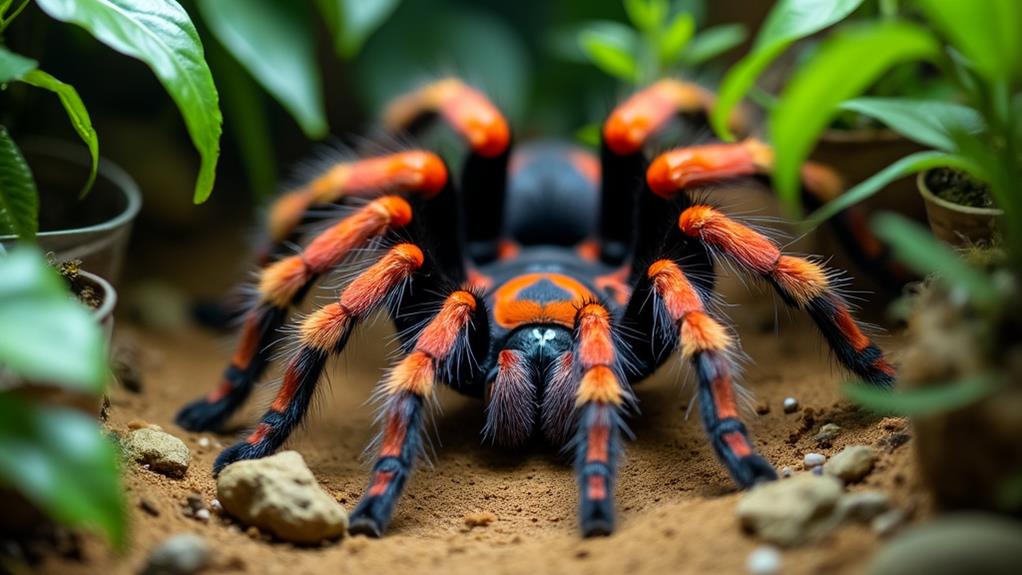
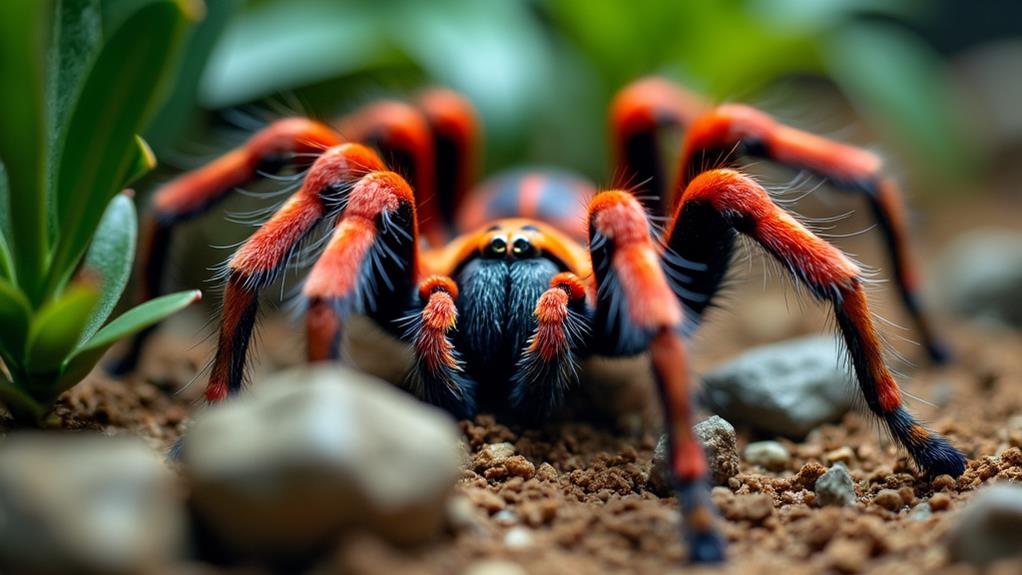
The Costa Rican Zebra Tarantula, often called Aphonopelma seemanni, is an enthralling species native to regions like Guatemala, Nicaragua, and Costa Rica. Known for its distinctive striped legs, this striped-knee tarantula captivates enthusiasts with its unique appearance and fascinating biology. If you're considering adding one to your collection, it's vital to understand their specific care requirements.
Costa Rican zebra tarantulas can reach a leg span of 4 to 6 inches. Females boast a lifespan of 15 to 20 years, while males typically live around 5 years. When setting up their home, verify the enclosure size is between 5 to 10 gallons. A substrate depth of at least 4 inches is fundamental since these tarantulas love to burrow. Maintaining a humidity level between 75% to 80% and temperatures from 70 to 85°F is crucial for their well-being.
While generally docile, their skittish nature means they can be quite quick, making them better suited for experienced hobbyists. You might find them in a pet store, but remember, they're not the best choice for beginners. Proper care guarantees these fascinating creatures thrive in captivity.
Behavior and Temperament
Why do Costa Rican zebra tarantulas captivate enthusiasts with their behavior and temperament? These intriguing arachnids are known for their generally docile nature, making them relatively easy to care for when compared to more aggressive species. However, their skittish behavior can surprise you, as they often dart quickly when startled. This can make handling a challenge, especially if you're inexperienced. It's crucial to be careful when handling them, as their quick movements require a gentle, steady approach to avoid causing stress or accidental harm.
Despite their docile demeanor, Costa Rican zebra tarantulas make use of defense mechanisms like flicking barbed hairs, which can irritate your skin and eyes. Bites are rare, but their venom might cause mild irritation. They don't recognize their owners, as they lack memory, so each interaction is new for them, necessitating careful handling to guarantee they don't become stressed. When personalising content for their care, remember they prefer solitary living and can experience stress around other pets or tarantulas. Understanding these behaviors will help you create a safe and comfortable environment for your Costa Rican zebra tarantula, enhancing the experience for both you and your pet.
Housing and Environment
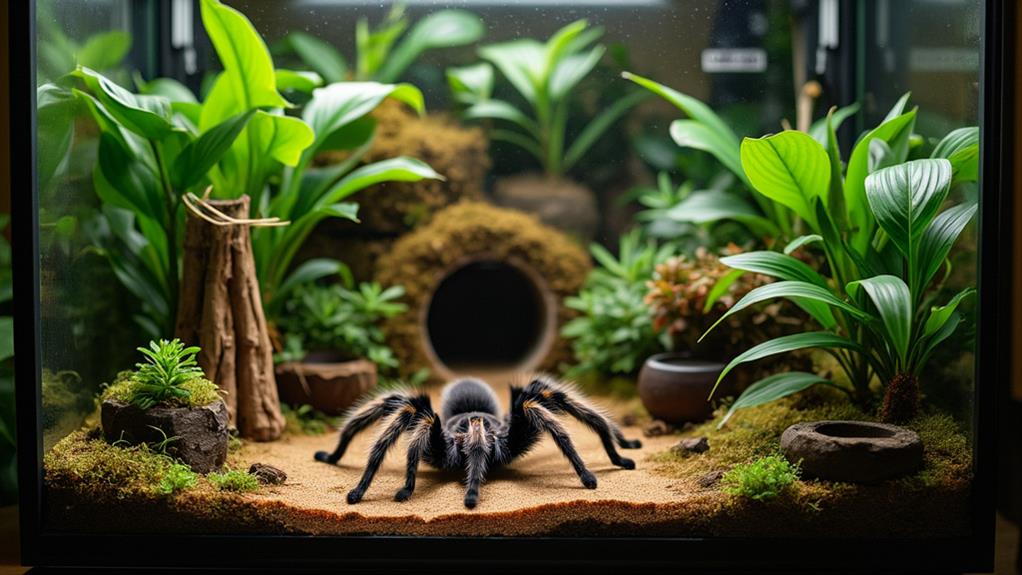
Understanding the behavior and temperament of Costa Rican zebra tarantulas helps you create a suitable home for them. These fascinating creatures need an enclosure size of at least 5 to 10 gallons, with a 10-gallon tank being ideal. This provides enough space for both their burrowing activities and general movement. A substrate depth of at least 4 inches is essential, using materials like coco-fiber, soil, and peat moss. These substrates not only support their natural burrowing instincts but also help retain moisture, important for their well-being.
Maintaining the right temperature and humidity levels is key to replicating their natural habitat. Keep the temperature between 70 and 85°F (21 to 30°C) and humidity levels around 75% to 80%. This guarantees a moist environment, which the Costa Rican zebra tarantula naturally thrives in. A secure habitat is crucial, as these spiders are adept climbers. Use a mesh lid or a solid glass top to prevent any escape attempts.
Regular monitoring and maintenance of their habitat are necessary. Ensure the substrate remains damp but not soggy, and consistently check humidity levels. This attention to detail helps promote a healthy and secure living environment for your tarantula.
Diet and Feeding
Regarding feeding your Costa Rican Zebra Tarantula, you'll find that its diet is straightforward yet vital for its health. Rican zebra tarantulas make excellent pets when you understand their dietary needs. They primarily eat live prey, with crickets being a staple. Occasionally, you can introduce pinky mice to provide extra protein. For adult tarantulas, it's best to feed them 1-2 times a week, ensuring they're satisfied without overfeeding. Juveniles, on the other hand, need feeding every 1-2 days due to their rapid growth phase.
It's crucial to remove any uneaten prey within 24 hours to avoid stress or a messy enclosure. This simple step helps maintain a clean environment, reducing risks of unwanted bacteria or pests. In addition to food, a shallow water dish should be provided at all times. It serves both as a drinking source and a means to maintain the enclosure's humidity. Don't forget to change the water daily to keep it fresh and healthy for your tarantula.
Keep an eye on the substrate's moisture level; excessive wetness can lead to bacterial growth, so aim for a balanced environment that supports your tarantula's well-being.
Health and Maintenance
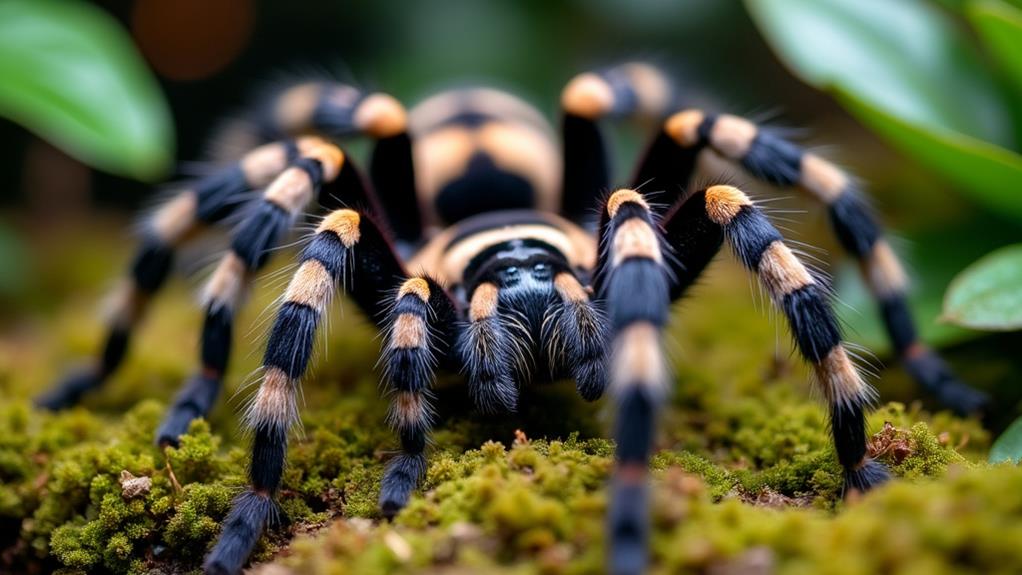
Feeding your Costa Rican Zebra Tarantula properly is just one part of guaranteeing its general well-being. Maintaining peak health for your pet tarantula involves closely monitoring the humidity and temperature within its enclosure. Aim for 75-80% humidity and temperatures between 70-85°F (21-30°C). This creates a comfortable environment that mimics its natural Costa Rican habitat.
You'll need to outfit the enclosure with at least 4 inches of substrate. This not only keeps your tarantula's home hygienic but also supports its burrowing behavior. Remember to change the substrate every 4-6 months. Regarding feeding, adults should receive live prey, like crickets, weekly, while juveniles need feeding every 1-2 days. Be sure to remove uneaten prey after 24 hours to prevent stress or potential health issues.
The molting process is vital for your tarantula's health. During molting, avoid handling your tarantula as it's vulnerable and more prone to injury. Watch for signs of stress or health problems, such as refusal to eat, listlessness, or abnormal behavior. Prompt action can prevent serious health issues and guarantee a long, healthy life for your pet.
Purchasing or Adopting
Choosing to bring a Costa Rican Zebra Tarantula into your home is an exciting decision that requires careful consideration. While pet stores might be your primary thought, opting for reputable breeders or rescues can guarantee you bring home a healthier tarantula with a well-documented health history. The average cost ranges from $20 to $40, with females usually at the higher end due to their longer lifespan. Before making your choice, keep these three emotional aspects in mind:
- Peace of Mind: Knowing your tarantula's health history can ease worries about future health issues.
- Trust: Building a relationship with reputable breeders fosters trust in the care and authenticity of your new pet.
- Compassion: Adopting from a rescue gives a second chance to a tarantula in need.
When adopting, always ask about the spider's previous care and health history. Visiting breeders in person allows you to see the tarantula's living conditions and feeding habits, key indicators of their health. Remember, individual housing is essential to prevent accidental breeding and reduce stress. Prioritize finding a reliable source to guarantee your Costa Rican Zebra Tarantula thrives in its new environment.
Additional Resources
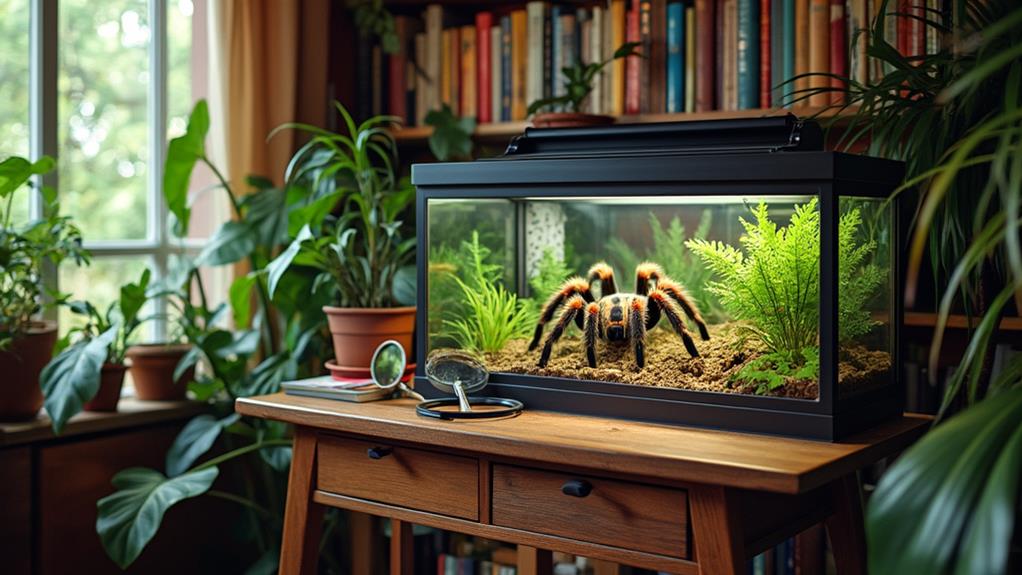
Investigating supplementary resources is crucial for ensuring your Costa Rican Zebra Tarantula thrives in its new home. Start with thorough care guides available on websites like Tarantulas.com. These guides cover everything from feeding schedules to habitat setup, providing detailed insights into the specific needs of this exotic pet. Understanding how to create an ideal environment and diet for your tarantula will help keep it healthy and reduce stress.
Join online forums and communities such as Arachnoboards to connect with fellow tarantula enthusiasts. These platforms are invaluable for sharing experiences and solutions to common care challenges, ensuring you're not alone in your experience. You'll find firsthand advice on balancing the intricacies of feeding and habitat setup, tailored to your Costa Rican Zebra Tarantula's unique requirements.
Don't overlook video series focusing on tarantula care. Watching experts demonstrate proper techniques can greatly improve your understanding of species-specific needs and behaviors, making you a more confident owner. Moreover, investigate veterinary resources specializing in exotic pets for professional guidance on health concerns and general maintenance. For an in-depth approach, books and articles on tarantula care can expand your knowledge, covering everything from habitat design to dietary needs.
Related posts